Under-RV Storage Ideas That Actually Work in the Real World

Salem Hassan founded Travelcamp RV and brings 30+ years of hands-on RV, marine, and powersports retail experience to every review.
✎ Reviewed by Salem Hassan — Founder, Travelcamp RV · 30+ years in RV, marine, and powersports retail
Why trust us
ShopRVGear articles are researched by the Searchshop Editorial team using manufacturer specs, RV trade sources, and owner feedback. We match every recommendation to your RV class — Class A, B, C, fifth-wheel, or travel trailer — because gear that works in a 40-ft motorhome often does not fit a Class B van. We may earn a commission on qualifying purchases; it does not change what we recommend.
Under-RV Storage Ideas That Actually Work in the Real World
If you are searching for under rv storage solutions ideas that make life easier at the campsite, the goal is not just to fit more stuff underneath your rig. It is to create a system that stays secure in wind, handles mud and rain, and does not interfere with leveling, hookups, or slide-outs. We researched the most practical approaches RV owners use in the real world, and the best options all share the same traits: they are weather-aware, easy to access, and simple to maintain.
Why Under-RV Storage Gets Complicated Fast

Under-RV space looks generous until you start parking on uneven pads, routing sewer and water lines, and working around stabilizers, axles, and tanks. What works in a driveway may fail at a gravel site after one rainstorm.
The most common problems are:
- Containers that slide or tip on sloped campsites
- Gear that gets soaked from splashback or runoff
- Blocked access to dump valves, jacks, or utility connections
- Rodents and insects finding soft bags or open bins
- Clutter that makes setup and teardown slower
That is why the best under-RV storage plan starts with zones, not random bins.
Start With Storage Zones
Before adding anything under the rig, divide the space into functional zones.
Zone 1: Utility Access Area
This area includes:
- Sewer hose connections
- Water hookups
- Electrical cord paths
- Dump valves
- Low-point drains
We recommend keeping this area as open as possible. Do not place everyday storage directly in front of service points.
Zone 2: Clean Gear Area
Use this space for items such as:
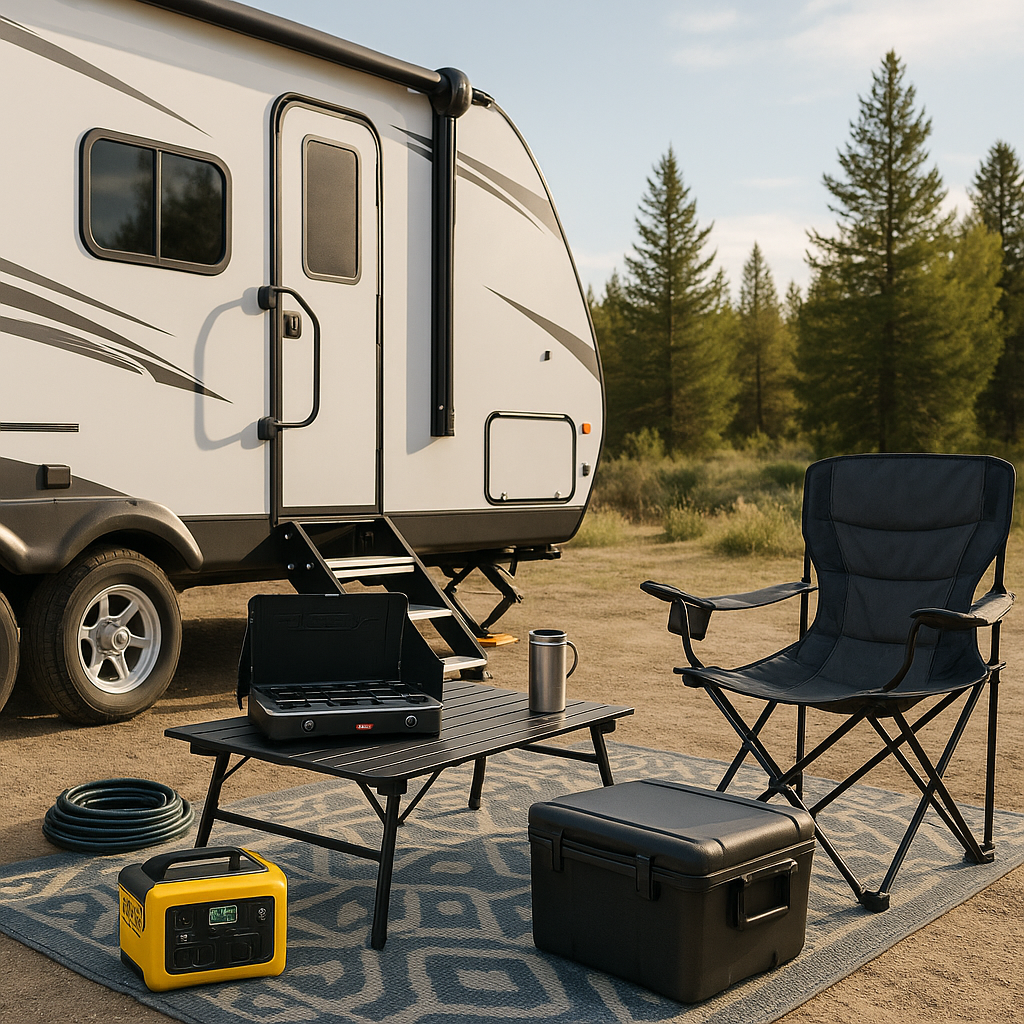
- Outdoor mats
- Folding tables
- Extra chairs
- Wheel chocks in a dedicated bin
- Leveling blocks in a washable container
Zone 3: Dirty or Wet Gear Area
This is the place for:
- Muddy tools
- Rinse hoses
- Wet boots in a tray or ventilated bin
- Portable waste-related accessories kept separate from clean items
Zone 4: Short-Term Grab-and-Go Area
This area should hold the things you use often during a stay:
- Patio accessories
- Small broom
- Gloves
- Cord adapters in a labeled tote
Under-RV Storage Ideas That Work

1. Low, Lidded Bins With Ground Clearance Awareness
Shallow bins are one of the simplest solutions because they fit under many trailers and fifth wheels without creating a trip hazard. The key is choosing containers low enough to clear the frame and high enough to keep contents off wet ground.
Best use cases
- Campsite setup supplies
- Outdoor accessories
- Maintenance items stored in sealed bags inside the bin
Real-world tip
Choose bins with secure lids and add large weatherproof labels on two sides. If you can only identify a tote from one angle, you will waste time moving everything around.
2. Rolling Storage Trays for Hard-Packed Sites
On concrete or packed gravel, rolling trays can be very useful for frequently accessed gear. They let you slide equipment out instead of crawling under the RV.
Best use cases
- Tool kits
- Electrical adapters
- Spare gloves and small accessories
Limitations
They are less effective on soft dirt, deep gravel, or muddy sites. In those conditions, wheels sink and trays become frustrating.
3. Milk Crates or Open Grid Baskets for Drying Gear
Ventilated storage is ideal for items that need airflow, such as hoses after rinsing or damp outdoor gear. Open crates also make visual identification easier.
Best use cases
- Rinse hoses
- Tent stakes
- Muddy leveling gear after cleaning
Safety note
Do not use open crates for anything that should stay clean or critter-free.
4. Hanging Skirt Pockets or Clip-On Organizers
If your setup includes RV skirting or a temporary enclosed patio area, hanging pocket organizers can create vertical storage without taking floor space.
Best use cases
- Gloves
- Flashlights
- Small hand tools
- Lighters or grill accessories
Important caution
Keep hanging organizers away from hot exhaust areas, moving slide components, and sharp frame edges.
5. Weather-Resistant Deck Boxes Near the RV Edge
A compact deck box can function as under-RV-adjacent storage when true underbody clearance is limited. This is often the most practical answer for seasonal campers.
Best use cases
- Bulky patio gear
- Charcoal tools or outdoor cooking accessories
- Extra mats and camp toys
Why it works
It avoids forcing too much into the low-clearance underbelly area while still keeping gear close to the rig.
6. Dedicated Dirty-Gear Trays
One of the most overlooked ideas is a simple tray for dirty items. Instead of letting muddy blocks, hoses, and boots spread mess everywhere, contain them in one washable spot.
Best use cases
- Sewer support parts stored separately from clean gear
- Muddy shoes
- Wet leveling pads
How to Set Up Under-RV Storage the Right Way
Step 1: Measure Clearance at the Lowest Point
Measure from the ground to the lowest safe storage area under the RV.
Safety tips:
- Never crawl under an RV supported only by jacks.
- Measure on level ground first, then allow extra margin for uneven campsites.
- Account for suspension movement and tire settling.
Step 2: Identify Heat, Water, and Moving Hazards
Mark off areas near:
- Exhaust outlets
- Furnace vents
- Slide-out mechanisms
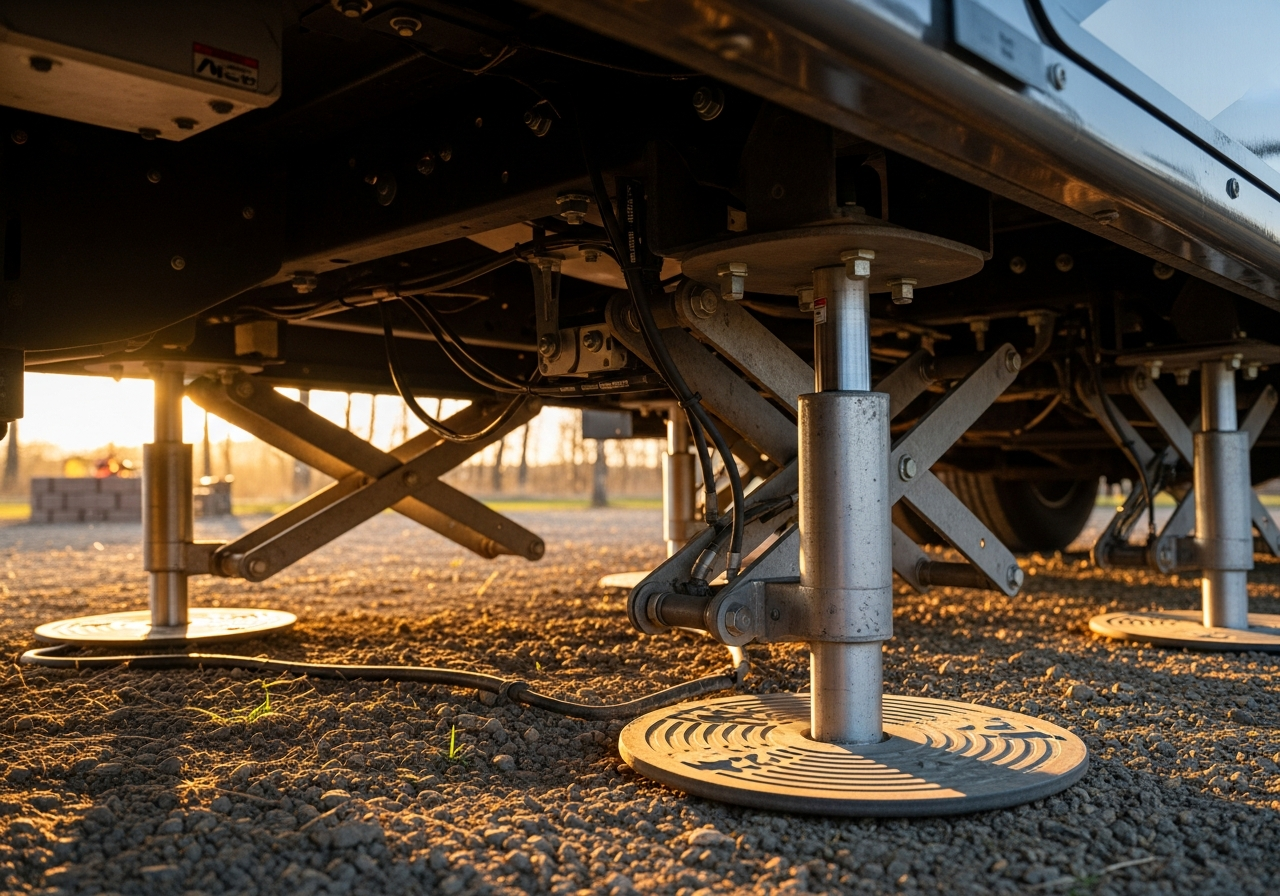
- Stabilizer jacks
- Plumbing outlets and dump valves
Safety tips:
- Keep storage away from any heat source.
- Do not block airflow to vents.
- Leave full access to emergency and maintenance points.
Step 3: Sort Gear Into Clean, Dirty, and Frequent-Use Categories
This prevents one of the biggest storage mistakes: mixing sanitary supplies with patio gear.
We recommend three simple labels:
- Clean
- Dirty
- Daily Use
Step 4: Choose Containers That Match the Campsites You Actually Use
If you camp mostly on paved pads, rolling options may help. If you stay on dirt, grass, or gravel, sealed bins and trays are usually better.
Step 5: Anchor or Stabilize Lightweight Storage
Wind can move empty bins and soft organizers.
Safety tips:
- Use bungee cords or straps only where they cannot contact hot or moving parts.
- Avoid creating tripping hazards around entry doors.
- Do not tie anything to plumbing or electrical lines.
Step 6: Leave a Clear Utility Path
Before finalizing your layout, connect water, sewer, and power as if you were camping. If a bin blocks any routine task, move it now.
Common Mistakes to Avoid
Storing too much weight on soft ground
Heavy bins can sink after rain and become difficult to move.
Blocking inspection points
You should still be able to look for leaks, loose wiring, or damage under the RV.
Using fabric bags for everything
Soft storage can absorb moisture, trap odors, and invite pests.
Ignoring splash zones
Even if rain does not fall directly under the RV, road grime and runoff can soak gear from the sides.
Troubleshooting Under-RV Storage Problems
1. Problem: Bins keep getting wet
Diagnostic steps:
- Check whether water is coming from rain runoff, tire splash, or a plumbing leak.
- Inspect the ground slope to see if water is pooling under the rig.
- Look for cracked lids, warped edges, or missing seals.
Solutions:
- Move bins away from the runoff side of the RV.
- Raise containers slightly on a plastic grid or low platform.
- Replace damaged lids or use better-sealing containers.
- If moisture appears even in dry weather, inspect the RV for leaks.
2. Problem: Storage interferes with hookups or leveling
Diagnostic steps:
- Perform a full mock setup with all hoses, cords, and jacks deployed.
- Note which items must be moved each time.
- Identify whether the issue is poor placement or oversized containers.
Solutions:
- Reassign utility-side storage to another zone.
- Switch from one large tote to two smaller bins.
- Keep hookup accessories in a separate quick-access container.
3. Problem: Critters are getting into stored gear
Diagnostic steps:
- Look for chew marks, nesting material, or droppings.
- Check whether food, scented cleaners, or fabric items are stored below.
- Inspect bins for gaps or lids that do not fully latch.
Solutions:
- Remove anything edible or strongly scented.
- Use harder-sided containers with tighter closures.
- Clean the area and reduce clutter that creates hiding spots.
4. Problem: Gear is hard to reach
Diagnostic steps:
- Track which items you use daily, weekly, and rarely.
- Observe whether you must kneel or crawl too far for basic items.
- Check if labels are visible from the campsite side.
Solutions:
- Move daily-use gear to the outer edge.
- Store rare-use items deeper under the RV.
- Add side-facing labels and group similar supplies together.
Seasonal Maintenance Guide for Under-RV Storage
A good storage system only works if we maintain it through changing weather and travel conditions.
Spring Checklist
- Remove all bins and sweep out debris.
- Inspect for rodent activity, water intrusion, or corrosion.
- Wash containers with mild soap and let them dry fully.
- Re-label faded bins.
- Repack by season so winter-only items are not taking prime space.
Summer Checklist
- Check for heat exposure near exhaust and sun-reflective surfaces.
- Inspect plastic bins for warping.
- Rinse dirty-gear trays more often to control odor.
- Confirm that frequent-use items are still easy to access during peak travel.
Fall Checklist
- Remove leaves and organic debris that hold moisture.
- Check seals and lids before wet weather increases.
- Rotate out summer-only gear.
- Inspect straps, cords, and anchors for wear.
Winter Checklist
- Empty any containers holding liquids or damp gear.
- Remove items that can crack in freezing temperatures.
- Check for ice buildup risks around low-clearance storage.
- If storing the RV, reduce underbody clutter so inspections are easier.
Step-by-Step Container Maintenance
1. Empty and sort
Separate gear into keep, relocate, clean, and discard piles.
2. Clean containers thoroughly
Use mild soap and water. Dry completely before repacking.
3. Inspect for cracks and weak handles
Replace any container that could fail while dragging or lifting.
4. Sanitize dirty-gear storage separately
Anything used around wastewater equipment should be cleaned apart from general camping supplies.
5. Repack by frequency of use
Place the most-used items nearest the access side of the RV.
What We Recommend for the Most Practical Setup
For most RV owners, the most reliable system is not complicated. We recommend:
- One sealed bin for clean outdoor gear
- One separate bin or tray for dirty or wet items
- One quick-access tote for hookups and adapters
- A clear utility zone with nothing stored directly in front of it
- Visible labels and a seasonal cleanout routine
That setup works better than trying to turn the entire under-RV area into a packed storage bay. In real-world camping, simple systems are easier to keep safe, dry, and usable.
Key Takeaways
- The best under-RV storage system starts with zones: utility, clean gear, dirty gear, and daily use.
- Low sealed bins, washable trays, and ventilated crates are often more practical than oversized storage solutions.
- Always protect access to dump valves, hookups, jacks, vents, and slide mechanisms.
- Match your storage style to your typical campsite surface, not just your driveway.
- Seasonal maintenance prevents moisture damage, pest issues, and wasted space.
- If storage keeps causing problems, simplify the setup and prioritize access over capacity.