How to Store Your RV for Winter: A Complete Protection Guide

Salem Hassan founded Travelcamp RV and brings 30+ years of hands-on RV, marine, and powersports retail experience to every review.
✎ Reviewed by Salem Hassan — Founder, Travelcamp RV · 30+ years in RV, marine, and powersports retail
Why trust us
ShopRVGear articles are researched by the Searchshop Editorial team using manufacturer specs, RV trade sources, and owner feedback. We match every recommendation to your RV class — Class A, B, C, fifth-wheel, or travel trailer — because gear that works in a 40-ft motorhome often does not fit a Class B van. We may earn a commission on qualifying purchases; it does not change what we recommend.
How to Store Your RV for Winter: A Complete Protection Guide
If you're wondering how to store RV in winter without ending up with frozen pipes, dead batteries, or surprise water damage in spring, the good news is that a careful storage routine goes a long way. We researched the most important winter storage practices for motorhomes, travel trailers, and fifth wheels, and this guide walks through them step by step. With the right prep, your RV can sit through the cold season safely and be much easier to recommission when warmer weather returns.
Why Winter RV Storage Matters

Cold weather can be hard on every major RV system. Water expands when it freezes, which can crack plumbing lines, fittings, pumps, and water heaters. Batteries lose charge faster in low temperatures. Moisture buildup can lead to mold, mildew, and soft interior materials. Tires can develop flat spots, and rodents often look at stored RVs as warm shelter.
A proper winter storage plan helps us:
- Prevent freeze damage to plumbing
- Protect the roof, seals, and exterior finish
- Preserve batteries and tires
- Reduce odors, mold, and pest problems
- Make spring startup faster and less expensive
Step-by-Step: How to Store Your RV for Winter
1. Choose the Right Storage Location
Where you store your RV affects how much protection it gets.
Best options, from most protected to least:
- Indoor climate-protected storage
- Covered storage
- Outdoor storage on a well-drained, level surface
If outdoor storage is your only option, pick a spot away from low areas where water or snowmelt collects. We recommend avoiding parking directly on mud, grass, or standing moisture for long periods.
Safety tip: Make sure the RV is parked level and stabilized according to the manufacturer's guidance. Use wheel chocks before unhitching a towable.
2. Wash and Dry the Exterior Thoroughly
Before storage, remove dirt, bug residue, road salt, tree sap, and grime. These contaminants can damage paint, decals, and metal surfaces over time.
Exterior cleaning checklist
- Wash the body, roof edges, and lower panels
- Clean awnings and let them dry fully before retracting
- Rinse wheel wells and undercarriage if exposed to road salt
- Clean exterior storage compartments
- Dry all surfaces as completely as possible
If your RV roof is accessible and safe to inspect, check for cracked sealant around vents, skylights, antennas, and roof penetrations.
Safety tip: Use stable ladders and avoid walking on the roof unless your RV manufacturer permits it.
3. Inspect and Seal Vulnerable Areas
Winter moisture can enter through small gaps and become a major problem by spring.
Areas to inspect
- Roof seams and lap sealant
- Window frames
- Entry door seals
- Compartment doors
- Slide-out seals
- Plumbing and electrical penetrations underneath
If you find damaged sealant or weatherstripping, repair it before storage. We researched common off-season RV issues, and water intrusion is one of the most expensive and avoidable.
4. Empty, Clean, and Dry the Interior
A clean interior discourages pests and reduces odors.
Interior prep checklist
- Remove all food, including canned goods, dry goods, and pet food
- Empty the refrigerator and freezer
- Defrost and dry the fridge completely
- Wipe down counters, cabinets, and floors
- Vacuum upholstery and under cushions
- Remove liquids that could freeze or leak
- Launder linens and either remove them or store them in sealed bins
Leave the refrigerator door propped open if the manufacturer recommends it. This helps prevent mildew and stale odors.
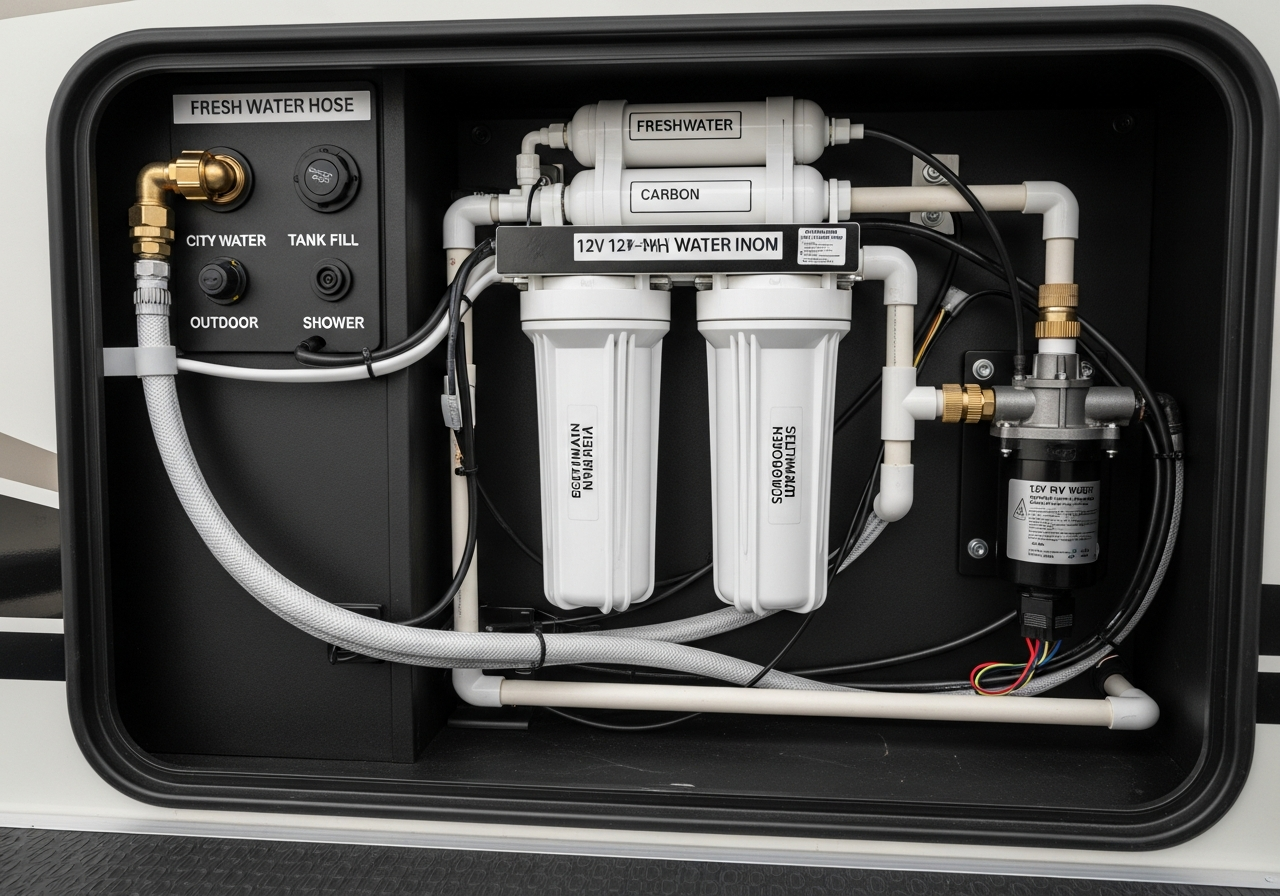
5. Winterize the Plumbing System
This is the most important part of winter storage.
Basic plumbing winterization steps
- Turn off the water heater and let it cool
- Disconnect any city water connection
- Drain the fresh water tank
- Drain and flush the gray and black tanks
- Open low-point drains
- Drain the water heater and bypass it if your RV has a bypass valve
- Use compressed air if appropriate for your system, or pump RV antifreeze through the lines
- Run antifreeze through each faucet, shower, and toilet until it appears at the fixture
- Pour antifreeze into each drain trap
Use only RV/marine antifreeze, not automotive antifreeze.
Safety tip: Follow your owner's manual for your water heater, pump, and plumbing layout. Some systems have filters, check valves, or appliances that need special handling.
6. Protect the Battery System
Batteries can discharge during storage, and a neglected battery may freeze or fail.
Battery storage steps
- Turn off all 12-volt loads and disconnect the battery if recommended
- Clean terminals and remove corrosion
- Fully charge the battery before storage
- Check electrolyte levels on serviceable lead-acid batteries
- Store in a cool, dry place if removed, or maintain with an appropriate charger if left installed
For motorized RVs, remember both the house battery bank and chassis battery.
7. Care for Tires and Suspension
Tires lose pressure in cold weather, and long stationary periods can stress them.
Tire protection checklist
- Inflate tires to the manufacturer's recommended storage or operating pressure
- Park on a firm surface
- Use tire covers if stored outdoors
- Move the RV occasionally if practical, or slightly reposition it during long storage
- Avoid leaving excessive weight in the RV
Do not rely only on visual inspection. Check pressure with a quality gauge before storage and periodically during winter.
8. Shut Down Propane and Fuel Systems Properly
Turn off propane at the tank. For motorhomes and generators, fuel considerations matter too.
Fuel and propane steps
- Close propane valves
- Inspect propane hoses and regulator area for wear or debris
- For gasoline engines or generators, consider fuel stabilizer if recommended by the manufacturer
- Run stabilized fuel through the engine or generator long enough to circulate it
- Check for fuel leaks or unusual odors before storage
Safety tip: Never store the RV with active propane appliances running.
9. Prevent Moisture and Pest Problems
Stored RVs often suffer more from condensation and rodents than from snow itself.
Moisture prevention
- Use moisture absorbers or ventilation strategies appropriate for your climate
- Avoid sealing in damp fabrics or wet gear
- Crack vents only if your cover and storage conditions allow safe ventilation
Pest prevention
- Seal obvious entry points
- Remove crumbs and trash completely
- Check basement compartments and under-sink areas
- Avoid using strong-smelling food-based baits inside living spaces unless placed carefully and safely
We recommend checking local storage rules before placing traps or deterrents.
10. Cover and Secure the RV
If using a cover, choose one designed for RV storage and proper ventilation. A poor-fitting tarp can trap moisture and abrade the finish.
Final security steps
- Close and lock all windows, vents, and compartments as appropriate
- Remove valuables and documents
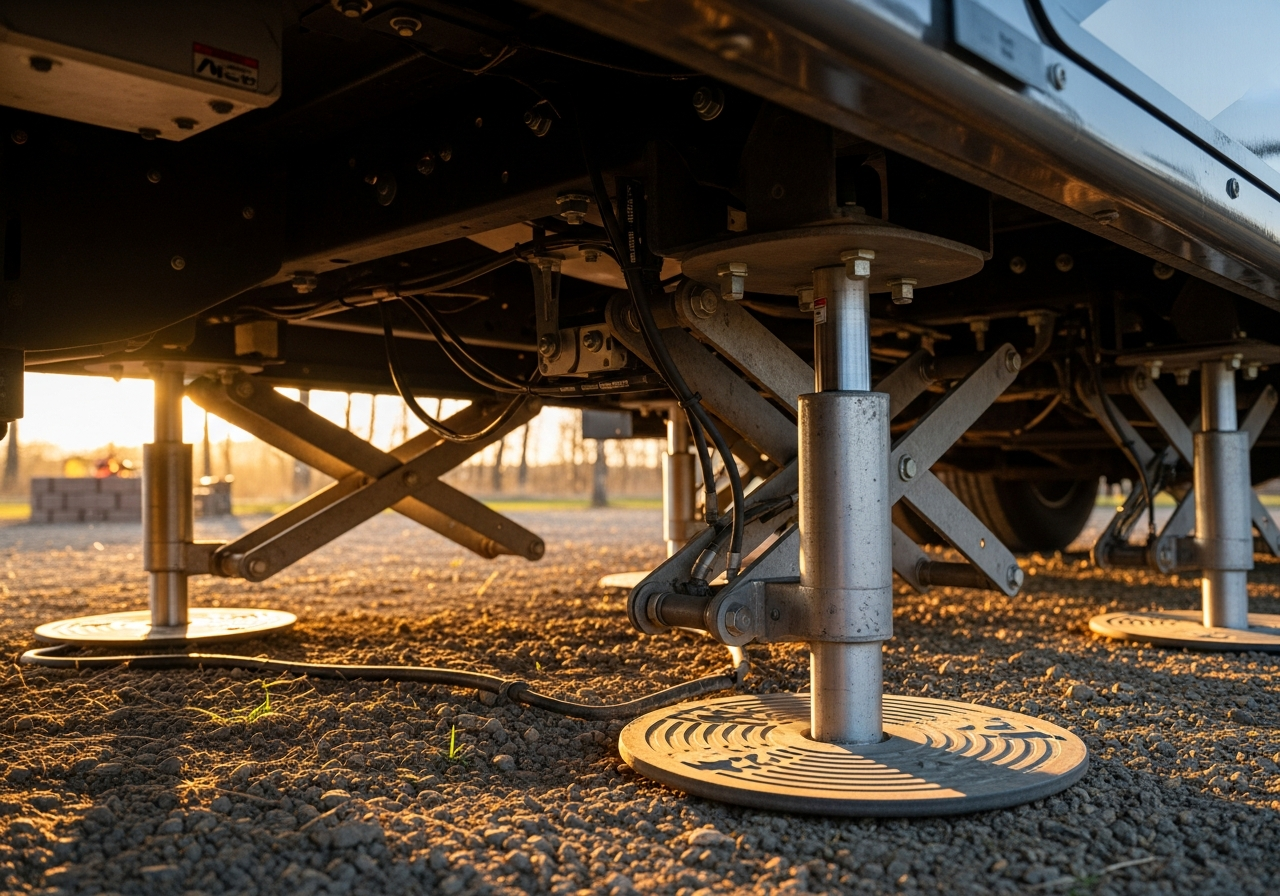
- Engage stabilizers only as directed for your RV type
- Install tire covers and RV cover if used
- Lock doors and verify storage lot requirements
Winter RV Storage Maintenance Checklist

Even in storage, your RV should not be ignored for months.
Monthly checklist
- Inspect the cover for tears or pooling water
- Check tire pressure and visible condition
- Look for signs of leaks around rooflines and windows
- Inspect for rodent droppings or nesting material
- Verify batteries are holding charge
- Confirm the RV remains level and secure after storms
Mid-winter checklist
- Recheck seals and compartment doors
- Remove heavy snow accumulation if safe to do so
- Look underneath for hanging wires, water drips, or animal activity
- Confirm moisture control products are still effective
Spring wake-up checklist
- Remove cover and inspect exterior
- Reinstall or reconnect batteries
- Flush antifreeze from plumbing
- Sanitize the fresh water system
- Check roof, seams, tires, brakes, and lights
- Test appliances and safety detectors
- Look for leaks before your first trip
Troubleshooting Common Winter Storage Problems
1. You find water inside the RV in spring
Diagnostic steps:
- Check roof seams, vents, skylights, and antenna mounts
- Inspect window seals and slide seals
- Look for staining near cabinets or wall corners
- Determine whether the moisture is a leak or condensation
Solutions:
- Reseal the failed entry point
- Dry affected materials immediately
- Improve ventilation or moisture control if condensation was the cause
- Inspect hidden areas for mold or soft wall panels
2. The battery is dead after storage
Diagnostic steps:
- Check whether the battery disconnect was used correctly
- Measure battery voltage
- Inspect for parasitic loads
- Examine terminals for corrosion
Solutions:
- Recharge with an appropriate charger
- Replace the battery if it no longer holds charge
- Disconnect batteries fully during future storage if allowed
- Use a maintenance charger where safe and practical
3. There is a bad odor inside the RV
Diagnostic steps:
- Check refrigerator, pantry, and trash areas
- Inspect drain traps and holding tanks
- Look for mold, mildew, or rodent intrusion
- Open cabinets and storage compartments to isolate the source
Solutions:
- Deep clean all surfaces
- Flush and sanitize tanks and plumbing as needed
- Remove contaminated insulation or nesting material
- Dry the RV thoroughly and improve ventilation
4. You see signs of rodents
Diagnostic steps:
- Inspect under sinks, near wiring, and in storage bays
- Look for droppings, chewed materials, or nests
- Check under the chassis for entry points
- Examine soft materials like seat bases and insulation
Solutions:
- Remove nests and sanitize affected areas safely
- Seal entry points
- Replace damaged wiring or insulation
- Increase inspection frequency during future storage
5. Plumbing leaks appear after de-winterizing
Diagnostic steps:
- Pressurize the system gradually
- Check fittings near the pump, water heater, and low-point drains
- Inspect faucets, toilet valve, and outside shower
- Look for cracked plastic fittings
Solutions:
- Tighten loose fittings carefully
- Replace cracked connectors or valves
- Recheck winterization procedure before next season
- Test all water lines before travel
Common Mistakes to Avoid
- Skipping plumbing winterization in mild climates
- Leaving food or scented items inside
- Storing with a partially discharged battery
- Ignoring roof seal maintenance
- Using the wrong antifreeze
- Covering a dirty or wet RV
- Forgetting periodic inspections during storage
Key Takeaways
- The best answer to how to store rv in winter is a full process: clean, inspect, winterize, protect, and monitor.
- Plumbing protection is the top priority because freeze damage is costly and common.
- Batteries, tires, seals, and moisture control all need attention before long-term storage.
- Monthly checks help catch leaks, pests, and battery issues before they become expensive repairs.
- A careful spring inspection is just as important as fall preparation.
With a solid winter storage routine, we can reduce off-season wear and avoid many of the repairs that frustrate RV owners every spring. A few careful hours before temperatures drop can save a lot of time, money, and stress later.