How to Maximize Every Inch of RV Storage Space

Salem Hassan founded Travelcamp RV and brings 30+ years of hands-on RV, marine, and powersports retail experience to every review.
✎ Reviewed by Salem Hassan — Founder, Travelcamp RV · 30+ years in RV, marine, and powersports retail
Why trust us
ShopRVGear articles are researched by the Searchshop Editorial team using manufacturer specs, RV trade sources, and owner feedback. We match every recommendation to your RV class — Class A, B, C, fifth-wheel, or travel trailer — because gear that works in a 40-ft motorhome often does not fit a Class B van. We may earn a commission on qualifying purchases; it does not change what we recommend.
How to Maximize Every Inch of RV Storage Space
If you have ever wondered how to maximize rv storage space, the good news is that you usually do not need a bigger rig—you need a better system. In most RVs, unused vertical space, poorly packed compartments, and duplicate gear waste more room than owners realize. We researched the most effective organization methods used by experienced RVers and combined them into a practical guide you can apply in a single weekend.
A well-organized RV does more than reduce clutter. It improves safety on the road, makes setup faster at camp, and helps protect your gear from damage caused by shifting loads, moisture, and overpacking.
Why RV Storage Feels So Limited

RV storage is challenging because every area has competing demands. Kitchen cabinets hold food and cookware, pass-through bays carry tools and outdoor gear, and bedroom spaces often double as clothing storage and utility access. On top of that, RVs move, vibrate, and face temperature swings.
That means smart RV storage is not just about fitting more items. It is about storing the right items in the right place, with weight balance, accessibility, and safety in mind.
Step-by-Step: How to Maximize Every Inch of RV Storage Space
1. Empty Everything Out and Sort by Use
Start with a full reset. Remove items from cabinets, drawers, under-bed compartments, exterior bays, and bathroom storage.
Create four categories:
- Daily-use items
- Weekly or occasional-use items
- Emergency or maintenance items
- Donate, discard, or relocate items
This step reveals what is actually taking up space. We researched common RV packing habits and found that duplicate kitchen tools, extra linens, and “just in case” items are often the biggest storage drains.
2. Measure Every Storage Area
Do not organize by guesswork. Measure:
- Cabinet height, width, and depth
- Drawer interior dimensions
- Under-bed and dinette storage openings
- Exterior compartment dimensions
- Door swing clearance and slide-out interference
Write the measurements down. This helps you choose bins, dividers, and stackable containers that actually fit.
3. Assign Zones by Activity
The easiest way to keep an RV organized is to store items where they are used.
Recommended zones include:
- Kitchen zone: cookware, utensils, dry food, dish supplies
- Bathroom zone: toiletries, towels, medications
- Bedroom zone: clothing, shoes, bedding
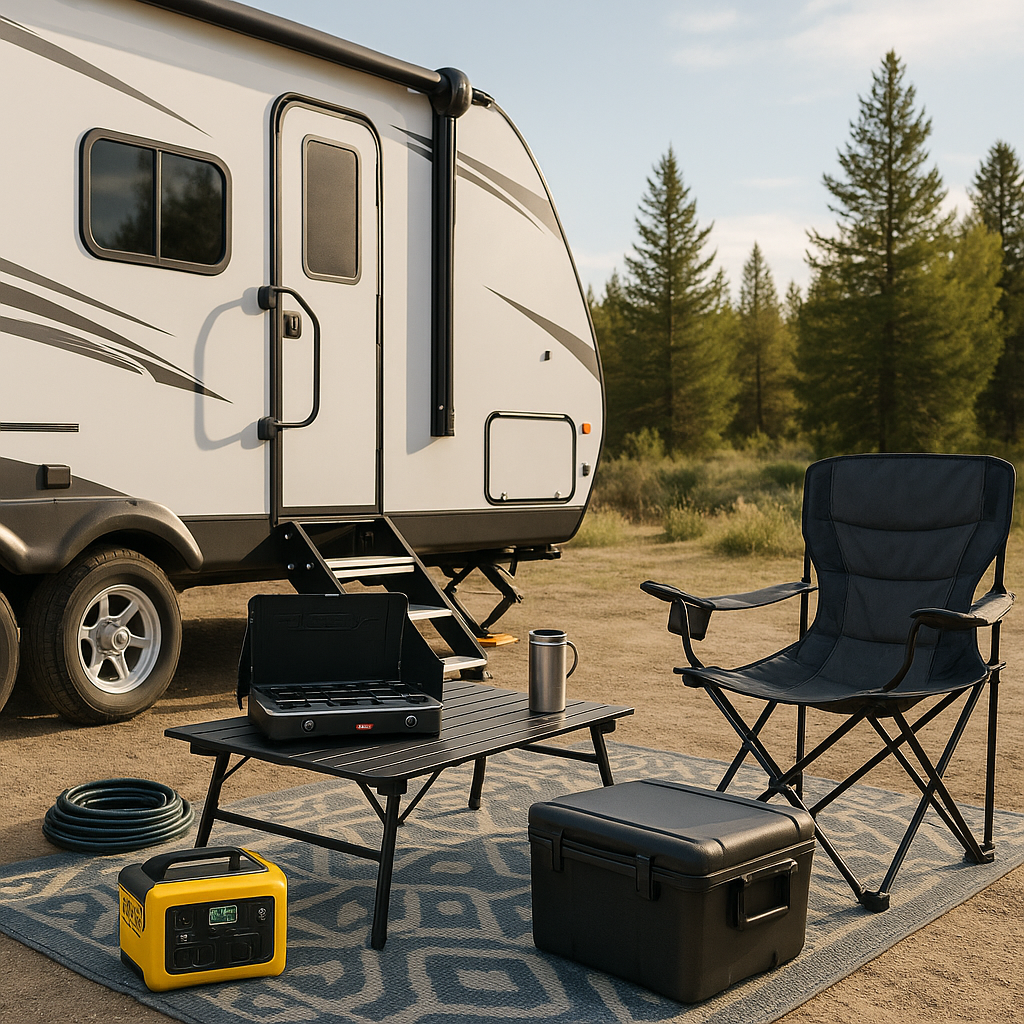
- Outdoor zone: chairs, leveling gear, grill tools, patio items
- Utility zone: hoses, cords, tools, fuses, gloves
When every item has a “home,” clutter is less likely to spread.
4. Use Vertical Space First
A lot of RV storage is wasted above existing items. Before adding more gear, look up.
Ways to use vertical space:
- Add shelf risers in cabinets
- Use stackable bins in closets and bays
- Install tension rods to create dividers
- Hang lightweight organizers on interior doors
- Use under-shelf baskets where clearance allows
Safety Tip
Avoid overloading upper cabinets with heavy items. Store heavier gear low and near the axle when possible to help maintain safe weight distribution and reduce shifting while driving.
5. Switch to Soft-Sided and Collapsible Storage
Rigid packaging wastes room. Transfer bulky or awkward items into shapes that fit your available space better.
Good candidates include:
- Extra blankets in compression bags
- Clothing in soft bins
- Dry goods in square containers
- Collapsible laundry baskets and dish tubs
- Fold-flat outdoor accessories when practical
Square and rectangular containers generally use cabinet space more efficiently than round ones.
6. Organize by Frequency of Access
Place your most-used items at the easiest reach points.
A practical access plan:
- Eye-level cabinets: daily essentials
- Lower cabinets and drawers: heavier frequently used items
- Upper shelves or rear compartments: occasional-use items
- Deep under-bed or rear storage: backup supplies and seasonal gear
This saves time and prevents constant reshuffling.
7. Secure Everything for Travel
Storage is only useful if it stays in place.
Use simple retention methods such as:
- Drawer liners to reduce sliding
- Bins with lids for loose supplies
- Dividers for pans and cutting boards
- Straps or containment bars in exterior bays
- Labeled pouches for small repair items
Safety Tip
Never store loose heavy objects where they can shift during travel. A sliding toolbox, cast-iron pan, or water-filled container can damage compartments or affect handling.
8. Reduce Packaging and Consolidate Supplies
Original packaging often wastes significant room. Consolidate where it makes sense.
Examples:
- Remove paper goods from oversized wrappers
- Store spices in compact containers
- Combine first-aid items into one kit
- Keep hardware, fuses, and adapters in labeled cases
Just remember to keep important instructions, expiration dates, and safety labels for medications and chemicals.
9. Use Hidden and Multi-Use Spaces
Many RVs have underused areas that can become efficient storage spots.
Look for:
- Under-dinette bench storage
- Bed lift compartments
- Toe-kick areas if factory design allows access
- Wall cavities with built-in organizers
- Over-cab or overhead bunk spaces
- Shower space for temporary laundry storage while parked
10. Recheck Weight Limits Before You Finish
The final step is critical. More organized storage can tempt us to carry more than the RV should.
Review:
- Cargo carrying capacity
- Axle weight distribution
- Tongue or pin weight where applicable
- Individual compartment weight limits if listed
Safety Tip
Do not place all dense gear in one side or one rear compartment. Balanced loading helps preserve tire life, braking performance, and towing stability.
Room-by-Room RV Storage Strategies

Kitchen
The kitchen usually benefits most from small changes.
Best practices
- Nest cookware and store lids vertically
- Use drawer dividers for utensils
- Store dry food in stackable containers
- Keep only one or two multi-purpose prep tools
- Use tension rods to keep items from tipping in cabinets
Bathroom
Bathrooms are tight, so moisture control matters as much as organization.
Best practices
- Use slim bins under the sink
- Roll towels instead of folding them
- Store backup toiletries in one labeled container
- Keep medications in a dry, temperature-appropriate location
Bedroom and Closet
Clothing expands quickly in RVs.
Best practices
- Rotate by season
- Use packing cubes or soft bins
- Store off-season clothing in vacuum or compression bags
- Limit shoes to the pairs you actually wear during the trip
Exterior Storage Bays
These compartments often become catch-all spaces.
Best practices
- Separate wet gear from electrical items
- Keep hoses and cords in dedicated containers
- Store tools in compact kits, not loose piles
- Put emergency gear near the compartment opening for quick access
Troubleshooting Common RV Storage Problems
1. Problem: Cabinets Become Messy After Driving
Diagnostic steps
- Check whether items are loosely stacked
- Look for slick cabinet surfaces
- See if containers are oversized or underfilled
Solutions
- Add non-slip liner
- Use smaller bins to contain categories
- Install simple dividers or tension rods
- Move fragile or top-heavy items lower
2. Problem: You Cannot Find What You Need Quickly
Diagnostic steps
- Identify whether items are mixed by category
- Check if emergency items are buried
- See whether labels are missing
Solutions
- Reassign storage by zone
- Label bins clearly
- Keep frequently used items in front
- Store repair and safety gear in one dedicated kit
3. Problem: Exterior Bays Smell Musty or Feel Damp
Diagnostic steps
- Inspect for wet hoses, rugs, or chairs
- Check compartment seals for leaks
- Look for condensation or poor airflow
Solutions
- Dry gear before storing whenever possible
- Use ventilated bins for damp-prone items
- Replace worn seals if needed
- Clean compartments and leave them open to air out when safe to do so
4. Problem: The RV Feels Overloaded Even After Organizing
Diagnostic steps
- Review what you have not used in the last few trips
- Check compartment weights
- Look for duplicate tools, cookware, or supplies
Solutions
- Remove duplicates
- Carry smaller quantities of consumables
- Weigh the RV and redistribute cargo
- Prioritize multi-use gear over single-purpose items
RV Storage Maintenance Guide
A good organization system needs regular upkeep. Otherwise, clutter slowly returns.
Monthly Maintenance Steps
- Remove items that migrated out of their assigned zones
- Wipe cabinet shelves and compartment floors
- Check for leaks, crumbs, dust, or pest signs
- Tighten loose organizers, rods, or brackets
- Review whether any supplies expired or ran out
Seasonal Storage Checklist
Spring
- Remove off-season winter gear
- Inspect for moisture damage or mildew
- Repack emergency kits and restock first aid
- Confirm hoses, cords, and leveling tools are accessible
Summer
- Reduce heavy blankets and cold-weather clothing
- Check exterior compartments for heat-sensitive items
- Reorganize outdoor gear for frequent campground use
Fall
- Rotate in layers, rain gear, and cool-weather bedding
- Consolidate summer-only gear
- Inspect seals on exterior compartments before wet weather
Winter
- Remove liquids or supplies that may freeze if the RV is stored
- Store de-winterizing or winterizing tools together
- Reduce onboard items if the RV will sit unused
- Check for rodents or nesting materials in hidden spaces
Step-by-Step Deep Organization Reset
Plan a full reset two or three times per year.
- Empty one storage zone at a time
- Clean and inspect the area
- Discard broken, expired, or unused items
- Repack by category and frequency of use
- Label containers if needed
- Recheck weight balance after major changes
Final Thoughts
Learning how to organize an RV well is less about buying more containers and more about building a repeatable system. When we researched long-term RV storage habits, the most successful setups shared the same traits: fewer duplicates, better zones, smart use of vertical space, and regular maintenance.
If you focus on access, safety, and weight balance, you can make even a small RV feel significantly more functional.
Key Takeaways
- Start by removing everything and sorting by actual use
- Measure storage spaces before reorganizing
- Use zones so each item has a clear home
- Maximize vertical space with stackable, right-sized storage
- Keep heavy items low and balanced for safer travel
- Secure loose gear to prevent shifting and damage
- Troubleshoot clutter by fixing access, labeling, and moisture issues
- Maintain your system with monthly checks and seasonal resets