RV Accessories Glossary: Every Term You Need to Know

Salem Hassan founded Travelcamp RV and brings 30+ years of hands-on RV, marine, and powersports retail experience to every review.
✎ Reviewed by Salem Hassan — Founder, Travelcamp RV · 30+ years in RV, marine, and powersports retail
Why trust us
ShopRVGear articles are researched by the Searchshop Editorial team using manufacturer specs, RV trade sources, and owner feedback. We match every recommendation to your RV class — Class A, B, C, fifth-wheel, or travel trailer — because gear that works in a 40-ft motorhome often does not fit a Class B van. We may earn a commission on qualifying purchases; it does not change what we recommend.
RV Accessories Glossary: Every Term You Need to Know
If you have ever shopped for hoses, surge protectors, leveling gear, or towing equipment, you already know how confusing rv accessories glossary terms can be. We researched the most common language used in RV gear guides, owner manuals, and campground hookups so this glossary is practical, not overwhelming. Whether you are a new camper or a seasoned traveler, understanding these terms helps us choose the right accessories, use them safely, and maintain them with confidence.
Why RV Accessory Terms Matter

RV accessories are not just convenience items. Many of them affect safety, sanitation, electrical protection, towing stability, and campsite setup. When we understand the vocabulary, we can:
- Buy compatible gear the first time
- Avoid hookup mistakes
- Troubleshoot problems faster
- Maintain equipment correctly
- Travel more safely and efficiently
RV Accessories Glossary Terms
30-Amp Service
A 30-amp RV electrical connection uses a three-prong plug and typically provides 120 volts of power. It is common on smaller travel trailers and many mid-size RVs.
50-Amp Service
A 50-amp connection uses a four-prong plug and provides more electrical capacity than 30-amp service. Larger fifth wheels and motorhomes often require it for multiple air conditioners and heavy appliance loads.
Adapter
An adapter lets us connect different plug types, hose sizes, or fitting styles. A common example is a 30-to-50-amp dogbone adapter.
Anode Rod
Used in many RV water heaters, an anode rod helps reduce tank corrosion by attracting corrosive elements in the water. It should be inspected regularly and replaced when heavily worn.
Battery Disconnect Switch
This switch cuts power from the RV battery bank to reduce drain during storage or maintenance.
Black Tank
The holding tank that collects toilet waste. Black tank accessories often include treatment chemicals, flush wands, sewer hoses, and tank rinser systems.
Brake Controller
A towing accessory installed in the tow vehicle that controls electric trailer brakes. Proper adjustment improves braking stability and stopping distance.
Bubble Level
A simple leveling tool used to check whether the RV is sitting evenly side to side and front to back.
Chock
A wheel chock is placed against a tire to prevent the RV from rolling. We recommend using chocks before unhitching or leveling.
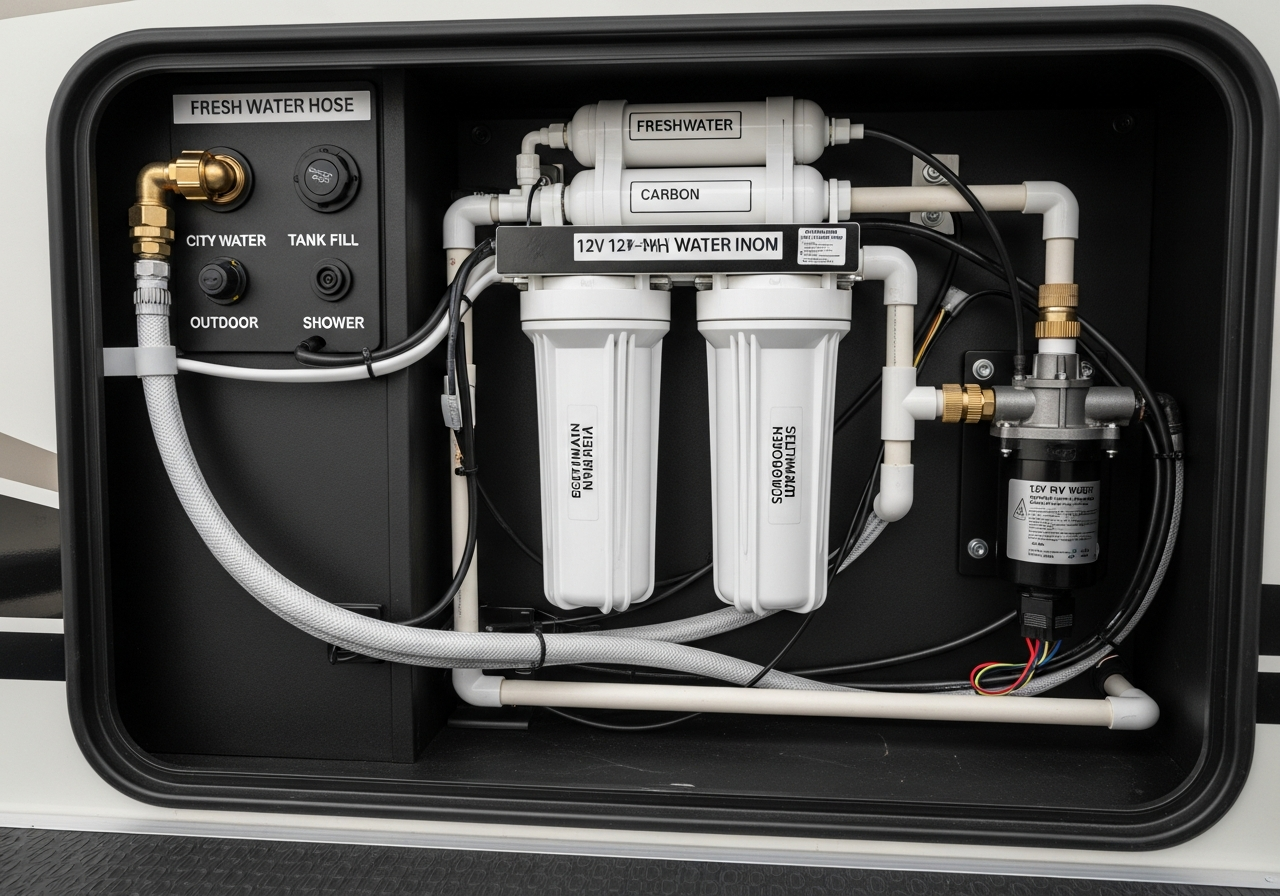
City Water Connection
This is the inlet where we connect a potable water hose to campground water service. A water pressure regulator is usually recommended here.
Coax Cable
A cable used for campground cable TV or certain antenna connections.
Converter
An RV converter changes 120-volt AC shore power into 12-volt DC power to run lights, fans, and other low-voltage systems while charging batteries.
Dogbone Adapter
A short, heavy-duty electrical adapter with different plug ends. It helps connect an RV plug to a campground pedestal with a different receptacle type.
Fresh Water Tank
The onboard tank that stores clean water for sinks, showers, and toilets when we are not connected to city water.
Gray Tank
The holding tank for wastewater from sinks and showers. It fills faster than many new RV owners expect.
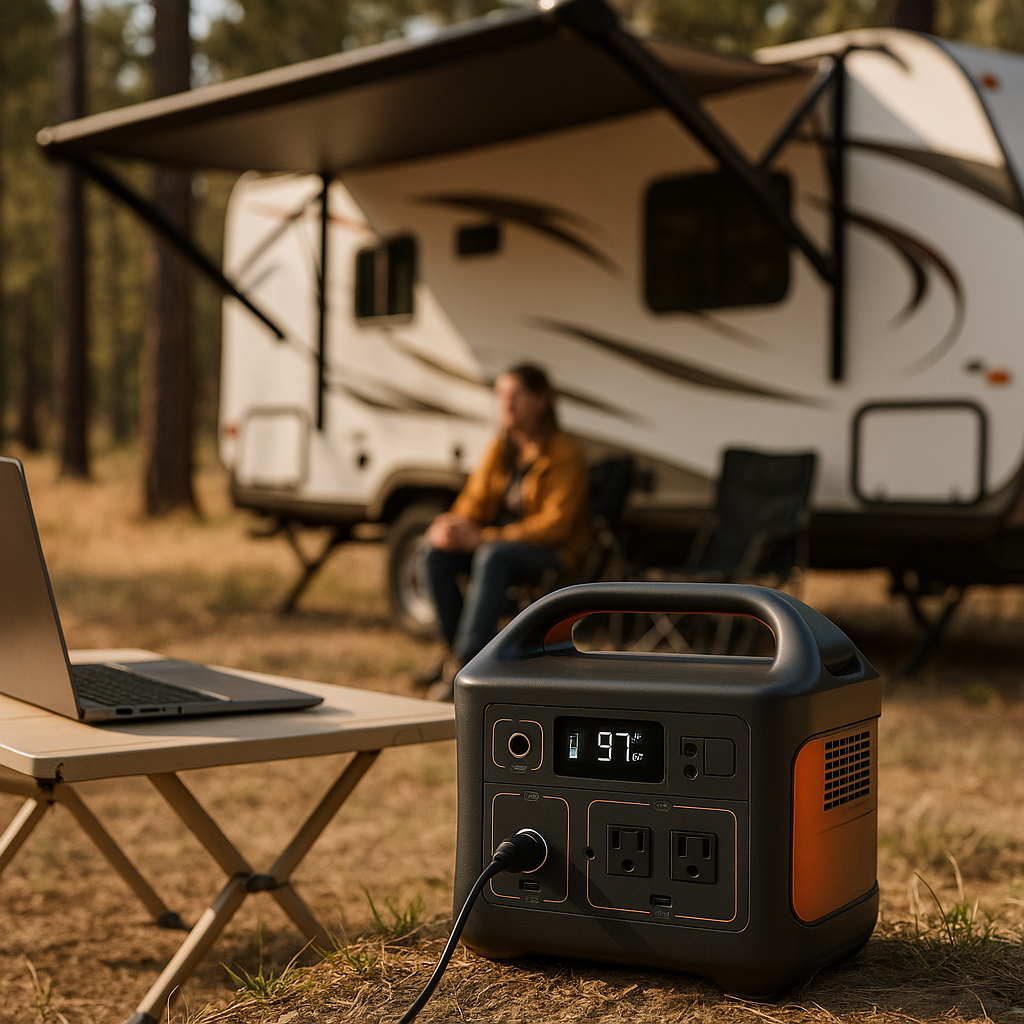
Inverter
An inverter changes 12-volt DC battery power into household-style 120-volt AC power for selected appliances and outlets.
Leveling Blocks
Stackable blocks placed under tires or stabilizer contact points to help level the RV on uneven campsites.
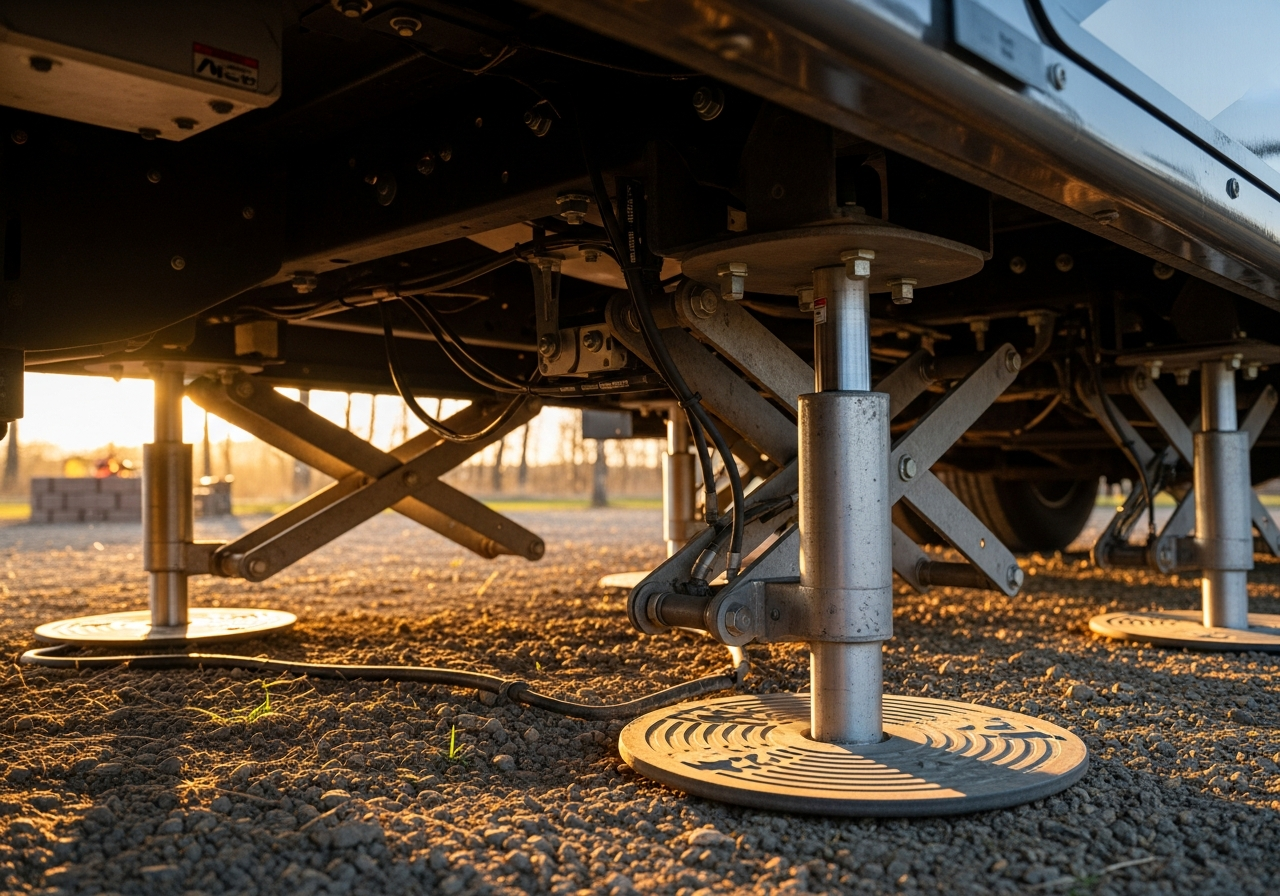
Leveling Jack
A jack used to raise and stabilize the RV during setup. Some systems are manual, electric, or hydraulic.
Potable Water Hose
A drinking-water-safe hose used for fresh water hookups. It should be kept separate from sewer equipment.
Pressure Regulator
A water pressure regulator reduces incoming campground water pressure to help protect RV plumbing from leaks or burst fittings.
Sewer Elbow
A clear or angled fitting attached to the end of a sewer hose to improve drainage and allow us to see when tanks are fully rinsed.
Sewer Hose Support
A support cradle that keeps the sewer hose sloped downward for smoother waste flow.
Shore Power
Shore power means electricity supplied from an external source, such as a campground pedestal or home outlet.
Stabilizer Jack
Unlike leveling jacks, stabilizer jacks are mainly meant to reduce movement after the RV is already level. They should not usually be used to lift the RV unless the manufacturer says otherwise.
Surge Protector
An electrical protection device that helps defend the RV from voltage spikes, wiring faults, and some pedestal issues.
TPMS
A tire pressure monitoring system tracks tire pressure and often temperature in real time, helping us catch leaks or overheating before they become dangerous.
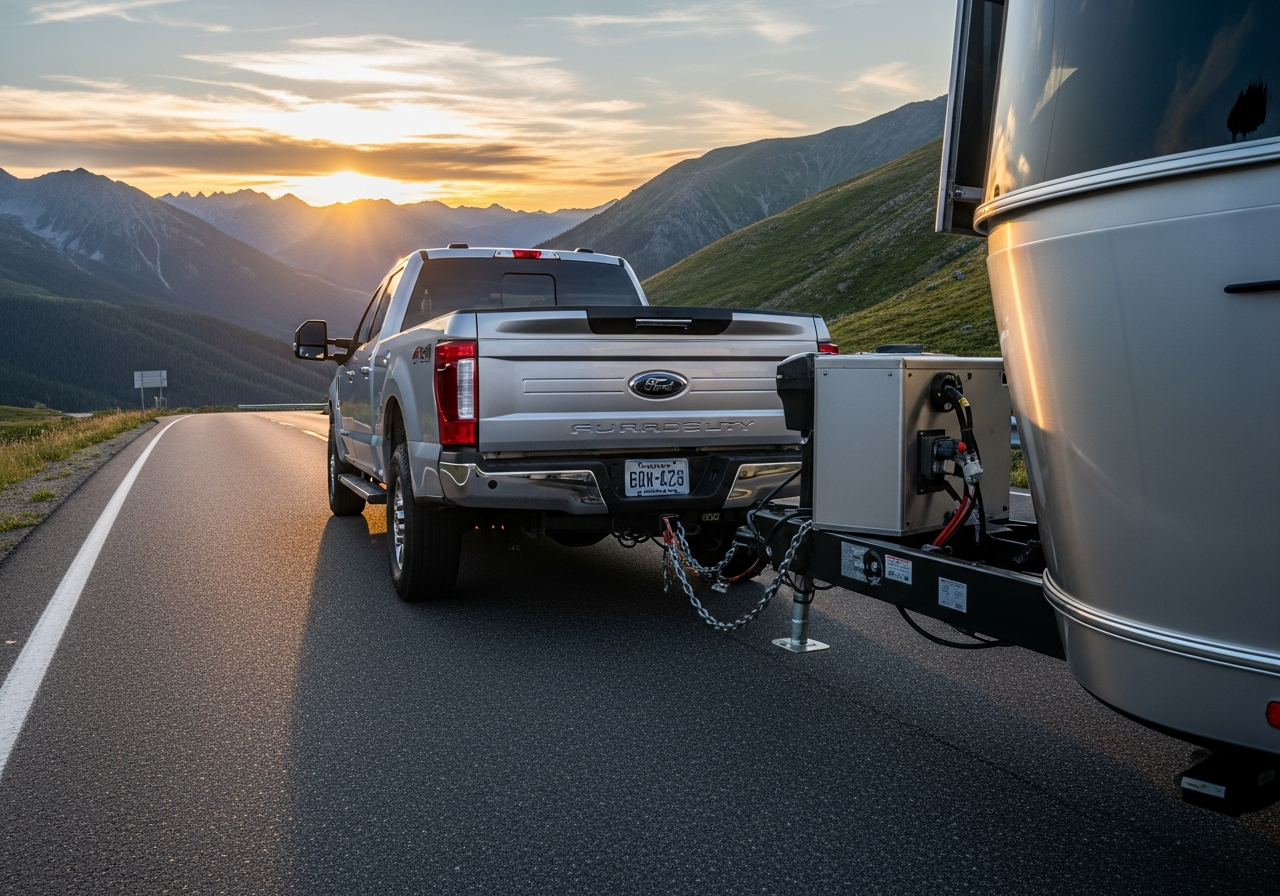
Weight Distribution Hitch
A hitch system that redistributes trailer tongue weight more evenly across the tow vehicle and trailer axles for improved control.
How to Use This Glossary When Choosing Accessories

Step-by-Step Buying Process
Identify your RV type and hookups. Check whether your RV uses 30-amp or 50-amp service, what tank capacities it has, and whether it needs a specific hitch setup.
Read the owner manual first. We recommend confirming electrical limits, jack use, water pressure guidance, and towing requirements before buying accessories.
Match accessories to the system. Choose hoses for potable water, sewer fittings for waste systems, and adapters that match plug and receptacle types exactly.
Prioritize safety-related gear. Focus first on wheel chocks, a pressure regulator, electrical protection, brake control compatibility, and leveling tools.
Confirm storage and maintenance needs. Some accessories need seasonal draining, cleaning, battery care, or replacement schedules.
Safety Tips
- Never assume all campground power pedestals are wired correctly.
- Never use a garden hose for drinking water supply.
- Chock wheels before unhitching.
- Do not crawl under an RV supported only by jacks unless proper support procedures are followed.
- Keep fresh water and sewer gear stored separately.
Troubleshooting Common RV Accessory Problems
1. No Power at the Campsite
Diagnostic steps:
- Check whether the pedestal breaker is on.
- Verify your plug type matches the outlet or adapter.
- Inspect the surge protector for fault warnings.
- Check the RV main breaker and converter status.
Solutions:
- Reset the pedestal breaker if allowed by campground rules.
- Replace the incorrect adapter with the proper dogbone or plug type.
- If the surge protector reports reverse polarity or open ground, do not connect until the campground addresses it.
- Reset internal breakers and inspect for overloaded circuits.
2. Weak or Leaking Water Connection
Diagnostic steps:
- Inspect the hose washer and fittings.
- Confirm the pressure regulator is installed correctly.
- Look for kinks in the potable water hose.
- Check for leaks at the city water inlet.
Solutions:
- Replace worn washers.
- Install or adjust the regulator properly.
- Straighten or replace damaged hose sections.
- Tighten fittings gently; overtightening can crack plastic inlets.
3. Sewer Hose Not Draining Properly
Diagnostic steps:
- Check whether the hose has a continuous downward slope.
- Inspect for a low spot trapping waste.
- Verify the tank valve is fully open.
- Look for buildup in the elbow or hose.
Solutions:
- Use a sewer hose support.
- Reposition the hose to remove dips.
- Open the valve fully.
- Rinse the system thoroughly after dumping.
4. RV Feels Unstable After Setup
Diagnostic steps:
- Confirm the RV is level.
- Check whether wheel chocks are installed.
- Inspect stabilizer jack contact points.
- Make sure stabilizers are snug but not overextended.
Solutions:
- Re-level using blocks or leveling jacks.
- Add or reposition chocks.
- Place pads or blocks under stabilizer feet if needed.
- Tighten stabilizers evenly to reduce bounce.
RV Accessory Maintenance Guide
Proper care extends the life of accessories and helps prevent expensive failures.
How to Maintain Water Accessories
- Disconnect and drain the potable water hose.
- Inspect fittings and washers for cracks.
- Sanitize hoses and filters as directed by the manufacturer.
- Store fresh water gear in a clean, separate bin.
Safety tip: Never store sewer equipment with drinking water accessories.
How to Maintain Electrical Accessories
- Unplug shore power safely by turning off the pedestal breaker first when possible.
- Inspect plugs, adapters, and surge protectors for heat damage or corrosion.
- Clean contacts only as recommended by the manufacturer.
- Store cords loosely to avoid internal wire damage.
Safety tip: If you see melted plastic, burn marks, or loose blades, replace the accessory immediately.
How to Maintain Sewer Accessories
- Dump tanks in the correct order for your setup, commonly black first and gray second.
- Rinse the sewer hose and elbow thoroughly.
- Allow components to drain fully.
- Check seals, caps, and hose ends before storage.
Safety tip: Wear disposable gloves and wash hands thoroughly after handling waste equipment.
Seasonal RV Accessory Checklists
Spring Checklist
- Inspect potable water hoses, filters, and pressure regulator
- Check anode rod condition if equipped
- Test surge protector and shore power cord
- Inspect wheel chocks, leveling blocks, and stabilizers
- Verify TPMS sensors and tire pressures
- Flush and sanitize fresh water systems
Summer Checklist
- Monitor power loads during heavy air-conditioner use
- Check hose exposure to sun damage
- Inspect sewer hose for soft spots or cracks
- Confirm battery charging performance
- Recheck hitch and brake controller settings before long trips
Fall Checklist
- Drain and clean hoses before colder nights
- Inspect weather seals around stored accessories
- Check adapters and plugs for corrosion
- Clean and dry sewer supports and fittings
- Review storage bins for contamination or moisture
Winter Checklist
- Disconnect, drain, and store water accessories to prevent freeze damage
- Use the battery disconnect switch if storing the RV
- Protect cords and hoses from rodents and moisture
- Remove and inspect removable accessories before long-term storage
- Confirm tanks and lines are winterized according to the RV manufacturer guidance
Common Mistakes to Avoid
Mixing Up Leveling and Stabilizing
Many owners use these terms interchangeably, but they are not always the same. Level first, then stabilize.
Ignoring Water Pressure
Campground pressure can be much higher than RV plumbing is designed to handle. A regulator is a basic protective accessory.
Using the Wrong Electrical Adapter
Not every adapter solves every hookup problem. Matching amperage and receptacle type matters.
Overlooking Routine Inspections
A cracked washer, worn anode rod, or heat-damaged plug can become a much bigger problem if ignored.
Key Takeaways
- RV accessories include safety, utility, sanitation, and setup equipment.
- Understanding glossary terms helps us choose compatible gear and avoid common mistakes.
- The most important terms to know often involve power, water, tanks, leveling, and towing.
- Troubleshooting starts with simple checks: fit, connection, slope, power source, and visible wear.
- Seasonal maintenance keeps accessories reliable and reduces the risk of leaks, electrical issues, and storage damage.
- We recommend using your owner manual alongside this glossary for RV-specific limits and procedures.