How to Organize Your RV Storage Compartments Like a Pro

Salem Hassan founded Travelcamp RV and brings 30+ years of hands-on RV, marine, and powersports retail experience to every review.
✎ Reviewed by Salem Hassan — Founder, Travelcamp RV · 30+ years in RV, marine, and powersports retail
Why trust us
ShopRVGear articles are researched by the Searchshop Editorial team using manufacturer specs, RV trade sources, and owner feedback. We match every recommendation to your RV class — Class A, B, C, fifth-wheel, or travel trailer — because gear that works in a 40-ft motorhome often does not fit a Class B van. We may earn a commission on qualifying purchases; it does not change what we recommend.
How to Organize Your RV Storage Compartments Like a Pro
If you’ve been wondering how to organize RV storage efficiently, the good news is that it does not require a full remodel or expensive upgrades. With the right system, we can turn cluttered compartments into safe, easy-to-access storage that supports better weight distribution, faster setup, and less frustration on the road. We researched the most effective RV storage methods and combined them into a practical process you can use whether you travel on weekends or live in your rig full-time.
Why RV Storage Organization Matters

Well-organized RV compartments do more than look neat. They help us:
- Find gear quickly at campsites and rest stops
- Reduce shifting cargo while driving
- Protect hoses, tools, and camping equipment from damage
- Improve weight balance and avoid overloading one side
- Spot leaks, pests, or maintenance issues earlier
A professional-level storage system is really about safety and efficiency. When every item has a designated place, loading and unloading becomes simpler and daily RV life feels less chaotic.
Step-by-Step: How to Organize RV Storage Efficiently
1. Empty Every Storage Compartment
Start by removing everything from exterior bays, pass-through storage, under-bed areas, and interior cabinets that support travel gear.
This gives us a clean slate and helps reveal problems such as:
- Water intrusion
- Rust or corrosion
- Broken latches
- Cracked bins
- Forgotten duplicate items
Safety tip
Wear gloves when emptying lower compartments, especially if tools, leveling blocks, chemicals, or sharp hardware are stored together.
2. Sort Gear Into Clear Categories
Once everything is out, group items by function instead of by where they used to fit.
Common RV storage categories include:
- Water and sewer gear
- Electrical cords and adapters
- Tools and repair supplies
- Outdoor living items
- Cooking overflow and pantry backup
- Emergency and roadside equipment
- Cleaning supplies
- Seasonal gear
This step helps us see what we actually carry and what no longer earns its space.
3. Remove Duplicates and Low-Use Items
One of the fastest ways to gain storage space is to cut down on “just in case” clutter. We recommend keeping only what supports your travel style, climate, and RV setup.
Ask these questions:
- Have we used this in the last three trips?
- Is this item essential for safety or repairs?
- Do we already have another version of it?
- Can a smaller or multipurpose item replace it?
Be realistic. Heavy, rarely used gear takes up space and can affect payload.
4. Assign Compartments by Priority and Weight
This is where organization becomes strategic.
Store items based on two rules:
- Frequently used gear should be easiest to reach.
- Heavy gear should be stored low and near the RV’s axle line when possible.
A smart layout often looks like this:
- Front or easy-access bay: leveling blocks, gloves, flashlight, wheel chocks
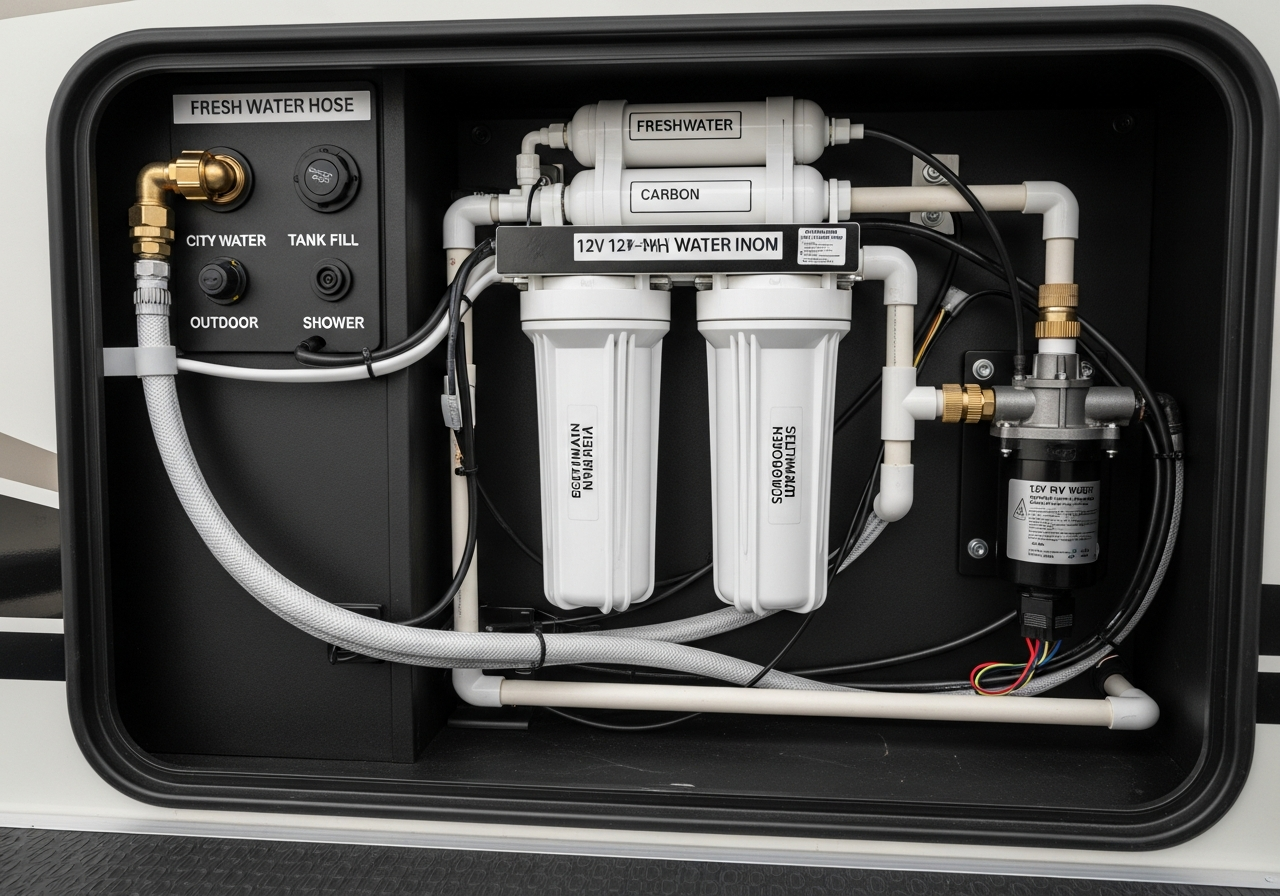
- Utility compartment: fresh water hose, sewer hose, pressure regulator, fittings
- Central lower compartment: tools, jack accessories, spare parts
- Rear or less accessible areas: seasonal gear, backup supplies, rarely used items
Safety tip
Do not place loose heavy tools or metal equipment in overhead cabinets or high shelves. In sudden stops, those items can shift and cause damage or injury.
5. Use Bins, Bags, and Labels
Loose gear creates instant disorder. Containing items is the key to staying organized long-term.
We recommend using:
- Stackable bins for grouped supplies
- Soft zip bags for hoses and cords
- Clear containers for small parts
- Waterproof labels for quick identification
- Separate bins for clean and dirty gear
Label by category, not by random item lists. For example, “Electrical,” “Water Setup,” and “Emergency Tools” are more useful than overly detailed labels.
6. Separate Clean Systems From Dirty Systems
One of the most important RV storage habits is keeping sanitation-related gear away from everything else.
Always separate:
- Sewer hoses and fittings
- Fresh water hoses and filters
- Cleaning chemicals
- Food-related supplies
If possible, use sealed bins or dedicated compartments for anything that could leak, smell, or contaminate other items.
Safety tip
Never store fuel, propane cylinders not designed for interior storage, or flammable chemicals in enclosed interior living spaces. Follow manufacturer guidance and local safety regulations.
7. Secure Items to Prevent Shifting
Even organized compartments can become a mess after one rough road if nothing is restrained.
Use simple retention methods such as:
- Non-slip liners
- Bungee cords
- Cargo nets
- Adjustable bars
- Velcro straps for hoses and extension cords
The goal is to prevent movement without making access difficult.
8. Create a Loading Map
Once your system works, document it. A simple phone note or printed diagram can save time before every trip.
Your loading map should note:
- What goes in each compartment
- Which items must stay upright
- Which bins are seasonal
- Approximate weight of heavy items
This is especially helpful if more than one person packs the RV.
Best Practices for Different RV Storage Areas

Pass-Through Basement Storage
This area works best for long or bulky items such as folding chairs, mats, and storage totes. Keep the center clear enough to slide items in and out without unloading everything else.
Utility Compartments
Dedicate these to campsite hookup items only. Keep water and sewer supplies separated inside the compartment with individual bins or divided containers.
Interior Cabinets and Under-Bed Storage
Use these spaces for lighter items, soft goods, backup pantry supplies, and weather-sensitive gear. Avoid overloading bed platforms or cabinet hinges.
Exterior Side Compartments
These are ideal for smaller categories such as tool kits, electrical adapters, gloves, and maintenance supplies. Use one category per compartment whenever possible.
Troubleshooting Common RV Storage Problems
1. Problem: Compartments Become Messy After Every Drive
Diagnostic steps:
- Check whether items are stored loose.
- Look for oversized bins with empty space inside.
- Inspect for slick compartment floors that allow sliding.
Solutions:
- Add non-slip liner under bins.
- Use smaller containers so contents cannot tumble around.
- Strap down heavy or awkward items.
- Place the most movement-prone gear in fitted bags or crates.
2. Problem: We Cannot Find What We Need Quickly
Diagnostic steps:
- Count how many categories are mixed in each bay.
- Check whether bins are labeled clearly.
- Notice whether frequently used items are buried behind seasonal gear.
Solutions:
- Reduce each compartment to one main purpose.
- Label all bins on the front and top.
- Move daily-use items to the most accessible locations.
- Keep an inventory list on your phone.
3. Problem: One Side of the RV Feels Overloaded
Diagnostic steps:
- Review where heavy tools, grills, generators, or spare parts are stored.
- Compare left and right side loading.
- Check actual axle and cargo ratings if available.
Solutions:
- Redistribute heavy gear closer to the center of the RV.
- Remove unnecessary dense items.
- Avoid stacking all tools or liquids in one compartment.
- We recommend using a scale-based approach if you routinely travel near capacity.
4. Problem: Compartments Smell Musty or Damp
Diagnostic steps:
- Inspect seals, doors, and compartment corners for moisture.
- Check hoses, wet mats, and recently used gear.
- Look for mildew on fabric bags or cardboard packaging.
Solutions:
- Dry all gear before storing.
- Replace cardboard with plastic bins.
- Clean compartment surfaces and inspect weather seals.
- Add ventilation or moisture control where appropriate.
5. Problem: Hookup Gear Gets Cross-Contaminated
Diagnostic steps:
- Check whether fresh water and sewer gear share space.
- Look for leaking fittings or unsealed containers.
- Inspect gloves and cleaning cloths stored with potable water parts.
Solutions:
- Use separate, clearly labeled bins.
- Store potable water items in sealed clean containers.
- Bag dirty fittings immediately after use.
- Sanitize the compartment if contamination occurs.
Maintenance Guide: Keep Your Storage System Working
A good organization system needs regular upkeep. Here is a simple maintenance routine.
Seasonal RV Storage Organization Checklist
Spring Checklist
- Empty compartments and vacuum debris.
- Inspect seals, hinges, and latch hardware.
- Check for winter moisture damage or pests.
- Repack only the gear needed for the upcoming travel season.
- Confirm emergency items are complete and current.
Summer Checklist
- Remove heat-sensitive items that should not bake in exterior compartments.
- Check water gear for leaks, cracks, or worn washers.
- Reassess outdoor gear volume after frequent trips.
- Clean sand, dirt, and grass from pass-through bays.
Fall Checklist
- Rotate out summer-only gear.
- Add cold-weather supplies such as insulated hoses or gloves if needed.
- Inspect compartment weatherstripping before wet weather.
- Review weight and remove unused items collected during the season.
Winter Checklist
- Remove liquids or chemicals that should not freeze.
- Dry hoses and storage bins thoroughly.
- Check for rodent entry points.
- Leave compartments clean, dry, and lightly ventilated if your RV setup allows.
Step-by-Step Monthly Maintenance Routine
1. Open and inspect each compartment
Look for leaks, loose fasteners, odors, and signs of shifting.
2. Wipe down bins and surfaces
Dust, road grime, and moisture build up quickly in exterior bays.
3. Recoil cords and hoses properly
Neat coils reduce kinks, save space, and make setup easier.
4. Confirm labels are readable
Replace faded or peeling labels before they become useless.
5. Recheck weight placement
If you have added supplies, tools, or bulk food, make sure heavy items are still balanced.
Pro Tips for Long-Term Success
Keep a one-in, one-out rule
When new gear comes aboard, remove something that serves the same purpose.
Store by task, not by item type alone
A campsite setup bin is often more useful than scattering related items across multiple compartments.
Use the easiest compartment for the first 10 minutes of arrival
Put wheel chocks, gloves, leveling gear, and hookup essentials where we can reach them immediately.
Reevaluate after every trip
If a bin was never touched, it may be carrying dead weight. If an item was annoying to access, it needs a better home.
Key Takeaways
- Organizing RV storage efficiently starts with emptying everything and sorting by category.
- Store heavy items low and near the center of the RV when possible.
- Keep frequently used gear in the easiest-to-reach compartments.
- Separate fresh water, sewer, chemical, and food-related supplies.
- Use labeled bins, straps, and non-slip liners to prevent shifting.
- Troubleshoot recurring mess by improving containment and reducing mixed-use compartments.
- Maintain the system with monthly inspections and seasonal reset checklists.
A professional RV storage setup is less about buying more containers and more about creating a repeatable system. When we organize with access, safety, and weight balance in mind, every trip gets easier.