RV Safety Essentials: 12 Must-Have Items Every Camper Needs

Salem Hassan founded Travelcamp RV and brings 30+ years of hands-on RV, marine, and powersports retail experience to every review.
✎ Reviewed by Salem Hassan — Founder, Travelcamp RV · 30+ years in RV, marine, and powersports retail
Why trust us
ShopRVGear articles are researched by the Searchshop Editorial team using manufacturer specs, RV trade sources, and owner feedback. We match every recommendation to your RV class — Class A, B, C, fifth-wheel, or travel trailer — because gear that works in a 40-ft motorhome often does not fit a Class B van. We may earn a commission on qualifying purchases; it does not change what we recommend.
RV Safety Essentials: 12 Must-Have Items Every Camper Needs
When it comes to safer travel, rv safety essentials must have gear should never be an afterthought. Whether we camp on weekends or take long cross-country trips, the right safety equipment helps us prevent small problems from becoming expensive or dangerous emergencies. We researched the most important items every RV owner should carry, along with practical setup tips, troubleshooting advice, and seasonal maintenance steps that make a real difference.
RV safety is about more than one fire extinguisher or a basic first-aid kit. It includes prevention, visibility, tire protection, weather awareness, and having the right tools when something goes wrong.
Why RV Safety Gear Matters

RVs combine the challenges of driving a large vehicle with the responsibilities of managing propane, electrical systems, water systems, and changing weather conditions. That means a safer setup depends on layers of protection.
We recommend building your RV safety plan around four goals:
- Prevent fires, leaks, and mechanical failures.
- Improve visibility and control while driving and parking.
- Prepare for medical, roadside, and weather emergencies.
- Maintain safety gear so it works when we need it most.
The 12 Must-Have RV Safety Essentials
1. Fire Extinguishers
Every RV should have at least one rated extinguisher near the main exit, and many campers benefit from a second unit in the bedroom or exterior storage area.
Why it matters: RV fires can spread quickly because of compact layouts, propane appliances, and electrical systems.
What to look for:
- ABC-rated extinguisher
- Easy-to-read pressure gauge
- Secure mounting bracket
- Size appropriate for RV use
Safety tip: Never store an extinguisher where a fire could block access to it.
2. Smoke, Carbon Monoxide, and Propane Detectors
These detectors are some of the most important silent protectors in an RV.
Why it matters: Smoke, carbon monoxide, and propane leaks can become life-threatening before we notice them.
Best practice: Replace batteries on schedule and test alarms before every trip.
3. First-Aid Kit
A well-stocked first-aid kit should cover cuts, burns, sprains, bug bites, and common travel-related needs.
Recommended contents:
- Bandages and gauze
- Antiseptic wipes
- Burn cream
- Tweezers and scissors
- Pain relievers
- Gloves
- Emergency contact list
4. Tire Pressure Monitoring System or Tire Gauge
Tire issues are among the most common RV safety concerns.
Why it matters: Underinflated or overheating tires can lead to blowouts, poor handling, and damage to the RV.
We recommend: Monitoring pressure before departure and during travel, especially for trailers and motorhomes carrying heavy loads.
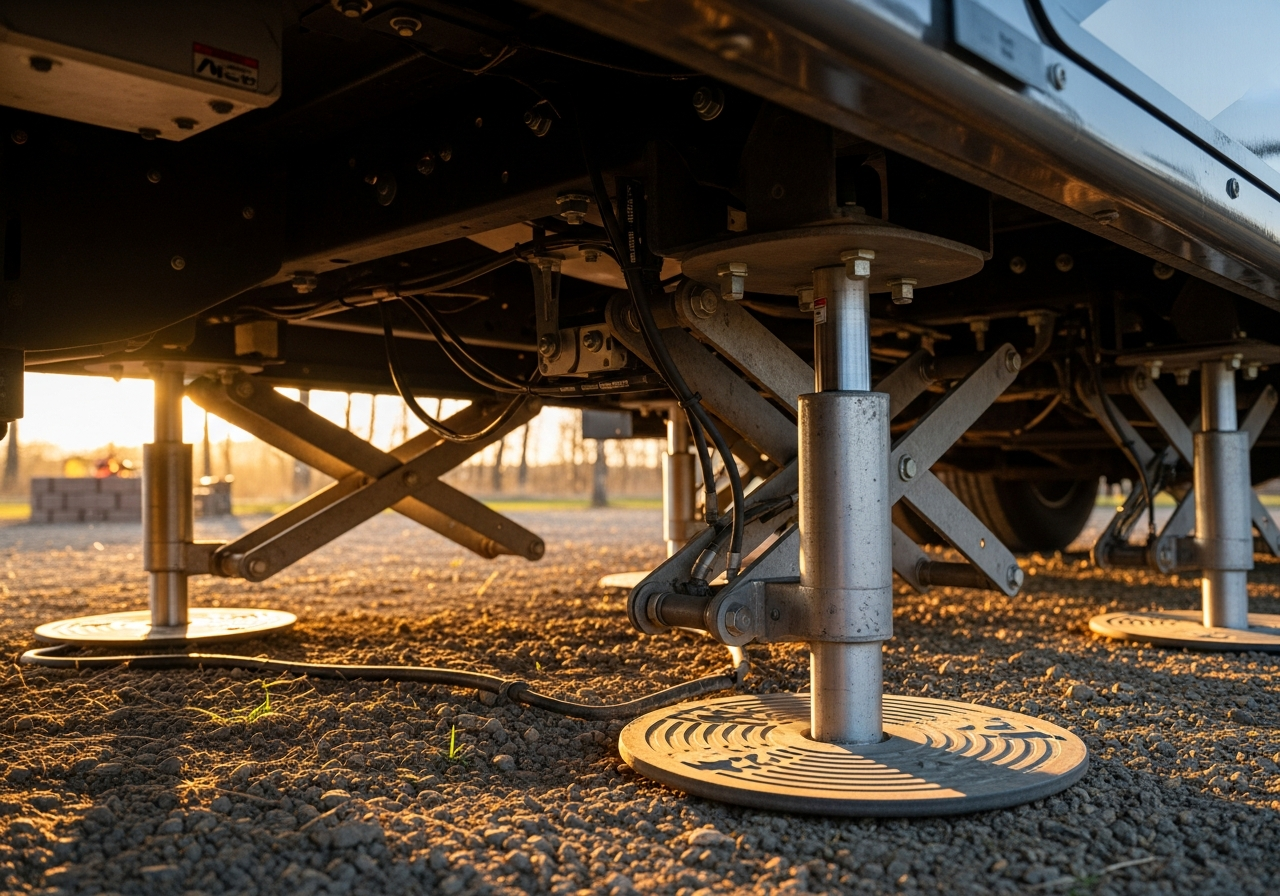
5. Wheel Chocks and Leveling Support
Wheel chocks help prevent unwanted movement when parked.
Why it matters: A rolling RV can cause injuries, damage hookups, or create dangerous instability.
Safety tip: Chock wheels before unhitching a trailer and before working around the RV.
6. Surge Protector or EMS
Campground power can be inconsistent. A surge protector or electrical management system helps guard your RV from voltage problems.
Why it matters: Poor shore power can damage appliances, air conditioners, converters, and electronics.
7. Emergency Roadside Kit
A complete roadside kit supports minor repairs and visibility during breakdowns.
Useful items include:
- Reflective triangles or road flares
- Flashlight or headlamp
- Work gloves
- Basic hand tools
- Duct tape
- Jumper support gear if appropriate
- Rain poncho
8. Portable Air Compressor
A portable air compressor helps maintain proper tire pressure on the road and at camp.
Why it matters: Correct pressure improves tire life, handling, braking, and fuel efficiency.
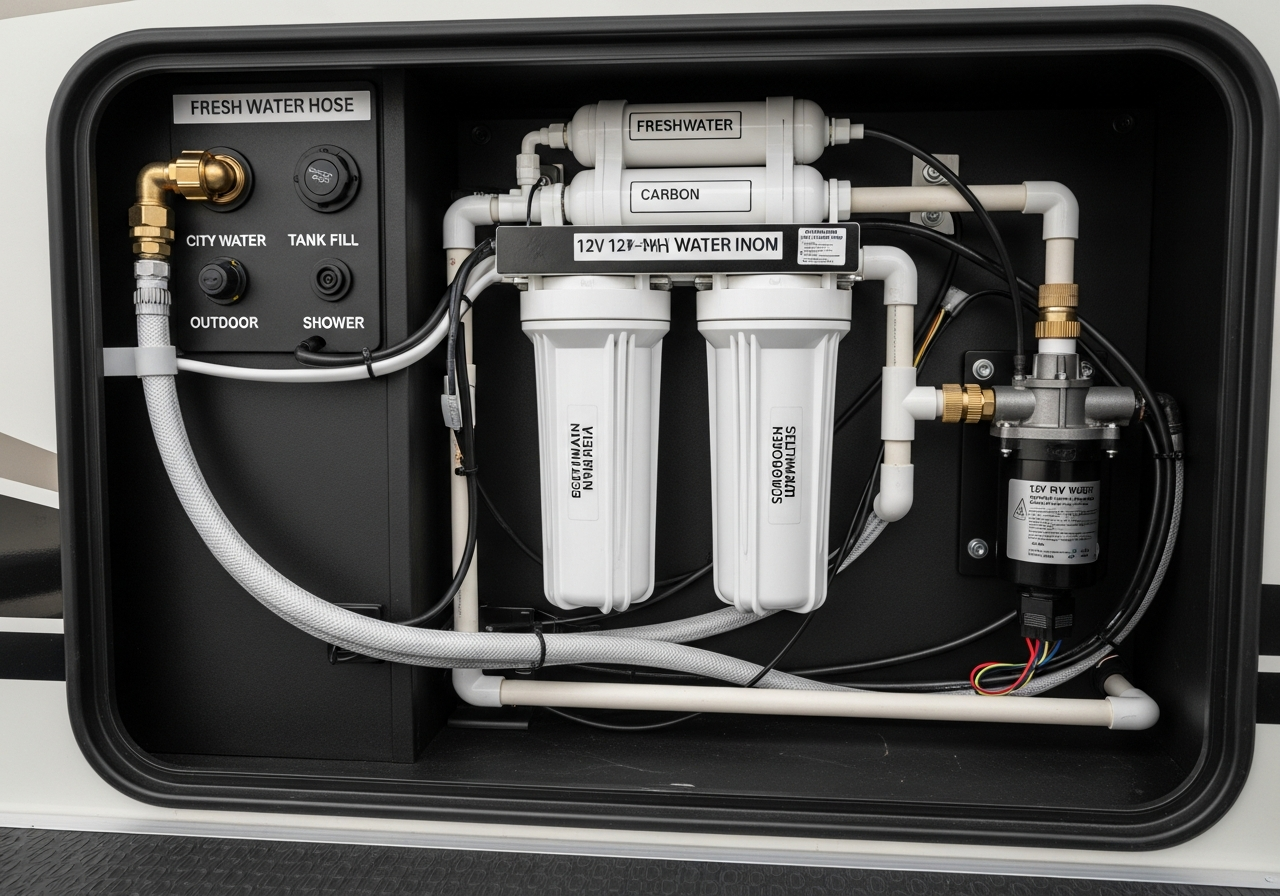
9. Water Pressure Regulator
High campground water pressure can damage RV plumbing.
Why it matters: Burst lines and leaking fittings can quickly create interior water damage.
Safety tip: Always connect a regulator before attaching the freshwater hose.
10. Sewer Hose Support and Disposable Gloves
Waste system safety often gets overlooked, but clean handling matters.
Why it matters: Proper support improves drainage and reduces mess, leaks, and contamination.
11. Weather Radio or Emergency Communication Device
Cell service is not guaranteed in remote camping areas.
Why it matters: Severe weather alerts and emergency communication can be critical during storms, wildfires, or road closures.
12. Basic Tool and Spare Parts Kit
A practical tool kit helps us address minor issues before they become trip-ending problems.
Include items such as:
- Screwdrivers
- Adjustable wrench
- Pliers
- Fuses
- Electrical tape
- Spare bulbs
- Hose washers
- Zip ties
How to Set Up Your RV Safety Gear Before a Trip

Step-by-Step Pre-Trip Safety Setup
Test all detectors.
Press the test buttons on smoke, carbon monoxide, and propane alarms. Replace weak batteries immediately.Check fire extinguishers.
Confirm the gauge is in the safe zone and the extinguisher is securely mounted.Inspect tires.
Measure cold tire pressure, inspect tread, and look for cracks, bulges, or uneven wear.Verify lights and visibility gear.
Check brake lights, turn signals, running lights, flashlights, and reflective triangles.Examine electrical hookup protection.
Make sure your surge protector or EMS is clean, undamaged, and ready to connect before shore power.Prepare water and sewer safety items.
Pack the pressure regulator, gloves, and sewer support where they are easy to reach.Review emergency supplies.
Confirm your first-aid kit, weather radio, and roadside kit are complete and accessible.
Safety tip: Do not bury emergency gear under chairs, grills, and cargo. Fast access matters.
Troubleshooting Common RV Safety Problems
1. Detector Keeps Beeping
Diagnostic steps:
- Check whether the unit indicates low battery, end-of-life, or alarm condition.
- Replace batteries with fresh ones.
- Clean dust from vents using a soft brush or compressed air if allowed by the manufacturer.
- Review the manufacture date.
Solution: If the detector still chirps after battery replacement and cleaning, replace the unit. Many detectors expire after several years.
2. Tire Pressure Keeps Dropping
Diagnostic steps:
- Measure pressure when tires are cold.
- Inspect valve stems for leaks.
- Look for nails, punctures, sidewall cracks, or rim damage.
- Compare all tire readings to spot unusual patterns.
Solution: Inflate to the correct specification, then have persistent leaks professionally repaired. Replace damaged or aged tires rather than risking a blowout.
3. Shore Power Feels Unreliable
Diagnostic steps:
- Inspect the pedestal visually before plugging in.
- Connect the surge protector or EMS first.
- Watch for low voltage, open ground, or reverse polarity warnings.
- Check your RV power cord for heat or discoloration.
Solution: If the power source shows faults, notify campground staff and avoid using that pedestal until the issue is corrected.
4. Water Connection Starts Leaking
Diagnostic steps:
- Turn off the water source.
- Inspect hose washers and connection threads.
- Confirm the pressure regulator is installed correctly.
- Check for cracked fittings or damaged hose ends.
Solution: Replace worn washers, tighten gently, and swap damaged fittings. Avoid overtightening, which can worsen leaks.
5. Sewer Hose Does Not Drain Properly
Diagnostic steps:
- Check that the hose support creates a steady downhill slope.
- Look for kinks or low spots.
- Confirm the tank valve is fully open during dumping.
- Inspect for clogs or collapsed hose sections.
Solution: Reposition the hose for better flow and replace worn or damaged sections as needed.
RV Safety Maintenance Guide
Routine maintenance keeps safety gear reliable. We recommend using a seasonal checklist so important tasks are not missed.
Spring Checklist
- Test all alarms and replace batteries if needed.
- Inspect fire extinguishers and confirm charge levels.
- Check tire age, pressure, and tread condition.
- Review first-aid supplies and replace expired items.
- Inspect water hoses, regulators, and plumbing fittings.
- Check roof seals and windows for leaks that could lead to hidden damage.
Summer Checklist
- Monitor tire pressure more often in hot weather.
- Verify cooling vents and appliance areas are free of debris.
- Restock drinking water and heat-related emergency supplies.
- Confirm flashlights and radios are charged or have fresh batteries.
Fall Checklist
- Inspect heaters and detectors before cold-weather camping.
- Review roadside gear for seasonal visibility needs.
- Check battery condition and cable connections.
- Replace worn gloves, hoses, and small tool kit items.
Winter Checklist
- Winterize water systems if storing the RV.
- Remove or protect temperature-sensitive medical supplies.
- Store detectors and electronics according to manufacturer guidance if the RV is inactive.
- Recheck tire pressure before moving a stored RV.
How to Maintain RV Safety Gear Step by Step
Fire Extinguisher Care
- Inspect the gauge monthly.
- Check for corrosion, dents, or broken seals.
- Gently invert dry chemical extinguishers occasionally if recommended by the manufacturer.
- Replace or service expired units.
Detector Maintenance
- Test monthly.
- Replace batteries at least annually unless using sealed long-life units.
- Vacuum exterior vents lightly.
- Replace the entire detector at the end of its service life.
Tire Safety Maintenance
- Check cold inflation before each travel day.
- Inspect tread and sidewalls visually.
- Torque lug nuts to spec when required.
- Weigh the RV periodically to avoid overloading tires.
Water and Sewer Gear Maintenance
- Rinse hoses after use.
- Inspect washers and seals for wear.
- Store gear dry to reduce odor, mold, and deterioration.
- Replace cracked hoses or brittle fittings promptly.
Smart Habits That Improve RV Safety
Beyond gear, habits matter.
Driving Habits
- Leave extra stopping distance.
- Reduce speed in wind, rain, and mountain grades.
- Check mirrors frequently.
- Avoid sudden steering inputs.
Campsite Habits
- Walk the site before backing in.
- Identify fire ring, hookups, trees, and low obstacles.
- Keep exits clear inside the RV.
- Store heavy items securely so they do not shift in transit.
Family Safety Habits
- Review emergency exits with everyone onboard.
- Teach children not to touch hookups or leveling gear.
- Keep emergency numbers and campground information easy to find.
Conclusion
The best RV safety plan is simple, consistent, and built around prevention. These 12 essentials cover the most common risks RVers face, from fire and tire trouble to electrical faults and water damage. We researched the gear categories and maintenance practices that matter most, and we recommend treating safety equipment as part of every trip plan, not an afterthought.
A few minutes spent checking detectors, tires, hookups, and emergency supplies can make camping more enjoyable and far less stressful.
Key Takeaways
- Fire extinguishers, detectors, tire tools, and roadside supplies are foundational RV safety items.
- Electrical and water protection gear can prevent expensive damage.
- Pre-trip inspections help catch problems before departure.
- Troubleshooting is easier when we follow simple diagnostic steps.
- Seasonal maintenance keeps safety gear ready year-round.
- Safer RV travel comes from both the right equipment and consistent habits.