How to Find Free RV Camping Spots: Apps, Databases, and Tips

Salem Hassan founded Travelcamp RV and brings 30+ years of hands-on RV, marine, and powersports retail experience to every review.
✎ Reviewed by Salem Hassan — Founder, Travelcamp RV · 30+ years in RV, marine, and powersports retail
Why trust us
ShopRVGear articles are researched by the Searchshop Editorial team using manufacturer specs, RV trade sources, and owner feedback. We match every recommendation to your RV class — Class A, B, C, fifth-wheel, or travel trailer — because gear that works in a 40-ft motorhome often does not fit a Class B van. We may earn a commission on qualifying purchases; it does not change what we recommend.
How to Find Free RV Camping Spots: Apps, Databases, and Tips
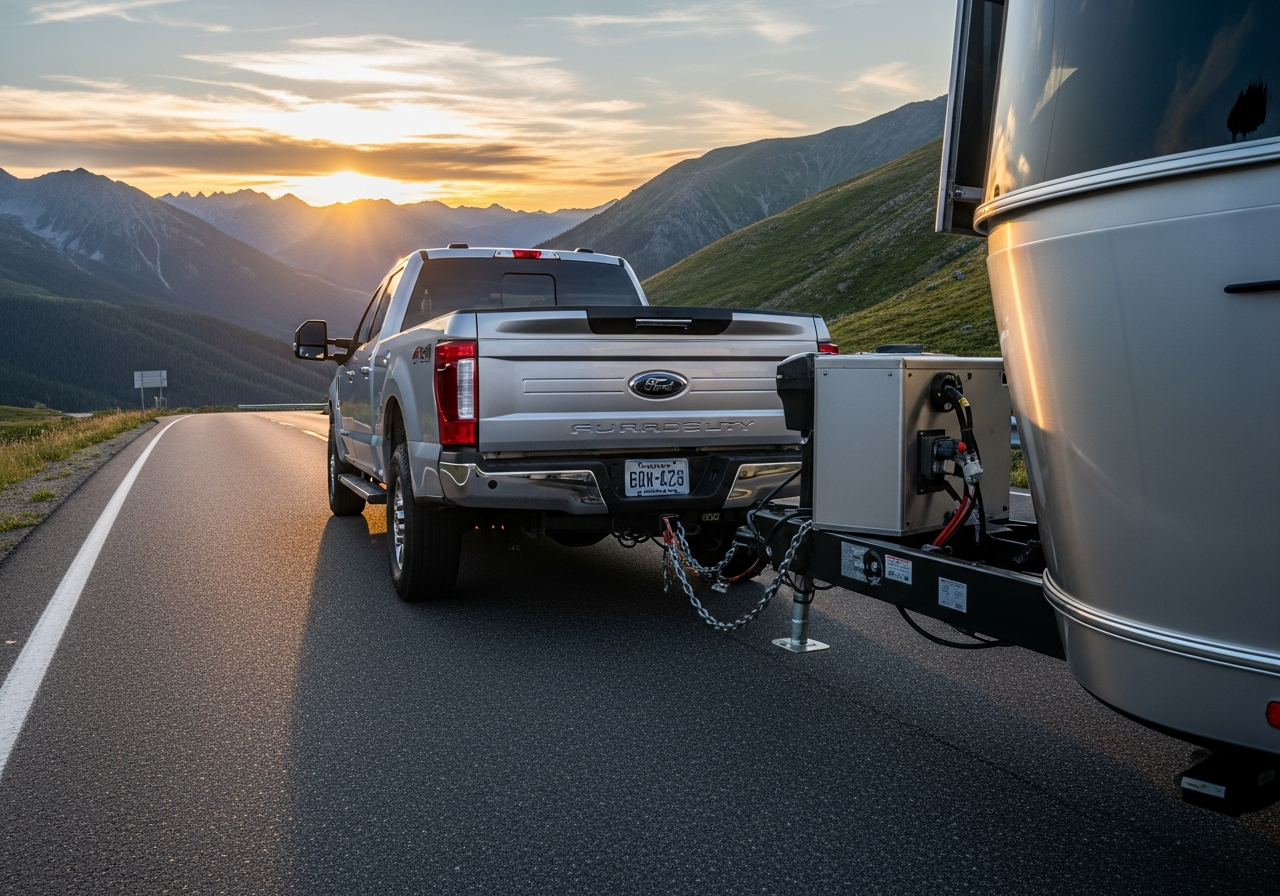
If you’ve been wondering how to find free rv camping spots, the good news is that there are more options than many RVers realize. From Bureau of Land Management land and national forest dispersed camping to overnight parking where it’s explicitly allowed, free stays are possible when we research the rules, confirm local restrictions, and arrive prepared. The key is knowing which apps and databases to trust, how to verify what you find, and how to camp responsibly so these places remain available.
Why Free RV Camping Takes More Than Just an App

Free RV camping can save money, add flexibility to a route, and open access to scenic public lands. But not every listing online is current, legal, or suitable for your rig. We recommend treating apps and databases as a starting point, then confirming details with official land managers, recent reviews, and satellite imagery.
In practice, finding a good free spot usually comes down to four questions:
- Is it legal to camp there?
- Is the road and site suitable for our RV size and clearance?
- Is it safe for an overnight or multi-night stay?
- Are there seasonal, fire, or local restrictions in effect?
Best Types of Free RV Camping Spots
Before looking at tools, it helps to understand the main categories of free camping.
Public Land Dispersed Camping
This is often the best option for true camping. On many BLM and national forest lands, dispersed camping is allowed outside developed campgrounds, subject to local rules.
Common features:
- No hookups
- No reservations
- Stay limits, often 14 days within a 28-day period
- Variable road conditions
- Limited or no services
Free Overnight Parking
This is not the same as camping. Some businesses or properties may allow overnight parking, but only with permission and only where local ordinances allow it.
Common places people check:
- Certain travel centers
- Some casinos
- Some fairgrounds
- Select businesses that explicitly permit overnight RV parking
Always ask first and follow posted rules.
Wildlife Areas, County Lands, and Other Public Parcels
Some state trust lands, wildlife management areas, county parks, and municipal properties allow low-cost or free stays, but rules vary widely. These often require extra verification.
How to Find Free RV Camping Spots: Step-by-Step

1. Start With a Route and Backup Radius
Begin by identifying your destination and a practical search radius, usually 20 to 40 miles. Free sites fill up, roads may be rough, and local restrictions can change.
We recommend building:
- A primary target area
- A secondary backup area
- One paid campground fallback in case conditions change
Safety Tip
Avoid planning to arrive at a new dispersed site after dark. It is much harder to assess road width, branches, mud, slope, and turnaround space at night.
2. Search Free Camping Apps and Community Databases
Use multiple sources rather than relying on one listing. Community-driven apps can be helpful because they often include recent user reports, photos, and road notes.
Look for details such as:
- RV length limits mentioned in reviews
- Surface type and road grade
- Cell signal reports
- Generator etiquette notes
- Signs of closures or enforcement
- Whether the listing is true camping or overnight parking only
When reading reviews, prioritize the most recent ones and scan for patterns. If several travelers mention a washout, new signage, or a difficult turnaround, take that seriously.
3. Verify With Official Land Agencies
This is one of the most important steps. Community listings may lag behind current rules.
Check the official source for:
- BLM field office notices
- National forest motor vehicle use maps
- District alerts and closure notices
- Fire restrictions
- Campfire bans
- Seasonal road closures
- Stay limits
H3: What to Confirm Before You Go
Ask or verify:
- Is dispersed camping allowed in this area?
- Are there designated corridors or numbered sites only?
- What is the maximum stay length?
- Are there vehicle size restrictions?
- Are roads passable for trailers or larger motorhomes?
- Are generators, fires, or off-road travel restricted?
4. Use Satellite View and Terrain Maps
A listing may say “big-rig friendly,” but maps can tell a different story. Satellite imagery helps us check for pull-through clearings, road width, sharp switchbacks, and nearby development.
Use maps to evaluate:
- Road approach angles
- Turnaround space
- Tree cover and branch clearance
- Distance from highways or rail lines
- Slope and drainage patterns
- Nearby water crossings or washes
Safety Tip
If a road looks narrow, deeply rutted, sandy, or steep in imagery, assume conditions may be worse in person, especially after rain or snow.
5. Match the Site to Your Rig and Setup
Not every free site works for every RV. A van may fit almost anywhere, while a long fifth wheel or Class A needs more room and better access.
Consider:
- Total rig length
- Height clearance
- Weight and traction needs
- Rear overhang
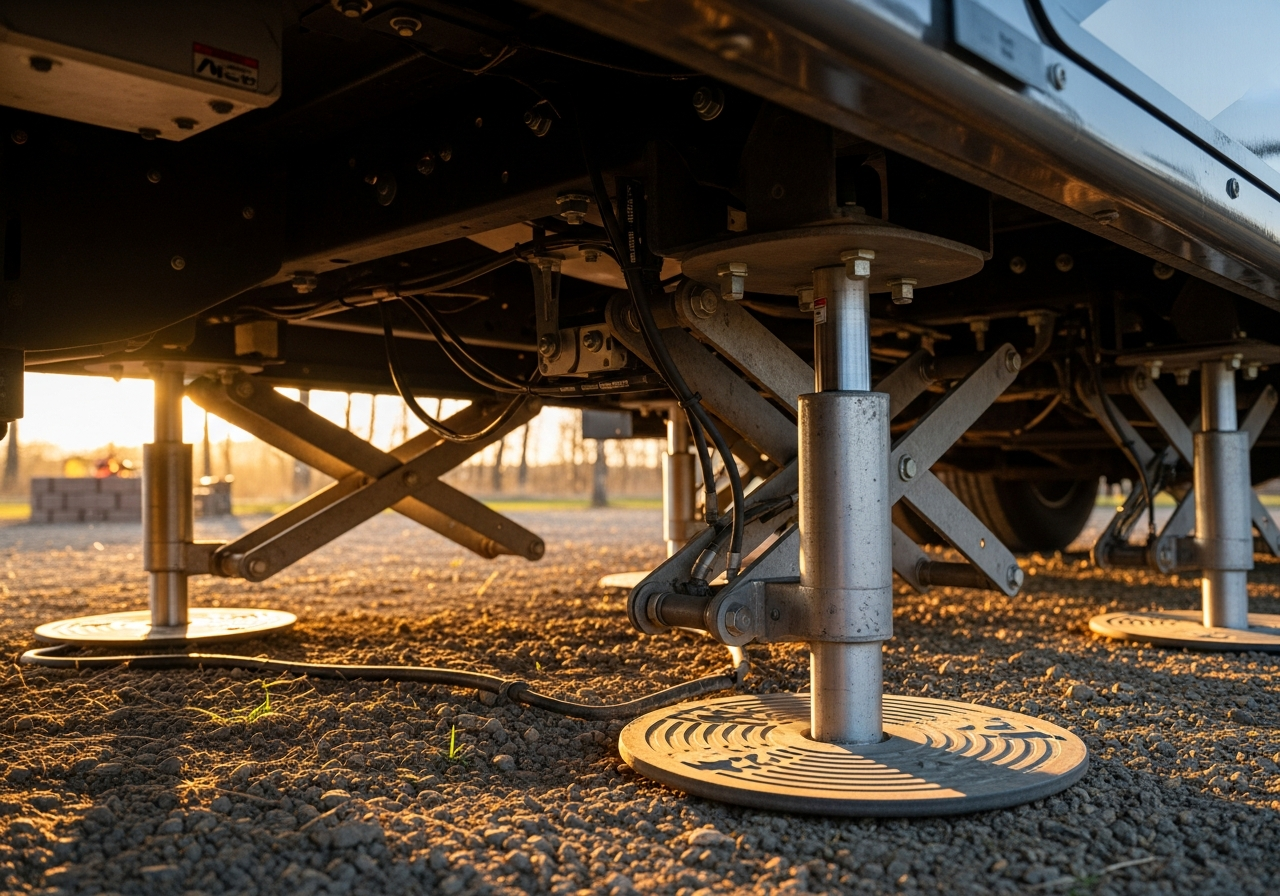
- Need for leveling blocks
- Solar exposure if you camp off-grid
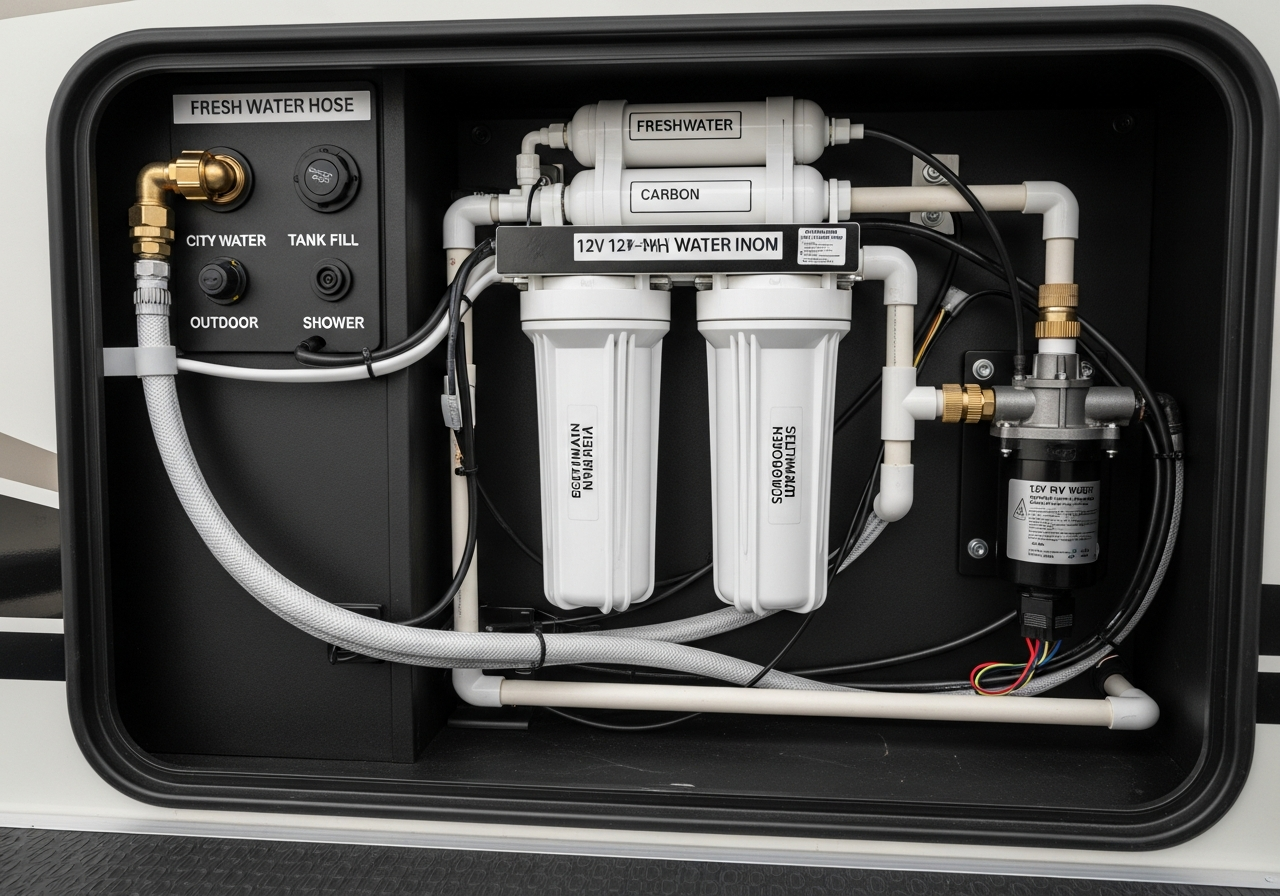
- Fresh water and waste tank capacity
If you need to dump tanks or refill water soon, a free site far from services may not be practical.
6. Confirm Local Rules for Overnight Parking
If you are not on public land and are instead seeking a one-night stop, ask permission directly. Even where a business is generally RV-friendly, local ordinances or property-level changes may prohibit overnight stays.
Be respectful and specific:
- Ask where to park
- Ask how long you may stay
- Do not set out chairs, grills, or jacks unless permitted
- Keep slides in if space is tight or rules require it
7. Arrive Early and Inspect Before Committing
Once on site, do a slow visual check before driving in fully.
Look for:
- Soft shoulders
- Mud, sand, or deep gravel
- Low branches
- Evidence of flash-flood channels
- Broken glass or unsafe activity
- Enough room to turn around
- Existing fire rings and durable surfaces
If possible, walk the final approach first.
Safety Tip
Trust your instincts. If a place feels unsafe, crowded, unstable, or too difficult to exit, move on to your backup option.
8. Camp Responsibly and Leave No Trace
Free camping depends on good behavior. Many closures happen because of trash, human waste, fire damage, or overstays.
Best practices:
- Pack out all trash
- Use existing sites where allowed
- Keep wastewater contained and dispose of it legally
- Follow fire restrictions exactly
- Respect stay limits
- Keep noise low
- Do not block roads, gates, or access points
Troubleshooting Common Free RV Camping Problems
1. The App Listing Looks Great, but the Site Is Closed
Diagnosis
- Check the date of the last review.
- Look for closure alerts from the land agency.
- Review satellite imagery for gates, barriers, or recent disturbance.
Solution
Use official agency pages as the final authority, and always keep one or two backup locations saved offline.
2. The Road Is Too Rough for the RV
Diagnosis
- Stop before committing to a narrow or washed-out road.
- Walk or scout the route if safe.
- Look for deep ruts, sand, steep grades, and no-turnaround sections.
Solution
Do not force the approach. Choose a more accessible site, reduce risk by arriving earlier next time, and filter future searches for road-condition comments from similar rig types.
3. The Spot Is Legal, but It Feels Unsafe
Diagnosis
- Assess lighting, neighboring activity, and distance from traffic.
- Check whether the area shows signs of dumping, partying, or abandoned vehicles.
- Evaluate your exit path in case you need to leave quickly.
Solution
Move to a different location. Legality does not guarantee comfort or security. We recommend prioritizing visibility, easy exit access, and recent positive reviews.
4. There Is No Cell Signal
Diagnosis
- Confirm whether signal reports were carrier-specific.
- Check elevation and terrain around the site.
- Compare offline maps with nearby higher ground or open areas.
Solution
Download maps before arrival, share your plan ahead of time, and choose sites with verified signal if you work remotely or need emergency connectivity.
5. You Arrive and Every Good Spot Is Taken
Diagnosis
- Note the season, weekday, and time of arrival.
- Check whether the area is near a park, event, or holiday corridor.
- Review nearby backups within your planned radius.
Solution
Arrive earlier, avoid peak weekends when possible, and save several alternatives in the same region.
Seasonal Maintenance Guide for Free Camping Readiness
Free camping is easier when the RV is prepared for self-contained stays. A little seasonal maintenance reduces the chance of getting stranded or running out of essentials.
Spring Checklist
- Inspect roof seals and exterior caulking.
- Check tires for age, pressure, and winter damage.
- Sanitize the fresh water system.
- Test battery health and charging systems.
- Restock wheel chocks, leveling blocks, and recovery basics.
Summer Checklist
- Confirm air conditioner performance if you may need a paid fallback.
- Inspect coolant and engine systems for motorized RVs.
- Monitor tire pressure closely in heat.
- Review fire restrictions for your route.
- Carry extra drinking water.
Fall Checklist
- Check furnace operation.
- Inspect weather seals around doors and compartments.
- Test exterior lights for shorter daylight hours.
- Reassess batteries as solar production declines.
- Review hunting season notices on public land.
Winter Checklist
- Winterize plumbing if freezing conditions are likely.
- Carry tire chains where required or recommended.
- Check propane levels and regulator condition.
- Inspect wiper blades and defroster performance.
- Avoid remote roads after storms unless conditions are confirmed.
Step-by-Step Pre-Departure Readiness Check
1. Fill and Balance Essentials
Top off fresh water as needed, but avoid carrying more weight than necessary if road conditions are uncertain. Empty waste tanks before heading to remote areas.
2. Download Offline Resources
Save maps, agency PDFs, reservation-free backups, and contact numbers for ranger districts or field offices.
3. Inspect Tires and Undercarriage
Check pressure, tread, and visible damage. Look under the RV for anything loose that rough roads could worsen.
4. Secure the Interior and Exterior
Latch compartments, secure loose gear, and confirm nothing underneath will drag on uneven roads.
5. Review Weather and Fire Conditions
A free site can become a bad choice quickly if storms, wind, flooding, or fire restrictions change.
Smart Tips to Improve Your Success Rate
H3: Search Midweek When Possible
Popular free areas are often easier to access and less crowded from Monday through Thursday.
H3: Read Reviews From Similar Rigs
A site that works for a truck camper may not work for a 35-foot trailer. Prioritize comments from RVers with similar size and clearance.
H3: Keep Expectations Realistic
Free camping usually means fewer amenities, more planning, and more self-sufficiency. The tradeoff can be worth it when the location is legal, quiet, and scenic.
H3: Have an Exit Plan
Always know where you will go if weather changes, a road is blocked, or the site feels wrong.
Key Takeaways
- The best answer to how to find free rv camping spots is to combine apps, community reviews, official public land sources, and map verification.
- Treat every listing as a lead, not a guarantee.
- Confirm legality, road access, safety, and seasonal restrictions before arrival.
- Match the site to your RV’s size, weight, and off-grid capabilities.
- Keep backup options, arrive early, and use Leave No Trace practices.
- Maintain your RV for self-contained travel so free camping stays practical and safe.
With the right process, free RV camping can be both economical and rewarding. We researched the most reliable methods and consistently recommend a layered approach: search broadly, verify carefully, inspect in person, and always be ready to pivot.