RV Park vs Boondocking: Which Is Right for You?

Jake has spent 8 years full-timing in a Class A motorhome and has personally tested hundreds of RV products across North America. He is the lead gear reviewer at Shop RV Gear, covering solar setups, backup safety syst…
Why trust us
Every product featured on Shop RV Gear is researched by RV owners with real on-road experience. Our lead reviewer Jake Morris has full-timed for 8 years and personally tested gear across 40+ states. We earn a small commission on qualifying purchases — this never influences our picks.
How We Evaluated
We researched and tested the top options, comparing them across key factors including performance, value, ease of use, and reliability. Our recommendations are based on hands-on evaluation and real-world usage data.
RV Park vs Boondocking: Which Is Right for You?
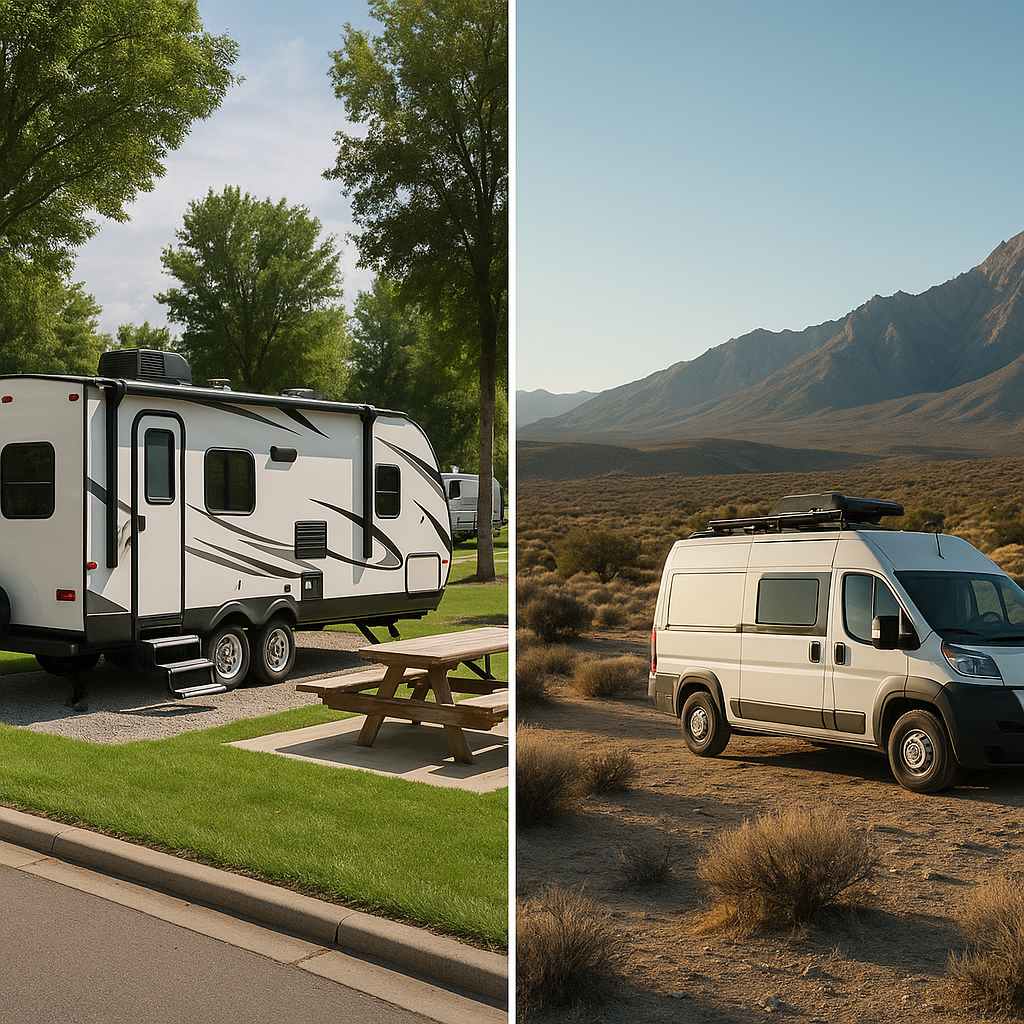
When comparing rv park vs boondocking, the right choice depends on how you like to travel, how much comfort you need, and what kind of experience you want from life on the road. Some RVers love the convenience of full hookups, laundry rooms, Wi-Fi, and a nearby camp store. Others prefer the freedom of parking on public land, waking up to mountain views, and avoiding campground fees altogether.
Both options have clear advantages, and both come with trade-offs. If you are new to RV travel, understanding the differences between an RV park and boondocking can help you plan better trips, avoid surprises, and spend your money where it matters most.

In this guide, we will break down rv park vs boondocking across the factors that matter most: cost, amenities, comfort, privacy, safety, flexibility, and who each option suits best.
RV Park vs Boondocking at a Glance
| Factor | RV Park | Boondocking |
|---|---|---|
| Cost | Usually paid nightly, weekly, or monthly | Often free or very low cost |
| Hookups | Water, sewer, electric often available | No hookups |
| Comfort | Higher comfort and convenience | More rustic and self-managed |
| Privacy | Can be close to neighbors | Usually more space and solitude |
| Amenities | Showers, laundry, Wi-Fi, dump stations | Few or no amenities |
| Flexibility | Reservations may be needed | More freedom, but local rules apply |
| Power Needs | Easy for high electricity use | Limited by batteries, solar, or generator |
| Best For | Families, beginners, long stays with comfort | Adventurous, budget-minded, off-grid travelers |
What Is an RV Park?
An RV park is a developed campground designed specifically for recreational vehicles. Many offer full or partial hookups, including water, sewer, and electric service. Depending on the location, you may also find bathrooms, showers, laundry facilities, picnic tables, clubhouses, playgrounds, dog areas, and even pools.
RV parks can range from simple overnight stops near highways to destination resorts with extensive amenities. They are usually easier for beginners because the infrastructure is already in place, and there is often staff available if you need assistance.
What Is Boondocking?
Boondocking refers to camping without hookups, often on public land such as Bureau of Land Management areas, national forest land, or other dispersed camping locations where RVers can stay independently. Some people also use the term to describe overnight parking without hookups in places like store lots or rest areas where legal.
With boondocking, you rely on your RV's own systems. That means using battery power, fresh water tanks, propane, and waste storage without access to sewer or electrical hookups. It can be an amazing way to save money and enjoy solitude, but it requires more planning and self-sufficiency.
Cost Comparison
For many travelers, cost is the biggest factor in rv park vs boondocking. RV parks can range from budget-friendly to expensive, especially in popular vacation areas or during peak season. If you want full hookups, premium locations, or resort-style features, nightly rates can climb fast.
Boondocking is often free, which makes it attractive for long-term travelers and anyone looking to reduce travel expenses. However, free camping is not always truly free. You may need to invest in solar panels, larger battery banks, generators, water containers, or portable waste solutions to stay comfortably off-grid.
If your main goal is saving money over time, boondocking usually wins. If you value convenience and are okay paying for it, an RV park may feel well worth the price.
Comfort and Convenience
RV parks are the clear winner when it comes to convenience. Hookups let you run air conditioning more easily, take longer showers, flush waste tanks without stress, and recharge devices without monitoring your battery levels. You also get a more predictable environment, which can be especially helpful in bad weather or when traveling with kids.
Boondocking is more hands-on. You need to monitor tank levels, conserve electricity, manage waste, and think carefully about water usage. That said, many RVers enjoy the challenge and satisfaction of living more independently. If you already have an off-grid setup, boondocking can still be comfortable, just in a different way.
Privacy and Experience
One of the strongest arguments in the rv park vs boondocking debate is the kind of experience you want. RV parks are social and accessible. You may have neighbors close by, shared amenities, and organized activities. For some travelers, that community feeling is a major benefit.
Boondocking usually offers more privacy, quiet, and connection to nature. Instead of hearing generators, traffic, or campground conversations, you may hear wind, birds, and total silence. If you want open space, scenic views, and fewer crowds, boondocking is often the better fit.
Safety and Security
Safety depends on the location and your preparation. RV parks often feel more secure because they are managed, populated, and designed for overnight stays. You may have lighting, office staff, designated sites, and other campers nearby.
Boondocking can also be safe, but it requires more research. You should confirm that camping is legal, check road conditions, understand local weather risks, and avoid isolated spots that make you uncomfortable. Mobile signal can also be weak or nonexistent in remote areas, which matters in emergencies.
If safety and predictability are top priorities, RV parks may offer more peace of mind, especially for new RVers.
Internet, Power, and Work Needs
If you work remotely or rely on steady internet, RV parks may be easier, though campground Wi-Fi can be inconsistent. Still, access to shore power makes it easier to run routers, boosters, laptops, and other electronics.
Boondocking can work well for remote workers too, but only with preparation. You may need solar power, a reliable cellular setup, and strong battery capacity. For travelers who use a lot of electricity or need guaranteed connectivity, RV parks are generally the safer choice.
Who Should Choose an RV Park?
An RV park may be right for you if:
- You are new to RV travel
- You want hookups and modern amenities
- You travel with children
- You prefer easy access to towns and attractions
- You need reliable power for air conditioning or work
- You want a simple, low-stress overnight stop
Who Should Choose Boondocking?
Boondocking may be right for you if:
- You want to save money on camping fees
- You enjoy solitude and natural surroundings
- You are comfortable managing water, power, and waste
- You have solar, batteries, or a generator
- You prefer flexible, off-grid travel
- You want a more self-reliant RV lifestyle
Verdict: RV Park vs Boondocking
So, in the debate of rv park vs boondocking, which is right for you?
Choose an RV park if comfort, hookups, security, and convenience matter most. It is the better option for beginners, families, remote workers with high power needs, and anyone who wants a predictable camping experience.
Choose boondocking if freedom, privacy, scenic isolation, and lower costs are your top priorities. It is ideal for experienced RVers, budget-conscious travelers, and anyone who enjoys off-grid adventure.
For many RVers, the best answer is not one or the other. A mix of both often creates the ideal travel lifestyle. You might stay in RV parks when you need to recharge, do laundry, dump tanks, and resupply, then switch to boondocking when you want peace, space, and a lower-cost stay in beautiful places.
Ultimately, the best choice in rv park vs boondocking comes down to your RV setup, travel budget, and personal comfort level. If you understand the trade-offs, you can enjoy both styles and build trips that fit exactly how you want to travel.
Top Picks & Comparison
| # | Product | Price | Rating | ||
|---|---|---|---|---|---|
| #1 |  |
Jackery Solar Generator 1000 v2 with 200W Solar Panel,1070Wh Portable Power Station LiFePO4 Battery,1500W AC/100W USB-C Output, 1Hr Fast Charge for Outdoor,Off-Grid Living,RV,Emergency |
$699.00 | (1,247) | View on Amazon |
| #2 |  |
Camco Rhino 21-Gallon RV Portable Waste Tank - Features Large Heavy-Duty No-Flat Wheels & Low Drain Hole - Includes Removable Steel Tow Adapter, 3’ Sewer Hose & More RV Accessories (39002) |
$198.00 | (27,155) | View on Amazon |
| #3 | ![GEARGO RV Surge Protectors 30 Amp RV Circuit Analyzer, [𝟐𝟎𝟐𝟔 𝐍𝐞𝐰 𝐔𝐩𝐠𝐫𝐚𝐝𝐞𝐝 & 𝐆𝐞𝐧𝟐] Full Protection, RV Adapter Plug for Camper(Orange)](https://m.media-amazon.com/images/I/61aGM2brPtL._AC_UL320_.jpg) |
GEARGO RV Surge Protectors 30 Amp RV Circuit Analyzer, [𝟐𝟎𝟐𝟔 𝐍𝐞𝐰 𝐔𝐩𝐠𝐫𝐚𝐝𝐞𝐝 & 𝐆𝐞𝐧𝟐] Full Protection, RV Adapter Plug for Camper(Orange) |
$39.06 | (2,213) | View on Amazon |
| #4 |  |
Jackery HomePower 3000 Portable Power Station with 2X 200W Solar Panels, 3600W (Surge 7200W) Output, 3072Wh LFP Battery Solar Generator, Essential Backup for Home Use, Power Outage, RV, Emergencies |
$1,748.20 | (227) | View on Amazon |
| #5 |  |
EF ECOFLOW Solar Generator DELTA 3 Classic with 220W Solar Panel, 1024Wh LiFePO4 Battery Portable Power Station, 1800W AC/100W USB-C Output (3600W Surge), 1 Hr Fast Charge for Home, Camping, RV |
$669.00 | (221) | View on Amazon |