
Class A vs Class C Motorhome: Which Is Right for You?

Jake has spent 8 years full-timing in a Class A motorhome and has personally tested hundreds of RV products across North America. He is the lead gear reviewer at Shop RV Gear, covering solar setups, backup safety syst…
Why trust us
Every product featured on Shop RV Gear is researched by RV owners with real on-road experience. Our lead reviewer Jake Morris has full-timed for 8 years and personally tested gear across 40+ states. We earn a small commission on qualifying purchases — this never influences our picks.
How We Evaluated
We researched and tested the top options, comparing them across key factors including performance, value, ease of use, and reliability. Our recommendations are based on hands-on evaluation and real-world usage data.
Class A vs Class C Motorhome: Which Is Right for You?
If you're shopping for a motorized RV, the class a vs class c motorhome debate usually comes down to one big question: do you want maximum space and luxury, or easier driving and better value? Both types can deliver memorable road trips, full-time living potential, and the freedom to travel on your schedule. But they serve different owners, budgets, and camping styles.
At Shop RV Gear, we’ve seen buyers get stuck focusing only on size or price. The better approach is to compare how each motorhome performs in the real world: setup, storage, fuel costs, sleeping capacity, maintenance, and how comfortable you feel behind the wheel. This guide breaks it all down so you can make the right call.

Class A vs Class C Motorhome Comparison Table
| Feature | Class A Motorhome | Class C Motorhome |
|---|---|---|
| Typical Price | Higher | Lower to mid-range |
| Driving Feel | Bus-like, wide, elevated | More like a truck or van |
| Interior Space | Excellent | Good to very good |
| Sleeping Capacity | Good | Excellent for families |
| Exterior Storage | Usually larger basement storage | Usually less storage |
| Fuel Economy | Usually lower | Usually better |
| Luxury Features | More common | Available, but often fewer |
| Campground Access | Can be limited in smaller parks | Easier in more campgrounds |
| Towing Capacity | Often strong, varies by chassis | Good, varies widely |
| Maintenance Costs | Often higher | Often lower |
| Best For | Full-timers, luxury travelers, long stays | Families, beginners, shorter trips |
Key Takeaways
- Class A motorhomes offer more interior room, larger tanks, premium features, and a bus-like driving experience.
- Class C motorhomes are typically easier to drive, often cost less, and usually provide excellent sleeping capacity for families.
- If you plan to full-time, entertain often, or want high-end amenities, Class A is often the better fit.
- If you want a motorhome that feels more approachable for beginners, Class C often wins.
- Your best choice depends on budget, travel frequency, campground preferences, and comfort with vehicle size.
What Is the Difference Between a Class A and a Class C Motorhome?
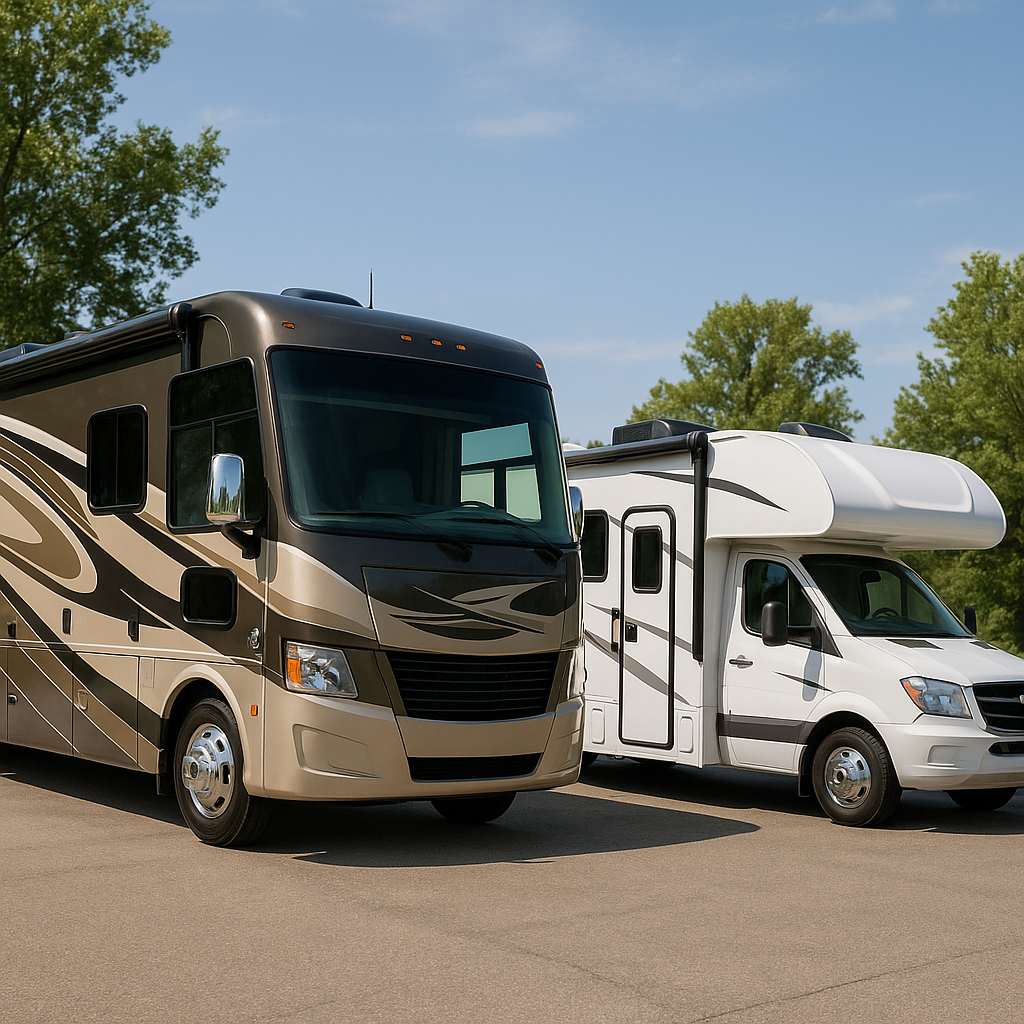
A Class A motorhome is the largest and most bus-like type of motorized RV. It is built on a heavy-duty chassis and usually has a flat front with large panoramic windows. Class A rigs are known for roomy living areas, larger storage bays, and upscale features.
A Class C motorhome is built on a truck or van cutaway chassis and is easy to recognize by the over-cab sleeping or storage area above the driver. It tends to be smaller than a Class A, though some larger Super C models blur the line.
Quick visual difference
- Class A: flat nose, bus style, larger body
- Class C: truck-like cab, over-cab bunk, more familiar cockpit
Typical size ranges
- Class A: roughly 26 to 45 feet
- Class C: roughly 21 to 35 feet
That difference in shape and chassis affects nearly everything else, from handling to storage to campsite access.
Side-by-Side Comparison: Which Matters Most?
1. Price and overall value
For many buyers, budget is where the Class C gets an early advantage.
A new Class A usually costs more than a comparable Class C, especially when you move into diesel pushers or luxury gas models. Insurance, tires, maintenance, and repairs can also be more expensive.
A Class C often gives you a lower entry price while still providing a full bathroom, kitchen, sleeping space, and decent storage. For buyers who want to start RVing without committing to the highest ownership costs, that matters.
Winner: Class C for affordability
2. Driving and maneuverability
This is one of the biggest real-world differences.
A Class C feels more familiar to many drivers because it uses a truck-style cab. Visibility is often easier to judge, and the learning curve can feel less intimidating. Parking, fuel stops, and navigating tighter campground roads are often simpler too.
A Class A gives you a commanding view of the road, but it can feel wide, tall, and more demanding, especially in wind, traffic, or older campgrounds with tight turns.
Winner: Class C for ease of driving
3. Interior living space
Class A motorhomes are built to maximize interior room. Wider living areas, larger slide-outs, bigger kitchens, residential refrigerators, and more open floorplans are common. If you spend lots of time indoors, the difference is noticeable.
Class C floorplans can still be highly functional, but they are usually more compact. The over-cab bunk helps reclaim sleeping space without taking up as much floor area, which is great for families.
Winner: Class A for spaciousness
4. Sleeping capacity
This is where Class C models often shine.
The over-cab bunk, convertible dinettes, sofa beds, and rear bedroom layouts can make Class C units especially practical for families with kids or guests. Some Class A models sleep a lot of people too, but their layouts more often prioritize lounge space and luxury over maximum bed count.
Winner: Class C for family sleeping flexibility
5. Storage capacity
Class A coaches usually offer larger exterior basement compartments, which is a major advantage for longer trips and full-time RV living. Bulky gear like chairs, grills, tools, hoses, and outdoor mats fits more easily.
Class C models usually have less exterior storage, though many still provide enough room for weekend or moderate-length travel.
Winner: Class A for storage
6. Fuel economy
Neither category is famous for great MPG, but Class C models usually do a bit better, especially smaller gas-powered units. Class A coaches, particularly large gas units and diesel pushers, often consume more fuel.
Winner: Class C for fuel economy
7. Luxury and comfort
If your idea of RVing includes theater seating, tile floors, washer-dryer prep, large tanks, premium insulation, and a more residential feel, Class A coaches generally dominate. That does not mean Class C models are basic, only that Class A rigs more often target premium buyers.
Winner: Class A for luxury
Pros and Cons of Class A Motorhomes
Pros
- Spacious interiors with open floorplans
- Larger storage bays for extended travel
- More luxury options and residential features
- Better suited for long stays and full-time RVing
- Often larger holding tanks and utilities capacity
Cons
- Higher purchase price
- Can be more intimidating to drive
- Lower fuel economy in many cases
- Maintenance and tire replacement can cost more
- May not fit smaller campsites or older parks
Pros and Cons of Class C Motorhomes
Pros
- Easier for many owners to drive and park
- Lower purchase cost in many segments
- Great sleeping capacity, especially for families
- Better access to more campgrounds and fuel stops
- Often lower operating costs overall
Cons
- Less interior room than most Class A models
- Smaller exterior storage in many floorplans
- Can feel tighter on long trips or full-time use
- Luxury features may be more limited at lower price points
- Cab-over area may reduce aerodynamic efficiency and add noise
Best Choice by Buyer Type
Best for full-time RV living: Class A
If you plan to live in your motorhome for months at a time, work remotely, or spend extended periods indoors, Class A usually makes more sense. The extra room, storage, tank capacity, and comfort features add up fast.
Best for first-time motorhome buyers: Class C
A Class C is often the safer starting point for new RV owners. The driving position feels more familiar, and the lower purchase price can reduce the pressure of your first big RV decision.
Best for families with kids: Class C
The over-cab bunk is incredibly practical. Kids often love it, and parents appreciate having dedicated sleeping space without setting up a bed every night.
Best for couples wanting luxury: Class A
Many couples prefer the more open lounge layout, larger bathroom, and premium amenities found in a Class A coach.
Best for national parks and smaller campgrounds: Class C
Many public campgrounds have length restrictions or tighter roads. A smaller Class C can be far less stressful in those settings.
How to Choose Between a Class A and Class C Motorhome
Instead of guessing, use a simple process before you buy.
Materials you’ll need
- A realistic total RV budget
- Your tow vehicle or toad plan, if applicable
- A list of must-have features
- A notebook or phone for dealership walkthrough notes
- Campground length limits for places you plan to visit
- Insurance and maintenance estimates
Step-by-step buying process
Set your true budget
Include more than purchase price. Add insurance, registration, storage, fuel, maintenance, tires, and upgrades.Define your travel style
Ask how often you travel, how long you stay, and whether you prefer resorts, state parks, or boondocking.Count your real sleeping needs
Think about who will actually travel with you most of the time, not just occasional guests.Test drive both types
Drive on local streets, highways, and if possible in windy conditions. Comfort behind the wheel matters more than brochure specs.Walk through floorplans slowly
Stand in the kitchen, bathroom, and bedroom. Open cabinets. Sit on the toilet with the door closed. Check if slides block access when retracted.Measure your gear
Bring dimensions for grills, chairs, bins, pet crates, or mobility gear. Storage claims can be misleading.Check campground compatibility
If your dream trips involve older state parks or national park campgrounds, verify length restrictions before buying a large Class A.Compare ownership costs over 3 to 5 years
A lower upfront price can still become expensive if the floorplan does not fit your needs and you trade too soon.
Safety Tips When Shopping and Operating
- Never buy a motorhome without checking cargo carrying capacity.
- Confirm the gross vehicle weight rating (GVWR) and towing limits before adding passengers and gear.
- Inspect tire age, not just tread depth, on used motorhomes.
- Test all seatbelts, entry steps, mirrors, cameras, and driver visibility.
- Practice turning, braking, backing, and lane changes in a safe open lot before your first trip.
- If you’re considering a larger Class A, budget for a professional driver training session.
Practical Advice for Real-World RV Owners
Think about downtime, not just drive time
Many buyers focus on how the RV feels while moving. That matters, but you’ll likely spend more hours parked than driving. If you regularly take week-long or month-long trips, the comfort advantage of a Class A can be worth the higher cost.
Do not overbuy for rare situations
If you travel mostly as a couple, buying a huge coach because you might bring guests twice a year can be expensive overkill. In that case, a well-designed Class C may be smarter.
Storage is more important than most buyers expect
Outdoor gear, hoses, leveling blocks, tools, pet supplies, and seasonal clothing add up quickly. Full-timers especially should not underestimate the storage advantage of a Class A.
Smaller can mean more freedom
A Class C may open up more route options, easier gas stops, and less stress in older campgrounds. That flexibility is a big quality-of-life factor.
Common Mistakes Buyers Make
Choosing based on looks alone
A sleek Class A can be tempting, but if it feels stressful to drive, you may use it less.
Ignoring payload
A motorhome that looks spacious can still have limited carrying capacity once passengers, water, and gear are added.
Forgetting about maintenance access
Routine service, engine access, and repair costs vary by chassis and layout. Research the exact model, not just the RV class.
Prioritizing sleeping capacity over livability
Yes, a Class C may sleep more people on paper. But if you mostly travel as a couple, interior comfort may matter more than extra beds.
FAQ
Is a Class A better than a Class C motorhome?
Not universally. A Class A is usually better for space, storage, and luxury, while a Class C is often better for value, drivability, and family sleeping arrangements. The better choice depends on how you travel.
Is a Class C motorhome easier to drive than a Class A?
For most owners, yes. A Class C usually feels more familiar because of its truck-style cab, and it is often easier to maneuver in cities, campgrounds, and fuel stations.
Which motorhome is better for full-time living?
A Class A is generally better for full-time living because it usually offers more room, larger tanks, more storage, and a more residential layout. Still, some couples full-time very comfortably in larger Class C models.
Final Verdict: Class A vs Class C Motorhome
If you want the simplest answer in the class a vs class c motorhome comparison, here it is:
- Choose Class A if you want maximum living space, premium comfort, larger storage, and a better setup for full-time or long-term travel.
- Choose Class C if you want easier driving, lower costs, better family sleeping options, and broader campground flexibility.
For many first-time buyers, Class C is the more practical all-around choice. For serious travelers, long-stay campers, and buyers who value comfort above all else, Class A often earns the upgrade.
The right motorhome is the one you’ll feel confident driving, comfortable living in, and able to afford long after the excitement of purchase day fades. If you keep those three factors in balance, you’ll make a smart buy.
At Shop RV Gear, our advice is simple: test drive both, compare real ownership costs, and choose the floorplan that fits your travel life, not just your wishlist.
Top Picks & Comparison
| # | Product | Price | Rating | ||
|---|---|---|---|---|---|
| #1 |  |
RV Backup Camera Wireless Plug and Play: Pre-Wired for Furrion System Recording Wide View Rear View Camera Clear Night Vision HD 1080P 7'' Touch Key Monitor for Trailer Camper Motorhome Yakry Y27-N |
$91.99 | (5,409) | View on Amazon |
| #2 |  |
1080P HD Wireless Backup Camera: 1-Min Magnetic Easy Install No Wiring 7" Anti-Glare Monitor with Clear Night Vision - 24H Long Life Solar Scratch-Proof Rear View Camera for Truck Trailer SUV Small RV |
$109.99 | (2,389) | View on Amazon |
| #3 |  |
Fookoo HD 1080P 7" Wireless RV Backup Camera System for Furrion Pre-Wired RV Truck Camper, 7" IPS DVR Monitor & Rear View Camera, IR Night Vision IP69 Waterproof DIY Parking Lines - DW7Y5 |
$125.99 | (778) | View on Amazon |
| #4 |  |
RV Backup Camera Wireless Easy Install: Plug & Play for Furrion Pre-Wired RVs - 7″ HD Touch Key Monitor, 1080P DVR, 4-Channel Split-Screen, Night Vision, IP69K Waterproof AMTIFO A7 |
$88.99 | (737) | View on Amazon |
| #5 |  |
TireMinder i10 RV TPMS with 4 Transmitters, Black |
$237.89 | (1,028) | View on Amazon |