RV Outdoor Living Setup Ideas for the Perfect Campsite Experience

Salem Hassan founded Travelcamp RV and brings 30+ years of hands-on RV, marine, and powersports retail experience to every review.
✎ Reviewed by Salem Hassan — Founder, Travelcamp RV · 30+ years in RV, marine, and powersports retail
Why trust us
ShopRVGear articles are researched by the Searchshop Editorial team using manufacturer specs, RV trade sources, and owner feedback. We match every recommendation to your RV class — Class A, B, C, fifth-wheel, or travel trailer — because gear that works in a 40-ft motorhome often does not fit a Class B van. We may earn a commission on qualifying purchases; it does not change what we recommend.
RV Outdoor Living Setup Ideas for the Perfect Campsite Experience
Creating a relaxing campsite starts with smart rv outdoor living setup ideas that make your space comfortable, organized, and safe. Whether we are setting up for a quick weekend trip or a longer seasonal stay, the goal is the same: turn the area outside the rig into a practical extension of the RV. We researched the most useful layout strategies, comfort upgrades, and maintenance habits so you can build an outdoor space that feels inviting without becoming cluttered or difficult to manage.
Why Your RV Outdoor Setup Matters

A well-planned outdoor living area does more than look nice. It improves traffic flow, keeps gear accessible, reduces tripping hazards, and helps protect your campsite from unnecessary wear. It also gives everyone a place to cook, relax, and gather without constantly moving in and out of the RV.
The best setups usually balance five priorities:
- Shade and weather protection
- Seating and dining comfort
- Storage and organization
- Safe walking paths
- Easy setup and breakdown
How to Plan Your RV Outdoor Living Space
Before placing chairs, mats, or tables, we recommend starting with a simple layout plan.
1. Assess the Campsite First
Walk the site before unloading gear. Look for:
- The flattest area for seating
- Tree roots, rocks, or uneven ground
- Water runoff paths in case of rain
- The direction of sun and wind
- Clearance around slides, steps, and storage bays
Safety tip: Never block emergency exits, utility hookups, or the path to your tow vehicle or toad.
2. Divide the Space Into Zones
The easiest way to create a functional outdoor setup is to assign zones.
Entry Zone
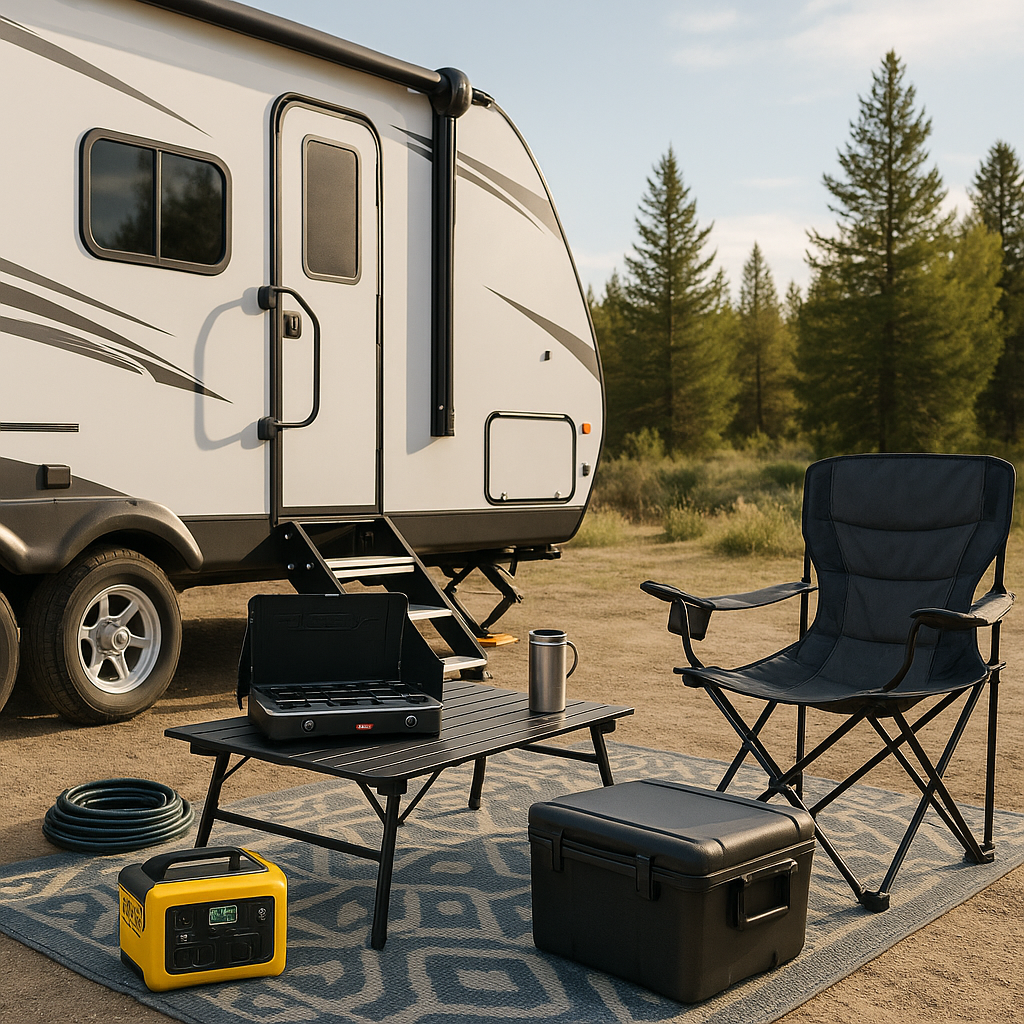
This area should stay clear and easy to clean. Place a durable outdoor mat near the steps to reduce dirt tracked inside.
Lounge Zone
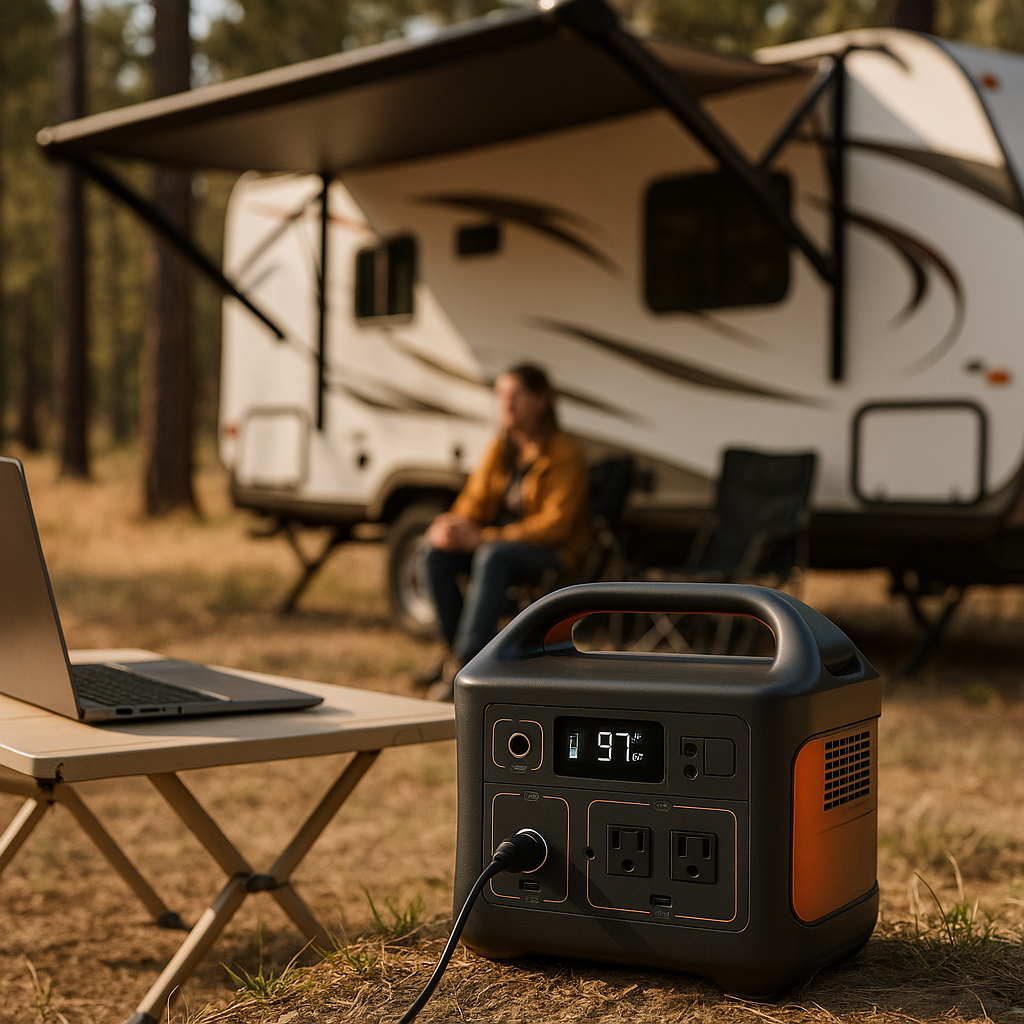
Set chairs and side tables under the awning or in the best shaded area. Keep enough room to walk behind seating without bumping into gear.
Dining or Cooking Zone
If campground rules allow cooking outside, position the cooking area away from high foot traffic and a safe distance from the RV wall, awning fabric, and propane connections.
Storage Zone
Use bins, collapsible shelves, or a designated corner for shoes, toys, cords, and outdoor accessories.
3. Prioritize Shade and Weather Protection
Shade can make or break your campsite experience. Your awning is usually the anchor of the setup, but placement still matters.
We recommend:
- Angling one side of the awning slightly lower if rain is expected
- Securing all accessories against wind
- Avoiding heavy hanging items that strain awning arms
- Leaving enough room to retract the awning quickly
Safety tip: Retract the awning during strong wind, storms, or when leaving the campsite for extended periods.
Best RV Outdoor Living Setup Ideas

These ideas help create a campsite that feels comfortable without becoming overbuilt.
Create a Comfortable Seating Area
Choose seating based on how you actually camp. If you like quiet mornings, two chairs and a small table may be enough. If you host family or friends, flexible seating matters more.
Useful seating strategies include:
- Arranging chairs in a semicircle for conversation
- Using lightweight side tables for drinks and lanterns
- Leaving a clear path from the RV steps to the main gathering area
- Positioning seats to take advantage of views, shade, or a fire ring
Add an Outdoor Rug or Ground Mat
A ground mat helps define the space, reduces tracked-in debris, and makes the area feel more finished. It also gives kids and pets a cleaner place to sit or play.
Place mats on level ground and secure corners if needed.
Safety tip: Avoid bunching edges or loose corners that can create trip hazards.
Set Up a Simple Outdoor Kitchen Station
For campers who cook outside often, a compact prep area can make meals easier. Keep the setup simple and easy to clean.
A practical outdoor kitchen zone may include:
- A folding prep table
- A small trash and recycling station
- Basic cooking tools in one tote
- Paper towels, wipes, and hand sanitizer nearby
Keep food covered and clean up promptly to avoid attracting insects or wildlife.
Use Vertical and Hidden Storage
Outdoor living areas get messy fast when everything lands on the ground. We recommend using organized storage to keep the site neat.
Helpful options include:
- Stackable bins for games and tools
- Hanging organizers near the entry area
- Under-chair baskets or totes
- Shoe trays by the steps
Improve Lighting for Safety and Ambiance
Good lighting makes the campsite safer after dark and helps define the outdoor living area.
Focus on:
- Entry lighting near RV steps
- Soft perimeter lighting around the sitting area
- Task lighting for cooking or grilling
- Path lighting to avoid trips and falls
Safety tip: Keep cords tidy and use outdoor-rated lighting components only.
Make It Pet- and Kid-Friendly
If children or pets travel with you, plan for their movement from the start.
We recommend:
- Keeping a dedicated play or rest area
- Storing leashes, towels, and cleanup supplies near the door
- Avoiding breakable decor at ground level
- Maintaining a clear walking route around furniture and gear
Step-by-Step: How to Set Up the Perfect RV Campsite Outdoor Area
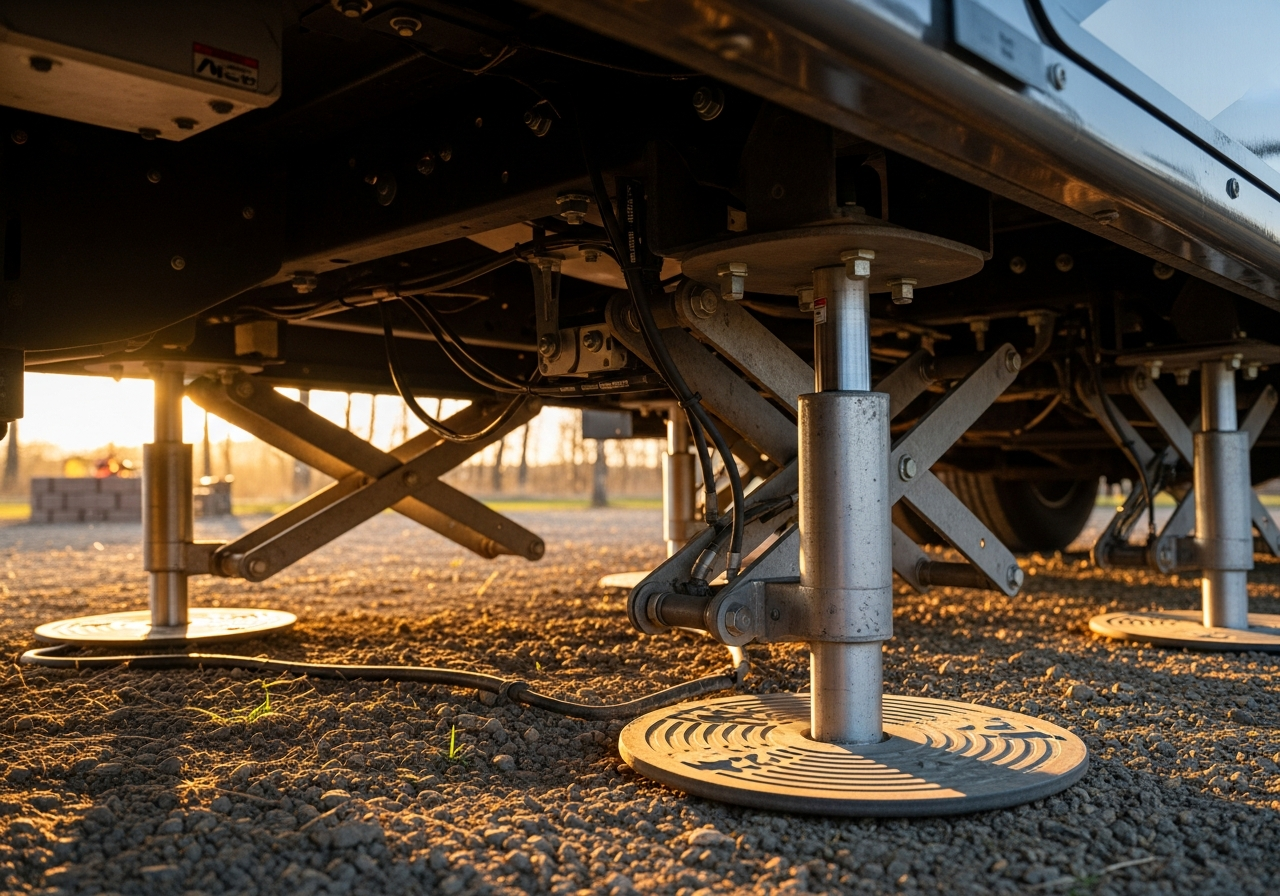
Step 1: Level and Stabilize the RV
Set up the RV fully before arranging the outdoor space.
- Level the rig
- Deploy stabilizers if applicable
- Extend slides only after checking clearance
Safety tip: Confirm no furniture, bins, or mats will interfere with slide operation.
Step 2: Open and Inspect the Awning
Extend the awning according to manufacturer instructions.
- Check fabric for tears
- Make sure arms lock properly
- Adjust pitch for drainage if needed
Step 3: Place the Ground Mat
Position the mat just outside the main entry.
- Keep it centered with the steps
- Leave enough room for the door swing
- Smooth out edges to prevent curling
Step 4: Arrange Seating and Tables
Set the main seating area under shade.
- Face chairs toward a view or gathering point
- Keep side tables within reach
- Leave at least one unobstructed walkway
Step 5: Set Up Cooking and Dining Zones
Place cooking gear away from seating fabric and foot traffic.
- Use a stable surface
- Keep fuel sources secure
- Store utensils and cleanup supplies together
Step 6: Add Lighting and Storage
Finish with practical details.
- Install pathway or step lighting
- Place bins in a low-traffic corner
- Keep frequently used items near the door
Step 7: Do a Final Safety Walkthrough
Before settling in, walk the entire site.
Check for:
- Trip hazards
- Loose cords
- Unstable furniture
- Flammable items near cooking equipment
- Obstructed exits
Troubleshooting Common RV Outdoor Setup Problems
Even a good plan sometimes needs adjustment. Here is how we recommend diagnosing common issues.
1. Problem: The Outdoor Area Feels Crowded
Diagnostic steps:
- Check whether the walkway from RV steps to seating is blocked.
- Count how many items are on the ground.
- Identify gear that is rarely used but still taking up space.
Solutions:
- Remove one or two nonessential pieces
- Shift storage to vertical bins or totes
- Reduce table size or seating count
- Re-center the layout around one main activity zone
2. Problem: Dirt Keeps Getting Tracked Into the RV
Diagnostic steps:
- Inspect the mat placement near the steps.
- Look for muddy or sandy traffic paths.
- Check whether shoes are being stored inside instead of outside.
Solutions:
- Add or reposition a larger entry mat
- Create a shoe drop zone outside the door
- Sweep the mat daily
- Use a second small rug just inside the entry
3. Problem: Wind Makes the Setup Unstable
Diagnostic steps:
- Observe which items move first in gusts.
- Inspect awning angle and tie-downs if used.
- Check lightweight decor, tablecloths, and loose bins.
Solutions:
- Retract the awning if conditions worsen
- Store loose items when away from camp
- Use heavier, lower-profile furniture placement
- Keep the setup minimal on windy days
4. Problem: Bugs Are Taking Over the Space
Diagnostic steps:
- Check for exposed food or trash.
- Look for standing water nearby.
- Observe whether lights are attracting insects at night.
Solutions:
- Seal food and empty trash regularly
- Remove water-holding containers
- Switch to softer, warmer lighting where possible
- Clean cooking surfaces immediately after use
Seasonal Maintenance Guide for Your Outdoor Setup
Outdoor gear lasts longer when we maintain it throughout the year.
Spring Setup Checklist
Before the first major trip:
- Inspect awning fabric for mildew, tears, or weakened seams.
- Clean outdoor mats and allow them to dry fully.
- Check chairs and tables for rust, cracks, or loose hardware.
- Test outdoor lighting and replace weak batteries if needed.
- Restock cleanup supplies, stakes, and storage bins.
Summer Mid-Season Checklist
During frequent camping months:
- Sweep mats and shake out debris after each trip.
- Wipe down chairs and tables to prevent buildup.
- Inspect plastic parts for UV damage.
- Verify that storage totes still close securely.
- Check awning arms and moving parts for smooth operation.
Fall Pack-Up Checklist
At the end of the main season:
- Deep-clean all outdoor furniture and accessories.
- Dry every item completely before storage.
- Fold mats loosely to avoid cracking.
- Store fabric items in a dry, ventilated area.
- Note any repairs needed before next season.
Winter Storage Checklist
If your gear will sit for months:
- Keep cushions and fabric protected from moisture.
- Store metal items off damp concrete if possible.
- Remove batteries from seasonal lights.
- Inspect bins for pest entry points.
- Cover or store gear where freeze-thaw cycles will not cause damage.
Step-by-Step Maintenance Instructions
How to Clean an RV Outdoor Mat
- Shake off loose dirt.
- Rinse with water.
- Scrub lightly with mild soap if needed.
- Rinse thoroughly.
- Let it dry completely before folding.
How to Maintain Folding Chairs and Tables
- Open each piece fully.
- Check hinges, locks, and feet.
- Tighten loose screws or bolts.
- Clean surfaces with mild soap and water.
- Dry completely before storage.
How to Inspect an Awning Area Safely
- Extend the awning on a calm day.
- Look for fabric wear, sagging, or hardware issues.
- Clear debris from arms and joints.
- Confirm the awning retracts smoothly.
- Address any damage before the next trip.
Final Thoughts on Building a Better Campsite
The most effective RV outdoor living spaces are not the most complicated. They are the ones that match how we actually camp. A simple, well-zoned layout with shade, seating, lighting, and organized storage can transform a campsite into a comfortable place to spend the day. When we plan with safety, weather, and maintenance in mind, the outdoor area becomes easier to enjoy on every trip.
Key Takeaways
- Start with a site assessment before unloading outdoor gear.
- Divide your campsite into entry, lounge, cooking, and storage zones.
- Keep walkways clear and avoid blocking RV exits, slides, or hookups.
- Use shade, mats, lighting, and simple storage to make the space more functional.
- Troubleshoot common issues like crowding, dirt, wind, and bugs with small layout changes.
- Follow seasonal maintenance checklists to keep outdoor gear clean, safe, and ready for travel.