How to Set Up Your RV Campsite Quickly and Efficiently

Salem Hassan founded Travelcamp RV and brings 30+ years of hands-on RV, marine, and powersports retail experience to every review.
✎ Reviewed by Salem Hassan — Founder, Travelcamp RV · 30+ years in RV, marine, and powersports retail
Why trust us
ShopRVGear articles are researched by the Searchshop Editorial team using manufacturer specs, RV trade sources, and owner feedback. We match every recommendation to your RV class — Class A, B, C, fifth-wheel, or travel trailer — because gear that works in a 40-ft motorhome often does not fit a Class B van. We may earn a commission on qualifying purchases; it does not change what we recommend.
How to Set Up Your RV Campsite Quickly and Efficiently
If you want to learn how to set up rv campsite fast, the secret is not rushing—it’s following the same smart routine every time. We researched the most common setup mistakes RVers make and the habits experienced campers use to avoid them. With a clear arrival checklist, a safe hookup order, and a few preventive maintenance habits, we can turn campsite setup into a smooth 15- to 30-minute process instead of a stressful one.
Why a Fast RV Setup Matters

A quick, efficient setup saves more than time. It helps us:
- Reduce setup mistakes
- Avoid damage to the RV or campsite utilities
- Improve safety around leveling, chocking, and hookups
- Get settled before dark or bad weather rolls in
- Start enjoying camp sooner
Fast setup comes from preparation, not guesswork. The more consistent our routine, the easier each arrival becomes.
What to Do Before You Pull Into the Site
Before we even stop the RV, a few simple checks make setup much easier.
1. Review the Site Layout
Look for:
- Power pedestal location
- Water hookup location
- Sewer connection position
- Tree branches or obstacles
- Slope of the pad
- Fire ring, picnic table, and slide-out clearance
If possible, get out and walk the site first. This helps us choose the best parking position before backing in.
2. Assign Setup Roles
If traveling with a partner or family, decide who will:
- Guide backing and parking
- Watch slide-out clearance
- Handle wheel chocks
- Connect utilities
- Check inside the RV
Clear roles prevent confusion and speed up the process.
3. Keep Setup Gear Accessible
We recommend storing these items in one easy-to-reach compartment:
- Wheel chocks
- Leveling blocks
- Sewer hose and supports
- Fresh water hose
- Water pressure regulator
- Surge protector or EMS
- Power cord adapters
- Gloves
- Basic flashlight
When everything is in one place, we avoid digging through storage bays after arrival.
Step-by-Step: How to Set Up Your RV Campsite Fast

1. Position the RV Carefully
Pull in or back into the site slowly. Use a spotter whenever possible.
Safety tips
- Use hand signals or two-way radios with your spotter
- Never rely only on backup cameras
- Watch for low branches, posts, and utility hookups
- Stop immediately if you lose sight of your spotter
Aim to position the RV so that:
- The power cord reaches the pedestal comfortably
- The sewer hose has a natural downhill path
- The water hose reaches without stretching
- The entry door opens to a usable patio area
- Slides have full clearance
2. Level Side-to-Side First
If your site slopes, correct side-to-side leveling before unhitching a trailer or finalizing position.
How to do it
- Check the level using a bubble level or built-in leveling system.
- Place leveling blocks on the low side.
- Pull or back the RV onto the blocks slowly.
- Recheck until level.
Safety tips
- Keep people clear while driving onto blocks
- Use blocks rated for your RV’s weight
- Avoid stacking blocks beyond manufacturer guidance
3. Secure the RV With Wheel Chocks
Before disconnecting a towable or moving to final leveling, place wheel chocks firmly against the tires.
Why this matters
Chocks prevent dangerous rolling during unhitching and leveling.
Safety tips
- Chock both sides when appropriate
- Place chocks before unhitching a trailer
- Never trust the parking brake alone on a slope
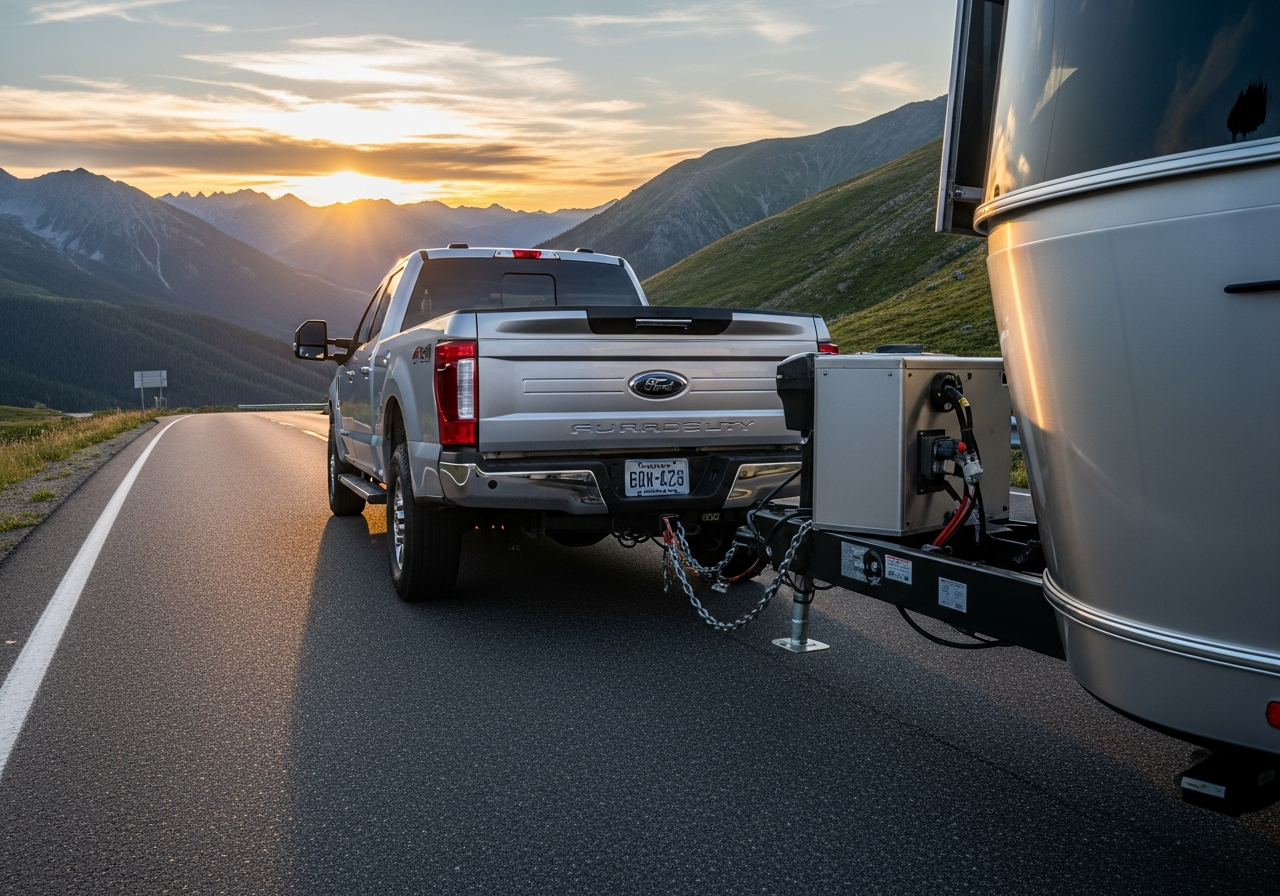
4. Unhitch or Set the Parking Brake
For travel trailers and fifth wheels:
- Chock wheels
- Lower landing gear or tongue jack
- Disconnect safety chains, breakaway cable, and electrical plug
- Unhitch carefully
- Pull tow vehicle forward enough for working room
For motorhomes:
- Put the transmission in park
- Set the parking brake
- Confirm stable position before leveling
5. Level Front-to-Back
Once the RV is secured, level front-to-back.
How to do it
- Use the tongue jack, landing gear, or leveling system.
- Raise or lower until the RV is level.
- Recheck both directions.
If you have auto-leveling, confirm the ground is stable and follow the system instructions.
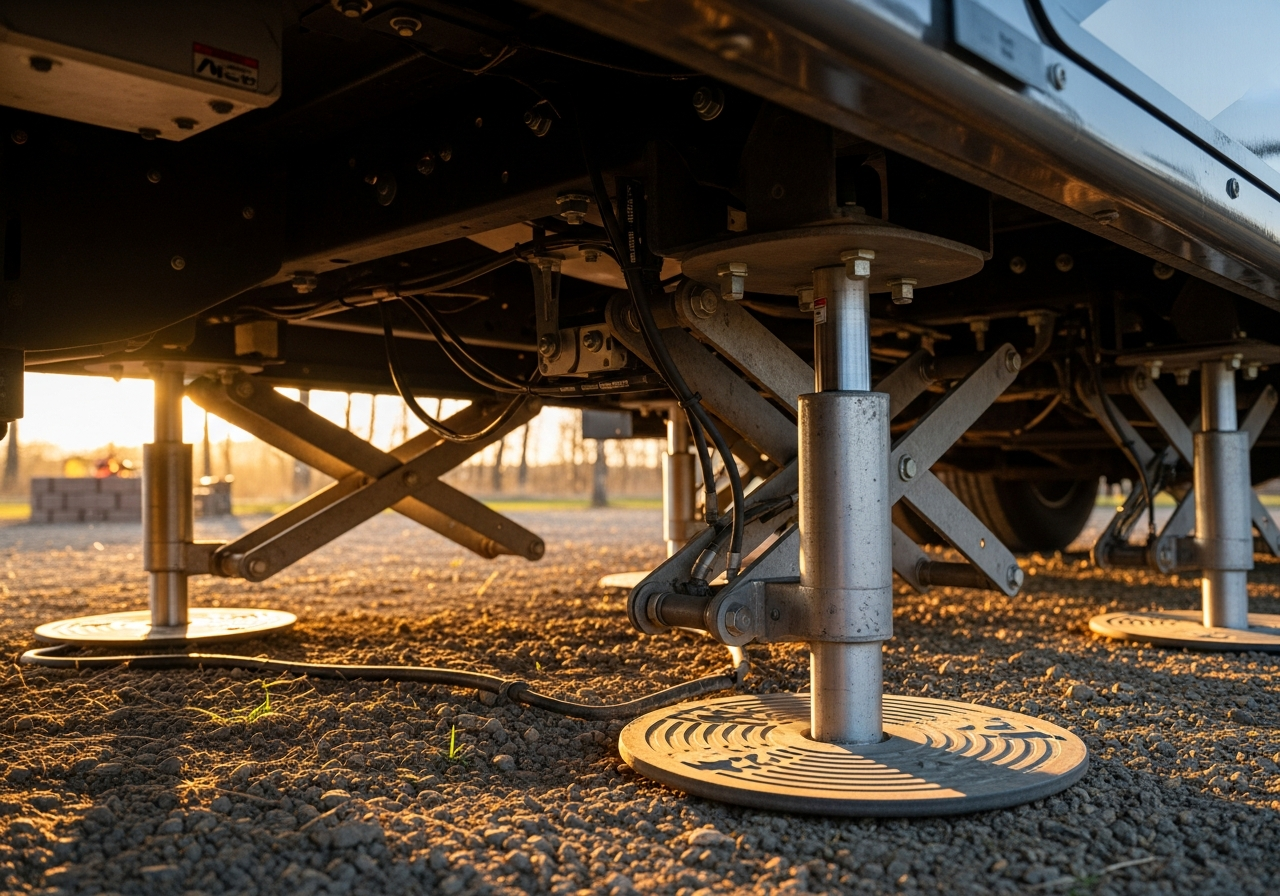
6. Deploy Stabilizers
Stabilizers reduce bounce, but they are not designed to lift or level the RV.
Proper method
- Lower stabilizers until they contact the ground.
- Add a small amount of pressure for firmness.
- Use pads under feet on soft ground if needed.
Safety tips
- Keep hands and feet clear of moving parts
- Do not overextend stabilizers
- Never use stabilizers as jacks unless specifically designed for that purpose
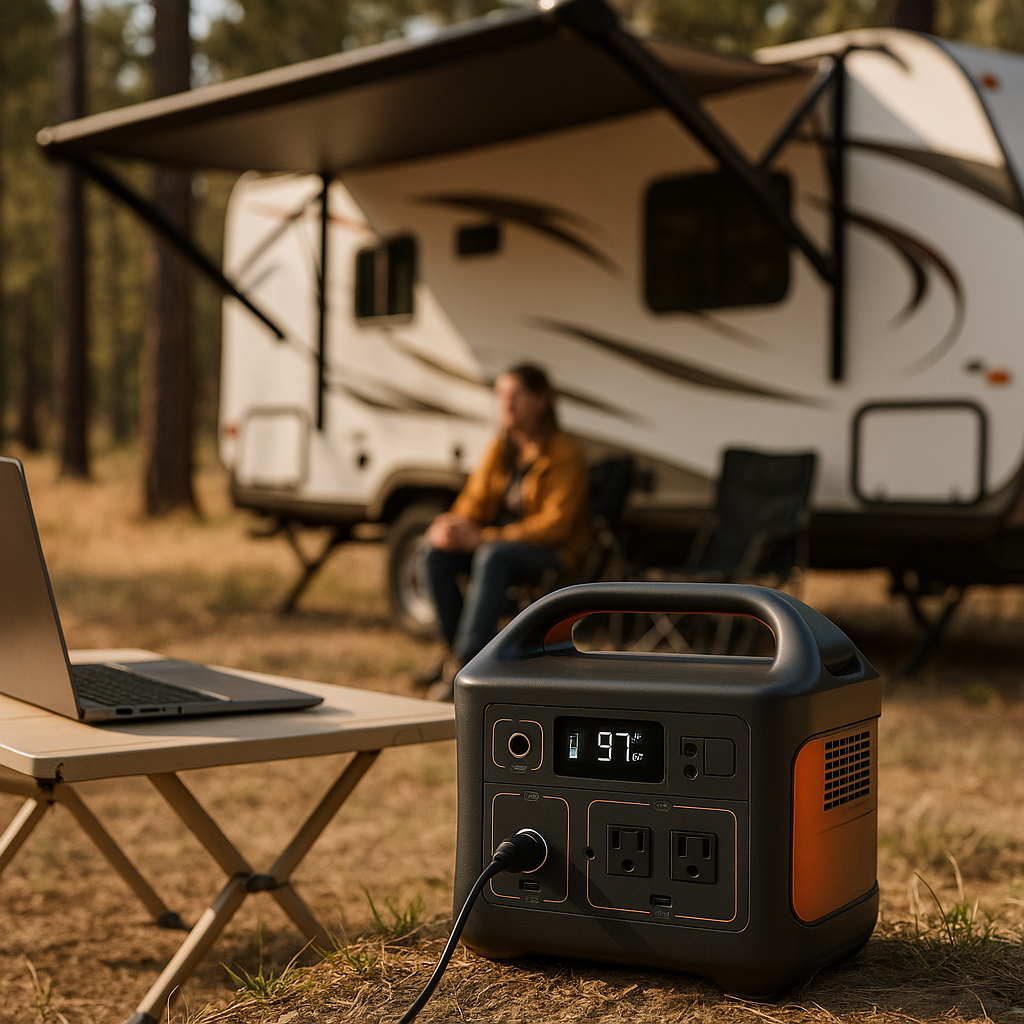
7. Connect Electricity First
We recommend connecting power before dealing with water and sewer so the RV can run lights, climate control, and appliances during the rest of setup.
How to do it
- Make sure the pedestal breaker is off.
- Plug in your surge protector or EMS.
- Connect the power cord securely.
- Turn the breaker on.
- Check inside the RV for proper power.
Safety tips
- Inspect the pedestal for burn marks or damage
- Never plug into a questionable outlet
- Keep connections off wet ground when possible
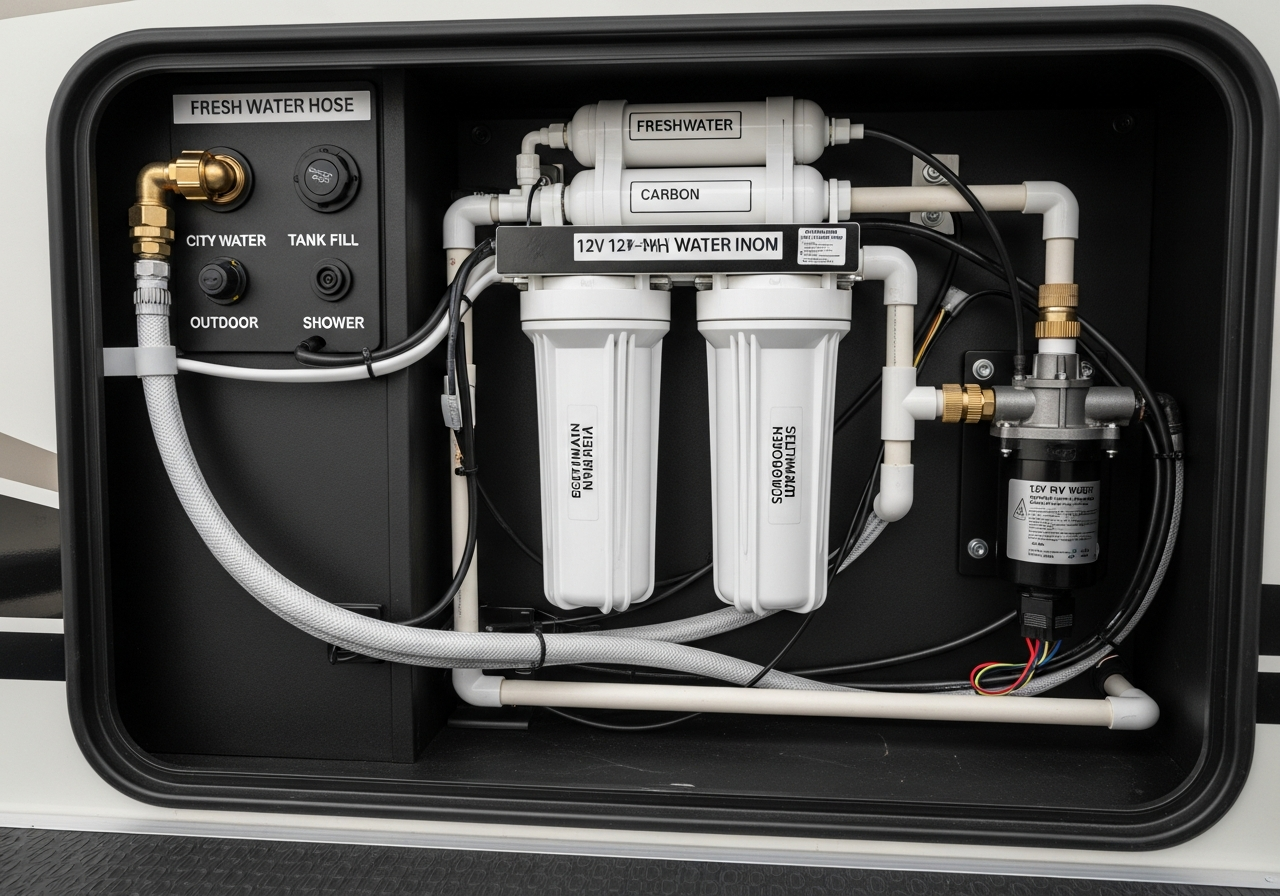
8. Connect Fresh Water
How to do it
- Attach a water pressure regulator to the spigot.
- Connect a drinking-water-safe hose.
- If used, add an inline filter.
- Connect the hose to the city water inlet.
- Turn water on slowly and check for leaks.
Safety tips
- Use a pressure regulator to protect RV plumbing
- Keep fresh water hoses separate from sewer gear
- Sanitize hoses periodically
9. Connect Sewer Only If Needed
Not every stay requires an immediate sewer hookup. For short stays, some RVers wait until dump time.
How to do it
- Put on gloves.
- Connect the sewer hose to the RV outlet securely.
- Connect the other end to the site sewer inlet.
- Use a sewer support if needed for proper slope.
- Keep black tank valve closed until dumping.
- Gray tank may also stay closed until needed, depending on your dumping routine.
Safety tips
- Confirm a tight connection at both ends
- Never leave the black tank valve open continuously
- Rinse and store sewer gear separately from fresh water equipment
10. Open Slides and Set Up the Outdoor Area
Once the RV is level and stable, extend slides if there is enough clearance.
Then set up only the essentials first:
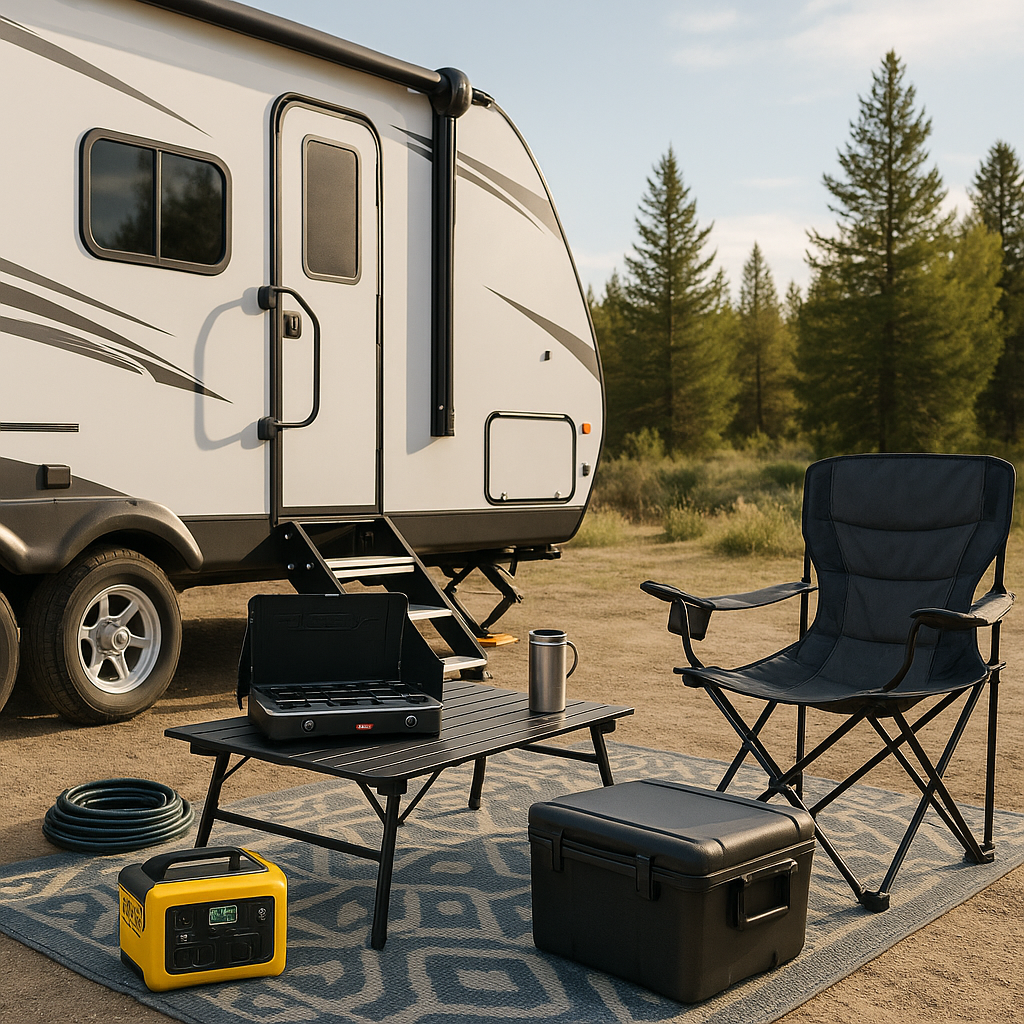
- Entry mat
- Steps if needed
- Patio chairs
- Awning, weather permitting
This keeps setup fast and avoids clutter before the core systems are checked.
11. Do a Final Walkaround
Before relaxing, complete one last inspection.
Check that:
- Chocks are in place
- Stabilizers are down properly
- Power is working
- Water has no leaks
- Sewer is secure
- Slides and awning have clearance
- Storage doors are latched
A 60-second walkaround can prevent major problems later.
Common Mistakes That Slow Down Campsite Setup
- Parking before checking utility locations
- Forgetting wheel chocks
- Hooking up water without a pressure regulator
- Opening sewer valves too early
- Deploying slides before leveling
- Searching multiple compartments for gear
- Skipping the final leak and power check
Troubleshooting RV Campsite Setup Problems
When setup does not go smoothly, use this quick diagnostic process.
1. The RV won’t level properly
Diagnostic steps:
- Check whether the site slope is too extreme.
- Confirm leveling blocks are placed under the correct side.
- Recheck tire position and ground firmness.
- Inspect the leveling system for error codes if equipped.
Solutions:
- Reposition the RV on the pad
- Add or reduce leveling blocks
- Use jack pads on soft ground
- Request a different site if the slope is excessive
2. No power after hookup
Diagnostic steps:
- Verify the pedestal breaker is on.
- Check the surge protector or EMS display.
- Confirm the plug is fully seated.
- Test interior outlets and main appliances.
- Check the RV’s main breaker panel.
Solutions:
- Reset the pedestal breaker once if safe to do so
- Reconnect the cord securely
- Reset tripped RV breakers
- Notify campground staff if pedestal power is faulty
3. Water pressure is weak or leaking
Diagnostic steps:
- Check the spigot connection.
- Inspect hose washers and fittings.
- Confirm the pressure regulator is installed correctly.
- Look for kinks in the hose.
Solutions:
- Tighten fittings by hand
- Replace worn washers
- Straighten the hose
- Fill the fresh tank and use the pump if site pressure is unreliable
4. Sewer hose won’t drain well
Diagnostic steps:
- Check for a low spot in the hose.
- Confirm the hose support creates steady slope.
- Verify the tank valve is fully open during dumping.
- Inspect for twists or blockage.
Solutions:
- Reposition the hose for better downhill flow
- Add support sections
- Flush after dumping if appropriate
- Replace damaged hose components
5. Slides won’t extend safely
Diagnostic steps:
- Check for trees, posts, or pedestal interference.
- Confirm the RV is level.
- Verify battery voltage or shore power connection.
- Inspect inside for furniture or cargo obstruction.
Solutions:
- Reposition the RV if clearance is limited
- Restore power or charge the battery
- Remove interior obstructions
- Consult the owner’s manual for slide override procedures if necessary
Maintenance Guide for Faster Future Setups
Good maintenance makes every arrival quicker and less stressful.
Seasonal RV Campsite Setup Checklist
Spring checklist
- Inspect power cord for wear or heat damage.
- Sanitize fresh water hoses and fittings.
- Check leveling blocks and chocks for cracks.
- Test stabilizers and leveling systems.
- Lubricate moving parts as recommended by the manufacturer.
Summer checklist
- Inspect hoses for UV damage.
- Check awning fabric and hardware.
- Verify surge protector function during heavy campground use.
- Clean storage compartments and reorganize setup gear.
Fall checklist
- Inspect seals around hookups and storage bays.
- Clean and dry sewer equipment thoroughly.
- Review flashlight batteries and emergency gear.
- Check for mud, rust, or corrosion on stabilizer feet and jacks.
Winter checklist
- Drain and winterize water systems if needed.
- Store hoses dry to prevent cracking.
- Keep electrical adapters clean and protected.
- Inspect tire chocks and blocks before off-season storage.
Step-by-Step Maintenance Routine Before Any Trip
1. Repack setup gear in the same order
Store the first-use items where they are easiest to reach:
- Chocks
- Blocks
- Power gear
- Water gear
- Sewer gear
2. Inspect all connection points
Look at:
- Cord ends
- Hose threads
- Rubber washers
- Sewer bayonet fittings
- Regulator screens
Replace worn parts before departure.
3. Test critical systems at home
If possible, connect to shore power or run onboard systems briefly to confirm:
- Lights work
- Leveling system responds
- Water pump operates
- Slides move normally
4. Update your arrival checklist
After each trip, note what slowed you down. Then adjust your checklist so the next campsite setup is even faster.
A Simple Fast-Setup Routine to Follow Every Time
For most RVers, the fastest sequence is:
- Walk the site
- Position the RV
- Level side-to-side if needed
- Chock wheels
- Unhitch or secure the motorhome
- Level front-to-back
- Deploy stabilizers
- Connect power
- Connect water
- Connect sewer if needed
- Extend slides
- Final walkaround
When we follow the same order every time, setup becomes automatic.
Key Takeaways
- The best way to learn how to set up rv campsite fast is to use a repeatable checklist.
- Always prioritize safety: spotter communication, wheel chocks, proper leveling, and careful hookups.
- Connect utilities in a consistent order to reduce mistakes.
- Troubleshooting is easier when we diagnose one system at a time: leveling, power, water, sewer, or slides.
- Seasonal maintenance and organized storage save time at every campsite.
- A final walkaround is one of the quickest ways to catch small problems before they become big ones.