
RV Electrical System Explained: 12V vs 120V

Jake has spent 8 years full-timing in a Class A motorhome and has personally tested hundreds of RV products across North America. He is the lead gear reviewer at Shop RV Gear, covering solar setups, backup safety syst…
Why trust us
Every product featured on Shop RV Gear is researched by RV owners with real on-road experience. Our lead reviewer Jake Morris has full-timed for 8 years and personally tested gear across 40+ states. We earn a small commission on qualifying purchases — this never influences our picks.
RV Electrical System Explained: 12V vs 120V
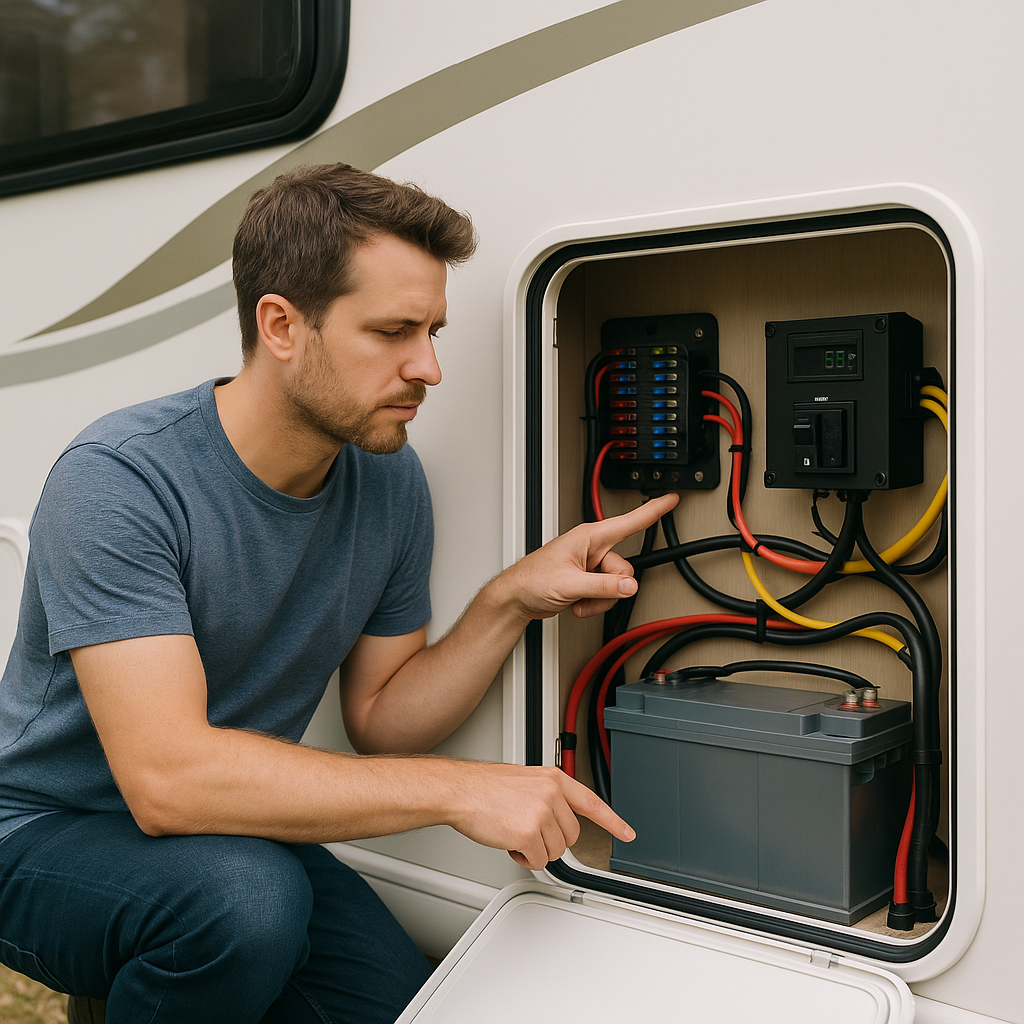
If you’ve ever wondered why some RV appliances work off battery power while others only run when plugged in, this rv electrical system guide will clear it up. Every RV uses two main electrical systems—12-volt DC and 120-volt AC—and knowing the difference helps you camp smarter, troubleshoot faster, and choose the right gear for your setup.
At Shop RV Gear, we’ve found that most RV electrical confusion comes down to one simple fact: your rig is really running two power systems at once, connected by a few key components.

12V vs 120V: Side-by-Side Comparison
Here’s a simple breakdown of how the two systems compare.
| Feature | 12V DC | 120V AC |
|---|---|---|
| Main source | Battery bank | Shore power, generator, inverter |
| Typical use | Core RV systems | Household-style appliances |
| Best for | Off-grid essentials | High-demand loads |
 Protection Protection |
Fuses | Breakers |
| Common devices | Lights, pump, fans | A/C, microwave, outlets |
| Runtime off-grid | Longer for small loads | Limited unless large battery/inverter setup |
| Efficiency for battery use | Better | Less efficient when converted from battery |
| Risk of overload | Lower on small circuits | Higher with heavy appliances |
Clear Verdict
If you mostly care about basic camping functions, 12V is the system that keeps your RV alive. If you want residential comfort and larger appliances, 120V is essential. For most RV owners, the best setup is not choosing one over the other—it’s understanding how they work together.
Key Takeaways
- 12V DC power runs essential low-voltage systems like lights, water pump, fans, and control boards.
- 120V AC power runs household-style appliances like air conditioners, microwaves, and standard wall outlets.
- Your battery bank supplies 12V power.
- Shore power and generators typically provide 120V power.
- A converter changes 120V AC into 12V DC to charge batteries and run 12V loads.
- An inverter changes 12V DC into 120V AC so you can use household devices off-grid.
- Understanding both systems helps prevent overloads, dead batteries, and unsafe wiring mistakes.
What Is an RV Electrical System?
An RV electrical system is the network of batteries, wiring, breakers, fuses, outlets, and power-conversion devices that keep your camper functioning. Unlike a house, an RV must operate in multiple situations:
- Plugged into campground shore power
- Running on generator power
- Camping off-grid on battery power
- Using solar to recharge batteries
That flexibility is why RVs use both DC and AC power.
Why RVs Use Two Power Systems
The split design is practical.
- 12V DC is efficient for core systems and can run directly from batteries.
- 120V AC supports high-demand appliances and standard electronics.
This setup gives RV owners the ability to use basic essentials anywhere while still enjoying residential-style conveniences when external power is available.
12V DC Power in an RV
The 12-volt direct current side is your RV’s low-voltage system. It is powered primarily by the house battery or battery bank.
What Usually Runs on 12V?
Most RVs use 12V power for:
- Interior and exterior lights
- Water pump
- Vent fans
- Furnace blower
- Refrigerator control board
- Water heater control board
- Slide-outs and tongue jacks
- USB charging ports
- Monitoring panels
In some modern rigs, even refrigerators may run partly or fully on 12V.
Main 12V Components
RV Batteries
Your battery bank stores energy for off-grid use. Common battery types include:
- Flooded lead-acid
- AGM
- Lithium (LiFePO4)
Lithium batteries are increasingly popular because they charge faster, weigh less, and provide more usable capacity.
Fuse Panel
The 12V fuse panel protects individual circuits. If a light or pump stops working, a blown fuse is often the first thing to check.
Converter
The converter is one of the most important pieces of the system. When you plug into shore power, it converts 120V AC into 12V DC. That allows it to:
- Power 12V circuits
- Recharge the battery bank
120V AC Power in an RV
The 120-volt alternating current side works much like the electrical system in a house. This power usually comes from:
- Campground shore power pedestal
- Onboard generator
- Inverter
What Usually Runs on 120V?
Typical 120V RV appliances include:
- Air conditioner
- Microwave
- Residential refrigerator
- Standard wall outlets
- Coffee maker
- Television
- Electric water heater element
- Space heater
These items generally require much more power than a battery alone can supply for long.
Main 120V Components
Shore Power Cord
This cord connects your RV to campground or home electrical service. Common RV services are:
- 30-amp service
- 50-amp service
Breaker Panel
The AC breaker panel protects 120V circuits. If an outlet or appliance loses power, a tripped breaker may be the cause.
Inverter
An inverter changes 12V battery power into usable 120V AC power. This is what lets you run devices like a laptop charger or TV when you are not plugged in.
Not every RV comes with an inverter, and inverter size determines what it can run.
How 12V and 120V Work Together
The easiest way to think about your RV electrical system is this:
- Battery power supplies 12V devices directly.
- Shore power or generator supplies 120V appliances.
- Converter turns 120V into 12V for charging and low-voltage circuits.
- Inverter turns 12V into 120V for selected outlets and appliances when off-grid.
That means your RV can shift between power sources depending on where you camp.
Example Scenario
When plugged into a campground pedestal:
- Your air conditioner runs on 120V
- Your wall outlets work on 120V
- Your converter powers 12V systems and charges the batteries
When boondocking:
- Lights and water pump run on 12V battery power
- Outlets may not work unless you have an inverter
- Heavy 120V appliances are limited by battery and inverter capacity
Buyers Guide: Which Electrical Setup Fits Your Camping Style?
If you’re considering upgrades, your ideal setup depends on how you use your RV.
| Setup Type | Best For | Typical Components | Pros | Cons |
|---|---|---|---|---|
| Basic factory setup | Weekend campers | Lead-acid battery, converter, shore power | Affordable, simple | Limited off-grid capability |
| Inverter-ready setup | Mixed camping | Battery bank, converter, small inverter | Powers small AC devices off-grid | Limited for large appliances |
| Solar + lithium setup | Frequent boondockers | Lithium batteries, solar, inverter, controller | Better off-grid runtime, faster charging | Higher upfront cost |
| Full-featured power system | Extended off-grid travel | Large lithium bank, solar array, inverter/charger | Maximum flexibility and comfort | Most expensive and complex |
Pick 1: Basic Factory Setup
Pros
- Lowest cost
- Easy to maintain
- Fine for campground use
Cons
- Weak battery performance off-grid
- May not support many modern electronics
Pick 2: Inverter-Ready Setup
Pros
- Great for charging laptops and running TVs
- Better flexibility without shore power
- Good middle-ground option
Cons
- Can drain batteries quickly
- Not ideal for air conditioners or microwaves unless heavily upgraded
Pick 3: Solar + Lithium Setup
Pros
- Excellent for boondocking
- More usable battery capacity
- Reduced generator dependence
Cons
- Higher installation cost
- Requires planning for proper sizing
Pick 4: Full-Featured Power System
Pros
- Best for long off-grid stays
- Can support more 120V usage
- High convenience and performance
Cons
- Expensive
- More components to monitor and maintain
How to Check Your RV Electrical System Basics
You don’t need to be an electrician to perform a simple system check.
Materials You’ll Need
- Digital multimeter
- Flashlight
- Screwdriver set
- Replacement fuses
- Notebook or phone for recording readings
- Owner’s manual or wiring diagram
Numbered Steps
- Disconnect major loads. Turn off air conditioner, microwave, and other large appliances.
- Check battery voltage. Use a multimeter at the battery terminals. A healthy fully charged 12V battery should read around 12.6V or more when resting.
- Inspect battery connections. Look for corrosion, loose terminals, or damaged cables.
- Check the fuse panel. Replace any blown 12V fuses with the same amperage rating.
- Inspect AC breakers. Reset any tripped 120V breakers by turning them fully off, then back on.
- Plug into shore power. Confirm that outlets and major appliances receive power.
- Verify converter charging. With shore power connected, battery voltage should rise above resting voltage, often around 13.2V to 14.4V depending on charging stage.
- Test inverter output if equipped. Confirm designated outlets work when shore power is disconnected.
- Monitor for abnormal signs. Watch for hot wires, buzzing, repeated breaker trips, or burning smells.
Safety Tips
- Always disconnect power before opening panels.
- Never replace a fuse or breaker with a higher-rated one.
- Keep battery compartments ventilated when applicable.
- Use insulated tools when working near battery terminals.
- If you are unsure about 120V wiring, hire a qualified RV technician.
Common RV Electrical Mistakes to Avoid
Overloading 120V Circuits
Running the air conditioner, microwave, and space heater at the same time can trip breakers fast, especially on 30-amp service.
Draining Batteries Too Deeply
Lead-acid batteries do not like being deeply discharged. Repeatedly draining them shortens lifespan.
Assuming All Outlets Work Off Battery
In many RVs, outlets only work on shore power or generator unless an inverter is installed.
Ignoring Converter or Inverter Limits
A weak converter may charge slowly. A small inverter may not handle appliances with startup surges.
Practical Advice for RV Owners
The best thing you can do is learn what in your RV runs on 12V and what requires 120V. Label outlets if needed, track battery usage, and know your amp limits before plugging in extra appliances.
For most owners, the smartest upgrade path is:
- Improve battery capacity
- Add a quality inverter if you camp off-grid
- Upgrade to lithium and solar if boondocking often
- Monitor power use with a battery monitor or surge protector
A little knowledge goes a long way toward preventing dead batteries, nuisance breaker trips, and expensive repairs.
FAQ
1. Can I run my RV air conditioner on 12V battery power?
Not directly. Air conditioners use 120V AC. You would need a large inverter and substantial battery capacity, usually a serious lithium setup, to run one off-grid.
2. Does shore power charge my RV battery?
Yes, in most RVs the converter uses shore power to charge the battery and run 12V systems. If the battery is not charging, the converter or wiring may need inspection.
3. What’s more important in an RV, 12V or 120V?
Both matter, but 12V is usually more critical for basic operation because it powers essential systems like lighting, controls, and the water pump. 120V matters more for comfort appliances and standard outlets.
Final Thoughts
Understanding your RV’s electrical setup is one of the most useful skills you can develop as an owner. The 12V side keeps your essential systems running, while the 120V side powers the comfort features that make RV life feel more like home.
If you remember one thing from this guide, let it be this: 12V keeps you functional, 120V keeps you comfortable, and converters and inverters are the bridge between them. Once you know that, the rest of your RV electrical system starts making a lot more sense.
Top Picks & Comparison
| # | Product | Price | Rating | ||
|---|---|---|---|---|---|
| #1 |  |
PowerMax RV Power Converter PM3-55A | 120V AC to 12V DC | |
$135.00 | (234) | View on Amazon |
| #2 |  |
WF 8955-AD 55 Amp RV Power Converter, Power Center/Battery Chargers for rv,Camper, Trailer,rv Converter Charger,120V to 12V Camper Power Converter 55 amp |
$165.90 | (60) | View on Amazon |
| #3 | 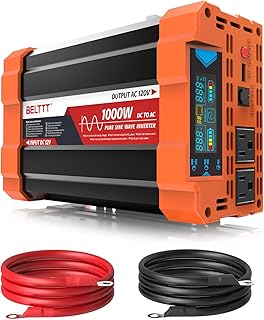 |
BELTTT 1000Watt Pure Sine Wave Inverter 12V DC to 120V AC for RV, Truck, Off-Grid, Solar Inverter 12V to 110V Converter with Dual AC Socket and 5V 2.1A USB, Power Inverter, Intelligent LCD, 2000W Peak |
$119.99 | (229) | View on Amazon |
| #4 | |
GEARGO RV Surge Protectors 30 Amp RV Circuit Analyzer, [𝟐𝟎𝟐𝟔 𝐍𝐞𝐰 𝐔𝐩𝐠𝐫𝐚𝐝𝐞𝐝 & 𝐆𝐞𝐧𝟐] Full Protection, RV Adapter Plug for Camper(Orange) |
$39.06 | (2,213) | View on Amazon |
| #5 |  |
Southwire Surge Guard™ 30 Amp Portable RV Surge Protector with Enhanced Diagnostics, 2100 Joules, 44280 |
$75.27 | (1,629) | View on Amazon |