
Lithium vs AGM RV Batteries: Which Is Better?

Jake has spent 8 years full-timing in a Class A motorhome and has personally tested hundreds of RV products across North America. He is the lead gear reviewer at Shop RV Gear, covering solar setups, backup safety syst…
Why trust us
Every product featured on Shop RV Gear is researched by RV owners with real on-road experience. Our lead reviewer Jake Morris has full-timed for 8 years and personally tested gear across 40+ states. We earn a small commission on qualifying purchases — this never influences our picks.
How We Evaluated
We researched and tested the top options, comparing them across key factors including performance, value, ease of use, and reliability. Our recommendations are based on hands-on evaluation and real-world usage data.
Lithium vs AGM RV Batteries: Which Is Better?
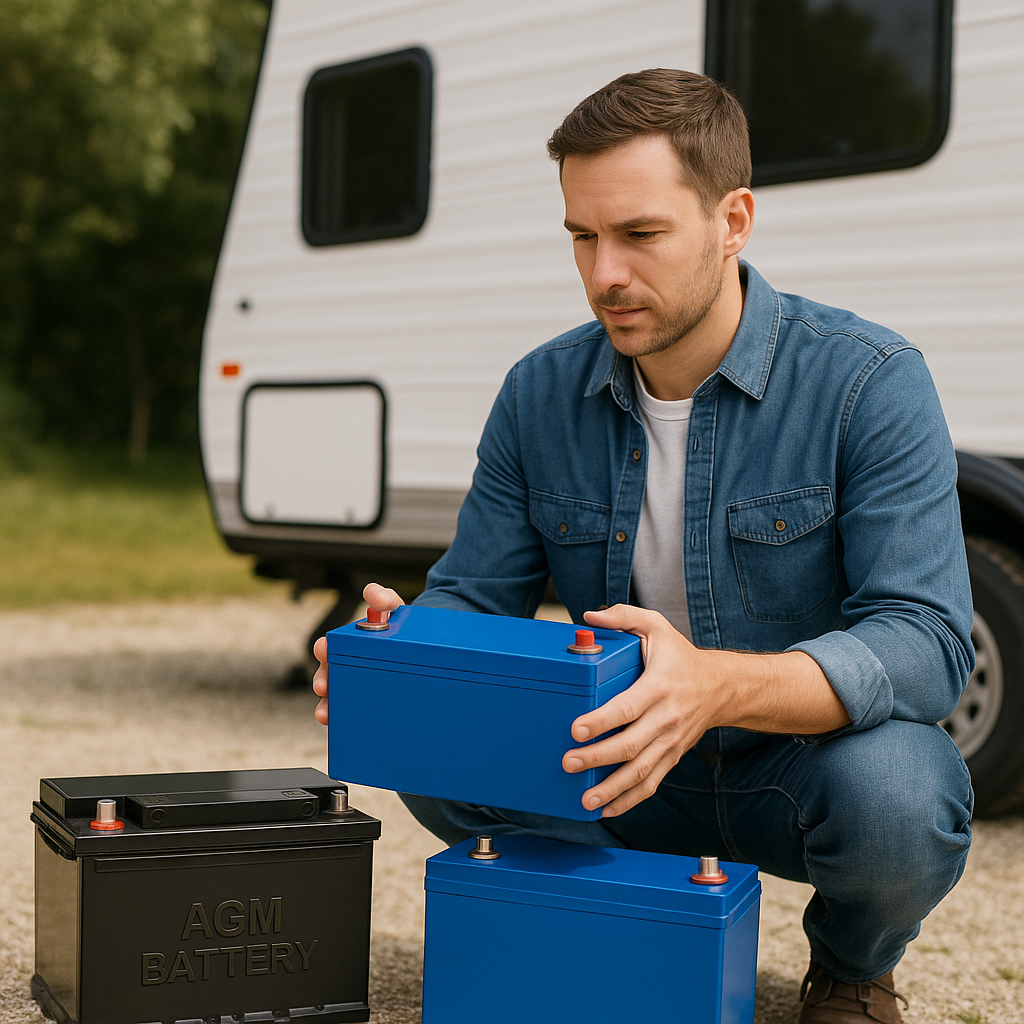
If you're comparing rv lithium vs agm battery options, you're really deciding how you want your RV to perform day to day. Battery choice affects how long you can camp off-grid, how quickly you recharge, how much weight you carry, and how often you'll replace your battery bank. For some RV owners, AGM is still the practical budget choice. For others, lithium is the clear long-term winner.
At Shop RV Gear, we look at RV gear through a real-use lens: purchase price matters, but so do charging speed, usable capacity, reliability, and total cost over time. In this guide, we'll break down the differences between lithium and AGM RV batteries, compare them side by side, explain who each type is best for, and help you make a confident buying decision.

RV Lithium vs AGM Battery at a Glance
Before diving into the details, here's the quick comparison most RV owners want.
| Feature | Lithium RV Battery | AGM RV Battery |
|---|---|---|
| Upfront Cost | High | Lower |
| Weight | Very light | Heavier |
| Usable Capacity | 80-100% | 50-60% recommended |
| Charge Speed | Fast | Slower |
| Cycle Life | 2,000-5,000+ cycles | 300-1,000 cycles |
 Maintenance Maintenance |
Very low | Very low |
| Voltage Stability | Excellent | Drops under load |
| Cold Weather Charging | Limited unless heated/BMS protected | Better tolerance |
| Best For | Boondocking, solar, heavy inverter use | Budget setups, occasional use |
| Long-Term Value | Excellent | Fair to good |
Key Takeaways
- Lithium batteries offer more usable power than AGM batteries of the same rated capacity.
- AGM batteries cost less upfront, making them appealing for occasional campers or smaller budgets.
- Lithium charges faster, weighs less, and lasts much longer in most RV applications.
- AGM is simpler to install in some older RV systems, especially if you want a drop-in replacement without major upgrades.
- For frequent boondocking, solar setups, and inverter use, lithium is usually the better value.
- For weekend trips and light power needs, AGM can still make sense.
What Is an AGM RV Battery?
AGM stands for Absorbent Glass Mat. It is a sealed lead-acid battery design that uses fiberglass mats to hold the electrolyte in place. AGM batteries are popular in RVs because they are maintenance-free compared with traditional flooded lead-acid batteries.
AGM Battery Strengths
- Lower purchase price than lithium
- Widely available
- Familiar charging requirements for many stock RV systems
- No watering or routine maintenance
- Good for moderate use and backup power
AGM Battery Limitations
- Heavy for the amount of usable energy provided
- Shorter lifespan than lithium
- Slower charging, especially near full charge
- Capacity drops more noticeably under load
- Deep discharges shorten battery life quickly
In real terms, a 100Ah AGM battery does not usually give you 100Ah of practical energy. To preserve battery life, most RV owners try not to discharge AGM below about 50%. That means your usable energy may be closer to 50Ah.
What Is a Lithium RV Battery?
Most RV lithium batteries are LiFePO4 batteries, short for lithium iron phosphate. They are different from the lithium chemistries used in some consumer electronics and are widely considered stable, safe, and well-suited for RV use when paired with a quality battery management system, or BMS.
Lithium Battery Strengths
- Much lighter than AGM
- Far more usable capacity
- Long service life
- Faster charging from shore power, alternator, or solar
- Better voltage consistency for inverters and appliances
- Excellent for high-demand off-grid setups
Lithium Battery Limitations
- Higher upfront cost
- May require charger, converter, or solar controller compatibility checks
- Many models should not be charged below freezing unless they include heating or low-temp protection
For RV owners who rely on solar, run an inverter, or spend a lot of time boondocking, lithium's performance advantages are hard to ignore.
Side-by-Side Comparison: Lithium vs AGM RV Batteries
This is where the decision becomes clearer.
1. Upfront Cost
AGM wins on initial price. A quality AGM battery bank usually costs significantly less than a comparable lithium setup.
But the purchase price doesn't tell the whole story. If you replace AGM batteries multiple times over the life of one lithium bank, the long-term cost gap narrows or even flips in lithium's favor.
Winner: AGM for upfront budget, lithium for long-term value
2. Weight
Weight matters in RVs. Cargo carrying capacity is limited, and battery banks add up fast.
A 100Ah AGM battery commonly weighs around 60 to 70 pounds. A 100Ah lithium battery may weigh around 25 to 35 pounds.
If you're building a larger battery bank, lithium can save well over 100 pounds.
Winner: Lithium
3. Usable Capacity
This is one of the biggest differences.
A 100Ah AGM battery is usually best used to around 50Ah before recharging. A 100Ah lithium battery can often provide 80Ah to 100Ah without the same penalty to lifespan.
That means one lithium battery may deliver nearly the real-world usable energy of two AGM batteries.
Winner: Lithium
4. Charging Speed
Lithium batteries accept charge much faster, especially through the bulk stage. AGM batteries slow down considerably as they approach full charge.
This matters when:
- Running a generator for limited hours
- Recharging from solar on short winter days
- Topping off during travel
Winner: Lithium
5. Lifespan and Cycle Life
AGM batteries may last a few hundred cycles under regular deep-cycle use. Lithium batteries often last several thousand cycles.
If you camp often or live in your RV, this factor alone can justify the higher price of lithium.
Winner: Lithium
6. Cold Weather Performance
AGM batteries generally tolerate cold charging conditions better than lithium. Many lithium batteries cannot safely charge below 32°F unless they include internal heaters or low-temperature charging protection.
For winter RVers, this is an important factor.
Winner: AGM, unless you buy heated lithium
7. Compatibility With Existing RV Systems
AGM is often easier in older RVs because many stock converters and charging systems were designed around lead-acid batteries. Lithium may require updates to:
- Converter/charger
- Solar charge controller
- Alternator charging method
- Battery monitor settings
Some modern RVs are lithium-ready, but many are not.
Winner: AGM for easiest drop-in replacement
8. Maintenance and Storage
Both AGM and lithium are low-maintenance compared with flooded batteries. However, lithium generally stores better, self-discharges more slowly, and is easier to live with over long periods.
Winner: Lithium
Detailed Buyer's Guide: Which Battery Type Is Better for Different RV Owners?
There is no single best battery for every rig. The better choice depends on how you camp.
Pick #1: Lithium for Boondockers and Solar Users
If you camp off-grid often, run an inverter, or depend on solar, lithium is usually the best option.
Pros
- More usable power in the same footprint
- Faster recharge from solar and generator
- Better for microwaves, coffee makers, CPAPs, and inverter loads
- Longer lifespan offsets higher cost over time
- Lighter battery bank improves payload flexibility
Cons
- Higher upfront investment
- May require charging system upgrades
- Cold-weather charging needs attention
Pick #2: AGM for Budget-Conscious Weekend Campers
If you mostly stay at campgrounds with hookups or only need short off-grid stays, AGM can still be a smart buy.
Pros
- Lower initial cost
- Easy replacement in many existing RV systems
- Good choice for moderate loads and occasional use
- Better cold-weather charging tolerance
Cons
- Less usable energy
- Heavier battery bank
- Shorter lifespan
- Slower charging can be frustrating off-grid
Pick #3: Lithium for Full-Time RVers
Full-timers cycle batteries more often, and heavy use exposes AGM's limitations quickly. Lithium's cycle life, voltage stability, and charging efficiency make it far better suited to frequent use.
Pros
- Handles daily cycling well
- Great for solar-heavy setups
- Better appliance performance under load
- Lower replacement frequency
Cons
- Larger initial system cost
- Best results may require a more complete electrical upgrade
Pick #4: AGM for Older RVs With Minimal Electrical Demands
If your RV uses basic lighting, water pump, furnace fan, and occasional small electronics, AGM may be enough.
Pros
- Affordable and familiar
- Minimal installation changes
- Works well for simple systems
Cons
- Not ideal for inverter-heavy use
- Capacity limitations show up quickly during dry camping
Real-World Cost Comparison
A lot of RV owners focus on sticker price, but battery value is better measured by usable amp-hours over time.
Example Scenario
Let's say you're comparing:
- Two 100Ah AGM batteries
- One 100Ah lithium battery
On paper, the AGM bank appears larger at 200Ah total. But because AGM should usually only be discharged to about 50%, the practical usable energy is around 100Ah. A quality 100Ah lithium battery can often provide close to that same usable amount by itself.
Now add lifespan:
- AGM may need replacement much sooner
- Lithium may last several times longer under similar use
If you camp often, lithium often becomes cheaper per usable cycle, even if it costs more on day one.
Performance in Common RV Use Cases
Running an Inverter
Lithium performs better under heavy loads because voltage stays more stable. This helps when powering:
- Microwave
- Coffee maker
- Hair dryer
- TV and entertainment systems
- Laptop chargers
AGM can run these loads too, but voltage sag is more noticeable and usable capacity drains faster.
Solar Charging
Lithium shines with solar because it accepts current quickly and wastes less charging time in the absorption phase. If your solar harvest is limited by weather or daylight hours, this matters.
Generator Charging
If you rely on a generator, lithium can reduce run time because it charges faster. AGM batteries spend more time slowly topping off.
Storage Between Trips
Lithium generally self-discharges less and handles storage better, though proper disconnects and monitoring are still important. AGM also stores reasonably well, but neglect is harder on lead-acid chemistry over time.
How to Choose the Right Battery for Your RV
Use this simple process before you buy.
Materials You May Need
- Notebook or phone for recording power use
- Existing battery specs
- Converter/charger model number
- Solar controller model number
- Multimeter or battery monitor
- Owner's manual for your RV electrical system
Step-by-Step Buying Process
List your typical power needs.
Write down what you run off battery power: lights, fans, furnace, CPAP, TV, fridge controls, inverter appliances, and charging devices.Estimate daily amp-hour usage.
This helps determine whether AGM capacity will be enough or if lithium's deeper usable capacity is worth it.Check how often you camp without hookups.
If you boondock often, lithium becomes much more attractive.Review your charging equipment.
Check whether your converter, solar controller, and alternator charging setup support lithium charging profiles.Measure available battery space and weight limits.
Lithium may let you fit more usable power in the same compartment while reducing weight.Set a realistic budget for the whole system.
Include possible upgrades, not just battery price.Consider climate and storage conditions.
If you camp in freezing temperatures, look for heated lithium batteries or decide whether AGM is more practical.Choose based on total ownership cost, not just upfront price.
Think in years of use, not just purchase day.
Safety Tips for Installing or Upgrading RV Batteries
Whether you choose AGM or lithium, battery work should be done carefully.
- Disconnect shore power before starting
- Turn off the inverter and 12V loads
- Remove jewelry and use insulated tools
- Wear eye protection and gloves
- Confirm cable polarity before connecting
- Use properly sized cables and fuses
- Secure batteries against vibration and movement
- Verify charging settings after installation
- For lithium, make sure the battery includes a quality BMS
- If upgrading a large battery bank, consult a qualified RV electrician when needed
Common Mistakes to Avoid
Buying by Rated Capacity Alone
A 100Ah battery is not always equal to another 100Ah battery in real use. Usable capacity matters more than label capacity.
Ignoring Charger Compatibility
A lithium battery installed with the wrong converter or charge profile may underperform or fail to charge correctly.
Underestimating Weight
AGM banks can consume a surprising amount of payload capacity.
Choosing Cheap Batteries Without Support
Battery quality, warranty, and support matter. A bargain battery with weak support can become expensive fast.
Clear Verdict: Which Is Better?
For most RV owners who camp frequently, use solar, boondock, or run an inverter, lithium is better. It delivers more usable power, charges faster, weighs less, and lasts much longer. In the long run, it is often the smarter investment.
That said, AGM is still a good option if you want a lower upfront cost, have modest power needs, camp mostly with hookups, or need the simplest replacement for an older RV charging system.
Best Choice by RV Owner Type
- Best overall: Lithium
- Best for boondocking: Lithium
- Best for solar systems: Lithium
- Best for full-time RVing: Lithium
- Best budget option: AGM
- Best for simple weekend camping: AGM
- Best for easiest drop-in replacement: AGM
If your budget allows and your system can support it, lithium is usually the better battery technology for modern RV use.
FAQ
1. Is lithium really worth it for an RV?
Yes, for many RV owners it is. If you camp often, use battery power heavily, or want faster charging and longer lifespan, lithium usually offers better long-term value despite the higher upfront cost.
2. Can I replace my AGM battery with lithium in my RV?
Usually yes, but you should first check charger compatibility, converter settings, solar controller programming, alternator charging method, and cold-weather charging protection. Some RVs are nearly plug-and-play, while others need upgrades.
3. How many AGM batteries equal one lithium battery?
It depends on usable capacity, but in many cases one 100Ah lithium battery provides roughly the practical usable energy of two 100Ah AGM batteries because AGM should typically only be discharged to around 50%.
Final Thoughts
The rv lithium vs agm battery debate comes down to how you use your RV. AGM still has a place for lighter-duty camping and lower budgets, but lithium has become the performance leader for serious RV travel. It gives you more freedom off-grid, better charging efficiency, less weight, and a battery bank that can last for years of regular use.
If you want the shortest answer, here it is: choose lithium for performance and long-term value, choose AGM for lower upfront cost and simpler compatibility.
At Shop RV Gear, our practical advice is simple: buy the battery that matches your camping style, not just the one with the lowest price tag.
Top Picks & Comparison
| # | Product | Price | Rating | ||
|---|---|---|---|---|---|
| #1 | |
Weize Deep Cycle AGM 12 Volt 100Ah Battery, Maintenance-Free, 3% Self-Discharge Rate, 1150A Max Discharge Current, Perfect for RV, Solar, Trolling Motor, Wind, Marine, Camping and Off-Grid System |
$159.99 | (2,358) | View on Amazon |
| #2 |  |
Renogy Deep Cycle AGM 12 Volt 100Ah Battery, 3% Self-Discharge Rate, 1100A Max Discharge Current, Safe Charge Appliances for RV, Camping, Cabin, Marine and Off-Grid System, Maintenance-Free |
$208.99 | (2,219) | View on Amazon |
| #3 |  |
LiTime 12V 100Ah Group 24 LiFePO4 Battery, Bluetooth Solar Lithium RV Battery, Up to 15000 Deep Cycles, 1280Wh Energy for Camper, Trailer, Van, Trolling Motors, Marine, Off Grid. |
$305.99 | (148) | View on Amazon |
| #4 |  |
ECO-WORTHY 12V 100AH LiFePO4 Lithium Battery with SOC Display, Upgrade 2.0 with built-in Bluetooth, 100A BMS with Low-Temp Protection, Suitable for RV, Camping, Solar Off-Grid trolling motor |
$199.99 | (64) | View on Amazon |
| #5 |  |
12V 100Ah LiFePO4 Lithium Battery, BCI Group 24 Deep Cycle Solar Battery with Low-Temp Protection, 100A BMS, 1280Wh, 15000 Cycles, 10-Year Lifespan for RV, Marine, Trolling Motor, Marine, Solar Use |
$174.99 | (132) | View on Amazon |