
How to Install RV Solar Panels on a Budget

Jake has spent 8 years full-timing in a Class A motorhome and has personally tested hundreds of RV products across North America. He is the lead gear reviewer at Shop RV Gear, covering solar setups, backup safety syst…
Why trust us
Every product featured on Shop RV Gear is researched by RV owners with real on-road experience. Our lead reviewer Jake Morris has full-timed for 8 years and personally tested gear across 40+ states. We earn a small commission on qualifying purchases — this never influences our picks.
🛠 What you'll need
-
 View on Amazon →Topsolar 100W 12V Solar Panel Kit Battery Charger 100 Watt 12 Volt Off Grid System for Homes RV Boat + 30A Solar Charge Controller + Solar Cables + Brackets for Mounting$101.99
 -
 View on Amazon →Renogy 200 Watt 12 Volt Monocrystalline Solar Panel Starter Kit with 2 Pcs 100W Solar Panel and 30A PWM Charge Controller for RV, Boats, Trailer, Camper, Marine ,Off-Grid System$159.99
 -
 View on Amazon →Renogy Solar Panel Mounting Z Brackets Lightweight Aluminum Corrosion-Free Construction for RVs, Trailers, Boats, Yachts, Wall and Other Off Gird Roof Installation, one set of 4 Units,Gray$10.99
 -
 View on Amazon →AILI Battery Monitor with Shunt, 8-120V up to 500A Voltage Current Meter, State of Charge Display up to 999AH, Compatible with LiFePO4 Lithium AGM Gel – for RV Camper Caravan Boat Solar Off-Grid$37.80
How to Install RV Solar Panels on a Budget
If you want to install RV solar panels budget-friendly, the good news is that you do not need a luxury rig or a huge electrical background to get started. With the right parts, a simple plan, and a few cost-saving choices, you can build a reliable RV solar setup that keeps your batteries charged without overspending.
At Shop RV Gear, we recommend focusing on the basics first: your power needs, battery type, panel size, and safe installation. Start small, leave room to expand, and put your money into the components that matter most.

Comparison Table: Best Budget RV Solar Approaches
| Option | Typical Cost | Best For | Pros | Cons | Verdict |
|---|---|---|---|---|---|
| 100W Portable Suitcase Kit | $150-$300 | Weekend campers | No roof drilling, easy setup, portable | Lower output, must deploy manually, theft risk | Best ultra-budget starter option |
| 200W Roof-Mount Kit | $250-$500 | Casual boondockers | Good value, always charging, simple system | Requires roof install, limited expansion in cheap kits | Best overall budget choice |
| 400W Roof-Mount System | $500-$900 | Frequent off-grid RVers | Better charging, supports more devices, scalable | More wiring, higher upfront cost | Best value for longer trips |
| Flexible Panels Setup | $250-$600 | Curved roofs or low-profile needs | Lightweight, low profile | Often shorter lifespan, heat reduces efficiency | Only worth it for specific roof situations |
Key Takeaways
- A basic budget RV solar setup usually includes panels, a charge controller, wiring, fuses, and battery connections.
- Portable and rigid roof-mounted panels are usually the best value for budget-conscious RV owners.
- PWM controllers are cheaper, but MPPT controllers are often more efficient and worth it for larger systems.
- The easiest low-cost setup for many RVers is 200W to 400W of solar paired with an existing battery bank.
- Careful planning prevents expensive mistakes like undersized wire, poor panel placement, or skipped fuses.
What You Need Before You Start
Before buying anything, estimate how much power you actually use in a day. Budget solar works best when expectations are realistic.
Common RV Loads to Estimate
- LED lights
- Water pump
- Phone and laptop charging
- Vent fan
- 12V fridge or propane fridge controls
- Small inverter use for TV or chargers
If you only boondock occasionally, a smaller setup may be enough. If you work remotely or run more electronics, you may need more wattage and battery capacity.
Basic Materials List
To install an affordable RV solar system, you will typically need:
- 1 to 4 solar panels
- Charge controller (PWM or MPPT)
- Mounting brackets or adhesive mounts
- Roof sealant compatible with your RV roof
- Solar cable and battery cable
- Inline fuse or breaker
- MC4 connectors if not included
- Cable entry gland for roof penetration
- Drill, screwdriver, wrench set, and multimeter
- Zip ties or cable clamps
- Safety glasses and gloves
Budget RV Solar System Options Compared
Choosing the right setup is the biggest money-saving decision. Here is a side-by-side look at common budget-friendly options.
Best Budget Picks for RV Owners
1. 100W Portable Solar Suitcase Kit
A portable suitcase kit is often the cheapest and simplest way to start.
Pros
- No permanent mounting required
- Great for testing solar before investing more
- Easy for renters or occasional travelers
Cons
- Lower daily energy production
- Setup and storage take time
- Less convenient in bad weather or quick stops
Best for: RVers who want a low-risk, low-cost entry point.
2. 200W Rigid Roof-Mount Kit
For many RV owners, this is the sweet spot between cost and usability.
Pros
- Better charging consistency than portable kits
- More affordable than larger systems
- Good for lights, fans, device charging, and light inverter use
Cons
- Installation takes more effort
- Cheap kits may include lower-end controllers or thin wiring
- Limited performance if heavily shaded
Best for: Most budget-focused RV owners who camp off-grid a few days at a time.
3. 400W Expandable Budget System
If you can stretch your budget, this setup often gives the best long-term value.
Pros
- Faster battery charging
- Better for cloudy days and shoulder seasons
- More room to grow into lithium batteries or larger inverters
Cons
- Higher upfront cost
- More roof space needed
- Requires closer attention to wire sizing and controller capacity
Best for: RVers who boondock often and want fewer power compromises.
Clear Verdict
If your goal is to install RV solar panels budget-minded without regretting the purchase later, a 200W rigid roof-mount kit is the best overall choice for most RV owners. It offers dependable charging, manageable installation, and a reasonable price. If your budget is extremely tight, start with a 100W portable kit and upgrade later.
How to Install RV Solar Panels on a Budget
Follow these steps for a simple, safe, and cost-conscious installation.
Step 1: Measure Your Roof and Plan Panel Placement
Check your roof for vents, AC units, antennas, and shadows. Place panels where they will get the most sun for the longest time.
Budget Tip
Use cardboard templates the size of your panels before drilling anything. This helps avoid expensive placement mistakes.
Step 2: Choose the Right Panel Type
Rigid panels are usually the best budget value because they tend to last longer and perform better than cheap flexible panels.
Practical Advice
If your roof has enough flat space, choose rigid aluminum-framed panels. They are usually the smartest buy per watt.
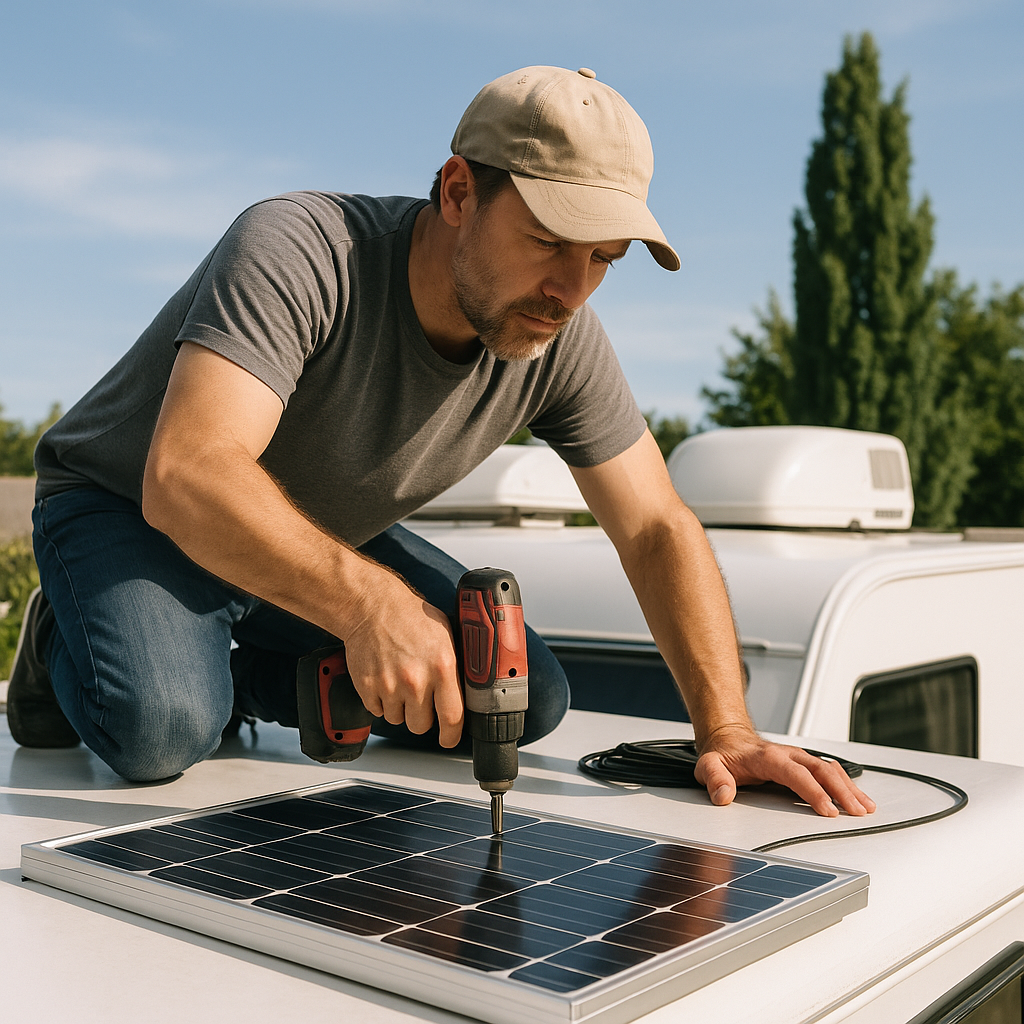
Step 3: Install Mounting Brackets
Attach Z-brackets or low-profile mounts to the panels first. Then mark the mounting holes on the roof.
- Pre-position the panel.
- Mark bracket holes.
- Drill pilot holes carefully.
- Apply sealant under each bracket.
- Screw brackets into the roof structure where possible.
- Cover screw heads and edges with sealant.
Safety Tip
Work on a dry day, wear non-slip shoes, and never rush roof work.
Step 4: Route the Solar Wiring Into the RV
Use a weatherproof cable entry gland or existing refrigerator vent if appropriate and safe for your rig.
- Run positive and negative solar wires from the panel.
- Keep wiring neat and secured.
- Avoid sharp bends and hot surfaces.
- Seal all roof penetrations thoroughly.
Budget Tip
Buy the correct wire length once. Excess cable creates clutter, voltage drop planning issues, and wasted money.
Step 5: Mount the Charge Controller Close to the Batteries
The charge controller should be installed in a dry, ventilated area near the battery bank to reduce voltage loss.
PWM vs MPPT on a Budget
- PWM: cheaper, fine for smaller 12V systems
- MPPT: more expensive, better efficiency, especially with larger arrays
For a small 100W to 200W setup, PWM can be enough. For 400W or future expansion, MPPT is often worth the extra cost.
Step 6: Connect the Battery First
Most charge controllers should be connected to the battery before the solar panels. Always follow the controller manual.
- Install an inline fuse on the positive battery lead.
- Connect controller to battery terminals.
- Confirm correct polarity with a multimeter.
- Only then connect the solar panel input.
Safety Tip
Reverse polarity can damage components. Double-check every positive and negative connection before powering up.
Step 7: Connect the Solar Panels to the Controller
Once the battery is connected, attach the solar input wires.
- Use MC4 connectors if included
- Tighten all terminals securely
- Confirm charging status on the controller display or indicator lights
At this point, your system should begin charging when the panels are in sunlight.
Step 8: Test the System
Testing now can save costly troubleshooting later.
Check These Items
- Battery voltage before and after charging
- Controller charging mode
- Fuse placement
- Roof sealant coverage
- Cable security and strain relief
If something looks off, stop and inspect before continuing to use the system.
Common Budget Installation Mistakes to Avoid
Buying the Cheapest Kit Without Reviewing Components
Some low-cost kits save money by including weak brackets, undersized wire, or an entry-level controller that limits performance.
Skipping Fuses or Breakers
This is never a good place to cut costs. Proper circuit protection is essential.
Underestimating Battery Capacity
Solar panels charge batteries, but they do not replace the need for enough battery storage.
Ignoring Roof Shade
A panel partly shaded by an AC unit or antenna can lose a surprising amount of output.
Ways to Save Money Without Sacrificing Reliability
Buy Expandable Components
A controller with a little extra capacity can save money later if you add more panels.
Start With Your Existing Batteries
If your current batteries are still healthy, use them first and upgrade later.
Shop Kits Carefully
A complete kit can be cheaper than buying parts one by one, but compare what is actually included.
Install It Yourself
Labor can add hundreds of dollars to a basic solar job. If you are comfortable with basic tools and wiring, DIY offers the biggest savings.
FAQ
1. How much does it cost to install RV solar panels on a budget?
A basic DIY setup can cost around $150 to $500 for a small system and $500 to $900 for a more capable 400W setup. Costs depend on panel size, controller type, and whether you already have usable batteries.
2. Is it cheaper to use portable or roof-mounted solar panels for an RV?
Portable kits are usually cheaper to start with and easier to set up. Roof-mounted systems often provide better long-term value because they charge automatically whenever sunlight is available.
3. Can I install RV solar panels myself?
Yes, many RV owners can handle a small solar install themselves if they follow wiring instructions, use proper fuses, and seal roof penetrations correctly. If you are unsure about electrical work, have a professional inspect your setup.
Final Thoughts
The smartest way to install RV solar panels budget-friendly is to keep the system simple, buy dependable components, and avoid overbuilding on day one. For most RVers, a 200W roof-mounted kit offers the best balance of price, performance, and convenience.
If you camp only occasionally, start with a portable kit. If you boondock often, invest in a 400W expandable setup. Either way, careful planning and safe installation will do more for your budget than chasing the absolute cheapest parts.
For more practical RV gear advice, product comparisons, and honest recommendations, keep exploring Shop RV Gear.