Complete RV Winterization Checklist: How to Prepare for Cold Storage

Salem Hassan founded Travelcamp RV and brings 30+ years of hands-on RV, marine, and powersports retail experience to every review.
✎ Reviewed by Salem Hassan — Founder, Travelcamp RV · 30+ years in RV, marine, and powersports retail
Why trust us
ShopRVGear articles are researched by the Searchshop Editorial team using manufacturer specs, RV trade sources, and owner feedback. We match every recommendation to your RV class — Class A, B, C, fifth-wheel, or travel trailer — because gear that works in a 40-ft motorhome often does not fit a Class B van. We may earn a commission on qualifying purchases; it does not change what we recommend.
Complete RV Winterization Checklist: How to Prepare for Cold Storage
If you need a reliable rv winterization checklist, the goal is simple: prevent freeze damage, moisture problems, battery failure, pests, and avoidable wear while your rig sits in cold storage. We researched the most important seasonal maintenance tasks RV owners should handle before temperatures drop, and we organized them into a practical, step-by-step guide you can follow whether you own a motorhome, travel trailer, or fifth wheel.
A proper winterization routine does more than protect pipes. It also helps preserve seals, tires, appliances, and interior surfaces so your RV is easier to recommission in spring.
Why Winterizing Your RV Matters

Water expands when it freezes. Even a small amount left in a supply line, pump, faucet, toilet valve, or water heater can crack components and lead to expensive repairs. Cold storage also creates other risks:
- Battery discharge and sulfation
- Tire flat-spotting and UV damage
- Roof and window seal deterioration
- Mold and mildew from trapped moisture
- Rodent and insect intrusion
- Fuel degradation in motorized RVs and generators
We recommend winterizing before the first hard freeze, not after. If overnight temperatures are already approaching freezing, it is time.
Complete RV Winterization Checklist
1. Choose the Right Time and Storage Setup
Before you begin, decide where the RV will be stored and gather supplies.
What to prepare
- RV antifreeze rated for potable water systems
- Water heater bypass kit if not already installed
- Basic hand tools
- Air compressor with regulator, if using blow-out method
- Moisture absorbers
- Battery maintainer, if appropriate
- Tire covers
- Sealant inspection supplies
- Gloves and safety glasses
Safety tip
Never use automotive antifreeze in your RV plumbing. It is toxic and not designed for potable water systems.
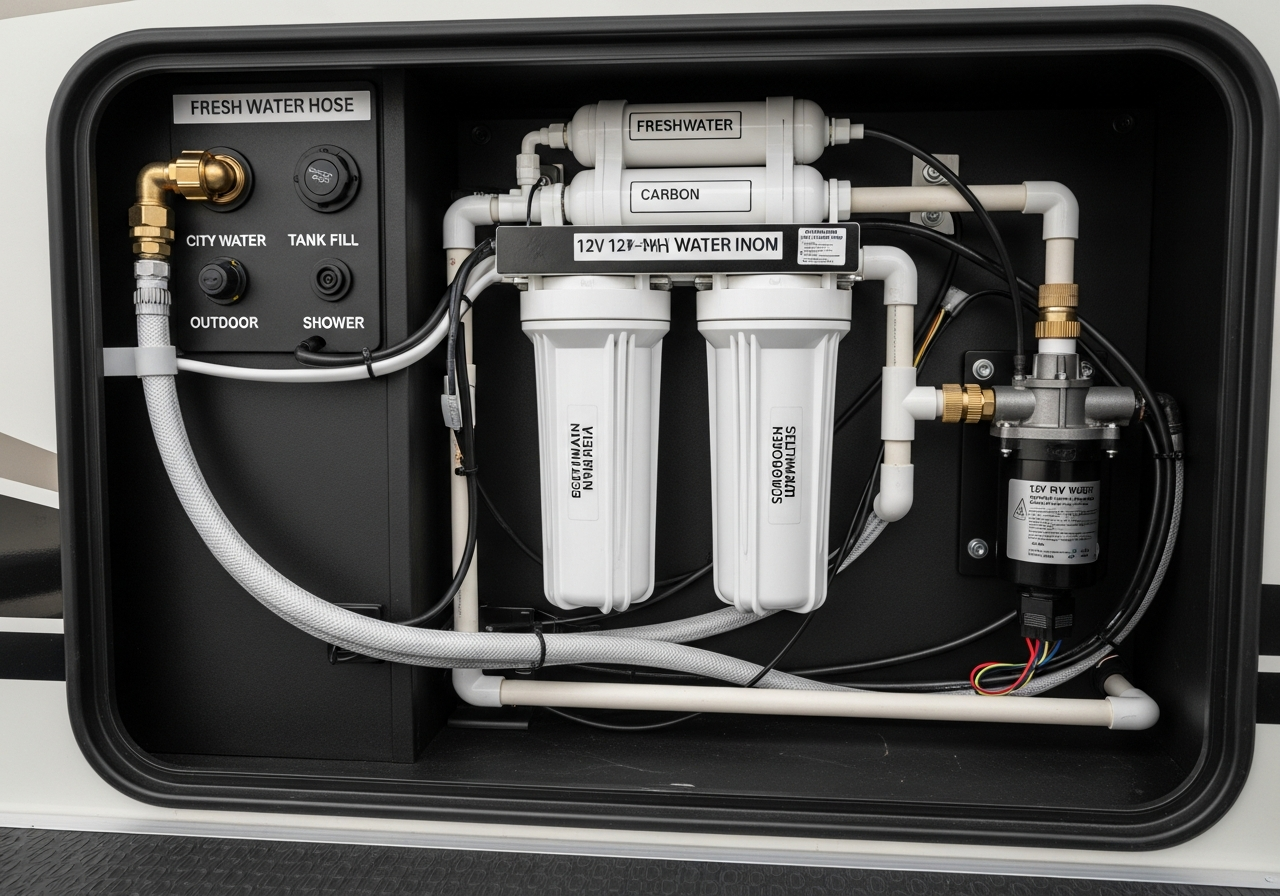
2. Drain the Fresh Water System
This is the foundation of every winterization job.
Step-by-step
- Turn off the water heater, water pump, and all water sources.
- Let the water heater cool completely before draining it.
- Disconnect from city water.
- Open the fresh tank drain and low-point drains.
- Open hot and cold faucets, including shower and exterior shower, to release pressure and help water drain.
- Flush the toilet until the line is empty.
- Drain and rinse holding tanks at an approved dump station.
Safety tip
Do not remove a water heater drain plug or anode rod while the tank is hot or pressurized.
3. Bypass and Drain the Water Heater
Water heaters hold several gallons of water, so bypassing them saves antifreeze and protects the tank.
Step-by-step
- Confirm the heater is off and cool.
- Open the pressure relief valve carefully.
- Remove the drain plug or anode rod and let the tank drain fully.
- Set the water heater bypass valves to bypass mode.
- Leave the drain plug out during storage if your manufacturer allows it, so any residual moisture can escape.
Why this matters
If you do not bypass the heater, you will waste antifreeze filling the tank instead of protecting the plumbing lines.
4. Protect the Plumbing Lines
There are two common methods: blowing out the lines with compressed air, or pumping RV antifreeze through the system. In very cold climates, many owners use both.
Option A: Blow out the lines
- Set your air compressor regulator to a safe pressure, typically no more than 30 to 40 PSI unless your RV manufacturer specifies otherwise.
- Attach a blow-out plug to the city water inlet.
- Open one faucet at a time, hot then cold, until only air comes out.
- Repeat for sinks, shower, exterior shower, toilet, and washer hookups if equipped.
- Cycle the water pump briefly to clear residual water if recommended by your manual.
Safety tip
Too much air pressure can damage fittings, valves, and water lines. We recommend checking your owner’s manual for the exact pressure limit.
Option B: Pump RV antifreeze through the system
- Close all drains.
- Set the water heater to bypass mode.
- Insert the winterizing siphon hose into RV antifreeze, or use the fresh tank only if your system specifically allows it.
- Turn on the water pump.
- Open each faucet one at a time until pink antifreeze flows from hot and cold sides.
- Run antifreeze through the shower, exterior shower, toilet valve, and appliance water lines.
- Pour antifreeze into each drain to protect P-traps.
Don’t forget these fixtures
- Ice maker line
- Washer or washer prep line
- Dishwasher if equipped
- Black tank flush inlet
- Exterior kitchen sink
5. Empty, Clean, and Prep the Interior
Cold storage can trap odors and moisture if the interior is sealed without preparation.
Step-by-step
- Remove all food, liquids, and toiletries that can freeze or attract pests.
- Defrost and clean the refrigerator.
- Leave the fridge and freezer doors propped open.
- Wipe down counters, floors, and soft surfaces.
- Remove bedding if storing long term, or ensure it is completely dry.
- Open cabinet doors to improve airflow.
- Place moisture absorbers in key areas.
Safety tip
Never leave propane appliances running while the RV is in storage unless the storage arrangement and manufacturer guidance specifically permit it.
6. Care for Batteries and Electrical Systems
Batteries suffer in cold weather, especially if left discharged.
Step-by-step
- Turn off the main battery disconnect.
- Clean battery terminals and check for corrosion.
- Fully charge the batteries before storage.
- Remove batteries for indoor storage if your climate is severe and your setup allows it.
- If left installed, use a quality maintainer when shore power and battery type make it appropriate.
What we recommend
Check electrolyte levels on flooded lead-acid batteries before storage, and top off only with distilled water if needed.
7. Protect Tires, Seals, Roof, and Exterior
Winter weather affects more than plumbing.
Step-by-step
- Inflate tires to the manufacturer’s recommended cold pressure.
- Park on a firm, level surface.
- Use tire covers if the RV is stored outdoors.
- Inspect roof seams, window seals, slide seals, and marker lights for cracks or gaps.
- Clean the exterior to remove road salts, grime, and debris.
- Lubricate moving seals and hinges if recommended by the manufacturer.
- Cover vents or openings only with products designed to prevent pest entry while preserving ventilation where needed.
Safety tip
Use stable ladders and proper fall precautions when inspecting the roof. If conditions are icy or the roof is slick, postpone the inspection.
8. Prepare the Engine, Fuel, and Generator
This applies to motorhomes and generators on any RV.
Step-by-step
- Fill the fuel tank to reduce condensation, unless your manufacturer advises otherwise.
- Add the correct fuel stabilizer and run the engine long enough to circulate it.
- Change oil and filters if due, since contaminated oil can sit all winter.
- Check coolant freeze protection.
- Run the generator under load according to the manufacturer’s storage guidance.
9. Prevent Pest Intrusion
Rodents can do major damage during storage.
Step-by-step
- Seal obvious entry points around plumbing, wiring, and underbody penetrations.
- Remove all food, pet food, and scented items.
- Vacuum thoroughly, especially under dinettes and beds.
- Inspect storage compartments and engine bays.
- Recheck monthly if possible.
Seasonal RV Storage Checklist

Late Fall: Before Storage
- Winterize plumbing
- Drain and clean tanks
- Charge and disconnect batteries
- Clean interior and remove perishables
- Inspect roof and seals
- Stabilize fuel if applicable
- Inflate tires and install covers
- Set moisture control and pest prevention measures
Mid-Winter: Monthly Check
- Look for leaks or snow load issues
- Check battery voltage if batteries remain installed
- Inspect for rodent activity
- Confirm covers, seals, and vents are secure
- Empty any collected moisture if needed
Early Spring: De-Winterization Preview
- Inspect for visible damage before reconnecting systems
- Reinstall batteries if removed
- Flush antifreeze from plumbing
- Sanitize the fresh water system
- Test appliances, pump, and fixtures
- Recheck tire pressure and roof seals
Troubleshooting Common Winterization Problems
1. Problem: Water still comes out clear instead of pink antifreeze
Diagnostic steps
- Confirm the water heater bypass is engaged.
- Check that the siphon hose is fully inserted into the antifreeze jug.
- Verify the winterizing valve is set correctly.
- Make sure the pump is primed and running.
Solution
Reset the bypass and winterizing valves, reprime the pump, and run each fixture again until pink fluid appears.
2. Problem: Low water flow when blowing out lines
Diagnostic steps
- Check compressor pressure and regulator setting.
- Inspect the blow-out plug for leaks.
- Open only one fixture at a time.
- Look for kinked hoses or closed valves.
Solution
Correct the pressure setting, reseal the connection, and isolate one line at a time for a more complete blow-out.
3. Problem: Water heater fills with antifreeze
Diagnostic steps
- Inspect bypass valve position.
- Review your plumbing layout if there are multiple valves.
- Confirm no valve was left partially open.
Solution
Drain the heater, reset the bypass correctly, and restart the winterization process.
4. Problem: Bad odors during storage
Diagnostic steps
- Check refrigerator and freezer for trapped moisture.
- Inspect sink and shower drains.
- Look for forgotten food or damp fabrics.
- Check holding tanks were fully emptied and rinsed.
Solution
Clean affected areas, add antifreeze to P-traps, improve ventilation where possible, and replace moisture absorbers.
5. Problem: Dead battery in spring
Diagnostic steps
- Measure resting voltage.
- Check for parasitic loads left on.
- Inspect terminals for corrosion.
- Review whether the battery was fully charged before storage.
Solution
Recharge and test the battery. If capacity is poor after charging, replacement may be necessary. Prevent recurrence with a disconnect switch and proper maintenance charging plan.
Mistakes to Avoid
- Waiting until after a freeze to winterize
- Forgetting the exterior shower or black tank flush line
- Using too much air pressure in plumbing lines
- Leaving food or moisture inside the RV
- Ignoring battery care
- Skipping roof and seal inspection
- Assuming one mild day means winter risks are over
Final Thoughts
A dependable rv winterization checklist helps turn a stressful seasonal task into a repeatable routine. We recommend working methodically: start with water systems, move to batteries and fuel, then finish with the interior, exterior, and pest prevention. That sequence reduces the chance of missing hidden components and helps protect the RV from the most expensive cold-weather damage.
If your RV has unique systems such as residential refrigerators, hydronic heating, washing machines, or advanced water filtration, always cross-check this guide with the owner’s manual.
Key Takeaways
- Winterize before the first hard freeze.
- Drain water completely and bypass the water heater.
- Use only RV antifreeze for potable plumbing systems.
- Protect overlooked fixtures such as exterior showers, ice makers, and black tank flush lines.
- Charge and maintain batteries before storage.
- Inspect seals, tires, and roof areas to prevent off-season damage.
- Check the RV periodically through winter for leaks, pests, and battery condition.
- In spring, flush and sanitize the water system before use.