
Best RV Smart Home Systems and Automation Upgrades

Jake has spent 8 years full-timing in a Class A motorhome and has personally tested hundreds of RV products across North America. He is the lead gear reviewer at Shop RV Gear, covering solar setups, backup safety syst…
Why trust us
Every product featured on Shop RV Gear is researched by RV owners with real on-road experience. Our lead reviewer Jake Morris has full-timed for 8 years and personally tested gear across 40+ states. We earn a small commission on qualifying purchases — this never influences our picks.
How We Evaluated
We researched and tested the top options, comparing them across key factors including performance, value, ease of use, and reliability. Our recommendations are based on hands-on evaluation and real-world usage data.
⚡ Quick Picks
- #1 MICRO-AIR EasyTouch Digital RV Thermostat Replacement - Programmable and Reliable - WiFi and Bluetooth Enabled - Replacement Thermostat Compatible with Dometic CT Single Zone (351 Black) $259.00 View on Amazon →
- #2 Victron Energy Smart Battery Shunt - Battery Monitor (Bluetooth) - Victron Smart Shunt with Detailed in-app Insights - 6.5V-70V, 500 amp View on Amazon →
- #3 MarCELL Cellular Temperature, Humidity & Power Monitor (Verizon) - Made in The USA - RVs, Pet Safety Monitoring, Second Home Monitoring, Greenhouse Monitoring,- 24/7 Monitoring & Instant Alerts $119.95 View on Amazon →
Short answer: the best RV smart home systems and upgrades
If you want a genuinely useful smart RV setup, start with a solid monitoring and control backbone, then layer in smart climate, power monitoring, and a few quality automation devices—not a pile of random gadgets.
For most RVers, a great starting stack looks like this:

- Best overall smart RV system: RV Whisper Monitoring System + Micro‑Air EasyTouch RV Thermostat + Victron smart power gear (for rigs with an inverter/solar)
- Best budget-friendly “light” smart setup: Govee Wi‑Fi/Bluetooth temperature sensors + a couple of Kasa smart plugs + a basic cellular hotspot
- Best for boondockers/full-timers: Victron Cerbo GX system with VRM remote monitoring + Micro‑Air EasyTouch + dedicated routers like Pepwave/MobileMustHave bundles
From there, add smart locks, leak sensors, and camera/alarms if you store your rig or travel with pets.
Below, we’ll walk through the best specific products, how they work together in an RV (not just in a house), and what’s worth skipping.
How to think about “smart” in an RV (before you buy anything)
RVs aren’t houses. You’re dealing with:

- Limited and sometimes dirty power
- Spotty or non‑existent internet
- Temperature swings and vibration
- Mixed 12V DC, 120V AC, propane systems
So your smart setup should prioritize:
Local control first, cloud second
Make sure you can still control key systems (climate, lights, pump, slides) when there’s no internet.[1][5]Low power draw
Always check idle wattage and standby draw—especially routers, hubs, and cameras—so you don’t murder your batteries overnight.[1]Simple, manual overrides
You should always be able to run the furnace, AC, pump, and slides without a phone or Wi‑Fi.[1]Rugged and serviceable gear
In an RV, vibration and heat kill cheap electronics. Stick to brands RVers actually use long‑term.[2][5]
Best overall RV smart home setup (practical, modular)
If you want a cohesive, reliable setup that covers climate, power, and basic security, build around this trio:
1. RV Whisper – best RV‑specific monitoring backbone
What it is: A hub designed specifically for RVs that collects data from multiple Bluetooth and wireless sensors (temperature, battery, propane, door, etc.) and lets you monitor things locally or remotely.[2]
Why it works for RVs:
- Made for RV systems/voltages and typical RV use cases
- Works even with inconsistent campground Wi‑Fi when paired with a hotspot
- Great for pet safety (temp alerts), battery protection, and storage monitoring[2]
Pros
- Designed from the ground up for RVs, not houses[2]
- Supports multiple sensor types (temp, door, 12V battery, etc.)
- Remote monitoring via internet when available
- Runs on 12V, low power draw
Cons
- It’s monitoring and alerting, not full automation (you’ll pair it with smart plugs or other devices to act)
- Upfront hardware cost plus optional subscription for cloud features
Best for: RVers who want a central health dashboard for their rig (especially if you store the RV, travel with pets, or boondock).
2. Micro‑Air EasyTouch RV – best smart RV thermostat
What it is: A drop‑in smart thermostat for many Dometic and Coleman‑Mach RV HVAC systems, with a touchscreen and Wi‑Fi/Bluetooth app control.[2][5]
Why it’s worth it:
- Lets you monitor and adjust temperature remotely—great for pets or coming back to a cooled coach[2]
- More precise control than most OEM RV stats
- Works even if the internet is down via Bluetooth
Pros
- Supports heating and cooling control in one unit[2]
- App control from inside or away from the RV
- Clear upgrade over basic RV thermostats
- Real‑world adoption: widely used across RV forums and full‑time rigs
Cons
- Model compatibility matters—must match your existing AC/furnace unit
- Relies on Wi‑Fi/internet for remote control outside Bluetooth range
Best for: Anyone who camps with pets, stores their RV in temperature‑sensitive climates, or just wants better climate control.
3. Victron “smart” power stack – best for serious solar/boondocking
What it is: Victron makes solar charge controllers, inverters, battery monitors, and the Cerbo GX system with VRM online portal—many components are “Smart” models with built‑in Bluetooth.[5]
Why it’s powerful:
- Gives you detailed insight into battery state, solar input, and AC loads[5]
- Lets you remotely monitor your entire electrical system when you have internet
- Can participate in automations (e.g., controlling inverters based on state of charge)[5]
Pros
- Extremely well‑proven in the RV and off‑grid community[5]
- Great data visibility for troubleshooting and energy planning
- Many devices have local Bluetooth control (no internet required)
Cons
- Overkill for weekenders who mostly plug into shore power
- System pricing adds up when you include Cerbo GX and display
- Requires more installation expertise
Best for: Full‑timers and boondockers who rely heavily on solar and batteries.
Best budget smart RV setup (high impact, low complexity)
If you don’t want to re‑wire the rig, start with simple, modular gear that works on shore or off‑grid.
4. Govee Wi‑Fi/Bluetooth temperature & humidity sensors
Govee makes small battery‑powered sensors that connect via Bluetooth and, in some models, Wi‑Fi for remote alerts.
Pros
- Affordable entry for pet safety and storage monitoring
- Log data over time (handy for troubleshooting condensation or AC issues)
- Many models support alerts when temp hits thresholds
Cons
- App‑centric; no broader automation hub built‑in
- Wi‑Fi models need internet for remote alerts
Best for: Campers who want basic temperature awareness without rewiring thermostats.
5. TP‑Link Kasa smart plugs – simple automation for 120V devices
Kasa Wi‑Fi smart plugs (like the HS103/HS105 or energy‑monitoring KP115) are popular in RVs for controlling portable devices: heaters, fans, dehumidifiers, or lights.[4][5]
Pros
- Cheap, easy to set up
- Schedule or remotely toggle 120V devices[4][5]
- Some models track energy usage
Cons
- Only work on 120V AC (no direct 12V devices)
- Require Wi‑Fi for remote control and app integration
Best for: Quick wins like automating fans, lamps, dehumidifiers, space heaters—especially when plugged into shore power.
Smart security & access for RVs
6. Smart locks for RV doors
Several manufacturers now offer keyless and smart locks sized for RV entry doors. These typically replace your entire latch with a keypad, sometimes Bluetooth/app control.
Pros
- No more hiding keys under mats
- Easy code sharing for family or service techs
- Some models support remote locking/unlocking
Cons
- Needs careful fitment check for your specific door cutout
- Batteries must be maintained; keep a physical backup key
Best for: RVers who frequently host guests, rent their rig out, or hate juggling keys.
7. Smart cameras and video doorbells (Ring, etc.)
Ring and similar camera systems are popular for both RV storage and campsites, especially when paired with a cellular hotspot.[2]
Pros
- Motion alerts if someone approaches your rig in storage or at a park[2]
- Two‑way talk and recording when on decent internet
Cons
- Heavy bandwidth use—not ideal on weak data plans
- High power draw if left running off batteries
Best for: Folks who store RVs off‑site, or full‑timers who want a virtual “front porch” camera at each campground.
8. Leak and water‑shutoff automation
RV water damage is brutal and expensive. Some DIYers integrate smart water leak detectors and valves that can automatically shut off water if a leak is detected.[4]
Common combo:
- Wi‑Fi/Bluetooth leak sensors placed near plumbing, water heaters, and under sinks[4]
- A smart valve on the main water inlet
Pros
- Can save thousands in damage if a line blows while you’re away[4]
- Works well combined with voice assistants and routines
Cons
- More complex plumbing installation
- Valves must be rated for RV water systems and vibration
Best for: Full‑timers and long‑term seasonal campers who leave water connected for days at a time.
Smart climate & comfort upgrades
9. Smart thermostats & vent fans
Beyond Micro‑Air, some RVers use smart plugs and temperature triggers to run fans and space heaters automatically.[4]
Common setups include:
- Smart plugs connected to portable fans that kick on when temp exceeds a set point
- Smart control of dehumidifiers to combat condensation
Pros
- Very noticeable comfort upgrade with minimal cost[4]
- Helps manage moisture, mold, and temperature swings in small spaces
Cons
- You must size devices appropriately for your circuit loads and battery capacity
- Avoid unattended high‑wattage space heaters on cheap smart plugs
Best for: Anyone camping in humid or hot climates who struggles with condensation or stuffiness.
Smart power, solar, and energy monitoring
10. Smart inverters, charge controllers, and monitors
Alongside Victron, other brands offer app‑connected solar controllers, inverters, and battery monitors that integrate into a smart RV system.[3][5]
Why they matter:
- Energy is the heart of a smart RV—without knowing your power situation, automations can strand you with dead batteries[3]
- Monitoring lets you see real‑time consumption and dial in your routines[5]
Typical smart power functions:
- Remote on/off of inverters[5]
- Detailed battery state‑of‑charge and history
- Solar production tracking and configuration[5]
Pros
- Makes boondocking far more predictable[5]
- Helps you decide when to run generators, change campsites, or adjust loads
Cons
- Requires installation and planning
- Not as plug‑and‑play as consumer smart bulbs or plugs
Best for: Serious off‑grid and extended‑stay RVers.
Smart internet & connectivity (the backbone of everything)
Most smart RV gear assumes some kind of internet for full functionality. But you should design your system so core functions don’t die without it.[1][5]
11. RV‑grade routers and cellular boosters
Many full‑timers use dedicated mobile routers and antennas rather than just phone hotspots.[2][5]
Common upgrades include:
- Cellular hotspots or routers with multiple carrier SIMs
- Roof‑mounted antennas for better signal
- Optional Starlink Roam for higher‑bandwidth needs[2]
Pros
- More stable Wi‑Fi network inside the rig
- Enables cameras, smart plugs, RV Whisper, etc., to function reliably[2]
Cons
- Hardware plus data plans can be pricey
- Still useless in true dead zones
Best for: Full‑timers, remote workers, and anyone building a larger smart system around internet‑enabled gear.
What to skip (or be cautious about) in an RV
Not every shiny smart gadget belongs in a rolling earthquake. Some common traps:
Wi‑Fi–only devices with no local fallback
If a device becomes useless the moment your hotspot drops, think twice before making it mission‑critical (e.g., for your furnace).Always‑on high‑draw gadgets
Cloud cameras, consumer mesh Wi‑Fi, and some home hubs can quietly consume 20–50W continuously—a big hit to batteries.Cloud‑dependent door locks or jacks
Always make sure there’s a mechanical key or manual control for essentials like your entry door, stabilizers, and slides.[1]Cheap smart plugs on high‑wattage heaters
Many compact smart plugs aren’t intended for 1500W heaters at 100% duty cycle in a confined cabinet. Use heavy‑duty, rated gear or manual control for those loads.
How to build your RV smart home system step by step
You do not need to install everything at once. In fact, it’s better if you don’t.[1]
Step 1: Decide your top 2–3 goals
Common starting goals:
- Keep pets safe (temperature monitoring/alerts)
- Protect against leaks and low batteries in storage
- Make arrival/departure easier (lights, jacks, slides, awning control)
Step 2: Pick a backbone
Choose either:
- A monitoring‑first backbone (e.g., RV Whisper + temp sensors), or
- A power‑first backbone (Victron / other smart solar & inverter gear)
Make sure whatever you choose supports local access and 12V‑friendly power draw.[1][5]
Step 3: Add climate control
- If compatible, upgrade to Micro‑Air EasyTouch RV for smart HVAC control[2]
- Otherwise, use temp sensors + smart plugs to at least automate fans and dehumidifiers
Step 4: Layer in convenience devices
- Smart plugs for lamps/fans
- Smart lock for the entry door
- Leak sensors in vulnerable spots
Test each new device on campground power first, then see how it behaves on batteries.
Step 5: Test failure modes
- Unplug the hotspot and confirm you still have basic control[1]
- Kill shore power and see how long your always‑on devices last
- Confirm manual overrides on pump, furnace, slides, and jacks
If the rig still works fine when everything “smart” is offline, you’ve done it right.
Frequently Asked Questions
How much does it cost to make an RV “smart”?
It depends on how deep you go:
- Entry level (sensors + smart plugs): Modest spend for basic temp monitoring and a couple of automated devices.
- Mid‑range (RV Whisper + smart thermostat + a few smart devices): Roughly in the low‑to‑mid hundreds in hardware depending on choices.
- High end (Victron electrical system + Cerbo GX, cameras, router, full automation): Can climb into the thousands, especially with professional installation.
You can absolutely start small and build over time—there’s no requirement to do it all at once.[1][5]
Can I use regular home smart devices in an RV?
Often yes, but with caveats:
- Many Wi‑Fi smart plugs, bulbs, and cameras will work if you supply consistent 120V and Wi‑Fi
- You must account for vibration, heat, and constrained power; consumer devices weren’t designed for that environment
- Be cautious adding non‑RV‑rated gear to critical systems like brakes, slides, or jacks; keep critical functions on RV‑specific hardware with manual backups[1]
Do I need internet for an RV smart home system?
You need some internet for remote features (alerts while you’re away, camera viewing, remote thermostat tweaks), but a smart RV should be designed to work locally first.[1][5]
Look for:
- Devices with Bluetooth or local web interfaces for on‑site control
- Systems (like some DIY Home Assistant setups) that keep automations running even when there’s no cloud connection[5]
Remote access is a bonus; basic control and safety can’t depend on it.
All Picks & Comparison
| # | Product | Price | Rating | ||
|---|---|---|---|---|---|
| #1 |  |
MICRO-AIR EasyTouch Digital RV Thermostat Replacement - Programmable and Reliable - WiFi and Bluetooth Enabled - Replacement Thermostat Compatible with Dometic CT Single Zone (351 Black) |
$259.00 | (217) | View on Amazon |
| #2 | 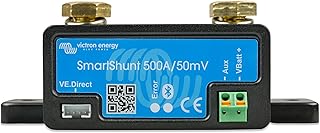 |
Victron Energy Smart Battery Shunt - Battery Monitor (Bluetooth) - Victron Smart Shunt with Detailed in-app Insights - 6.5V-70V, 500 amp |
— | (3,990) | View on Amazon |
| #3 |  |
MarCELL Cellular Temperature, Humidity & Power Monitor (Verizon) - Made in The USA - RVs, Pet Safety Monitoring, Second Home Monitoring, Greenhouse Monitoring,- 24/7 Monitoring & Instant Alerts |
$119.95 | (778) | View on Amazon |
| #4 |  |
RV Pet Temperature Monitor - No WiFi Required - Remote Power Outage & Temp Sensor with App Alerts. Cellular Monitoring System for Home Safety & Server Room (1 Year Subscription Included) |
$129.90 | (517) | View on Amazon |
| #5 |  |
Renogy 500A Battery Monitor with Shunt, High and Low Voltage Programmable Alarm, Range 10V-120V up to 500A, 20ft Shielded Cable, Compatible 12V Lithium Sealed, Gel, Flooded Batteries,Black |
$85.95 | (2,569) | View on Amazon |