
Solar vs Generator Power for RV: Which Is Better?

Jake has spent 8 years full-timing in a Class A motorhome and has personally tested hundreds of RV products across North America. He is the lead gear reviewer at Shop RV Gear, covering solar setups, backup safety syst…
Why trust us
Every product featured on Shop RV Gear is researched by RV owners with real on-road experience. Our lead reviewer Jake Morris has full-timed for 8 years and personally tested gear across 40+ states. We earn a small commission on qualifying purchases — this never influences our picks.
How We Evaluated
We researched and tested the top options, comparing them across key factors including performance, value, ease of use, and reliability. Our recommendations are based on hands-on evaluation and real-world usage data.
Solar vs Generator Power for RV: Which Is Better?
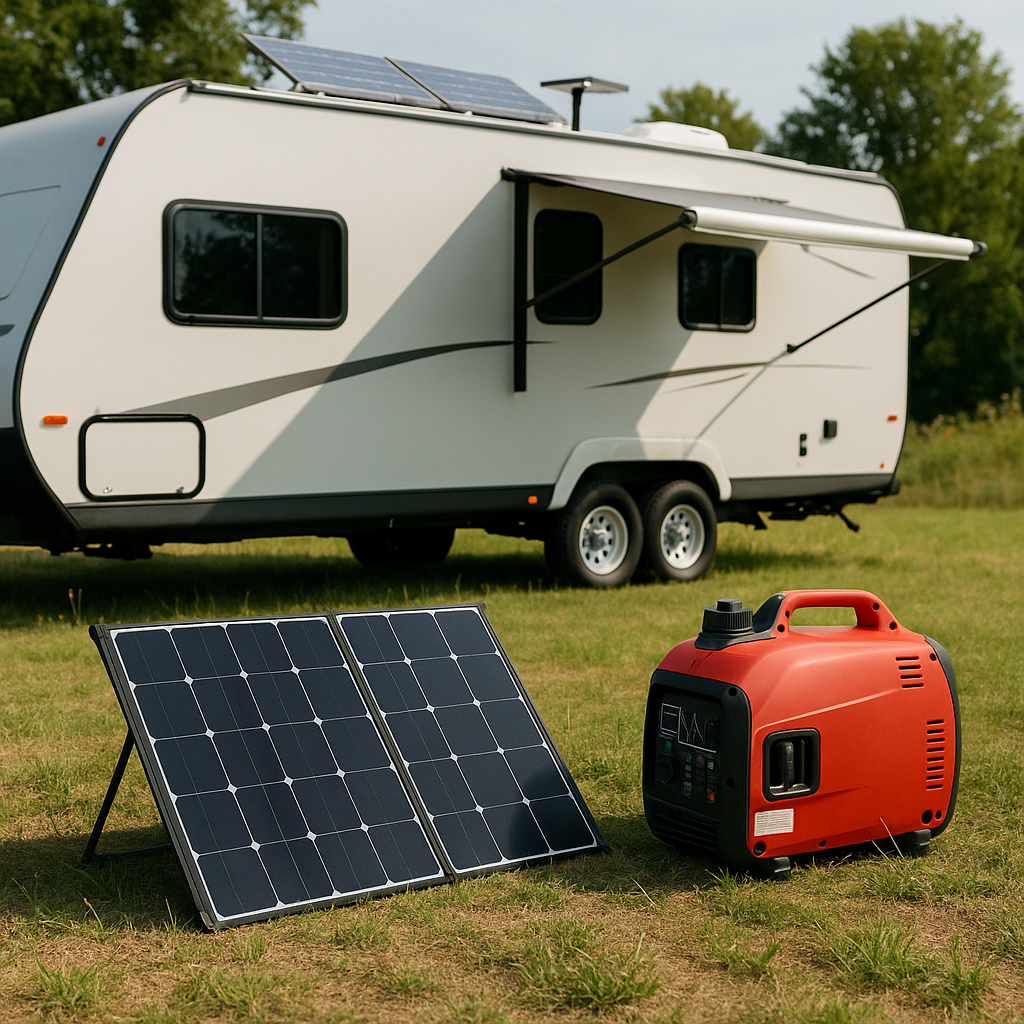
When RV owners compare rv solar vs generator setups, they’re usually trying to answer one practical question: what will keep the lights on, the batteries charged, and the trip comfortable without wasting money? We’ve tested both approaches across weekend trips, longer boondocking stays, and mixed-weather camping, and the truth is that neither system is automatically “better” for every rig. The right choice depends on how you camp, what you power, and how much convenience, quiet, and off-grid freedom matter to you.
In this comparison, we’ll break down where solar wins, where generators still dominate, and when a hybrid setup makes the most sense for RV owners.

RV Solar vs Generator at a Glance
Here’s the short version: solar is quieter, cleaner, and cheaper to run over time, while generators deliver more raw power on demand and work regardless of weather. If you mainly need to keep batteries topped off, run lights, fans, a water pump, devices, and maybe a 12V fridge, solar is often the better long-term solution. If you need to run an air conditioner, microwave, space heater, or other heavy 120V loads for long stretches, a generator is still hard to beat.
Side-by-Side Comparison Table
| Feature | RV Solar Power | RV Generator Power |
|---|---|---|
| Upfront cost | Moderate to high | Low to moderate |
| Ongoing cost | Very low | Fuel, oil, maintenance |
| Noise | Silent | Loud to moderate, depending on model |
| Ease of use | Automatic once installed | Manual setup, fueling, starting |
| Power output | Limited by panel, battery, inverter size | High continuous output available |
| Best for | Battery charging, light/medium loads, boondocking | Heavy loads, AC use, backup power |
| Weather dependence | Yes | No |
| Maintenance | Low | Moderate to high |
| Environmental impact | Low | Higher emissions and fuel use |
| Campground friendliness | Excellent | Sometimes restricted by quiet hours |
| Long-term value | Strong for frequent off-grid use | Strong for occasional heavy-demand use |
How RV Solar Power Works
An RV solar system collects energy through roof-mounted or portable solar panels, sends that power through a charge controller, stores it in your battery bank, and then uses an inverter if you need household-style AC power. In real use, the battery bank matters just as much as the panels. A large solar array with a small battery bank will still leave you short on usable energy after sunset.
Core Components of an RV Solar Setup
A practical RV solar system usually includes:

- Solar panels, mounted or portable
- Charge controller, ideally MPPT for better efficiency
- Battery bank, often lithium for usable capacity and faster charging
- Inverter for 120V appliances
- Monitoring system to track battery state and solar input
- Proper wiring, fuses, disconnects, and mounting hardware
We recommend thinking of solar as an energy ecosystem, not just panels on the roof. Many RV owners underbuild the battery side and then assume solar “doesn’t work,” when the real bottleneck is storage.
What Solar Is Best At
Solar excels at replacing small but constant battery drain. It’s ideal for powering:
- LED lighting
- Roof vent fans
- Water pump
- Phone and laptop charging
- Router or hotspot
- TV for moderate use
- CPAP machine
- 12V compressor fridge
- Small kitchen appliances used briefly through an inverter
If your goal is extended boondocking with low noise and minimal hassle, solar becomes very attractive.
How RV Generators Work
An RV generator converts fuel into electrical power. That may be a built-in onboard generator running on gasoline, propane, or diesel, or a portable inverter generator you carry in storage. Unlike solar, a generator can produce power immediately as long as you have fuel.
Types of RV Generators
Most RV owners choose between:
- Built-in generators: Convenient and integrated, common on motorhomes and larger fifth wheels
- Portable inverter generators: Quieter, more fuel-efficient, and popular for travel trailers and smaller RVs
- Traditional portable generators: Usually cheaper, but louder and less campground-friendly
In our experience, inverter generators are the most practical option for many RV owners because they’re easier on electronics, quieter than conventional units, and efficient at variable loads.
What Generators Are Best At
Generators are the clear winner when you need high surge power or extended 120V appliance use. They’re especially useful for:
- Air conditioners
- Microwaves
- Coffee makers
- Hair dryers
- Electric heaters
- Power tools
- Fast battery charging through a converter or charger
- Cloudy-weather backup during long off-grid stays
If your camping style includes hot climates, long summer trips, or frequent use of energy-hungry appliances, a generator covers needs that solar alone often cannot.
Cost Comparison: Upfront and Long-Term
Cost is one of the biggest deciding factors in the solar versus generator debate.
RV Solar Costs
A realistic RV solar setup can range widely:
- Basic portable panel kit: $200-$500
- Mid-range roof setup with 200W-400W and controller: $600-$1,500
- Full off-grid system with lithium batteries and inverter: $2,000-$6,000+
That upfront cost can feel steep. But once installed, solar has very low operating cost. Sunlight is free, and maintenance is minimal if components are installed correctly.
RV Generator Costs
Generator costs usually look easier at first:
- Small portable inverter generator: $500-$1,200
- Dual-fuel inverter generator: $800-$1,500
- Built-in RV generator: $3,000-$10,000+ depending on size and installation
But generators keep costing money after purchase. You’ll pay for:
- Fuel
- Oil changes
- Spark plugs
- Air filters
- Repairs over time
- Possible storage accessories, security cables, or covers
Which Is Cheaper Overall?
For occasional trips and limited use, a generator often has the lower entry cost. For frequent boondocking or long-term RV travel, solar usually wins on total cost of ownership, especially when paired with lithium batteries. We’ve found that RVers who camp off-grid more than a few times per season usually appreciate solar’s lower ongoing cost and convenience.
Performance in Real Camping Conditions
The biggest difference between solar and generators shows up in actual campsite conditions, not spec sheets.
Solar in Real Life
Solar performance changes with:
- Weather and cloud cover
- Season and sun angle
- Shade from trees or nearby rigs
- Roof space and panel orientation
- Dirt, dust, and snow on panels
A roof-mounted system is convenient, but partial shade can dramatically cut output. Portable panels can help because you can move them into the sun while parking the RV in shade.
For example, a 400W solar setup may produce plenty of energy on clear summer days to support lights, fans, device charging, and battery recovery. The same setup may struggle in winter, forested campsites, or several cloudy days in a row.
Generator in Real Life
Generator performance is more predictable. If it has fuel and is working properly, it produces power regardless of shade or cloud cover. That predictability matters when:
- You need AC in hot weather
- You’re camping in the mountains under tree cover
- You’re trying to recharge batteries after several poor solar days
- You need power at night for extended appliance use
The tradeoff is noise, fuel dependence, and maintenance. Even a good inverter generator is still audible, and many campgrounds restrict generator hours.
Noise, Comfort, and Camping Experience
This is where solar often wins by a mile.
Why Solar Feels Better at Camp
Solar is silent. There’s no engine sound, no fuel smell, no startup routine, and no vibration. That changes the feel of boondocking in a big way. We strongly prefer solar for quiet mornings, late-night charging, and dispersed camping where peace and self-sufficiency are part of the experience.
Generator Drawbacks for Comfort
Even quality generators create some combination of:
- Engine noise
- Exhaust smell
- Vibration
- Storage hassles
- Security concerns if portable
If you camp close to others, generator use can also be a social issue. Some neighbors won’t mind; others definitely will.
Maintenance and Reliability
Solar Maintenance
Solar systems are relatively low maintenance. Typical tasks include:
- Cleaning panels occasionally
- Inspecting wiring and roof seals
- Checking battery health and monitor readings
- Making sure connections remain tight and corrosion-free
A well-installed solar system can run for years with little intervention.
Generator Maintenance
Generators require regular attention. Expect to:
- Change oil on schedule
- Stabilize or rotate fuel
- Start and exercise the generator periodically
- Clean or replace air filters
- Replace spark plugs as needed
- Troubleshoot carburetor or fuel issues if stored too long
Infrequent use can actually be hard on generators. We’ve seen plenty of RV owners discover their generator won’t start right when they need it most.
Power Capacity: Can Solar Replace a Generator?
Sometimes yes, often no, at least not completely.
When Solar Can Replace a Generator
Solar can fully replace a generator if your RV power needs are modest and your system is sized correctly. That usually means:
- Efficient appliances
- LED lighting throughout
- Lithium battery bank with enough usable capacity
- Moderate inverter use
- Little or no air conditioner use
- Good sun exposure
For many van campers, small trailers, and efficiency-minded RVers, solar can be the primary power source.
When a Generator Is Still Necessary
A generator still makes sense if you regularly need:
- Roof AC for hours at a time
- Multiple high-draw appliances in one day
- Reliable power in bad weather
- Fast recovery after heavy battery drain
- Power for larger family camping setups
Running an air conditioner from solar is possible, but it requires a large battery bank, robust inverter, and enough solar input to recover daily use. That setup is expensive and not realistic for many RV owners.
Pros and Cons
RV Solar Power Pros
- Silent operation
- No fuel required
- Low maintenance
- Excellent for boondocking
- Low long-term operating cost
- Environmentally cleaner
- Works automatically during daylight
RV Solar Power Cons
- Higher upfront cost for capable systems
- Performance depends on weather and shade
- Limited output compared with generators
- Large loads require expensive batteries and inverter capacity
- Roof space can be a constraint
RV Generator Power Pros
- High power output on demand
- Runs heavy appliances easily
- Works day or night, rain or shine
- Lower entry cost for many RVers
- Excellent backup power source
- Faster battery charging in poor solar conditions
RV Generator Power Cons
- Noise and exhaust
- Ongoing fuel costs
- More maintenance
- Campground restrictions may apply
- Portable models require storage and theft prevention
- Less pleasant overall camping experience
Who It’s For
Solar Is Best For
We recommend solar for RV owners who:
- Boondock regularly
- Value quiet camping
- Use mostly lights, fans, electronics, and other moderate loads
- Want lower long-term operating cost
- Prefer less maintenance
- Camp in sunny climates or open sites
A Generator Is Best For
We recommend a generator for RV owners who:
- Need to run air conditioning often
- Camp in hot or humid climates
- Stay in shaded campsites or cloudy regions
- Want dependable backup power regardless of weather
- Use high-draw kitchen or comfort appliances frequently
- Need a lower-cost way to add substantial power quickly
A Hybrid Setup Is Best For
For many RVers, the real winner is both. A solar-plus-generator setup gives you quiet daily charging with backup for heavy loads and poor weather. If your budget allows, this is the most flexible solution.
A common sweet spot looks like this:
- 200W-600W of solar
- 100Ah-300Ah lithium battery bank
- Pure sine wave inverter
- Small inverter generator for backup and AC support
That combination covers most real-world camping needs without overbuilding one system to do everything.
Best Use Cases by Camping Style
Weekend Campers
If you mostly take short trips and stay in campgrounds with hookups, a generator may be enough if you want occasional backup power. Solar is still nice for battery maintenance and convenience, but it may take longer to justify the cost.
Frequent Boondockers
Solar is usually the better primary investment. If you spend many nights off-grid, the quiet, automatic charging and low operating cost become valuable very quickly.
Summer Travelers in Hot States
If AC is a must, generators still have the edge. Solar can support the rest of your system, but relying on solar alone for cooling is difficult for most rigs.
Full-Time RVers
Full-timers often benefit most from a hybrid setup. We recommend building around solar and batteries first, then adding a generator as a backup and heavy-load tool.
Our Verdict: Which Is Better?
If we have to choose one winner in the rv solar vs generator debate, our answer is this: solar is better for everyday RV independence, while generators are better for heavy-demand power.
For most modern RV owners, especially those who boondock or want a quieter experience, solar offers the better overall lifestyle upgrade. It reduces noise, cuts ongoing costs, and makes off-grid camping easier. But if your camping depends on air conditioning, high-watt appliances, or guaranteed power in any condition, a generator still earns its place.
Our Practical Recommendation
- Choose solar if your goal is quiet, low-maintenance off-grid power for batteries and moderate loads.
- Choose a generator if your priority is running high-draw appliances and having guaranteed power anytime.
- Choose both if you want the most capable and flexible RV power setup.
If you’re building from scratch, we usually recommend starting with an energy audit. List what you actually use each day, how long you use it, and whether it runs on 12V or 120V. That one step will tell you very quickly whether solar alone can handle your needs or whether a generator should stay in the plan.
FAQ
1. Is solar cheaper than a generator for an RV?
Over the long term, usually yes. Solar costs more upfront but has very low operating expense. Generators are often cheaper to buy initially, but fuel and maintenance add up over time.
2. Can RV solar run an air conditioner?
It can, but only with a large battery bank, a strong inverter, and enough solar capacity to recharge that energy use. For most RV owners, a generator is still the more practical option for regular AC use.
3. Do I need a generator if I already have solar?
Not always. If your loads are modest and your solar-plus-battery system is properly sized, you may not need one. But a generator is still useful as backup during cloudy weather or when running heavy appliances.
4. Are portable solar panels better than roof panels for RVs?
They’re better in some situations, especially when you camp in shade and can place panels in direct sun. Roof panels are more convenient because they work automatically, while portable panels offer better positioning flexibility.
5. What is the best setup for most RV owners?
For many RVers, the best balance is a hybrid system: a moderate solar array, lithium batteries, and a small inverter generator for backup. That setup handles daily off-grid power quietly while still covering heavy loads when needed.
Top Picks & Comparison
| # | Product | Price | Rating | ||
|---|---|---|---|---|---|
| #1 |  |
Renogy 200 Watt 12 Volt Monocrystalline Solar Panel Starter Kit with 2 Pcs 100W Solar Panel and 30A PWM Charge Controller for RV, Boats, Trailer, Camper, Marine ,Off-Grid System |
$159.99 | (1,533) | View on Amazon |
| #2 |  |
PowerSmart 3800 Watt Dual Fuel Inverter Generator, Quiet Portable Gas Propane Powered with CO Sensor and RV Ready Outlet, 149cc 4-Stroke OHV Engine for Home Backup, Camping and Tailgating |
$499.99 | (1,089) | View on Amazon |
| #3 |  |
JJN 12 Volt 100 Watt Solar Panel Kit with High Efficiency 9BB Half-Cut Mono Solar Panel 20A PWM 12V/24V Charge Controller Mounting Brackets Cables for RV Camper Marine Boat Off Grid System |
$89.99 | (107) | View on Amazon |
| #4 |  |
PowerSmart 3600-Watt Portable Inverter Generator, Quiet Technology, RV Ready 30A Outlet, Camping, Home use |
$399.99 | (241) | View on Amazon |
| #5 |  |
ECO-WORTHY 200 Watts 12 Volt/24 Volt Solar Panel Kit with High Efficiency Monocrystalline Solar Panel and 30A PWM Charge Controller for RV, Camper, Vehicle, Caravan and Other Off Grid Applications |
$179.99 | (1,090) | View on Amazon |