RV Traveling with Dogs: The Complete Guide to Happy Pets on the Road

Salem Hassan founded Travelcamp RV and brings 30+ years of hands-on RV, marine, and powersports retail experience to every review.
✎ Reviewed by Salem Hassan — Founder, Travelcamp RV · 30+ years in RV, marine, and powersports retail
Why trust us
ShopRVGear articles are researched by the Searchshop Editorial team using manufacturer specs, RV trade sources, and owner feedback. We match every recommendation to your RV class — Class A, B, C, fifth-wheel, or travel trailer — because gear that works in a 40-ft motorhome often does not fit a Class B van. We may earn a commission on qualifying purchases; it does not change what we recommend.
RV Traveling with Dogs: The Complete Guide to Happy Pets on the Road
Planning a road trip with your dog can be one of the best parts of RV life, but it takes more than packing a leash and food bowl. In this rv traveling with dogs tips guide, we cover how to prepare, travel safely, troubleshoot common issues, and maintain a pet-friendly RV through every season. We researched best practices from veterinarians, trainers, and experienced RV owners to create a practical resource you can use before and during your trip.
Why RV Travel Can Be Great for Dogs

Dogs often do well in RVs because they stay close to their people and keep a more consistent routine than they would with air travel or hotel hopping. Familiar bedding, regular feeding times, and fewer abrupt transitions can help reduce stress.
That said, RV travel also creates unique risks:
- Heat buildup inside parked rigs
- Motion anxiety and nausea
- Escapes at campgrounds or rest stops
- Exposure to unfamiliar wildlife, plants, and parasites
- Limited access to veterinary care in remote areas
The goal is simple: build a routine that keeps your dog secure, comfortable, and easy to manage on the road.
How to Prepare for RV Travel with Dogs
1. Schedule a pre-trip health check
Before a long trip, we recommend a vet visit to confirm your dog is fit to travel.
Ask your veterinarian about:
- Required vaccines for the regions you plan to visit
- Flea, tick, and heartworm prevention
- Motion sickness support
- Anxiety management options
- Copies of medical records and prescriptions
Safety tip: If your dog has a chronic condition, ask for a written care summary and emergency instructions.
2. Update identification and records
Every traveling dog should have:
- A collar with current phone number
- A microchip with updated registration
- Printed vaccination records
- Recent photos showing body and face markings
Safety tip: Keep both paper and digital copies of records in case cell service is limited.
3. Create a dog travel kit
Pack one dedicated bin or bag with essentials:
- Food for the full trip plus extra days
- Water and travel bowls
- Medications and supplements
- Leash, backup leash, harness, and waste bags
- Towels, grooming brush, and paw wipes
- Favorite bed, blanket, and toys
- Crate or travel barrier if used at home
- First-aid supplies approved by your vet
4. Practice before the big trip
If your dog is new to RVing, start small.
- Let your dog explore the parked RV.
- Feed a meal inside the RV.
- Take a short drive around town.
- Build up to half-day outings.
- Watch for signs of stress, drooling, pacing, or vomiting.
This gradual approach helps you identify issues before a long travel day.
Safe Travel Day Routine

1. Secure your dog properly while driving
A loose dog in a moving RV can become a distraction or a projectile in a sudden stop. We recommend using one of these safer options:
- A crash-conscious travel crate secured in place
- A dog seat-belt harness in a suitable seating position
- A secure partitioned area where the dog cannot roam near the driver
Safety tip: Never let your dog ride in the driver’s lap, front passenger footwell, or unrestrained on furniture while the RV is moving.
2. Plan regular exercise and bathroom breaks
Most dogs need a stop every 2 to 4 hours depending on age, size, and health.
At each stop:
- Leash your dog before opening the door.
- Walk away from traffic areas.
- Offer water.
- Allow time to sniff and decompress.
- Check paws for heat, burrs, or debris.
3. Keep temperature under control
RVs can heat up or cool down quickly. Even mild outdoor temperatures can become dangerous inside.
We recommend:
- Monitoring indoor temperature continuously
- Using shade whenever possible
- Never leaving a dog unattended without a reliable climate-control plan
- Confirming power supply and backup options before stepping away
Safety tip: If there is any doubt about interior temperature stability, take your dog with you.
Setting Up a Dog-Friendly Campsite
Choose the right site
Look for:
- Shade in warm weather
- Level ground near walking areas
- Distance from heavy traffic and generator noise
- Pet-friendly campground rules
Build a predictable routine
Dogs settle faster when the day feels familiar. Try to keep:
- Feeding times consistent
- Morning and evening walks regular
- Sleeping area unchanged
- Commands and boundaries the same as at home
Create a safe outdoor zone
Use a leash, tie-out only where allowed and safe, or a portable enclosed area if campground rules permit.
Safety tip: Never leave your dog outside unattended, especially in areas with wildlife, loose dogs, or changing weather.
Common Problems and How to Troubleshoot Them
Problem 1: Your dog gets carsick or anxious in motion
- Notice the signs: drooling, whining, yawning, pacing, vomiting.
- Shorten drive segments and increase break frequency.
- Avoid feeding a large meal right before departure.
- Improve ventilation and reduce cabin heat.
- Talk to your vet about motion-sickness or anti-anxiety support.
Solution: Build tolerance with shorter drives and pair travel with calm rewards. For persistent symptoms, veterinary guidance is the safest next step.
Problem 2: Your dog barks at every campground noise
- Identify the trigger: people, dogs, doors, wildlife, or engine sounds.
- Close blinds or reduce visual stimulation.
- Provide a chew, mat, or familiar resting spot.
- Reinforce quiet behavior immediately.
- Increase exercise before quiet hours.
Solution: Most barking improves when dogs have more structure, less visual stimulation, and enough physical and mental activity.
Problem 3: Refusing food or water on the road
- Rule out overheating, illness, or nausea.
- Offer water from home or a familiar bowl.
- Feed at the usual times in a quiet setting.
- Avoid too many treats between meals.
- Monitor for lethargy, vomiting, or diarrhea.
Solution: Mild appetite dips can happen during transitions, but refusal paired with other symptoms requires veterinary attention.
Problem 4: Accidents inside the RV
- Revisit bathroom timing and frequency.
- Clean the area thoroughly to remove odor cues.
- Reduce unsupervised roaming indoors.
- Take your dog out after meals, naps, and exciting events.
- Watch for urinary or digestive health changes.
Solution: In small RV spaces, even a slight routine disruption can cause accidents. Tighten the schedule and monitor for medical causes.
Problem 5: Overheating or cold stress
- Check for panting, weakness, bright red gums, shivering, or curling up tightly.
- Move your dog to a safer temperature immediately.
- Offer water if your dog is alert and able to drink.
- Cool or warm gradually rather than abruptly.
- Contact a veterinarian if symptoms are significant or continue.
Solution: Temperature emergencies escalate fast in RV environments. Fast recognition and prompt action matter.
Seasonal Maintenance Guide for RV Travel with Dogs
Spring checklist
Spring brings mud, pollen, and emerging parasites.
Step-by-step spring routine
- Inspect entry mats and floors after wet walks.
- Wipe paws to reduce mud and allergens.
- Restart or confirm flea and tick prevention.
- Check underbelly, steps, and storage areas for insects.
- Wash bedding more often during heavy shedding.
Summer checklist
Heat is the biggest warm-weather risk.
Step-by-step summer routine
- Test air conditioning before every travel segment.
- Park for maximum shade when available.
- Walk early and late to avoid hot pavement.
- Feel pavement with your hand before walks.
- Increase water stops and monitor panting closely.
Safety tip: Brachycephalic dogs, seniors, puppies, and dogs with heart or respiratory conditions need extra caution in summer.
Fall checklist
Cooler weather can be ideal, but routines still matter.
Step-by-step fall routine
- Inspect paws for burrs and seeds after hikes.
- Adjust bedding for cooler nights.
- Keep reflective gear handy as daylight shortens.
- Watch for wildlife activity in campgrounds.
- Review food portions if activity levels change.
Winter checklist
Cold-weather RVing requires insulation, dry sleeping areas, and shorter exposure times for many dogs.
Step-by-step winter routine
- Dry paws and coat after snow or rain.
- Check paws for ice balls, salt, or chemical residue.
- Add warm bedding away from drafts.
- Limit time outside for small, thin-coated, or older dogs.
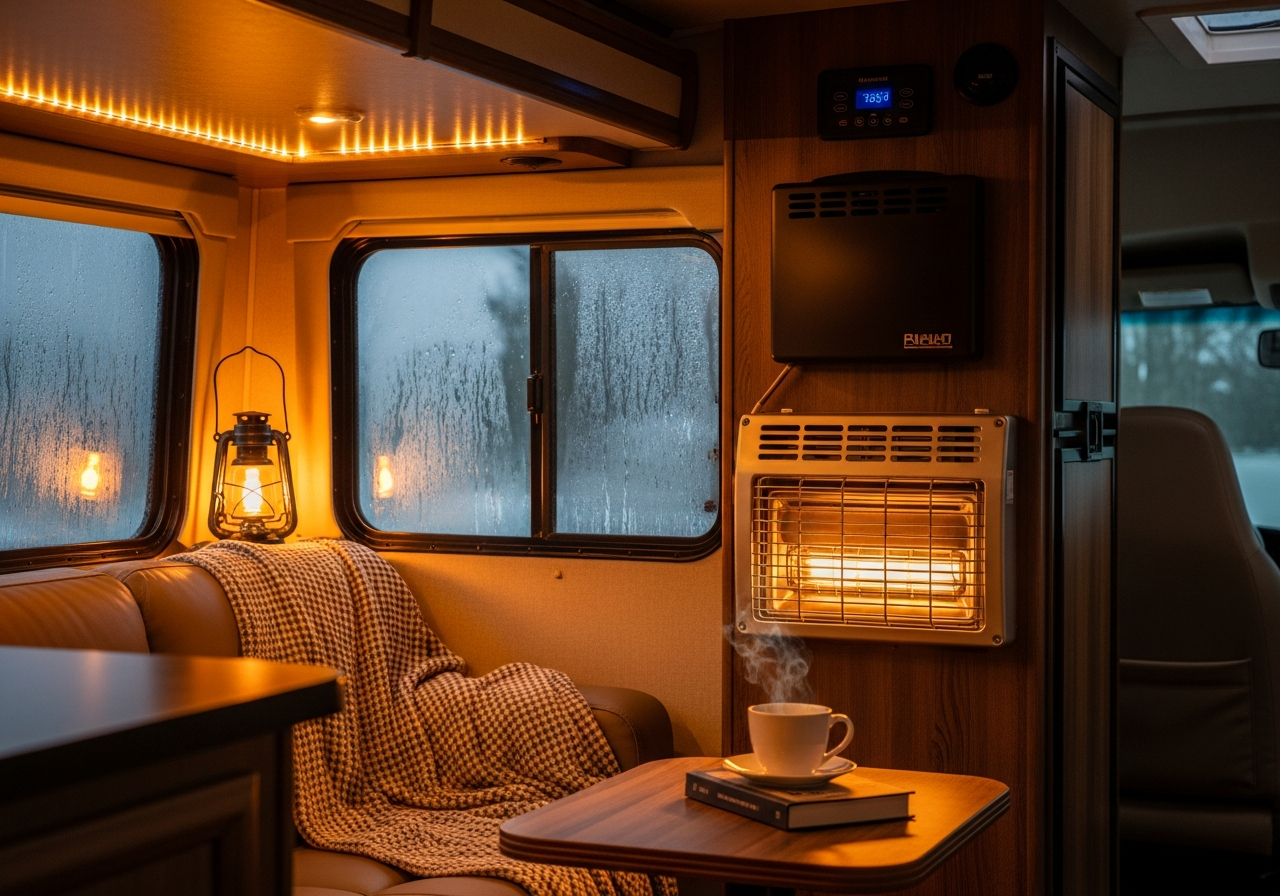
- Confirm heating systems are working safely and consistently.
Cleaning and Routine RV Upkeep with Dogs Onboard
Daily maintenance
A few minutes each day can prevent odors and wear.
- Sweep or vacuum pet hair.
- Wipe paws before entry.
- Empty waste promptly.
- Refresh water bowls.
- Check bedding for dampness or dirt.
Weekly maintenance
- Wash bedding and soft items.
- Clean food and water bowls thoroughly.
- Inspect leashes, harnesses, and crate latches.
- Sanitize accident-prone floor areas.
- Restock medications, waste bags, and cleaning supplies.
Deep-clean tasks between trips
- Remove pet hair from vents and upholstery.
- Clean under furniture and sleeping areas.
- Inspect seals and flooring for moisture damage.
- Deodorize safely with pet-conscious cleaning methods.
- Repack the dog travel kit so it is ready for the next departure.
Campground Etiquette for Dog Owners
Good pet etiquette makes travel easier for everyone.
We recommend:
- Following leash rules at all times
- Picking up waste immediately
- Preventing repetitive barking
- Keeping dogs out of restricted areas
- Asking before allowing greetings with people or other dogs
A well-managed dog is more welcome at campgrounds, trails, and RV parks, which helps protect access for all pet owners.
Final Planning Tips Before You Leave
Before any trip, run through this quick checklist:
- Vet records packed
- ID tags and microchip updated
- Food, meds, and water loaded
- Restraint system ready
- Climate plan confirmed
- Route stops identified
- Emergency vet locations saved
Small preparations make a big difference once you are on the road.
Key Takeaways
- RV travel can be comfortable for dogs when we keep routines predictable and safety measures consistent.
- Secure restraint during driving is essential; dogs should never roam freely in a moving RV.
- Temperature control is one of the most important parts of any rv traveling with dogs tips guide.
- Common issues like barking, motion sickness, and accidents usually improve with planning, shorter practice trips, and better scheduling.
- Seasonal maintenance matters: summer heat, spring parasites, fall debris, and winter cold all require different habits.
- Daily cleaning, gear checks, and updated identification help prevent bigger problems on the road.
With the right preparation, dogs can become excellent RV travel companions and enjoy the road right alongside us.