How to Stay Warm in Your RV During Winter: 10 Proven Strategies

Salem Hassan founded Travelcamp RV and brings 30+ years of hands-on RV, marine, and powersports retail experience to every review.
✎ Reviewed by Salem Hassan — Founder, Travelcamp RV · 30+ years in RV, marine, and powersports retail
Why trust us
ShopRVGear articles are researched by the Searchshop Editorial team using manufacturer specs, RV trade sources, and owner feedback. We match every recommendation to your RV class — Class A, B, C, fifth-wheel, or travel trailer — because gear that works in a 40-ft motorhome often does not fit a Class B van. We may earn a commission on qualifying purchases; it does not change what we recommend.
How to Stay Warm in Your RV During Winter: 10 Proven Strategies
If you’re wondering how to stay warm in rv in winter, the answer is a mix of insulation, moisture control, safe heating, and smart maintenance. Winter RV camping can be comfortable, but only if we prepare for heat loss, frozen plumbing, drafts, and condensation before temperatures drop too far. We researched the most effective cold-weather practices and organized them into 10 practical strategies you can use whether you’re weekend camping or staying in your rig for the season.
Why RVs Get Cold So Fast in Winter

RVs lose heat faster than houses because they have thinner walls, more window area, more air gaps, and exposed plumbing and undercarriage components. Even a well-built four-season RV can struggle in prolonged freezing weather if we don’t address the weak points.
The main causes of heat loss are:
- Drafty doors, windows, vents, and slide-outs
- Poor insulation in floors and storage bays
- Single-pane windows that transfer cold quickly
- Heat escaping through roof vents and windshield glass
- Moisture buildup that makes the interior feel colder
- Furnaces working inefficiently due to blocked ducts or low battery power
1. Start With a Full Cold-Weather Inspection
Before adding heaters or insulation, we recommend checking the RV for the basic issues that make heating harder.
Step-by-step inspection
- Check all seals and weatherstripping around entry doors, windows, storage compartments, and slide-outs.
- Inspect roof vents and vent covers for gaps or cracked seals.
- Look under the RV for exposed plumbing, open penetrations, or damaged underbelly material.
- Test the furnace before the first freeze to confirm it ignites, blows hot air, and cycles normally.
- Check propane levels and regulator performance if your furnace runs on LP gas.
- Verify battery health because weak batteries can affect furnace operation and blower performance.
Safety tip
If you smell propane, shut off the supply immediately, ventilate the RV, and have the system inspected by a qualified RV technician.
2. Seal Drafts and Air Leaks

One of the fastest ways to improve comfort is to stop cold air from entering in the first place.
Where to seal drafts
- Entry door edges
- Slide-out perimeters
- Window frames
- Plumbing and wiring penetrations
- Roof vent openings
- Storage compartment doors
How to do it
- Run your hand along windows, doors, and slide seams on a cold day.
- Mark any areas where you feel moving air.
- Replace worn weatherstripping.
- Add draft stoppers at the base of doors.
- Use removable insulation cushions for roof vents.
- Close off unnecessary openings without blocking required ventilation.
Safety tip
Do not permanently block appliance vents, furnace exhaust paths, or required fresh-air openings.
3. Insulate Windows, Vents, and the Windshield
Glass is one of the biggest sources of heat loss in an RV. Improving window insulation can make a noticeable difference overnight.
Best areas to insulate
- Front windshield in motorhomes
- Cab side windows
- Bedroom windows
- Roof vents and skylights
- Large living area windows
Practical methods
- Use thermal curtains or insulated drapes.
- Add reflective or clear window insulation film where appropriate.
- Place vent cushions in roof vents at night.
- Cover the windshield with an interior thermal barrier or an exterior cover.
- Open curtains during sunny hours to gain passive heat, then close them before sunset.
4. Use Your RV Furnace the Right Way
The built-in furnace is often the best primary heat source because it is designed to heat the living space and, in many RVs, help protect enclosed plumbing areas.
How to maximize furnace performance
- Set a realistic thermostat temperature instead of constantly raising and lowering it.
- Keep supply vents clear of rugs, bags, and furniture.
- Check return air openings for dust buildup.
- Replace or clean intake filters if your system uses them.
- Run the furnace periodically even if you also use electric heat, especially in freezing conditions.
Safety tip
Never use an oven, stovetop, or grill as a heat source inside the RV. This creates major fire and carbon monoxide risks.
5. Supplement Heat Carefully With Electric Heaters
If you have reliable shore power, an electric space heater can reduce furnace runtime and help keep the interior more comfortable.
How to use electric heat safely
- Choose a heater with tip-over protection and overheat shutoff.
- Place it on a hard, stable surface away from bedding, curtains, and traffic paths.
- Plug it directly into a properly rated outlet.
- Avoid daisy-chaining extension cords or power strips.
- Use one heater at a time unless you know your RV electrical system can handle more.
Safety tip
Monitor your total electrical load. Running heaters along with a microwave, water heater, or hair dryer can trip breakers or overheat wiring.
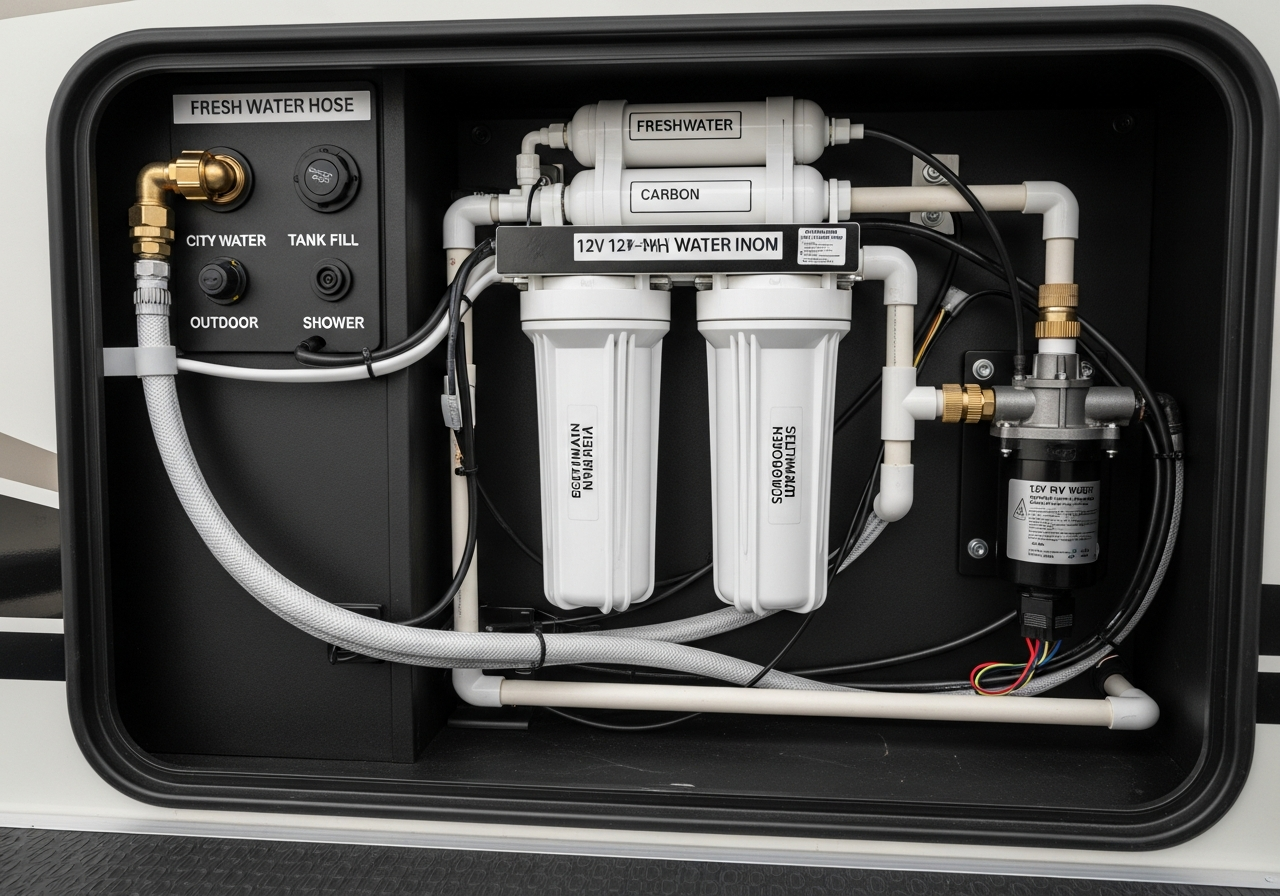
6. Protect Your Water System From Freezing
Staying warm is not only about air temperature. Frozen hoses, tanks, and pipes can quickly turn a winter trip into an emergency.
Water system protection steps
- Use a heated water hose or fill the fresh tank and disconnect the hose in severe cold.
- Insulate exposed hose bibs and campground spigots if allowed.
- Keep interior cabinet doors open where pipes run near exterior walls.
- Run the furnace enough to warm enclosed underbelly areas.
- Add RV-safe antifreeze only where appropriate and according to your owner’s manual.
- Dump tanks strategically and avoid leaving sewer hoses open in freezing weather.
Safety tip
Do not use automotive antifreeze in RV freshwater systems.
7. Add Skirting for Long Stays
If you’re parked for an extended period, skirting can significantly reduce cold air moving under the RV.
Why skirting helps
It creates a buffer zone beneath the coach, protects tanks and plumbing, and reduces heat loss through the floor.
How to use skirting effectively
- Measure the perimeter of the RV carefully.
- Install skirting tightly enough to reduce airflow but not so tightly that it tears in wind.
- Secure the bottom edge with weights, stakes, or approved fasteners.
- Check periodically for gaps after storms.
8. Control Condensation and Interior Moisture
Warmth and moisture go together in winter RVing. Without ventilation, condensation can form on windows, walls, and bedding, making the RV feel colder and increasing the risk of mold.
Moisture control steps
- Run the bathroom fan during showers.
- Use the range vent while cooking.
- Crack a roof vent slightly to allow humid air to escape.
- Wipe down wet windows in the morning.
- Use a dehumidifier if moisture is persistent.
- Dry wet boots and coats near, not on, heat sources.
Safety tip
Ventilation matters even in cold weather. A tightly sealed RV without airflow can trap moisture and combustion byproducts.
9. Warm the Floor and Sleeping Areas
Cold floors and bedding can make the whole RV feel uncomfortable even when the thermostat says otherwise.
Ways to improve comfort
- Add rugs or carpet runners over vinyl flooring
- Use insulated mattress pads or thermal bedding
- Place foam tiles in high-traffic areas
- Close privacy curtains to keep sleeping areas warmer at night
- Wear layered clothing and warm socks indoors
These small changes reduce the amount of heat your body loses to cold surfaces.
10. Manage Heat Room by Room
Not every part of the RV needs the same temperature all day. We recommend heating strategically to conserve energy and improve comfort.
Smart heating routine
- Keep the main living area comfortable during active hours.
- Close off unused spaces if your RV layout allows it.
- Preheat the bedroom before bedtime.
- Use daytime sunlight to warm the south-facing side of the RV.
- Lower the thermostat slightly overnight while maintaining safe temperatures for plumbing.
Troubleshooting Winter RV Heating Problems
When your RV still feels cold after basic prep, use this quick diagnostic process.
1. Problem: Furnace runs but RV never gets warm
Diagnostic steps:
- Check whether vents are blocked.
- Inspect for major drafts around slides or doors.
- Confirm propane supply is adequate.
- Check battery voltage if the furnace blower seems weak.
Solutions:
- Clear vents and return air pathways.
- Seal obvious air leaks.
- Refill propane and inspect the regulator.
- Charge or replace weak batteries.
2. Problem: Windows are dripping with condensation
Diagnostic steps:
- Check if vent fans are being used.
- Note whether you are cooking or showering without ventilation.
- Measure indoor humidity if possible.
Solutions:
- Increase ventilation slightly.
- Use a dehumidifier.
- Add window insulation and wipe moisture daily.
3. Problem: Floors are freezing cold
Diagnostic steps:
- Check whether the underbelly is exposed to wind.
- Inspect for gaps around slide floors and entry steps.
- Confirm skirting is intact if installed.
Solutions:
- Add rugs or foam flooring.
- Repair gaps and improve skirting coverage.
- Increase underfloor heat retention with better insulation.
4. Problem: Water line or hose freezes
Diagnostic steps:
- Identify whether the freeze is in the hose, inlet, or interior plumbing.
- Check outside temperatures and wind exposure.
- Confirm whether the furnace has been running enough to protect enclosed areas.
Solutions:
- Switch to tank-only water use temporarily.
- Warm the affected area gradually.
- Add hose insulation or a heated hose.
- Keep cabinet doors open near vulnerable pipes.
Seasonal Winter RV Maintenance Checklist
Pre-Winter Checklist
- Inspect roof, window, and door seals.
- Service the furnace and check propane systems.
- Test smoke, propane, and carbon monoxide detectors.
- Inspect batteries and charging systems.
- Insulate windows, vents, and exposed plumbing.
- Stock emergency supplies, blankets, and safe backup heat options.
During-Winter Checklist
- Check propane levels regularly.
- Monitor interior humidity and wipe condensation.
- Inspect skirting and seals after storms.
- Keep snow and ice away from vents and access panels.
- Verify water hoses and dump valves are not freezing.
- Listen for changes in furnace cycling or airflow.
End-of-Season Checklist
- Remove temporary insulation and inspect for trapped moisture.
- Clean vents, ducts, and heater areas.
- Check for mold, mildew, or water staining.
- Inspect seals for damage caused by cold weather.
- Drain and sanitize systems as needed before storage or spring travel.
Final Thoughts
Learning how to stay warm in your RV during winter is really about layering solutions. We researched the most reliable methods, and the best results come from combining draft control, insulation, safe heating, moisture management, and freeze protection. Start with the furnace and the building envelope, then add comfort upgrades like rugs, thermal curtains, and skirting if you’ll be parked in serious cold.
Key Takeaways
- The best answer to how to stay warm in rv in winter is to combine sealing, insulation, safe heat, and plumbing protection.
- Your RV furnace should usually remain the primary heat source in freezing weather.
- Windows, vents, doors, and slide-outs are the biggest heat-loss points.
- Condensation control is essential for both comfort and RV health.
- Skirting, heated hoses, and underbelly protection matter most during extended winter stays.
- Routine seasonal inspections help prevent both heating failures and freeze damage.