How to Cook Great Meals in Your RV Without Relying on Propane

Salem Hassan founded Travelcamp RV and brings 30+ years of hands-on RV, marine, and powersports retail experience to every review.
✎ Reviewed by Salem Hassan — Founder, Travelcamp RV · 30+ years in RV, marine, and powersports retail
Why trust us
ShopRVGear articles are researched by the Searchshop Editorial team using manufacturer specs, RV trade sources, and owner feedback. We match every recommendation to your RV class — Class A, B, C, fifth-wheel, or travel trailer — because gear that works in a 40-ft motorhome often does not fit a Class B van. We may earn a commission on qualifying purchases; it does not change what we recommend.
How to Cook Great Meals in Your RV Without Relying on Propane
If you’ve been wondering how to cook in rv without propane, the good news is that it’s easier than many RV owners expect. With the right mix of shore power, battery capacity, inverter support, and compact electric appliances, we can make satisfying meals on the road without depending on a propane stove or oven. We researched the most practical methods RVers use every day and organized them into a realistic, safety-first approach that works for weekends, long trips, and even off-grid stays.
Why Cook Without Propane in an RV?

There are several reasons RV owners look for propane-free cooking options:
- We may want to reduce propane refills and simplify trip planning.
- Some campgrounds offer reliable electrical hookups that make electric cooking convenient.
- Induction and other electric appliances can provide precise temperature control.
- Some RVers prefer to avoid open flames inside a small living space.
- During hot weather, certain appliances can cook faster and with less indoor heat buildup.
Going propane-free does not mean giving up good meals. It means matching your cooking style to your RV’s power system and available space.
What You Need Before You Start
Before choosing appliances, we recommend understanding your RV’s power setup.
Know Your Power Sources
Most propane-free RV cooking setups rely on one or more of these:
- Shore power: The easiest option for electric cooking at campgrounds.
- Generator power: Useful when hookups are unavailable.
- Battery bank with inverter: Essential for off-grid electric cooking, though power limits matter.
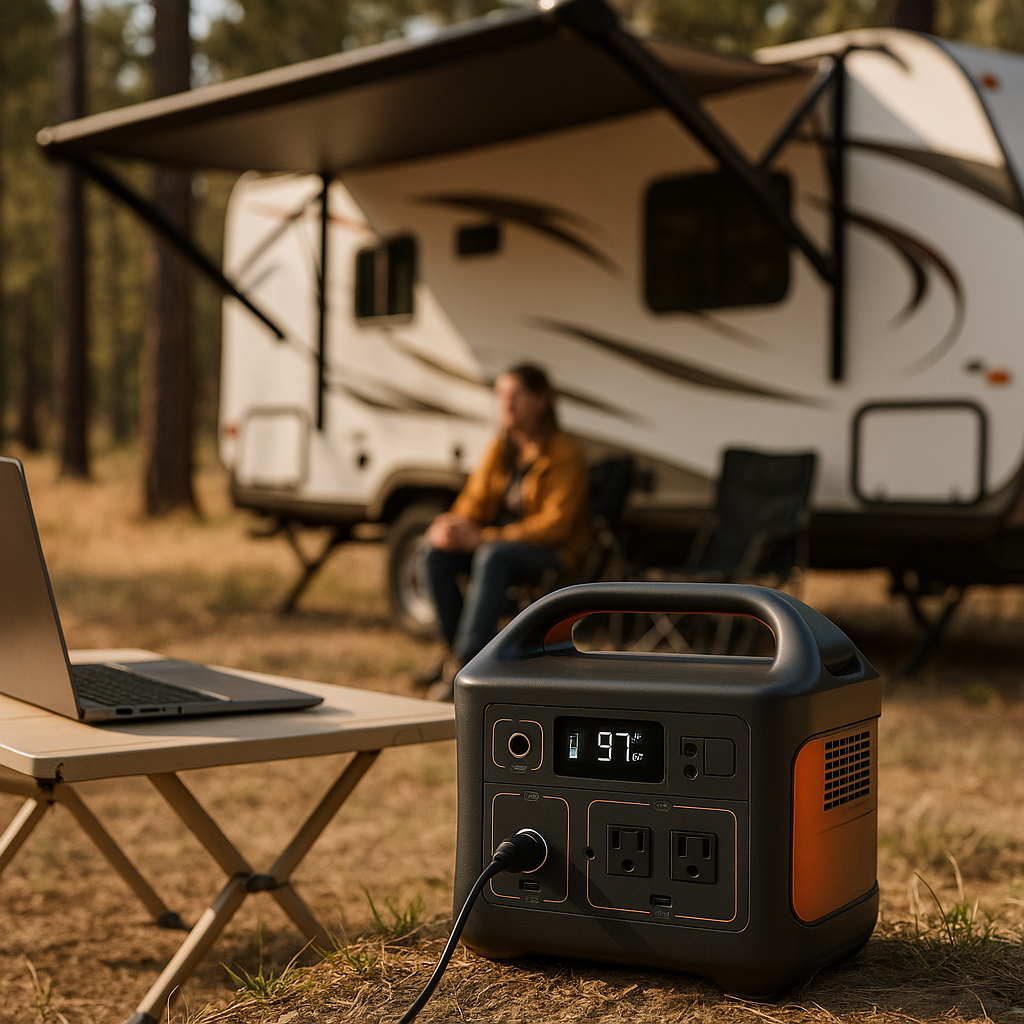
- Portable power station: A supplemental option for light-duty cooking tasks.
Understand Appliance Wattage
Electric cooking appliances draw significant power. Common ranges include:
- Induction cooktop: 1,200 to 1,800 watts
- Electric skillet: 1,000 to 1,500 watts
- Rice cooker: 300 to 700 watts
- Slow cooker: 150 to 300 watts on low, higher on high
- Air fryer: 1,200 to 1,800 watts
- Microwave: 900 to 1,500 watts input depending on model
- Electric kettle: 1,000 to 1,500 watts
If your RV is on a 30-amp service, running multiple high-draw appliances at once can trip breakers quickly.
Choose the Right Cookware
If you plan to use induction, make sure your pots and pans are induction-compatible. A magnet should stick firmly to the bottom.
Best Ways to Cook in an RV Without Propane

1. Use an Induction Cooktop
Induction is one of the most efficient propane-free cooking methods for RVs. It heats cookware directly, boils water quickly, and usually offers excellent temperature control.
Best for: Boiling, sautéing, frying, simmering
Benefits:
- Fast heat-up time
- No open flame
- Often easier to clean than coil or gas surfaces
- Less wasted heat in the RV
Watch-outs:
- Requires compatible cookware
- High wattage draw
- Needs a stable power source
2. Use a Microwave for More Than Reheating
A microwave can handle much more than leftovers. In an RV, it can steam vegetables, cook potatoes, prepare oatmeal, scramble eggs in a mug, and heat pre-cooked proteins.
Best for: Quick meals, side dishes, reheating, steaming
Benefits:
- Fast and convenient
- Minimal cookware needed
- Good option for hot weather
3. Add a Rice Cooker or Multi-Cooker
A rice cooker or compact multi-cooker is one of the most useful tools in a small RV kitchen. It can cook grains, steam vegetables, and in some cases handle soups, beans, and one-pot meals.
Best for: Rice, quinoa, oatmeal, soups, steamed vegetables
Benefits:
- Lower wattage than many hot cooking appliances
- Hands-off cooking
- Efficient for meal prep
4. Use an Electric Skillet or Griddle
An electric skillet works well in RVs because it combines a cooking surface and temperature control in one appliance.
Best for: Pancakes, stir-fries, grilled sandwiches, burgers, breakfast meals
Benefits:
- Versatile cooking area
- Simple temperature management
- Great for one-pan meals
5. Cook Outdoors When Possible
Cooking outside helps control heat, moisture, and odors inside the RV. If your campsite has electrical access, outdoor electric cooking can be especially practical.
Best for: Messier meals, warm-weather cooking, reducing indoor heat
Safety tip: Only use appliances outdoors if the manufacturer allows it, and keep all connections dry and protected.
How to Cook in Your RV Without Propane: Step-by-Step
1. Check Your Available Power
Look at whether you’re on 30-amp or 50-amp shore power, generator power, or battery/inverter power.
Safety tip: Never assume your inverter can handle a cooking appliance. Check its continuous wattage rating first.
2. Add Up Appliance Loads
Before cooking, consider what else is running:
- Air conditioner
- Water heater on electric mode
- Coffee maker
- Space heater
- Battery charger
If your cooktop uses 1,500 watts and your microwave uses another 1,200 watts, running both together may overload the circuit.
Safety tip: Avoid plugging multiple high-draw appliances into the same outlet or power strip.
3. Pick the Right Appliance for the Meal
Match the meal to the most efficient option:
- Oatmeal or rice: rice cooker
- Soup or leftovers: microwave
- Sautéed vegetables or pasta sauce: induction cooktop
- Breakfast skillet: electric skillet
- Slow-cooked chili: slow cooker
This reduces power waste and keeps cooking simple.
4. Prep Ingredients Before You Start
In a small RV kitchen, preparation matters. Chop ingredients, measure liquids, and clear counter space before turning on any appliance.
Safety tip: Keep cords routed away from sink water, walkways, and hot surfaces.
5. Ventilate the RV
Even without propane, cooking creates steam, grease, and heat. Open a window, run the vent fan, or cook outdoors when conditions allow.
Safety tip: Never block your RV’s ventilation while cooking.
6. Cook in Stages if Power Is Limited
If you are on limited shore power or using batteries, cook one component at a time. For example:
- Steam rice
- Warm vegetables
- Sauté protein
This helps prevent breaker trips and battery strain.
7. Clean and Store Appliances Safely
Let appliances cool fully before storing them. Wipe away grease, moisture, and food residue to prevent odors and electrical issues.
Safety tip: Never store an appliance with a tightly wrapped cord while it is still warm.
Smart Meal Strategies for Propane-Free RV Cooking
Focus on One-Pot Meals
These are efficient, easy to clean up, and ideal for compact kitchens:
- Rice bowls
- Pasta with vegetables and sausage
- Stir-fries
- Chili
- Soup and stew recipes
Use Partial Prep Ingredients
We recommend using practical shortcuts when road travel is busy:
- Pre-washed greens
- Frozen vegetables
- Pre-cooked grains
- Rotisserie chicken or cooked proteins
- Jarred sauces
This reduces prep time and electrical use.
Batch Cook When Hooked Up
If you have reliable shore power, make extra portions and refrigerate or freeze them for travel days. That way, you can rely on reheating instead of full cooking later.
Troubleshooting Common Problems
1. The Breaker Keeps Tripping
Diagnostic steps:
- Check what other appliances are running.
- Confirm the cooking appliance wattage.
- See whether the outlet is shared with another heavy load.
- Check campground pedestal output if available.
Solutions:
- Turn off the water heater or air conditioner while cooking.
- Move the appliance to a different circuit if your RV layout allows.
- Cook in stages instead of running multiple devices at once.
- Use lower-power appliances for simple meals.
2. The Inverter Shuts Down During Cooking
Diagnostic steps:
- Verify the inverter’s continuous watt rating.
- Check battery state of charge.
- Inspect for low-voltage warnings or overheating.
- Confirm cable connections are tight and clean.
Solutions:
- Use shore power or generator power for high-draw cooking.
- Charge batteries fully before use.
- Reduce appliance load.
- Improve inverter ventilation.
3. Food Cooks Unevenly on Induction or Electric Surfaces
Diagnostic steps:
- Check whether cookware is flat-bottomed.
- Confirm pan size fits the burner.
- Review the heat setting.
- Stir or rotate food more often.
Solutions:
- Use heavier, compatible cookware.
- Preheat properly.
- Avoid overcrowding the pan.
- Lower heat slightly for more even cooking.
4. Excess Moisture Builds Up Inside the RV
Diagnostic steps:
- Check whether the vent fan is running.
- Look for closed windows and poor airflow.
- Consider the type of food being cooked.
- Check for condensation on windows and walls.
Solutions:
- Open a roof vent or window.
- Use lids on pots when appropriate.
- Cook outdoors more often in humid weather.
- Wipe condensation promptly to prevent mildew.
5. Appliance Performance Seems Weak
Diagnostic steps:
- Check campground voltage if possible.
- Inspect extension cords for undersizing or damage.
- Confirm the outlet is supplying proper power.
- Check appliance cleanliness and airflow.
Solutions:
- Avoid long, light-duty extension cords.
- Plug directly into a suitable outlet when possible.
- Clean vents and heating surfaces.
- Delay cooking during periods of low campground voltage if necessary.
Maintenance Guide for Propane-Free RV Cooking Gear
Keeping electric cooking gear in good condition improves safety and reliability.
After Every Use
- Unplug the appliance.
- Let it cool completely.
- Wipe cooking surfaces with a non-abrasive cloth.
- Clean grease traps, lids, or removable inserts.
- Inspect the cord for heat damage or fraying.
Monthly Maintenance
- Check outlets for discoloration or looseness.
- Inspect appliance plugs for bent prongs.
- Clean vents on microwaves, air fryers, and multi-cookers.
- Verify your inverter fan area is free of dust.
- Review battery health if you cook off-grid often.
Seasonal RV Cooking Setup Checklist
Spring
- Inspect all cords and plugs after winter storage.
- Deep-clean appliances before first trip.
- Test GFCI outlets.
- Check battery performance and charge levels.
- Confirm cookware is complete and induction-compatible if needed.
Summer
- Prioritize outdoor cooking when possible.
- Watch for overheating in enclosed storage compartments.
- Increase ventilation during cooking.
- Clean grease more frequently in hot weather.
Fall
- Batch cook and plan for shorter daylight if using solar-supported systems.
- Check seals around windows and vents to manage condensation.
- Inspect extension cords and outdoor-rated connections.
Winter
- Keep appliances dry and condensation-free.
- Warm cold cookware gradually to reduce stress on surfaces.
- Monitor battery capacity closely, since cold weather can reduce performance.
- Avoid storing damp appliances in closed cabinets.
Safety Tips We Recommend Following Every Time
- Use only properly rated outlets and circuits.
- Keep appliances on stable, heat-resistant surfaces.
- Never leave active cooking appliances unattended.
- Keep a fire extinguisher accessible in the galley area.
- Do not use damaged cords, loose plugs, or questionable adapters.
- Keep water away from live electrical connections.
- Let appliances cool before moving or storing them.
- Follow the manufacturer’s indoor or outdoor use guidance.
Final Thoughts
Learning how to cook well in an RV without propane is mostly about planning around power, space, and ventilation. We researched the methods that make the most sense for everyday RV travel, and the pattern is clear: simple electric appliances, realistic load management, and smart meal planning can produce excellent results. Whether we rely on an induction burner, microwave, rice cooker, or electric skillet, the goal is the same: safe, efficient cooking that fits the way we travel.
Key Takeaways
- Yes, it’s possible: We can cook great RV meals without propane by using electric appliances strategically.
- Power matters most: Check wattage, circuit limits, inverter capacity, and battery state before cooking.
- Best appliance choices: Induction cooktops, microwaves, rice cookers, electric skillets, and slow cookers are all practical options.
- Cook smarter: One-pot meals, batch cooking, and staged cooking help avoid overloads.
- Ventilation is still essential: Electric cooking still adds heat and moisture.
- Troubleshooting is usually straightforward: Most issues come from overloads, low voltage, poor cookware choice, or inadequate airflow.
- Maintenance prevents problems: Clean appliances regularly, inspect cords and outlets, and adjust your setup seasonally.