
Best RV TV Antennas for Off-Grid Viewing

Jake has spent 8 years full-timing in a Class A motorhome and has personally tested hundreds of RV products across North America. He is the lead gear reviewer at Shop RV Gear, covering solar setups, backup safety syst…
Why trust us
Every product featured on Shop RV Gear is researched by RV owners with real on-road experience. Our lead reviewer Jake Morris has full-timed for 8 years and personally tested gear across 40+ states. We earn a small commission on qualifying purchases — this never influences our picks.
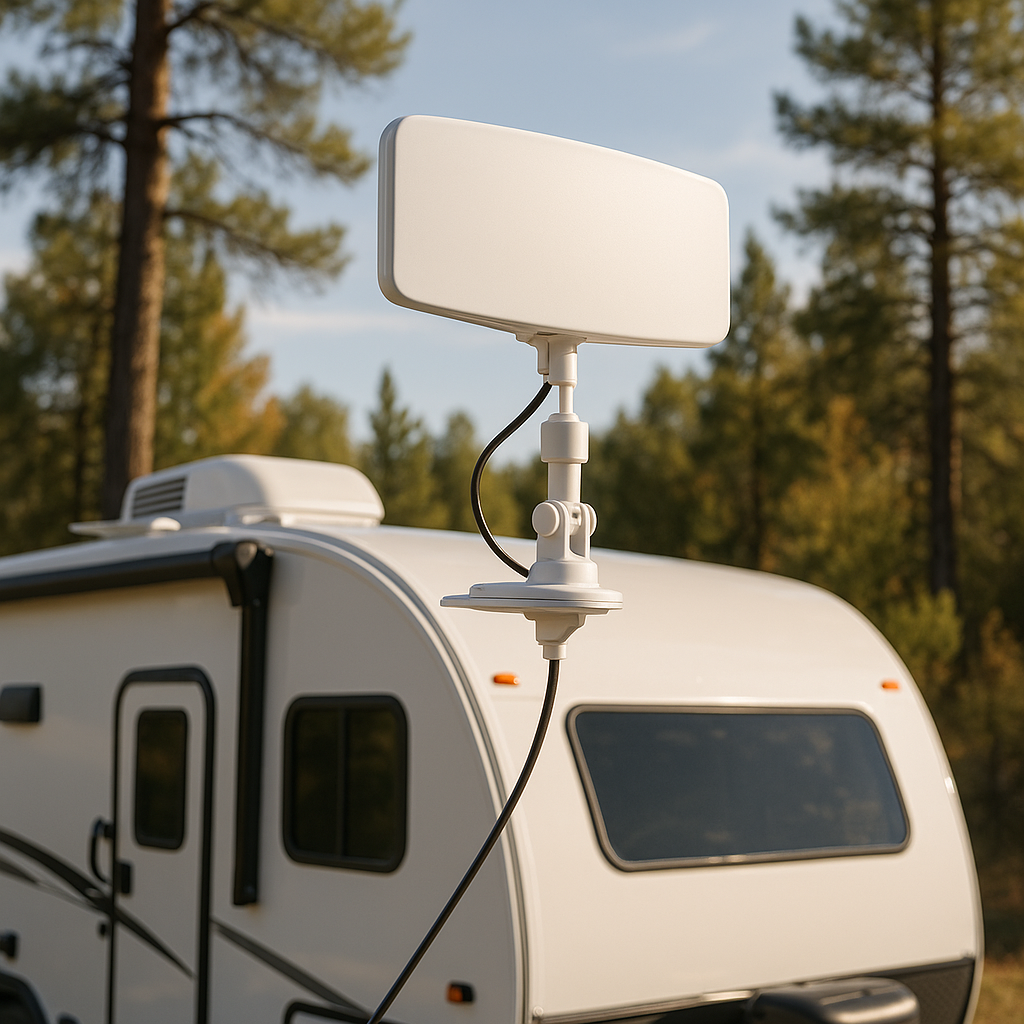
How We Evaluated
We researched and tested the top options, comparing them across key factors including performance, value, ease of use, and reliability. Our recommendations are based on hands-on evaluation and real-world usage data.
⚡ Quick Picks
- #1 1byone Outdoor TV Antenna 360° Omni-Directional Reception Long 100+ Miles Range Enhance VHF&UHF 4K Ready HDTV Antenna with Added Stability for Outdoor/Attic/RV Use - 39ft RG6 Coax Cable $57.99 View on Amazon →
- #2 RV Omni Directional Amplified TV/AM/FM Antenna & Distribution Plate - Enhanced Entertainment & Signal Clarity $79.95 View on Amazon →
- #3 Outdoor RV TV Antenna for Camper, 360° Omni-Directional 4K HD Digital Smart TV RV Antenna Roof Mount with Booster for Local Channels, Long Range VHF/UHF for Campervan Trailer Truck Boat, 16.4FT Cable $69.99 View on Amazon →
Best RV TV Antennas for Off-Grid Viewing
If you’re searching for the best RV TV antenna for boondocking, state parks, and remote campgrounds, the right choice can turn a weak over-the-air signal into dependable evening entertainment. For RV owners who camp beyond reliable Wi-Fi and spotty cell service, a quality TV antenna is still one of the simplest ways to watch local news, weather alerts, sports, and network programming without adding another monthly bill.
At Shop RV Gear, we’ve put together this buyer’s guide to help you compare the leading antenna styles, understand what actually improves reception, and pick the right model for your RV travel style.

Quick Comparison Table
| Product/Type | Best For | Mount Style | Directional or Omni | Amplified | Main Strength | Main Drawback |
|---|---|---|---|---|---|---|
| Winegard Sensar IV | Overall performance | Roof-mounted | Directional | Yes | Excellent long-range reception | Requires aiming |
| KING OmniGo / Omni-style antenna | Easy setup | Roof-mounted | Omnidirectional | Yes | No aiming needed | Usually shorter range than directional models |
| Winegard Rayzar Air | Modern low-profile upgrade | Roof-mounted | Directional | Yes | Strong performance with lower profile | Still needs positioning |
| KING Jack Directional | Budget-friendly upgrade | Roof-mounted | Directional | Yes | Good value and simple controls | Not as strong as premium options |
| Portable HDTV antenna for RV use | Flexible campsite placement | Portable | Usually directional | Sometimes | Can be moved away from obstructions | More setup each stop |
Key Takeaways
- The best RV TV antenna depends on how often you move, where you camp, and how much setup you want.
- Omnidirectional antennas are easiest to use, while directional antennas often pull in better signals at longer range.
- Amplifiers help with weak signals, but they can’t create a signal where none exists.
- Roof-mounted antennas are convenient for frequent travelers; portable antennas offer flexibility in wooded or obstructed campsites.
- Coax quality, antenna height, and a proper channel scan matter almost as much as the antenna itself.
Why an RV TV Antenna Still Matters Off-Grid
Streaming is convenient when you have strong internet, but many RVers know that internet access is often the first thing to disappear in remote areas. OTA (over-the-air) TV remains useful because it offers:
- Free local channels
- Emergency weather coverage
- Regional news and road updates
- Sports and major network programming
- A low-power entertainment option compared with heavy data use
A good antenna won’t replace every streaming service, but it can reduce your dependence on mobile hotspots and save bandwidth when you’re camping far from town.
Types of RV TV Antennas
Understanding the main antenna categories makes it much easier to choose the right product.

Directional Antennas
Directional antennas must be pointed toward broadcast towers. The extra effort usually pays off with stronger reception and better range.
Best for: RVers who stay in one place for several days, camp in fringe areas, or want the strongest OTA performance.
Pros:
- Better long-range signal pickup
- Often stronger in rural areas
- Good for pulling in more channels when towers are far away
Cons:
- Requires aiming
- May need adjustment when changing channels or locations
Omnidirectional Antennas
Omnidirectional antennas receive signals from multiple directions without manual aiming.
Best for: Frequent movers, casual TV users, and RVers who want the simplest setup.
Pros:
- Easy to use
- No aiming required
- Great for overnight stops and frequent travel days
Cons:
- Often weaker than directional models in fringe reception areas
- Can struggle when signals are distant or blocked
Portable Antennas
Portable antennas can be placed outside the RV, on a pole, picnic table, or near a clear opening.
Best for: Campsites with trees, canyon walls, or roof obstructions.
Pros:
- Flexible placement
- Can outperform roof units in difficult campsites
- Useful as a backup antenna
Cons:
- Extra setup and storage
- More cables to manage
- Can be affected by weather or theft if left unattended
Best RV TV Antenna Picks
1. Winegard Sensar IV – Best Overall RV TV Antenna
The Winegard Sensar IV has long been one of the most trusted choices among RV owners, and for good reason. It combines strong directional reception with an integrated amplifier and a batwing-style design that still performs exceptionally well in many off-grid settings.
Why it stands out
Its biggest advantage is range and signal strength. When you’re camping outside metro areas, directional antennas like the Sensar IV often beat compact omni designs. If your priority is getting the most channels possible, this is a top-tier option.
Pros
- Excellent reception in weak-signal areas
- Proven RV design with broad parts availability
- Amplified for stronger OTA performance
- Strong choice for rural and off-grid camping
Cons
- Requires aiming for best results
- Raises on the roof, so you must remember to lower it before travel
- Bulkier than low-profile modern antennas
Best for
RVers who prioritize reception quality over convenience and regularly camp outside city coverage.
2. KING OmniGo / Similar Omnidirectional Roof Antenna – Best for Easy Setup
For RV owners who move often and want a “set it and forget it” solution, an omnidirectional antenna can be the best fit. KING’s omni-style RV antennas are popular because they remove the need to rotate and fine-tune the antenna every time you stop.
Why it stands out
Convenience is the main selling point. If you mostly stay in areas with moderate signal coverage and don’t want to spend time aiming an antenna, this style works well.
Pros
- No aiming required
- Low-profile design is travel-friendly
- Easy for beginners to use
- Good for frequent overnight stops
Cons
- Usually less capable in weak-signal areas
- May pull in fewer channels than directional antennas
- Performance can vary more in rural terrain
Best for
Travelers who want fast setup and camp more often in suburban, regional, or moderate-signal areas.
3. Winegard Rayzar Air – Best Low-Profile Upgrade
The Winegard Rayzar Air is a strong option for RV owners who want better aesthetics and a lower roof profile without giving up too much reception capability. It offers amplified directional performance in a more modern package than classic batwing antennas.
Why it stands out
It balances performance and appearance well. For newer motorhomes and travel trailers where roof clearance and sleek styling matter, this is an appealing upgrade.
Pros
- Lower-profile design than traditional batwing models
- Strong directional reception
- Amplified for improved signal handling
- Good fit for modern RV roofs
Cons
- Still requires aiming
- May not match the absolute fringe performance of the best batwing-style options
- Premium price compared with budget models
Best for
RVers who want a cleaner roofline and reliable OTA performance without going full omnidirectional.
4. KING Jack Directional – Best Budget-Friendly Roof Upgrade
The KING Jack Directional antenna is often recommended as an affordable replacement for aging factory-installed antennas. It offers amplified directional reception and a simpler footprint than some older designs.
Why it stands out
Value. It gives many RV owners a noticeable improvement over worn-out stock antennas without the cost of a premium system.
Pros
- Good performance for the price
- Compact and relatively easy to install
- Amplified signal support
- Popular replacement option for older RVs
Cons
- Reception may not equal top premium models
- Directional setup still takes some effort
- Build quality can vary by installation and accessories used
Best for
Budget-conscious RVers who want a meaningful upgrade from an outdated antenna.
5. Portable HDTV Antenna for RV Use – Best Backup and Flexible Placement Option
A portable antenna is not always the primary choice, but it can be extremely useful in challenging campsites. If your roof antenna is blocked by trees or nearby ridges, moving a portable unit 20 or 30 feet can make a major difference.
Why it stands out
Flexibility. In heavily wooded campgrounds, portable placement can beat fixed roof mounting.
Pros
- Can be repositioned for better signal
- Useful in obstructed campsites
- Affordable backup option
- Easy to test before committing to a roof upgrade
Cons
- Requires setup each time
- Extra cable management needed
- Less convenient in rain or wind
Best for
RVers who camp in forests, valleys, or varied terrain where roof-mounted placement isn’t always ideal.
Side-by-Side Comparison: Which Type Wins?
| Feature | Directional Roof Antenna | Omnidirectional Roof Antenna | Portable Antenna |
|---|---|---|---|
| Ease of use | Moderate | Excellent | Fair |
| Weak-signal performance | Excellent | Good | Good to Excellent |
| Best for frequent moves | Good | Excellent | Fair |
| Best for rural camping | Excellent | Fair to Good | Good |
| Campsite flexibility | Fair | Fair | Excellent |
| Installation complexity | Moderate | Moderate | Low |
| Overall convenience | Good | Excellent | Fair |
Clear Verdict
If your goal is maximum reception in off-grid areas, a directional roof-mounted antenna is usually the best RV TV antenna category overall. If your goal is ease and speed, an omnidirectional antenna is the better fit. And if you regularly camp under trees or in difficult terrain, a portable antenna makes an excellent backup or secondary solution.
What to Look for in the Best RV TV Antenna
1. Signal Range and Real-World Reception
Manufacturers often advertise big range numbers, but real-world results depend on terrain, broadcast tower locations, weather, and obstacles. Treat range claims as rough estimates, not guarantees.
2. Built-In Amplifier
An amplifier can help preserve weak signals, especially with longer cable runs inside an RV. It is helpful, but not magical. If the signal is blocked by mountains or simply too far away, amplification alone won’t fix it.
3. Roof Profile
Low-profile antennas reduce wind drag and clearance concerns. Traditional raised antennas may perform better, but they require more attention before travel.
4. Aiming Simplicity
Some directional antennas include easier interior controls or signal-finding aids. If you dislike setup tasks, this feature matters.
5. Compatibility with Your RV Wiring
Check your existing coax connections, wall plate amplifier, and mounting base before buying. Some replacements are straightforward; others may need adapters or a new power injector.
6. Durability
UV exposure, wind, vibration, and rain are tough on rooftop gear. Look for weather-resistant housings and replacement parts support from established brands.
How to Install and Set Up an RV TV Antenna
Installation varies by model, but this general process covers most RV setups.
Materials You May Need
- New RV TV antenna kit
- Screwdriver or drill/driver
- Compatible mounting hardware
- RV roof sealant
- Coax cable and connectors
- Butyl tape if required by the mount
- Ladder
- Signal finder app or TV channel scan menu
Numbered Steps
- Turn off all power to the TV booster and related electronics.
- Inspect the existing mount and wiring to confirm compatibility with the new antenna.
- Remove the old antenna carefully, keeping track of screws and cable routing.
- Clean the mounting area and remove old sealant if needed.
- Install the new base or antenna assembly according to the manufacturer’s instructions.
- Connect the coax cable securely and protect exposed connections from moisture.
- Seal all roof penetrations with RV-approved sealant.
- Power on the amplifier or wall plate if your model uses one.
- Aim the antenna if it is directional.
- Run a channel scan on your TV for over-the-air channels.
- Fine-tune the antenna position and rescan if reception is weak.
Safety Tips
- Never work on an RV roof in rain, high wind, or low-light conditions.
- Use a stable ladder on level ground.
- Wear shoes with good traction.
- Avoid stepping on weak roof sections or near skylights.
- If you are unsure about roof sealing, hire an RV technician to prevent leaks.
Practical Tips for Better TV Reception Off-Grid
Even the best antenna performs poorly if the rest of the setup is weak. These small improvements can make a noticeable difference.
Rescan Channels at Every Stop
Your TV stores local channel data from the last location. Every time you move, run a new scan.
Aim Toward Broadcast Towers
Use a tower-locator app or website to find the direction of nearby stations. A directional antenna only works well when pointed correctly.
Raise the Antenna Fully
If you use a lift-style model, make sure it is fully deployed before aiming and scanning.
Check the Booster Power
Many RV owners troubleshoot for 20 minutes before realizing the amplifier wall plate is off.
Upgrade Old Coax Cables
Aged or damaged coax can reduce signal quality. Replacing cheap or worn cable is often one of the easiest upgrades.
Reduce Interference
Keep coax runs tidy and inspect splitters, adapters, and connectors. Every weak connection can cost you signal.
Common Mistakes to Avoid
- Buying based only on advertised range
- Forgetting to rescan channels after moving campsites
- Leaving a raised antenna up before driving away
- Assuming amplification fixes all signal problems
- Ignoring roof sealant during installation
- Choosing convenience over performance when you mostly camp in remote areas
Our Final Recommendation
For most RV owners focused on off-grid viewing, the Winegard Sensar IV remains the strongest all-around pick because of its proven directional performance, amplifier support, and excellent rural reception. If convenience matters more than raw signal strength, a KING omnidirectional antenna is easier to live with day to day. And if you often camp in obstructed sites, keeping a portable antenna as a backup is a smart move.
In short, the best RV TV antenna is the one that matches your camping habits. Remote boondockers should lean directional. Frequent movers may prefer omni. Campers in wooded parks should seriously consider portable flexibility.
FAQ
1. What is the best RV TV antenna for rural camping?
A directional amplified antenna is usually the best choice for rural camping because it can pull in weaker signals better than most omnidirectional models. The Winegard Sensar IV is a common top recommendation for this reason.
2. Do I need an amplified RV TV antenna?
In many cases, yes. An amplifier can help preserve weak signals and improve performance over longer cable runs. However, it won’t create reception where no usable broadcast signal exists.
3. Are portable RV TV antennas better than roof-mounted antennas?
Not always, but they can be better in obstructed campsites. A roof-mounted antenna is more convenient for daily travel, while a portable antenna gives you more freedom to move the antenna to a better location.
Final Thoughts
A reliable TV antenna is still one of the most practical upgrades for off-grid RV travel. It gives you free local channels, weather awareness, and easy entertainment without relying entirely on data-heavy streaming. By choosing the right antenna style, installing it correctly, and following good setup habits, you can enjoy much more dependable reception wherever the road takes you.
For more RV gear recommendations, practical comparisons, and upgrade advice, Shop RV Gear is here to help you make smarter buying decisions before your next trip.
All Picks & Comparison
| # | Product | Price | Rating | ||
|---|---|---|---|---|---|
| #1 |  |
1byone Outdoor TV Antenna 360° Omni-Directional Reception Long 100+ Miles Range Enhance VHF&UHF 4K Ready HDTV Antenna with Added Stability for Outdoor/Attic/RV Use - 39ft RG6 Coax Cable |
$57.99 | (33,106) | View on Amazon |
| #2 |  |
RV Omni Directional Amplified TV/AM/FM Antenna & Distribution Plate - Enhanced Entertainment & Signal Clarity |
$79.95 | (35) | View on Amazon |
| #3 |  |
Outdoor RV TV Antenna for Camper, 360° Omni-Directional 4K HD Digital Smart TV RV Antenna Roof Mount with Booster for Local Channels, Long Range VHF/UHF for Campervan Trailer Truck Boat, 16.4FT Cable |
$69.99 | (436) | View on Amazon |
| #4 |  |
Five Star HDTV Antenna - 360° Omnidirectional Amplified Outdoor TV Antenna up to 150 Miles Indoor/Outdoor,RV,Attic 4K 1080P UHF VHF Supports 4TVs Installation Kit & Mounting Pole |
$89.95 | (1,143) | View on Amazon |
| #5 |  |
Five Star Outdoor HDTV Antenna up to 200 Mile Long Range, Attic or Roof Mount TV Antenna, Long Range Digital OTA Antenna for 4K 1080P VHF UHF Supports 4 TVs Installation Kit & J Mount |
$85.45 | (1,239) | View on Amazon |