Best RV Safety Equipment and Gear for Families

Jake has spent 8 years full-timing in a Class A motorhome and has personally tested hundreds of RV products across North America. He is the lead gear reviewer at Shop RV Gear, covering solar setups, backup safety syst…
Why trust us
Every product featured on Shop RV Gear is researched by RV owners with real on-road experience. Our lead reviewer Jake Morris has full-timed for 8 years and personally tested gear across 40+ states. We earn a small commission on qualifying purchases — this never influences our picks.
Short Answer: The Must‑Have RV Safety Gear for Families
If you travel with kids, the non‑negotiable RV safety gear comes down to a few core categories: working detectors (smoke, CO, propane), at least two ABC fire extinguishers, a TPMS (tire pressure monitoring system), proper child restraints in chassis seats, a basic but real roadside kit, and a well‑stocked first aid kit.[1][4] Add an EMS/surge protector for your electrical system, wheel chocks and stabilizers, reflective triangles, headlamps, and a weather radio, and you’ve covered the big family risks without filling every storage bay with gimmicks.[1][2][3][4]
Below, we’ll start with the single best all‑around safety upgrade for most family RVs, then walk through a practical, no‑nonsense checklist of gear that’s worth your money, what to look for in each category, and what to skip.

Our Top Overall Pick for Family RV Safety
If you only upgrade one thing on a family rig, make it tire safety.
1. Tire Pressure Monitoring System (TPMS)
Blowouts at highway speed are one of the fastest ways to ruin a trip or a rig, especially when you’re towing with kids aboard. A TPMS gives you real‑time pressure and temperature on each tire so you catch slow leaks and overheats before they become emergencies.[4]
Modern RV safety guides consistently call out tire health—pressure, tread, and sidewall condition—as a critical risk factor for RVers.[4] A TPMS is the simplest way to stay ahead of it.

What it does for families
- Alerts you early to slow leaks so you can pull off safely, not on the shoulder with kids in the back.
- Helps you maintain proper pressure for load and handling, which matters more with a fully loaded family rig.[4]
- Reduces the chance of catastrophic blowouts that can cause loss of control or severe RV damage.
Key features to look for
- Sensor type: Cap sensors (easier to install) vs. internal sensors (more protected).
- High‑temp alerts: Important for catching dragging brakes or overworked tires.
- User‑replaceable batteries: Makes long‑term ownership cheaper.
- Towed vehicle support: If you pull a toad behind a motorhome, make sure it supports enough wheels.
Pros
- Early warning for the most common and dangerous RV failures.[4]
- Helps extend tire life and protect expensive RV structures.
- Easy DIY installation on most systems.
Cons
- Upfront cost and periodic sensor battery replacements.
- Requires occasional re‑pairing or relearning sensors when you rotate/replace tires.
What to skip
- TPMS that only show total system pressure instead of per‑tire values.
- Units with tiny, unreadable screens—if you can’t see alerts while driving, they won’t help you.
Core RV Safety Systems Every Family Needs
Think in layers: Detect → Prevent → React.[2] Start with the systems that keep you alive if something goes wrong.
2. Smoke, CO, and Propane Gas Detectors
RVs combine propane, 12V, and shore power in a small box where your family sleeps—that’s a lot of risk packed into a small space.[2][4]
Most modern rigs ship with basic detectors, but many owners don’t realize they expire, usually every 5–7 years for propane and CO units.[1][4]
What a good setup looks like
- Smoke detectors in living area and near bedrooms.[1][4]
- CO detectors near sleeping areas, mounted according to manufacturer instructions.[4]
- Propane/LPG detector low to the floor (propane is heavier than air), hard‑wired to RV power.[1][4]
Safety resources for family RV travel recommend:
- Replacing propane detectors every 5–7 years, and following manufacturer replacement intervals.[1][4]
- Testing all alarms monthly and after long storage.[1][4]
Pros
- Early warning for the most dangerous, often invisible hazards.
- Inexpensive relative to the risks they manage.
Cons
- Need regular testing and eventual replacement.
- False alarms can happen if cooking with poor ventilation, but that’s a training opportunity, not a defect.
What to skip
- Running with disabled or taped‑over detectors because they’re “annoying.” If they’re chirping, replace them—don’t silence them.
3. Fire Extinguishers and Fire Escape Planning
A small fire in an RV can become a total loss in minutes. Most family RV safety checklists recommend at least two ABC‑rated fire extinguishers, often more for larger rigs.[1][4]
Placement guidance
- 1 near the main entry door.
- 1 near the bedroom area.[1][4]
- Consider a small one in an exterior compartment near the propane or grill area.
Family‑oriented RV safety advice also stresses a fire escape plan:[1][4]
- Practice opening emergency windows and exits with kids.
- Make sure older kids know how to unlock and open the main door from inside.
- Assign roles: who grabs the toddler, who helps pets, who calls 911.[1]
Pros
- First line of defense against cooking and electrical fires.
- Gives you time to evacuate safely.
Cons
- Need periodic inspection; small units discharge quickly.
What to skip
- Cheap, off‑brand extinguishers with no clear rating or service info.
- Keeping all extinguishers in one cabinet instead of where you’d actually need them.
4. RV Electrical Protection: EMS & Surge Protection
Campground power is often dirty. A surge protector or, better, a full EMS (Electrical Management System) protects your RV from voltage spikes, low voltage, and bad wiring.[2][3][4]
Experienced RVers and safety content creators strongly recommend an EMS to protect expensive family rigs.[2][3][4]
What to look for
- EMS (not just surge): Looks for low/high voltage, open ground/neutral, reverse polarity.[2][3]
- Weather‑resistant for portable units.
- Lockable or with a cable loop so it doesn’t walk away at busy campgrounds.
Pros
- Protects A/Cs, refrigerators, and electronics from bad shore power.[2][3]
- Alerts you to dangerous pedestal wiring before it hurts anyone.
Cons
- Higher initial cost than a basic surge strip.
What to skip
- Cheap plug‑in “surge cubes” that only handle small spikes and don’t monitor wiring faults.
Roadside and Driving Safety for Families
5. Roadside Emergency Kit (Designed for RVs)
A proper roadside kit keeps you visible and gives you basic tools if you have to stop with kids on the shoulder.
Common RV safety checklists include:[1][4]
- Reflective warning triangles or flares.
- High‑visibility vests for adults and older kids.[4]
- Heavy‑duty jumper cables.
- Flashlights/headlamps plus spare batteries.[1][3][4]
- Basic tool kit: screwdrivers, adjustable wrench, pliers.[1][4]
- Duct tape and electrical tape.
- Tire pressure gauge and, ideally, a portable air compressor.[1][4]
- Work gloves and a tow strap for soft shoulders or minor stucks.[1]
Family travel resources recommend storing roadside gear in exterior compartments near the driver’s seat so it’s easy to reach without digging through camping gear.[4]
Pros
- Makes breakdowns safer and less chaotic with kids in the mix.
- Lets you handle minor problems without waiting hours for help.
Cons
- Takes up some storage space.
- Requires the driver to know how to use each item; teach this before you need it.
What to skip
- Novelty “car kits” with lots of filler items but no real tools.
6. Wheel Chocks, Leveling, and Stability Gear
A rolling or swaying RV is a serious hazard with children stepping in and out.
Essential gear here includes:[1][3][4]
- Solid wheel chocks rated for your RV weight.
- X‑chocks for travel trailers and fifth wheels to reduce fore‑aft movement.[3]
- Sturdy steps or upgraded entry steps to reduce fall risk, especially for seniors and small kids.[3]
Pros
- Prevents accidental rolling while parked.
- Reduces movement inside, which helps babies sleep and keeps kids from losing balance.
Cons
- More to set up at each campsite.
What to skip
- Using random rocks or wood scraps as your only chocks.
- Cheap plastic chocks that deform under heavy rigs.
7. Navigation and Route Safety
Height, weight, and stopping distance matter more when you’re hauling a family home on wheels.
Family RV safety guidance recommends:[4]
- Measure your rig’s total height fully loaded (A/Cs, antennas, racks), and post it on your dash.[4]
- Use RV‑specific navigation apps or GPS that route around low clearances and weight‑restricted roads.[1][4]
- Maintain 4–6 seconds following distance, increased to 6–8 in bad weather.[4]
- Keep highway speeds around 55–60 mph for control and fuel economy.[4]
- Follow the 3‑3‑3 rule when possible: no more than 300 miles per day, arrive by 3 p.m., stay 3 days.[4]
Gear that helps
- RV‑aware GPS or navigation app.
- Paper atlases/maps as backup in areas with no signal.[1][4]
Pros
- Avoids low bridges and hair‑raising detours with kids in tow.
- Reduces driver fatigue, a major safety factor.
Cons
- Dedicated GPS units can be pricey; apps are a more budget‑friendly start.
What to skip
- Trusting generic phone navigation alone to route a 12’‑plus RV.[4]
Inside the RV: Kid‑Focused Safety Gear
8. Child Car Seats and Restraints (Critical for Motorhomes)
If you travel in a motorhome, kids must ride in proper vehicle seats with lap‑and‑shoulder belts attached to the chassis, not on side‑facing couches or dinettes.[4]
Family safety guidance emphasizes:[4]
- Install car seats only in forward‑facing seats with proper belts.
- Never install car seats on side‑facing or rear‑facing RV benches.
- Verify that the belt you’re using is anchored to the vehicle frame, not just furniture.
Pros
- Brings motorhome travel closer to normal automotive crash protection for kids.[4]
Cons
- Limits where kids can sit and how you use interior space while driving.
- Some RV seats are not suitable for car seats at all; you may need to adjust your rig choice.
What to skip
- Letting kids “roam” or nap in bunks while underway.
- Booster seats without proper shoulder belts.
9. First Aid Kit (Family‑Ready, Not Travel‑Size)
A solid first aid kit is a must, and family guidance suggests keeping it in your main living area, not buried in storage.[1][4]
Core items recommended by RV safety resources include:[1][4]
- Assorted adhesive bandages.
- Sterile gauze pads and rolls.
- Adhesive tape.
- Scissors and tweezers.
- Antiseptic wipes and solution.
- Pain relievers and anti‑inflammatory meds.
- Allergy meds and any needed prescriptions.[1]
- Insect bite treatment and burn gel.[1]
- Disposable gloves and emergency blankets.[1][4]
For families, add:
- Pediatric doses of common medications.
- Extra bandages and blister care for kids who run hard.
- Copies of medical info and allergy lists.
Pros
- Handles the vast majority of on‑the‑road injuries and illnesses.
Cons
- Needs annual review to replace expired items.
What to skip
- Tiny “travel kits” that are mostly band‑aids and nothing else.
10. Interior Safety and Securement Gear
Inside the rig, your biggest risks with kids are falls and flying objects if you stop suddenly.
Family safety checklists recommend:[4]
- Latching all cabinets and drawers securely before travel.[4]
- Stowing small appliances (coffee makers, toasters) in sinks or padded spots.
- Placing TVs and other heavy loose items on the floor with padding for travel.[4]
- Putting fans, folding tables, and other light but bulky items on beds during travel so they don’t slide.[4]
- Ensuring slide‑outs are fully retracted and secured before moving.[4]
Helpful gear:
- Extra childproof latches for low cabinets.
- Non‑slip liners in drawers and shelves.
- Soft corner guards for sharp edges in kid zones.
Pros
- Reduces injury risk if you need to brake hard.
Cons
- Adds a few minutes to your pre‑departure routine.
What to skip
- Relying on friction alone—most RV drawers will open on bumpy roads.
Weather, Communications, and Power Backup
11. Weather Radio and Communication Backup
When you’re camping away from cities, you can’t always rely on cell alerts for severe weather.
Experienced RVers and safety videos frequently recommend a NOAA weather radio with alert function so you receive warnings even without cell service.[1][3]
You should also have:
- Fully charged phones before departure.[1]
- At least one high‑capacity power bank.
- A list of emergency contacts in paper form.[1]
Pros
- Early warning for storms, tornadoes, and flash floods.[1][3]
Cons
- Another device to keep powered and stored.
What to skip
- Relying solely on campground staff to warn you of incoming weather.
12. Lighting: Headlamps and Area Lights
Fumbling in the dark with kids around stairs, fire rings, and hookups is a recipe for injuries.
RV safety content aimed at older campers highlights headlamps as must‑have for hands‑free lighting during emergencies or nighttime hookups.[3]
Useful lights for families:
- Headlamps for each adult and older child.[3]
- Bright flashlights in multiple locations (bedroom, kitchen, tow vehicle).[1][4]
- Rechargeable lanterns for power outages.
Pros
- Keeps your hands free to hold a kid’s hand or handle tools.[3]
Cons
- Requires a system for charging and storing so they’re always findable.
What to skip
- Tiny keychain lights as your only backup.
Propane and House Systems Safety
13. Propane System Inspections and Detectors
Propane powers many RV appliances, but leaks in a confined space can be deadly.
Family RV safety guidance recommends:[4]
- Keeping cylinders upright and secured in ventilated compartments.[4]
- Inspecting tanks for rust, corrosion, or physical damage.[4]
- Recertifying portable cylinders on the required schedule (often at 10 years, then every 5 years).[4]
- Replacing two‑stage regulators every 10–15 years.[4]
- Checking flexible hoses and pigtails for cracks or rub wear.[4]
- Having a certified technician perform annual leak and pressure tests.[4]
- Replacing propane detectors every 5–7 years.[4]
Pros
- Greatly reduces the chance of leaks or malfunctioning appliances.
Cons
- Some tasks require professional service.
What to skip
- DIY repairs to gas regulators or major propane plumbing unless you’re qualified.
14. Pre‑Departure Checklists
The simplest safety “gear” is a printed checklist that your family follows every time you move the rig.[1][4]
Family RV safety resources recommend including:[4]
- Tire pressure check (a TPMS simplifies this).
- Lights and brake check for towables.[4]
- Hitch inspection and safety chains.
- Fluid levels on the tow vehicle or motorhome.[4]
- Slide‑outs retracted and locked.[4]
- Windows, vents, and roof hatches closed and latched.[4]
- Interior items stowed and cabinets locked.[4]
- Electrical cords and hoses disconnected and stored.[4]
- Final headcount of kids and pets.[4]
Pros
- Catches the little things that cause big problems on the road.
Cons
- Only works if you actually use it every time.
What to skip
- Relying on memory, especially when kids are distracting you.
Frequently Asked Questions
How much RV safety gear do we really need for a family trip?
You need enough gear to cover the big, likely risks: tire issues, fire, gas leaks, electrical problems, roadside breakdowns, and basic medical needs.[1][2][4] For most families, that means a TPMS, working detectors, two or more fire extinguishers, a real roadside kit, a first aid kit, solid wheel chocks, and an EMS or surge protector. Everything else is “nice‑to‑have,” not essential.
Where should we store safety equipment so kids can’t get into it but adults can?
Family safety resources suggest keeping first aid kits, fire extinguishers, flashlights, and emergency radios in the main living area, mounted or in clearly labeled cabinets adults can reach quickly.[1][4] Roadside gear like triangles, vests, jumper cables, and tools should live in exterior compartments near the driver’s seat.[4] Use childproof latches on any cabinet where you store chemicals or sharp tools.
How often should we test or replace RV safety equipment?
Guidance for RVers recommends:[1][4]
- Test smoke, CO, and propane detectors monthly and after storage; replace them per manufacturer instructions (often every 5–7 years for gas detectors).[1][4]
- Inspect fire extinguishers at least annually to ensure they are charged and undamaged.[1][4]
- Check tire pressure monthly at a minimum, and before every travel day.[4]
- Review your first aid kit at least once a year to replace expired items.[1][4]
- Have propane systems professionally inspected annually for leaks, regulator age, and hose condition.[4]
If you build these checks into a seasonal and pre‑trip routine, your safety gear stays ready without much extra effort.
Top Picks & Comparison
| # | Product | Price | Rating | ||
|---|---|---|---|---|---|
| #1 |  |
Progressive Industries EMS-PT30X Portable RV Surge Protector 30 Amp |
$109.00 | — | View on Amazon |
| #2 |  |
Tymate TM2 RV Tire Pressure Monitoring System, Tire Pressure Monitor with Solar Charge, TPMS with 4 Sensors(Max. 10) & 6 Alarm Modes, New Updated w/Color LCD Display, 0-87PSI for RV/Trailer/Truck/SUV |
$66.49 | (1,699) | View on Amazon |
| #3 | 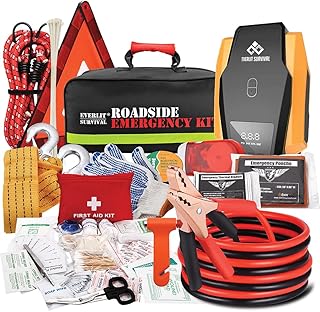 |
Everlit Survival Car Emergency Kit, Roadside Safety Tool Kit with Gloves,Digital Auto Air Compressor Tire Inflator, First Aid Kit, 12 Feet Jumper Cable, Tow Strap, Flashlight for Women, Men, Teenagers |
$69.95 | (2,897) | View on Amazon |
| #4 |  |
First Aid Only 91248 OSHA-Compliant First Aid Kit, All-Purpose 50-Person Emergency First Aid Kit for Business, Worksite, Home, and Car, 260 Pieces |
$20.95 | (5,566) | View on Amazon |