
Best RV Tire Pressure Monitoring Systems

Jake has spent 8 years full-timing in a Class A motorhome and has personally tested hundreds of RV products across North America. He is the lead gear reviewer at Shop RV Gear, covering solar setups, backup safety syst…
Why trust us
Every product featured on Shop RV Gear is researched by RV owners with real on-road experience. Our lead reviewer Jake Morris has full-timed for 8 years and personally tested gear across 40+ states. We earn a small commission on qualifying purchases — this never influences our picks.
How We Evaluated
We researched and tested the top options, comparing them across key factors including performance, value, ease of use, and reliability. Our recommendations are based on hands-on evaluation and real-world usage data.
⚡ Quick Picks
- #1 TireMinder i10 RV TPMS with 6 Transmitters $322.39 View on Amazon →
- #2 TST 507 Series TPMS - RV Tire Pressure Monitoring System with 6 Flow Thru Sensors & Color Display Monitor for Travel Trailers, Campers and Motorhomes (Metal Valve Stems Required for Flow Thru) $453.00 View on Amazon →
- #3 TPMS, Wireless Tire Pressure Monitoring System for RV, Trailer, Coach, Motor Home, Fifth Wheel, Including a Signal Booster and 10 Anti-Theft sensors. $239.99 View on Amazon →
Best RV Tire Pressure Monitoring Systems
A dependable rv tire pressure monitoring system can save you from blowouts, uneven tire wear, and expensive roadside repairs. After comparing the most popular options for motorhomes, fifth wheels, travel trailers, and tow vehicles, we found that the best systems combine accurate alerts, strong signal range, easy sensor pairing, and a display you can actually read while driving.
In this guide, we break down the best RV tire pressure monitoring systems for different types of rigs and budgets, explain what matters most before you buy, and share the practical setup details we think RV owners should know before hitting the road.

Side-by-Side Comparison: What Matters Most
Here’s how we think these systems stack up on the buying factors that matter most in real RV use.
| Product | Ease of Setup | Signal Range | Best for Large Rigs | Value | Display Quality | Overall Rating |
|---|---|---|---|---|---|---|
 TST 507 TST 507 |
Very Good | Excellent | Excellent | Very Good | Very Good | 9.4/10 |
| EEZTire | Good | Excellent | Excellent | Very Good | Good | 9.1/10 |
 TireMinder i10 TireMinder i10 |
Excellent | Very Good | Very Good | Good | Excellent | 9.0/10 |
| TireMinder A1A | Good | Good | Fair | Very Good | Fair | 8.4/10 |
| Tymate | Very Good | Fair to Good | Fair | Excellent | Good | 8.1/10 |
| PressurePro Pulse FX | Good | Excellent | Excellent | Fair | Very Good | 9.0/10 |
Our Top Picks at a Glance
| Product | Best For | Sensor Type | Tire Capacity | Display Style | Notable Strength | Our Verdict |
|---|---|---|---|---|---|---|
| TST 507 RV TPMS | Best Overall | Cap or flow-through | Up to 115 tires | Color monitor | Proven reliability and expandability | Best balance for most RVers |
| EEZTire TPMS | Best for Long Tow Setups | Cap | Up to 26 tires | Color monitor | Strong signal and trailer-friendly kit options | Great for fifth wheels and long trailers |
| TireMinder i10 |
Best for Ease of Use | Cap or flow-through | Up to 20 tires | Large color display | User-friendly setup and solid support | Best for beginners |
| TireMinder A1A | Best Budget Pick | Cap | Up to 22 tires | Monochrome display | Good core features at a lower price | Best value under a premium budget |
| Tymate RV TPMS | Best Budget Alternative | Cap | Varies by kit | Color display | Affordable and simple | Good starter system for lighter use |
| PressurePro Pulse FX | Best Premium Option | Cap | Large multi-tire support | Advanced monitor | Commercial-grade reputation | Best for serious high-mileage RVers |
Best RV Tire Pressure Monitoring Systems
1. TST 507 RV TPMS
Best Overall
If we had to recommend one system to the widest range of RV owners, it would be the TST 507. It has been a go-to in the RV community for years because it does the basics exceptionally well: dependable pressure and temperature monitoring, strong alert customization, and enough expansion for nearly any rig setup.

We especially like that TST offers both cap sensors and flow-through sensors. Cap sensors are lighter and simpler. Flow-through sensors make it easier to add air without removing the sensor, which can be convenient on larger rigs, though they are bulkier and work best with metal valve stems.
Pros
- Excellent reputation for long-term reliability
- Expandable for large RV and trailer combinations
- Available with cap or flow-through sensors
- Clear color display with customizable alerts
- Repeater option improves signal on longer rigs
Cons
- Setup takes a little time the first time around
- Flow-through sensors are heavier than cap sensors
- Usually priced above entry-level systems
Who It's For
This is the best choice for RVers who want a system they can grow into, especially if they may move from a travel trailer to a fifth wheel or motorhome later. We recommend it for frequent travelers, full-timers, and anyone towing long distances regularly.
2. EEZTire TPMS
Best for Long Tow Setups
EEZTire has built a strong following with RV owners towing longer fifth wheels and travel trailers. In our view, the biggest strength here is signal performance, especially when paired with the included or optional repeater depending on the kit.
The monitor is straightforward, and alert thresholds are practical for real-world RV use. If you have a truck-and-trailer combination where the rear trailer tires are a long way from the cab, this is one of the systems we’d shortlist first.
Pros
- Strong wireless performance for longer RVs
- Good fit for truck and trailer combinations
- Color display is easy to read while driving
- Solid alert options for pressure and temperature changes
- Well-known brand in the RV space
Cons
- Sensor programming can feel a bit tedious initially
- Display interface is functional more than polished
- Replacement parts can cost more than budget systems
Who It's For
We recommend EEZTire for fifth wheel owners, long travel trailer setups, and RVers who have had signal drop issues with cheaper systems.
3. TireMinder i10
Best for Ease of Use
The TireMinder i10 stands out for making setup less intimidating. Some TPMS kits feel like you need to study the manual for an hour before pairing the first sensor. The i10 is more approachable, and that matters if you are adding a monitor for the first time.
TireMinder also has a strong reputation for customer service, which we consider a real buying factor with electronics like this. If you run into pairing questions, repeater placement issues, or battery replacement concerns, responsive support can make the difference between using the system and tossing it in a drawer.
Pros
- Beginner-friendly setup process
- Large, readable color display
- Good customer support reputation
- Available with different sensor styles
- Reliable alerting for common RV use cases
Cons
- Not the cheapest option
- Advanced users may want more customization
- Sensor battery maintenance is still part of ownership
Who It's For
This is our pick for first-time TPMS buyers, occasional RVers, and owners who want a simpler learning curve without dropping to a bargain-bin product.
4. TireMinder A1A
Best Budget Pick
If you want a recognizable RV-focused brand at a lower price, the TireMinder A1A is a smart place to start. It does not have the fancier display or premium feel of higher-end models, but it covers the essentials: pressure alerts, temperature monitoring, and enough tire support for many common RV setups.
For weekend campers and seasonal travelers, that may be all you need. We would still pair it with good tire maintenance habits, including checking cold pressure before travel days and inspecting sidewalls at every stop.
Pros
- More affordable than premium RV TPMS models
- Trusted brand in the RV market
- Covers the core safety functions most owners need
- Good option for smaller trailers and moderate travel schedules
Cons
- Display is more basic than premium competitors
- Fewer premium features and refinements
- Not our first choice for very large or complex setups
Who It's For
We recommend the A1A for budget-conscious RV owners, weekend travelers, and smaller trailer owners who want a basic but credible system.
5. Tymate RV TPMS
Best Budget Alternative
Tymate has become popular with buyers looking for a lower-cost entry into TPMS ownership. These kits often include a bright display and enough sensors for a standard trailer setup at a price that is hard to ignore.
That said, budget systems are where we encourage buyers to be realistic. Lower prices can mean more variation in long-term durability, weather resistance, and support. If you only tow a few times a year and want an affordable safety upgrade, Tymate can make sense. If you are a full-timer covering thousands of miles, we would still lean toward TST, EEZTire, or TireMinder.
Pros
- Very affordable entry point
- Easy to find in common RV sensor kit sizes
- Simple display and straightforward operation
- Good value for occasional use
Cons
- Long-term durability can be less proven
- Support and replacement ecosystem may be weaker
- Not our top choice for heavy full-time use
Who It's For
This system is best for occasional campers, lighter-use trailers, and buyers who want to improve safety without spending premium money.
6. PressurePro Pulse FX
Best Premium Option
PressurePro has a more commercial and fleet-oriented reputation, and that shows in the design philosophy. These systems are built with serious mileage in mind. If you travel constantly, tow heavy, or simply prefer buying once and buying well, this is the premium lane.
This is not the system we’d suggest for every RVer because cost matters, and many owners will get all the functionality they need from a midrange option. But if your RV setup is expensive, your travel schedule is demanding, and tire failures would be especially disruptive, a premium TPMS can be easier to justify.
Pros
- Strong premium reputation
- Well suited for high-mileage and larger setups
- Robust monitoring for serious road use
- Good fit for owners prioritizing durability over price
Cons
- Expensive compared with mainstream RV options
- More than many casual RVers need
- Availability can vary by kit and supplier
Who It's For
We recommend PressurePro for full-timers, heavy haulers, large Class A owners, and RVers who prioritize premium equipment and long-term durability.
Our Verdict
For most RV owners, the TST 507 is the best overall pick because it balances reliability, expandability, and RV-specific features better than anything else we compared. If you tow a long fifth wheel or trailer and worry most about signal strength, EEZTire is a close second. If you want the easiest setup experience, choose the TireMinder i10.
How to Choose the Best RV Tire Pressure Monitoring System
Sensor Type: Cap vs. Flow-Through
Most RV TPMS kits use one of two external sensor styles:
- Cap sensors are smaller, lighter, and usually easier on valve stems.
- Flow-through sensors let you add air without removing the sensor, but they are heavier and are best used with metal valve stems.
For many RV owners, cap sensors are the safer default. We usually recommend flow-through sensors only if convenience matters a lot and your valve stems are up to the job.
Signal Range and Repeaters
A TPMS that works fine on a short trailer may struggle on a long fifth wheel or Class A towing a vehicle. That is why signal repeater support matters.
If your rig is more than modestly sized, we strongly prefer a system that includes or supports a repeater. In real-world RV use, that often means fewer dropouts from the rear trailer tires.
Number of Tires Supported
Count every tire you want monitored:
- Tow vehicle
- Trailer or fifth wheel
- Spare tire, if supported and useful to you
- Towed vehicle, if you drive a motorhome with a dinghy setup
It is easy to underbuy here. We recommend leaving room for future changes, especially if you may upgrade rigs.
Alert Customization
A good TPMS should warn you about:
- High pressure
- Low pressure
- Rapid air loss
- High temperature
The better systems let you customize pressure baselines and alert thresholds. That matters because RV tire pressures vary a lot between trailer tires, dually setups, and motorhome applications.
Display Readability
This sounds minor until you are driving through sun glare. We prefer monitors with:
- Large numbers
- Backlit screens
- Clear tire position layout
- Audible alerts that are noticeable but not absurdly loud
Battery and Maintenance
Most external sensors use replaceable batteries. Before buying, check:
- Battery type
- Typical battery life
- Ease of replacement
- Cost of extra sensors
If replacement batteries are uncommon or the process is annoying, you are less likely to keep the system running properly.
Practical Buying Advice We Give RV Owners
Match the TPMS to Your Travel Style
If you travel a few weekends each summer, a budget-friendly system may be enough. If you full-time or cross multiple states regularly, we think it is worth paying for better signal reliability and stronger support.
Don’t Ignore Valve Stems
This is one of the most overlooked details. External TPMS sensors add weight to the valve stem. On many RVs, especially trailers, metal valve stems are the safer match. If your rig has rubber stems, verify compatibility before installing heavier sensors.
Use TPMS as a Warning Tool, Not a Maintenance Substitute
A TPMS is not a replacement for checking cold tire pressure before travel, inspecting tread wear, or verifying load ratings. It is a live monitoring tool that helps catch problems on the road.
Budget for a Repeater if You Have a Long Rig
If your system does not include a repeater and your trailer is long, add one from the start. We have seen too many owners blame a decent TPMS for weak performance when the real issue was signal distance.
Think About Future Expansion
Many RVers eventually change rigs. Buying a system that supports more tires than you currently need can save money later, especially if replacement sensors are easy to add.
Common Mistakes to Avoid
Buying Based on Price Alone
The cheapest system is not always the best value if it misses alerts, drops signal, or becomes frustrating to maintain.
Skipping the Manual During Setup
Even good systems can be finicky if the initial pairing order is wrong. We recommend setting aside 30 to 45 minutes for first-time setup in your driveway rather than trying to figure it out at a campsite.
Forgetting Baseline Pressures
Your monitor is only as useful as the pressure settings you program. Use your tire manufacturer’s recommendations, your RV’s weight data, and your actual cold inflation targets.
Ignoring Temperature Alerts
Pressure gets the attention, but temperature matters too. A rising tire temperature can point to underinflation, dragging brakes, bearing issues, or overload conditions.
Which RV Tire Pressure Monitoring System Should You Buy?
If you want the short answer:
- Buy the TST 507 if you want the best all-around RV TPMS.
- Buy EEZTire if you have a long trailer and care most about signal reliability.
- Buy TireMinder i10 if you want the easiest setup and a beginner-friendly system.
- Buy TireMinder A1A or Tymate if your budget is tighter and your travel schedule is lighter.
- Buy PressurePro Pulse FX if you want a premium system for heavy use and high mileage.
For most Shop RV Gear readers, the TST 507 is the easiest recommendation because it delivers the best mix of performance, flexibility, and long-term value.
FAQ
What is the best RV tire pressure monitoring system overall?
For most RV owners, we recommend the TST 507. It offers strong reliability, good signal performance, multiple sensor options, and enough expandability for most trailers and motorhomes.
Do I really need a TPMS for my RV?
Yes, we think a TPMS is one of the most worthwhile safety upgrades for an RV. It helps you catch low pressure, overheating, and rapid air loss before they turn into a blowout or roadside repair.
Are flow-through sensors better than cap sensors?
Not always. Flow-through sensors are more convenient for adding air, but they are heavier and usually best with metal valve stems. Cap sensors are often the better choice for simplicity and compatibility.
Will an RV TPMS work on a long fifth wheel or motorhome?
Yes, but signal range matters. For longer rigs, we recommend choosing a system with a repeater or booster to maintain reliable communication from the rear tires to the monitor.
Can a TPMS replace manual tire checks?
No. A TPMS is a live monitoring tool, not a full replacement for manual inspections. You should still check cold tire pressure, inspect tread and sidewalls, and confirm proper loading before trips.
All Picks & Comparison
| # | Product | Price | Rating | ||
|---|---|---|---|---|---|
| #1 | |
TireMinder i10 RV TPMS with 6 Transmitters |
$322.39 | (399) | View on Amazon |
| #2 | |
TST 507 Series TPMS - RV Tire Pressure Monitoring System with 6 Flow Thru Sensors & Color Display Monitor for Travel Trailers, Campers and Motorhomes (Metal Valve Stems Required for Flow Thru) |
$453.00 | (348) | View on Amazon |
| #3 |  |
TPMS, Wireless Tire Pressure Monitoring System for RV, Trailer, Coach, Motor Home, Fifth Wheel, Including a Signal Booster and 10 Anti-Theft sensors. |
$239.99 | (746) | View on Amazon |
| #4 | 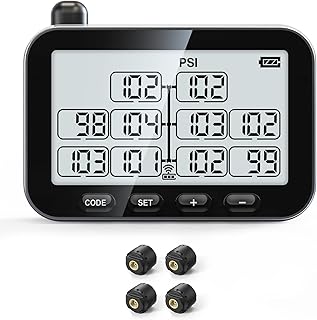 |
GUTA Trailer Tire Pressure Monitoring System - RV TPMS, 4 Sensors, 6 Alert Modes, Power Saving Display, Long Sensing Distance, Without Repeater, for Maximum 3 Trailers (T1/T2/T3), for Camper, RVs |
$139.99 | (584) | View on Amazon |
| #5 |  |
GUTA Trailer Tire Pressure Monitoring System, RV Tire Pressure Monitor with 10 Sensors, 6 Alert Modes, Signal Booster, Large Color Display, Long Sensing Distance, 0-188PSI TPMS for RV Trailer Semi |
$289.99 | (175) | View on Amazon |