
Best RV Antenna Systems for Free Over-the-Air TV

Jake has spent 8 years full-timing in a Class A motorhome and has personally tested hundreds of RV products across North America. He is the lead gear reviewer at Shop RV Gear, covering solar setups, backup safety syst…
Why trust us
Every product featured on Shop RV Gear is researched by RV owners with real on-road experience. Our lead reviewer Jake Morris has full-timed for 8 years and personally tested gear across 40+ states. We earn a small commission on qualifying purchases — this never influences our picks.
How We Evaluated
We researched and tested the top options, comparing them across key factors including performance, value, ease of use, and reliability. Our recommendations are based on hands-on evaluation and real-world usage data.
⚡ Quick Picks
- #1 Winegard RVW-395 Sensar IV Amplified Outdoor RV Antenna - Crank-Up Batwing HDTV - VHF/UHF, Digital, 4k Ultra-HD - Rotation Aiming 65 Mile Long Range - 48 Inch Raised Height $174.56 View on Amazon →
- #2 Winegard RV-3095 Sensar III Batwing Amplified RV TV Antenna (VHF/UHF, Digital, 4K Ready, 55 Mile Range), Light Gray $147.99 View on Amazon →
- #3 1byone Outdoor TV Antenna 360° Omni-Directional Reception Long 100+ Miles Range Enhance VHF&UHF 4K Ready HDTV Antenna with Added Stability for Outdoor/Attic/RV Use - 39ft RG6 Coax Cable $57.99 View on Amazon →
Short answer: the best RV antenna systems for free OTA TV
If you camp in a mix of RV parks and public land and want reliable free over-the-air TV, the best all‑around choice for most rigs is a roof‑mounted amplified antenna with a modern head, such as the Winegard Sensar IV (with Wingman) or a KING Jack directional antenna upgrade.[2][3][7] These pull in both VHF and UHF broadcasts, work with existing RV wiring, and give you the best shot at clear HD channels up to roughly 50–60 miles from towers in normal terrain.[2][3]
If you often camp under trees or in canyons where roof reception is hit‑or‑miss, pair a good roof antenna with a portable amplified indoor/portable antenna you can move to a window, picnic table, or tripod when the roof is blocked.[2][3] Skip cheap “250‑mile” gimmick antennas; in the real world, terrain and broadcast power matter more than inflated range claims.[2]

Below is a practical breakdown of the best RV antenna systems, how they differ, and which one to buy for your rig and camping style.
How RV TV antennas work (and why range claims are mostly fantasy)
An RV TV antenna receives free over‑the‑air (OTA) broadcast TV signals — the same local channels you’d get at home with an indoor or rooftop antenna.[2][3] Major networks like ABC, CBS, NBC, FOX, PBS, CW and local independents are all available OTA in HD where signals are strong.[2][3]
Key basics:

- Digital OTA is free – Once you have an antenna and a TV with an ATSC tuner (almost all modern TVs), there is no subscription.[2]
- Range is limited by physics – Most reputable RV antennas list realistic ranges around 35–55 miles in average conditions.[2][3][7] Claims of 150–250+ miles are marketing hype.
- Line of sight matters – Hills, trees, buildings, and low‑lying valleys can kill your signal long before you hit the advertised “range”.[3]
- Amplifiers help, but don’t perform miracles – A built‑in amplifier boosts weak signals coming down the coax, but it cannot create signal where none exists.[2][3]
So the goal is not chasing crazy range numbers, but choosing an antenna type that works with how and where you camp.
Types of RV TV antennas (and which you actually need)
Most RVers are choosing between three main antenna system types:
- Roof‑mounted directional “batwing” antennas (manual crank‑up or low‑profile)
- Roof‑mounted omnidirectional antennas (fixed dome or disc)
- Portable/indoor amplified antennas (backup or primary in small rigs)
1. Roof‑mounted directional “batwing” antennas
These are the classic RV antennas that raise and rotate from inside the rig. Modern versions like the Winegard Sensar IV, often with the Wingman UHF booster, are still considered some of the strongest performers for fringe reception.[2][3][7]
- Best for: People who regularly camp 20–55 miles from towers, boondockers, rural state parks.
- How they work: You crank the antenna up and rotate it toward the broadcast towers to get the strongest signal.[2][3]
- Pros: Excellent performance, especially on VHF; compatible with most factory wiring; often already installed on older rigs (you just upgrade the head).[2][3][7]
- Cons: You must remember to crank down before driving; moving parts can eventually wear or leak.
2. Roof‑mounted omnidirectional antennas
Omni antennas look like a small dome or disc and do not need to be raised or aimed. They “listen” in all directions at once, which is convenient but usually trades some gain and range compared with a good directional unit.[3][7]
- Best for: RVers staying mainly in RV parks near cities where towers are close and in multiple directions.
- Pros: Always ready to use; no cranking or aiming; low‑profile for storage covers and low branches.[3][7]
- Cons: Usually weaker at long distances than a directional batwing; may struggle with distant VHF channels.
3. Portable/indoor amplified antennas
These look like home HDTV antennas and can sit on a window, counter, or tripod outside. Several RV sites recommend keeping one as a backup when your roof antenna is shaded or blocked.[2][3]
- Best for: Vans, small trailers, and anyone who camps in heavily wooded sites or tight canyons.
- Pros: Cheap, easy to try, easy to move around for best spot.[2][3]
- Cons: Not as robust as a quality roof system; performance varies a lot between models and locations.[2][3]
Best RV antenna systems: top picks by camping style
Below are the most widely recommended, currently available RV antenna systems that have consistent real‑world reviews across RV forums, review sites, and retailer feedback.[1][2][3][7][10]
Important: Prices fluctuate and vary by retailer; check current pricing before you buy. Use this guide to compare features and decide which type and model family fits you best.
1. Best overall for most RVers: Winegard Sensar IV (with Wingman)
If I had to pick one antenna to put on the average travel trailer or motorhome, it would be a Winegard Sensar batwing with the Sensar IV/Wingman style UHF upgrade and Winegard wall power supply.[2][3][7]
Multiple independent guides note that the Sensar IV remains one of the strongest performing RV OTA antennas, especially for pulling in both VHF and UHF digital channels.[2][3][7] It has a realistic range rating around up to 55 miles under good conditions.[2]
Why it’s my top pick
- Consistently recommended by RV educators and technicians for range and reliability.[2][3][7]
- Many rigs already have a Winegard batwing base; you can swap the head to a Sensar IV style upgrade instead of re‑running coax.[2][3]
- Excellent at fringe reception, where omnidirectional domes start to fall apart.[2][3]
Pros
- Strong real‑world reception on both VHF (ABC, CBS, PBS) and UHF (many subchannels and independents).[2][3][7]
- Upgrade paths (Wingman/UHF add‑ons and modern power supplies) if you already own an older Sensar.[2][3]
- Broad support in RV community; lots of install guides and troubleshooting help available.[2][3]
Cons
- Crank‑up mechanism and rotating gears need occasional lubrication and can wear with age.[3]
- You must remember to stow before driving off.
- Slightly taller than low‑profile antennas when stored, so pay attention to low branches.
Who should buy it
- Full‑timers and frequent travelers who move between boondocking and RV parks.
- Anyone frustrated with a weak factory antenna who wants a high‑performing, proven replacement.
2. Best low‑profile directional upgrade: KING Jack RV antenna
The KING Jack style RV antenna is a low‑profile, directional antenna often sold as a replacement head for older batwing units.[2][3][7][10] Many RVers choose it to get rid of the tall batwing and crank‑up hardware while still having directional performance.
Manufacturer marketing often quotes 70–90 mile range, though most reviewers and RV guides suggest it performs best in the more realistic 35–55 mile band, similar to other quality directional antennas.[2][7][10]
Pros
- Low‑profile; no need to raise or lower the antenna, which reduces user error and wind noise.[2][3][7]
- Directional design lets you aim at the strongest towers for better fringe performance than most omnidirectional domes.[2][7]
- Kits are available that mount directly to existing Winegard Sensar hardware, simplifying upgrades.[3][7]
Cons
- Slightly less proven on distant VHF than a fully optimized Sensar IV setup in some reports.[2][3]
- Still needs to be rotated/aimed manually from inside the rig.[3]
Who should buy it
- RVers who hate dealing with crank‑up arms and want a cleaner roof profile.
- Those upgrading from an older, underperforming directional antenna who camp within a reasonable distance of towers.
3. Best omnidirectional roof solution: Winegard/RV omni domes
For people who mostly camp in or near urban areas and value convenience over absolute range, a roof‑mounted omnidirectional dome from a reputable brand like Winegard is a solid choice.[3][7][10]
These antennas are designed to capture signals from all directions at once and do not move. You simply turn on the amplifier and scan for channels.
Pros
- Zero user interaction: no aiming, no cranking, nothing to remember before driving.[3][7]
- Compact dome shape; easier to cover and less likely to snag on branches.
- Works well in city RV parks where towers may be scattered around you.
Cons
- Typically less range and sensitivity than a good directional batwing.[3][7][10]
- Can struggle in fringe rural locations where you’re 40–50+ miles from towers.
Who should buy it
- Weekend campers who mainly visit full‑hookup RV parks near metro areas.
- Owners of small rigs or Class B vans who want a simple, low‑maintenance setup.
4. Best portable backup: amplified indoor/portable antennas
A good portable amplified HDTV antenna (flat panel or small log‑periodic style) is worth having in your gear bin even if you rely on a roof unit.[2][3]
RV tech educators often recommend grabbing a quality indoor/portable antenna (with built‑in amplifier and long coax) so you can experiment with placement at windows, on a picnic table, or on a temporary mast.[2][3]
Pros
- Inexpensive way to add reception options when trees block your roof line.[2][3]
- Easy to test in different spots inside and outside the RV.
- No roof penetrations or permanent installation required.
Cons
- Performance is highly location‑dependent; walls, foil‑back insulation, and appliances can block signals.[3]
- Durability varies; not all “Amazon specials” are created equal.
Who should buy it
- Anyone who frequently camps in heavily wooded or uneven sites.
- Renters or vanlifers who cannot or do not want to run coax through the roof.
5. Budget picks and what to skip
Review sites and YouTube roundups are full of very cheap, long‑range‑claim antennas.[1][2][10] Many advertise 150–250+ miles of range.
According to RV educators and consumer testers, these distance numbers are not realistic for real‑world RV use; the Earth’s curvature alone limits line‑of‑sight TV signals to well under those figures at typical antenna heights.[2][3][10]
What typically happens:
- The amplifier boosts noise along with weak signals, so pictures may pixelate more, not less.[2][3]
- Build quality and weather sealing are often poor, so performance degrades quickly outdoors.[1][10]
If your budget is tight, it’s generally better to:
- Upgrade your existing proven brand antenna head (Winegard or KING) than to replace it with a no‑name long‑range dome.[2][3][7][10]
- Use a decent mid‑priced amplified portable instead of the absolute cheapest option.
How to choose the right RV antenna system for your rig
Use these steps to narrow your options from “anything on the internet” to one or two realistic choices that match your camping.
1. Map where you actually camp
- If you mostly camp within 20–30 miles of cities, an omni dome or low‑profile directional like KING Jack will likely be enough.[3][7]
- If you routinely boondock or stay in rural state parks 30–55 miles from towers, lean toward a directional batwing (Winegard Sensar IV).[2][3][7]
Use any OTA coverage site or app to check tower distances around your favorite destinations.
2. Check what’s already on your roof
- Existing batwing (Winegard style) – Usually worth upgrading the head and/or amplifier before you rip everything off.[2][3]
- Old omni dome – If you boondock more now, consider switching to a directional system.
- No roof antenna – Decide whether you are comfortable drilling and sealing a roof penetration. If not, start with a portable and upgrade later.
3. Consider your tolerance for fiddling
- If you don’t mind aiming and want the best shot at weak signals: go directional.
- If you just want to flip a switch and watch, accept slightly less reach and pick an omnidirectional dome.
4. Plan for your TV and wiring
- Most modern RV TVs have built‑in ATSC tuners; older sets may need an external tuner box.[3]
- Make sure the antenna you choose can tie into your existing coax distribution panel and 12V power supply.
- If your RV has a splitter feeding multiple TVs, a strong, clean amplifier at the antenna is especially helpful.[3]
Installation and setup tips that actually matter
You can buy the best antenna on paper and still get lousy reception if install or setup is sloppy. RV‑specific guides agree on these key practices:[2][3][7]
Mounting and sealing
- Mount the antenna on solid roof structure, not thin outer skin.
- Use the manufacturer’s recommended screws and sealant (commonly self‑tapping screws plus RV roof sealant) and re‑inspect annually for cracks.
- Keep the antenna clear of AC units, solar panels, and racks that can block or reflect signals.[3]
Coax and power
- Replace old, water‑logged coax if you’re upgrading an older rig; degraded coax can kill signal strength even with a good antenna.[3]
- Use proper compression connectors and avoid unnecessary splitters.
- Confirm that the 12V wall plate amplifier is wired correctly and the LED is on when you’re trying to watch OTA TV.[2][3]
Aiming and scanning
- When using a directional antenna, slowly rotate while watching the TV’s signal meter to lock onto the strongest towers.[2][3]
- Every time you move campsites, do a fresh channel scan in your TV’s tuner menu; channels are saved by location and change with every move.[2][3]
Real‑world expectations: what you’ll actually get
In practical RV use, with a quality antenna and decent install, most people can expect:
- In or near cities: 20–50 channels, including big networks plus subchannels, with a good antenna.[2][3]
- Mid‑distance rural parks: 10–25 channels, depending on terrain and tower layout.[2][3]
- Deep rural or mountainous boondocking: sometimes only a handful of channels, and sometimes nothing, regardless of antenna.[3]
Digital TV is all‑or‑nothing: once signal drops below a threshold, you get pixellation or no picture rather than a fuzzy analog signal.[3]
This is why upgrading to a better antenna and installing it correctly often makes a bigger difference than swapping TVs.
Frequently Asked Questions
Do I need a special TV for an RV antenna?
Most modern flat‑screen TVs already include an ATSC tuner that works with RV antennas out of the box.[3] If your TV is older (especially pre‑digital‑transition models), you may need a separate digital converter box between the antenna and the TV.
Can one RV antenna feed multiple TVs in my rig?
Yes. Your antenna connects to a signal booster/wall plate, which then splits the signal to multiple TVs via coax.[3] Each TV will need its own channel scan, but they can all watch different OTA channels simultaneously, limited by signal strength and splitter quality.
Will an RV antenna give me internet or streaming TV?
No. RV TV antennas only receive over‑the‑air broadcast TV signals, not internet or cellular data.[1][2][3] For streaming services (Netflix, YouTube TV, etc.), you still need a separate internet connection via campground Wi‑Fi, cellular hotspot, or satellite.
Are the “250‑mile range” RV antennas worth it?
Independent reviewers and RV educators strongly suggest treating extreme range claims with skepticism.[2][3][10] In real conditions, terrain and antenna height limit OTA TV to far shorter distances. You are usually better off with a well‑designed, brand‑name RV antenna installed properly than chasing unrealistic numbers.
Bottom line: what to buy
If you’re still deciding, here’s the simple, no‑nonsense recommendation:
Mostly rural, mix of boondocking and parks:
- Choose a Winegard Sensar IV batwing‑style system (with UHF upgrade) or equivalent high‑gain directional antenna.
Mostly RV parks near cities, want zero fiddling:
- Choose a reputable omnidirectional dome or a low‑profile KING Jack directional upgrade.
Tight budget or can’t drill the roof:
- Keep your existing roof antenna if it’s a known brand, upgrade the head/amplifier, and add a good amplified indoor/portable antenna as backup.
Focus on antenna type and build quality, not marketing range numbers, and you’ll get far more watchable free TV out of every campsite.
All Picks & Comparison
| # | Product | Price | Rating | ||
|---|---|---|---|---|---|
| #1 |  |
Winegard RVW-395 Sensar IV Amplified Outdoor RV Antenna - Crank-Up Batwing HDTV - VHF/UHF, Digital, 4k Ultra-HD - Rotation Aiming 65 Mile Long Range - 48 Inch Raised Height |
$174.56 | (1,086) | View on Amazon |
| #2 | 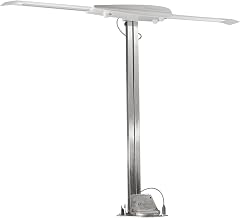 |
Winegard RV-3095 Sensar III Batwing Amplified RV TV Antenna (VHF/UHF, Digital, 4K Ready, 55 Mile Range), Light Gray |
$147.99 | (512) | View on Amazon |
| #3 |  |
1byone Outdoor TV Antenna 360° Omni-Directional Reception Long 100+ Miles Range Enhance VHF&UHF 4K Ready HDTV Antenna with Added Stability for Outdoor/Attic/RV Use - 39ft RG6 Coax Cable |
$57.99 | (33,106) | View on Amazon |
| #4 |  |
Antennas Direct ClearStream 4V Indoor Outdoor TV Antenna, UHF VHF, Multi-Directional, 70+ Mile Range, 4K 8K UHD, NEXTGEN TV – w/ 20-inch Mast (Black) |
$101.63 | (4,180) | View on Amazon |
| #5 |  |
Antennas Direct ClearStream 2V Indoor Outdoor TV Antenna UHF VHF Multi-Directional, 60+ Mile Range, 4K 8K UHD, NEXTGEN TV – w/Reflector, 20-inch Mast |
$69.99 | (5,552) | View on Amazon |