
Best RV Wi‑Fi Boosters and Routers for Full-Time RVers

Jake has spent 8 years full-timing in a Class A motorhome and has personally tested hundreds of RV products across North America. He is the lead gear reviewer at Shop RV Gear, covering solar setups, backup safety syst…
Why trust us
Every product featured on Shop RV Gear is researched by RV owners with real on-road experience. Our lead reviewer Jake Morris has full-timed for 8 years and personally tested gear across 40+ states. We earn a small commission on qualifying purchases — this never influences our picks.
How We Evaluated
We researched and tested the top options, comparing them across key factors including performance, value, ease of use, and reliability. Our recommendations are based on hands-on evaluation and real-world usage data.
⚡ Quick Picks
- #1 TravlFi JourneyGo LTE RV WiFi Hotspot | RV Internet with Multiple Networks, Pay As You Go and No Contracts | Portable Internet for Travel, Motorhomes and Campers $159.00 View on Amazon →
- #2 TP-Link Roam 7 BE3600 Wi-Fi 7 Portable Travel Router | Dual-Band, 2.5G Port, USB 3.0 | Multi-Modes in One | OpenVPN, WireGuard® | Public WiFi Sharing for Hotel/Cruise/RV/Plane | No 6 GHz | TL-WR3602BE $98.99 View on Amazon →
- #3 WAVLINK AX3000 Outdoor WiFi 6 Extender Long Range, Outdoor Wireless Access Point, Active PoE, 4x8dBi Antennas,Work with Starlink/Cameras/Router,IP67,Up to 256 Devices for Farm,Yard,RV $209.90 View on Amazon →
If you work from the road or stream nightly, random “RV Wi‑Fi boosters” from Amazon won’t cut it. Full‑time RVers who stay reliably connected usually run a combo setup: a good RV router plus Wi‑Fi extender for campground networks, and a separate cellular hotspot/booster for everywhere else.[3][6] This guide focuses on the Wi‑Fi side of that equation—boosters and routers that actually help you use park Wi‑Fi and existing signals instead of just promising miracles.
Below are the best RV Wi‑Fi boosters and routers for full‑timers, how they work in real life, and when you should skip them entirely.

Pros and Cons: Campground Wi‑Fi vs Cellular vs Satellite
| Option | Pros | Cons |
|---|---|---|
| Campground Wi‑Fi | Often included with site fee; no data caps[6] | Quality is wildly inconsistent; crowded at peak hours[6] |
| Cellular data | Great for highways/towns; flexible[6] | Coverage gaps in remote areas; data plan costs[6] |
| Satellite (e.g., Starlink) | Works where cell doesn’t; great for boondocking[3][6] | Up‑front hardware cost; needs clear sky view[6] |
Your Wi‑Fi boosters and routers sit primarily in the campground Wi‑Fi column but also act as the internal distribution network for cellular and satellite.
Best RV Wi‑Fi Boosters and Routers for Full-Time RVers
1. Best Overall Setup for Most Full-Time RVers: Long‑Range Wi‑Fi Extender + Dual‑Band Router
If you want one reliable, flexible setup that will work in most campgrounds, the sweet spot is a long‑range outdoor Wi‑Fi extender feeding an indoor dual‑band router.[1][6] You’re not locked into “RV‑branded” gear, and if something dies you can swap parts.
Typical build:

- Long‑range Wi‑Fi extender (Ubiquiti‑style or purpose‑built RV extender) mounted outside on a ladder or mast
- AC wall power or 12V inverter
- Ethernet from extender into a quality dual‑band router inside the rig
Why it works for full‑timers
- You pull the campground Wi‑Fi from the office or access point with the outside extender and rebroadcast it inside your RV with your own router.[1][6]
- You connect all your devices (laptops, TVs, tablets, smart gear) to one private network that doesn’t change every time you move parks.
- When campground Wi‑Fi is decent but weak at your site, this setup usually turns unusable Wi‑Fi into workable internet.[1][6]
Pros
- Strong range compared with plug‑in “boosters” inside the RV[1][6]
- Works in most parks that offer Wi‑Fi
- One stable private network for all devices
- Easy to upgrade router or extender separately
Cons
- Requires mounting hardware and a bit of wiring
- Won’t fix completely overloaded or extremely slow campground internet[6]
- Still dependent on the quality of the park’s Wi‑Fi
Who it’s for: Full‑timers who mostly stay in campgrounds or RV parks, work online, and want a solid base setup before getting fancy with satellite or multi‑carrier cellular.
2. Best Dedicated RV Wi‑Fi Extender Kit: “Campground Wi‑Fi” Kits
Several companies sell all‑in‑one RV Wi‑Fi extender kits that bundle an outdoor antenna, cable, and interior router into a single system. These are designed specifically to grab campground Wi‑Fi and rebroadcast it throughout your rig.[6]
Typical features include:
- Outdoor high‑gain antenna you mount on the roof, ladder, or mast
- Weather‑resistant housing and cabling meant for RV use
- A small indoor router that creates your private Wi‑Fi network
According to RV connectivity guides, these “camp Wi‑Fi” kits can significantly improve the reach of park Wi‑Fi, especially when the signal is strong near the park office but fades at the campsite.[1][6]
Pros
- Purpose‑built for RV use
- Usually includes everything in one box (antenna, cable, router)
- Designed to handle road vibration and outdoor mounting
Cons
- More expensive than DIY extender + consumer router
- Still limited by the quality and congestion of the campground’s internet backbone[6]
- Installation takes an afternoon and basic tools
Who it’s for: Full‑timers who want an RV‑specific solution and would rather pay a bit more to avoid cobbling gear together, and who frequently stay in parks with Wi‑Fi included.
3. Best Wi‑Fi Booster for Park Wi‑Fi Only: Compact Wi‑Fi Extenders / Repeaters
If you just want to make “barely there” park Wi‑Fi usable inside the RV, a simple Wi‑Fi extender / repeater can do the job.[1][5]
These plug‑in devices:
- Connect to an existing Wi‑Fi network
- Re‑broadcast that signal as a new access point closer to your devices[1]
- Are often called boosters, repeaters, or extenders, but functionally do the same thing[1]
RV connectivity resources explain that these devices do not create internet—they only amplify and rebroadcast an existing Wi‑Fi signal.[5] When the campground has usable Wi‑Fi outside but it doesn’t reach your rig interior, a repeater can bridge the gap.
Pros
- Inexpensive entry point
- Dead‑simple setup (often uses a WPS button or a short web wizard)
- Portable—can use in sticks‑and‑bricks houses or hotels as well
Cons
- Limited range compared to exterior antennas
- Speeds often drop compared with a direct connection due to repeated signal[1]
- Very dependent on where you plug them in; small location changes can make a huge difference[2]
Who it’s for: Full‑timers on a tight budget, or seasonal RVers who spend most of their time in parks with reasonably good but weak Wi‑Fi signals.
4. Best Router for Managing Multiple Internet Sources in an RV
Once you start juggling park Wi‑Fi, cellular hotspots, and maybe Starlink, a basic travel router starts to feel cramped. A full‑featured router inside your RV can act as the traffic cop for all your internet sources.[6][7]
In typical full‑time setups:
- The router’s WAN/Internet port connects to either a Wi‑Fi extender, a cellular modem/hotspot via Ethernet, or a satellite terminal.[6][7]
- The router creates one consistent Wi‑Fi network inside your rig.
- Many quality routers let you prioritize certain devices (like your work laptop) or connections.
In one RV connectivity walkthrough, creators show a standard consumer router handling all wired and wireless devices in the rig while being fed by a range extender.[7] This is essentially how many full‑timers build a flexible, upgradable system.
Key router features to prioritize for RV use
- Dual‑band (2.4GHz and 5GHz) for compatibility and speed
- Gigabit Ethernet ports for hard‑wiring TVs or workstations
- Strong CPU and RAM if you have lots of devices or do video calls and streaming
- Good firmware support and security updates
Pros
- One central control point for all your internet sources
- Better performance than tiny travel routers when many devices are connected[7]
- Easy to swap upstream source (camp Wi‑Fi today, hotspot tomorrow)
Cons
- Slightly larger physical footprint and power draw
- More settings than casual users want to mess with
Who it’s for: Full‑time RVers with multiple internet sources (park Wi‑Fi, hotspot, maybe Starlink) who want a stable, home‑like network in the rig.
5. How Wi‑Fi Boosters, Extenders, and Routers Actually Work
A lot of marketing fluff gets thrown around. Here’s how the pieces really fit together:
Wi‑Fi booster / extender / repeater
Most sources use these terms interchangeably for devices that capture a Wi‑Fi signal and rebroadcast it.[1][4][5]
- They do not create an internet connection; they only strengthen or extend an existing one.[4][5]
- They act as a middleman between the campground’s access point and your devices: they “grab” the signal, amplify it, then rebroadcast it closer to you.[1][4][5]
Router
A router creates and manages your local network:
- It doesn’t care where the internet comes from (park Wi‑Fi via an extender, cellular modem, satellite dish)—it just needs a feed into its WAN port.[6][7]
- It hands out local IP addresses, manages traffic, and provides Wi‑Fi to all your devices.
Why this matters to full‑timers
- If the campground’s internet is overloaded, no booster will fix that; you need a separate internet source (cellular, satellite).[3][6]
- If the signal is decent near the office but weak at your site, a Wi‑Fi extender + router setup can make a huge difference.[1][6]
- If you’re juggling work calls, streaming, and smart devices, a strong router is just as important as the booster.
How Full-Time RVers Actually Stay Connected
Modern full‑timers rarely rely on one solution. RV connectivity guides stress that no single internet option will cover you 100% of the time, so a multi‑path strategy is the norm.[3][6]
A typical robust setup looks like this:[3][6]
- Cellular data on smartphones (often Verizon or AT&T) for basic use and phone hotspots.
- A dedicated cellular hotspot (often on a different carrier than the phones) for work and streaming.[6]
- A cellular signal booster or external antenna for weak coverage areas.[6]
- A Wi‑Fi extender to leverage campground Wi‑Fi when it’s decent.[6]
- Optionally, Starlink or other satellite service for remote boondocking where cell coverage is poor.[3][6]
RV‑focused resources report that Starlink plus a cellular hotspot/booster combo is now the go‑to setup for serious digital nomads, with campground Wi‑Fi used as a third option when it’s decent.[3]
Where your RV Wi‑Fi boosters and routers fit into that picture:
- They make campground Wi‑Fi usable in and around your rig.[1][6]
- They create a stable internal Wi‑Fi network so you’re not constantly reconnecting each device to new networks.[6]
- They plug into your cellular or satellite gear as your primary internet source when park Wi‑Fi fails.[3][6]
Buying Guide: Choosing the Right RV Wi‑Fi Booster and Router
1. Start with your travel style
Ask yourself:
- Mostly RV parks and resorts with Wi‑Fi? Prioritize a campground Wi‑Fi extender plus router.
- Boondocking and public lands a lot? Your cellular and satellite gear matter more; treat Wi‑Fi boosters as a “nice to have.”[6]
- Heavy work from the road? Budget for a more capable router and long‑range gear, not just a plug‑in repeater.[6]
2. Know what a Wi‑Fi booster cannot do
RV education sites emphasize that a Wi‑Fi booster won’t magically make internet where none exists.[4][5]
It cannot:
- Create an internet connection where there’s no Wi‑Fi signal at all[4][5]
- Fix a campground’s slow backhaul or overloaded network[6]
It can:
- Extend a weak but usable signal into your rig
- Improve stability when you’re at the edge of the park’s Wi‑Fi coverage[1][6]
3. Key specs and features to prioritize
When comparing RV Wi‑Fi boosters and routers, focus on:
- External antennas: Exterior or window‑mounted antennas outperform interior‑only plug‑ins.[1][6]
- Dual‑band support: Both 2.4GHz (range) and 5GHz (speed) for flexibility.
- Weather resistance: For any antenna or extender mounted outside.
- Mounting options: Ladder, pole, magnet base, or roof brackets.
- Power options: 120V AC vs 12V DC; some rigs are inverter‑averse.
- Firmware and app: Clear setup process and updates for security.
4. Installation basics
A practical RV Wi‑Fi guide recommends a simple process for installing boosters and routers:[2]
- Read the manual before you climb a ladder.
- Install external antennas first, with as clear a line of sight as you can get.[2]
- Route cables cleanly and weather‑seal any roof penetrations.
- Power everything up and connect following the manufacturer’s quick‑start steps.[2]
- Optimize position—small location changes can drastically improve signal quality.[2]
- Test speeds using tools like Google’s built‑in speed test or Ookla and adjust if needed.[6]
What to Skip (Or Be Skeptical About)
- Tiny plug‑in “miracle” boosters with vague specs – If the listing doesn’t clearly state range, antenna type, and supported bands, assume marketing fluff.
- Any device claiming to “create internet anywhere” without a data source – This contradicts how Wi‑Fi boosters work; they must pull from an existing signal.[4][5]
- Old single‑band 2.4GHz‑only gear – In crowded parks, 2.4GHz can be miserable; dual‑band is worth it.
- Over‑priced RV‑branded routers with no better specs than consumer gear – Sometimes you’re just paying for the RV logo.
Realistic Expectations: What “Good” Looks Like for Full-Timers
Using a Wi‑Fi extender and router with decent campground Wi‑Fi, you can usually expect:[1][6]
- Email, web, and basic work tools to be fine most of the time.
- Video calls to be usable in off‑peak hours when fewer people are streaming.
- HD streaming to be hit‑or‑miss depending on how many neighbors are on the same network.
RV connectivity guides recommend speed‑testing each new park and adjusting your workflow accordingly: use campground Wi‑Fi for light tasks and save cellular or satellite for calls, uploads, and critical work.[6]
Frequently Asked Questions
How does a Wi‑Fi booster help in an RV?
A Wi‑Fi booster (or extender/repeater) captures an existing Wi‑Fi signal, amplifies it, and rebroadcasts it closer to your devices.[1][4][5] In an RV context, that usually means pulling the campground’s Wi‑Fi from near the office and pushing it into and around your rig so your phones, laptops, and TV can connect more reliably.[1][6]
Can a Wi‑Fi booster give me internet where I have no signal?
No. RV tech resources are clear that a Wi‑Fi booster cannot create internet where none exists.[4][5] It only strengthens or extends a signal that’s already there.[4][5] If there’s no usable park Wi‑Fi and no cellular coverage, you’ll need satellite internet or to move.
What’s the best overall RV internet setup for full-time travel?
For most full‑timers, experts now recommend a dual‑path setup: Starlink or similar satellite for remote areas, plus a cellular hotspot/booster for towns and highways, backed up by a Wi‑Fi extender/router for park Wi‑Fi when it’s good.[3][6] This combination gives you the best shot at staying online nearly everywhere you camp.
Do I still need a router if my hotspot has Wi‑Fi built in?
You can get by with a hotspot alone, but a dedicated router gives you a stronger, more flexible internal network. It handles more devices better, lets you swap between campground Wi‑Fi, hotspot, and satellite without re‑configuring each gadget, and usually offers better range and controls inside the RV.[6][7]
How do I know if campground Wi‑Fi is worth boosting?
After you connect near the park office or in your rig, run a speed test (Google’s built‑in tool or a site like Ookla) and note download, upload, and latency.[6] If basic pages load quickly and you see at least a few Mbps down, a booster/extender can usually make it usable in your RV. If speeds are terrible even right under the access point, no booster will fix the park’s overloaded network.
All Picks & Comparison
| # | Product | Price | Rating | ||
|---|---|---|---|---|---|
| #1 |  |
TravlFi JourneyGo LTE RV WiFi Hotspot | RV Internet with Multiple Networks, Pay As You Go and No Contracts | Portable Internet for Travel, Motorhomes and Campers |
$159.00 | (231) | View on Amazon |
| #2 | 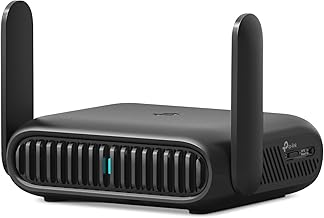 |
TP-Link Roam 7 BE3600 Wi-Fi 7 Portable Travel Router | Dual-Band, 2.5G Port, USB 3.0 | Multi-Modes in One | OpenVPN, WireGuard® | Public WiFi Sharing for Hotel/Cruise/RV/Plane | No 6 GHz | TL-WR3602BE |
$98.99 | (211) | View on Amazon |
| #3 |  |
WAVLINK AX3000 Outdoor WiFi 6 Extender Long Range, Outdoor Wireless Access Point, Active PoE, 4x8dBi Antennas,Work with Starlink/Cameras/Router,IP67,Up to 256 Devices for Farm,Yard,RV |
$209.90 | (233) | View on Amazon |
| #4 |  |
2026 AX1800 Outdoor WiFi 6 Extender Long Range, WAVLINK Outdoor WiFi Access Point with PoE, 4x8dBi High-Gain Antennas, IP67 Weatherproof, Support Up to 256 Devices for Farm, Yard, Patio, RV, Garage |
$159.99 | (402) | View on Amazon |
| #5 |  |
GL.iNet GL-SFT1200 (Opal) Portable WiFi Travel Router, Mini VPN Wireless Router for Fiber Optic Modem, Mobile Internet WiFi Repeater, Dual Band Openwrt Computer Routers, Home/Business/RV/Cruise |
$39.99 | (7,604) | View on Amazon |