
Best RV Air Compressors for Tire Inflation

Jake has spent 8 years full-timing in a Class A motorhome and has personally tested hundreds of RV products across North America. He is the lead gear reviewer at Shop RV Gear, covering solar setups, backup safety syst…
Why trust us
Every product featured on Shop RV Gear is researched by RV owners with real on-road experience. Our lead reviewer Jake Morris has full-timed for 8 years and personally tested gear across 40+ states. We earn a small commission on qualifying purchases — this never influences our picks.
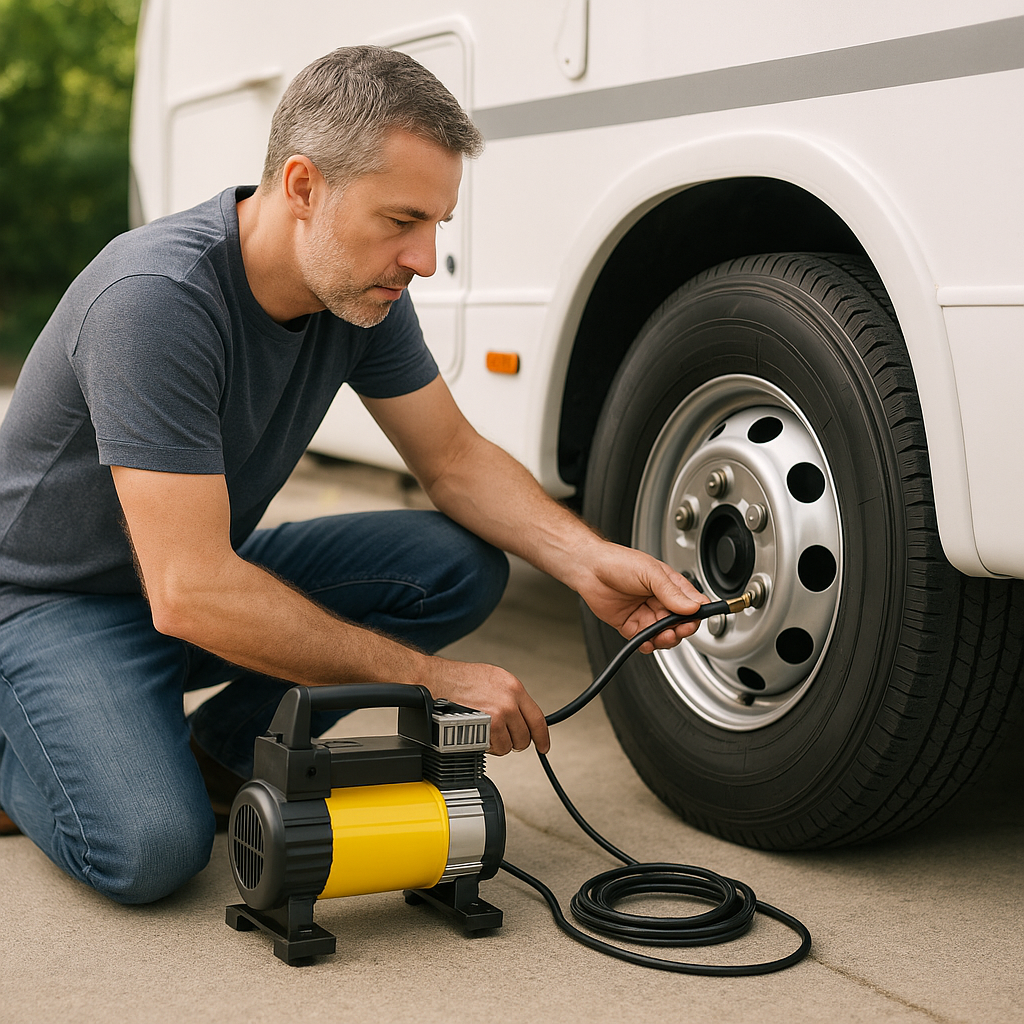
How We Evaluated
We researched and tested the top options, comparing them across key factors including performance, value, ease of use, and reliability. Our recommendations are based on hands-on evaluation and real-world usage data.
⚡ Quick Picks
- #1 VIAIR 450P-RV Automatic Portable Air Compressor Kit - 150 PSI for RV, Truck, Jeep and SUV Tires - RV Accessories with 1.80 CFM, Silver $346.79 View on Amazon →
- #2 VIAIR 400P RV 12-Volt(12v) Automatic Portable Compressor Kit, RV Tire Inflator/Pump, For Class C Motorhomes, 150 PSI 40047 $322.76 View on Amazon →
- #3 VIAIR 300P - 30033 Tire Inflator Portable Offroad Air Compressor for Truck & SUV, 12V On/Off Road Tire Pump Air Compressor Portable Heavy Duty 150 PSI $158.06 View on Amazon →
Best RV Air Compressors for Tire Inflation
If you're shopping for the best RV air compressor, you already know RV tires are not like passenger car tires. They run at higher pressures, carry heavier loads, and demand consistent maintenance to stay safe on the road. A weak inflator that works fine for a sedan often struggles with travel trailers, fifth wheels, and motorhomes.
In this Shop RV Gear buyer's guide, we'll break down what actually matters in an RV air compressor, compare the best options by use case, and help you choose a unit that can confidently handle your rig's tire pressure requirements.

Best RV Air Compressor Comparison Table
| Product Type | Best For | Power Source | Typical Strengths | Possible Drawbacks | Verdict |
|---|---|---|---|---|---|
| Heavy-duty portable 12V compressor | Most travel trailer and fifth-wheel owners | 12V battery clamps | Strong performance, portable, road-ready | Heavier than small inflators | Best overall choice for most RVers |
| Compact 12V inflator | Small trailers, emergency top-offs | 12V outlet | Budget-friendly, easy to store | Slow on high-pressure RV tires | Best for light-duty use only |
| Dual-power portable compressor | Home + campground flexibility | 12V and 120V | Versatile, convenient | May cost more | Best for mixed-use RV owners |
| High-output off-road style compressor | Larger RV tires and frequent use | 12V battery clamps | Fast inflation, excellent durability | Premium price | Best premium option |
| Pancake or hot-dog style AC compressor | Garage-based maintenance | 120V AC | Strong airflow, useful for tools too | Less convenient on the road | Best for at-home RV prep |
Key Takeaways
- The best RV air compressor should match your tire pressure needs, not just your budget.
- Many RVs need 80 to 125 PSI, but usable airflow at those pressures matters more than a big PSI number on the box.
- Portable 12V compressors are convenient, but larger RVs often benefit from battery-clamp or 120V models.
- Hose length, duty cycle, power source, and gauge accuracy are just as important as maximum PSI.
- For most towable RV owners, a heavy-duty portable compressor is the best balance of performance, storage, and price.
- For Class A motorhomes and high-pressure applications, a more powerful compressor with better airflow is usually worth the upgrade.
Why RV Owners Need a Dedicated Air Compressor
RV tire inflation is one of those maintenance jobs that's easy to delay until it becomes urgent. The problem is that underinflated tires run hotter, wear faster, and can contribute to dangerous blowouts. Overinflation can also reduce traction and create harsher ride quality.
A dedicated RV air compressor gives you three major advantages:
- You can check and correct pressure before every trip.
- You are not dependent on gas station air pumps.
- You can top off tires accurately for your specific load and tire rating.
For RVers, convenience is only part of the equation. The real goal is safer travel, better tire life, and fewer roadside surprises.

What to Look for in the Best RV Air Compressor
Before jumping into product categories and top picks, here are the buying factors that matter most.
Pressure Capability
Many RV tires need significantly higher pressure than standard car tires.
- Small trailers: often 50 to 65 PSI
- Travel trailers and fifth wheels: often 65 to 80 PSI
- Heavy-duty towables and some motorhomes: 90 to 110 PSI
- Certain Class A applications: 110 PSI or more
A compressor rated to 150 PSI sounds impressive, but that number alone doesn't tell the whole story. Some units can technically reach that pressure but do so very slowly.
Airflow (CFM)
CFM, or cubic feet per minute, tells you how much air the compressor can move. For RV use, decent airflow at higher pressure is what keeps inflation times reasonable. If you are topping off large LT or trailer tires, low airflow can become frustrating quickly.
Duty Cycle
Duty cycle refers to how long the compressor can run before it needs to cool down. A short duty cycle is fine for bicycle tires, but RV tires may require extended run time. If you're maintaining multiple tires, this matters a lot.
Power Source
Common RV compressor power options include:
- 12V cigarette-lighter style plug: convenient, but often limited in output
- 12V battery clamps: stronger power delivery for heavy-duty portable compressors
- 120V AC: useful in campgrounds, garages, and shore-power situations
- Dual power: flexible for both home and road use
Hose and Cord Length
A powerful compressor is less useful if it can't reach all your tires. RV owners should prioritize enough hose and power cord length to access every wheel position without awkward repositioning.
Gauge Accuracy and Ease of Use
Built-in gauges vary widely in quality. Digital gauges are often easier to read, but analog gauges can be durable and simple. The best setup is often a capable compressor paired with a separate high-quality tire pressure gauge.
Portability and Storage
RV gear always competes for storage space. Look for a compressor that's compact enough to carry but substantial enough to actually do the job.
Our Top Picks for RV Tire Inflation
Rather than pushing one exact model for every RVer, we recommend buying by compressor class. That's because the best choice depends heavily on your RV type, tire pressure requirements, and whether you need road-ready portability or mostly home use.
1. Best Overall: Heavy-Duty Portable 12V Compressor
This is the sweet spot for most RV owners. A heavy-duty 12V compressor with battery clamps, a long hose, and a real duty cycle can handle common trailer and tow-vehicle tire maintenance without taking up too much storage space.
Why it stands out
These compressors are far more capable than the small inflators sold for everyday cars. They usually connect directly to the battery for better power delivery and can inflate RV tires to practical pressures without excessive wait times.
Best for
- Travel trailers
- Fifth wheels
- Toy haulers
- Tow vehicles running LT tires
- RVers who want a reliable road-trip compressor
Pros
- Strong balance of power and portability
- Better suited to 80+ PSI applications than basic inflators
- Easy to store in an RV compartment
- Excellent for routine tire top-offs on the road
Cons
- Heavier and bulkier than compact inflators
- Usually louder during operation
- Premium units cost more than entry-level 12V models
Shop RV Gear verdict
For most readers, this is the best RV air compressor category to start with. It offers the best mix of performance, convenience, and real-world RV usefulness.
2. Best Budget Pick: Compact 12V Inflator
If you own a smaller trailer or only need occasional top-offs, a compact 12V inflator may be enough. These are inexpensive, small, and easy to stash in a storage bin.
Why it stands out
The biggest advantage is convenience. They're lightweight, simple to use, and good for emergency situations where you just need enough air to get safely moving again.
Best for
- Pop-up campers
- Small utility and teardrop trailers
- Light-duty backup use
- Budget-conscious RV owners
Pros
- Affordable
- Compact and easy to store
- Simple operation for quick top-offs
- Good backup option even if you own a larger compressor
Cons
- Often too slow for larger RV tires
- Limited duty cycle
- 12V outlet plugs may not provide enough power for demanding jobs
- May struggle near the upper PSI range needed by some RVs
Shop RV Gear verdict
A compact inflator is acceptable for smaller rigs or emergency use, but it is not the best long-term solution for larger RV tire maintenance.
3. Best for Flexibility: Dual-Power Portable Compressor
A dual-power compressor can run on both 12V DC and 120V AC, giving you more options at home, in storage, or at a campsite with shore power.
Why it stands out
This type of compressor is especially useful if you do some tire maintenance before a trip in your driveway, but still want the option to bring the unit on the road.
Best for
- Weekend RVers
- Home-based maintenance routines
- Owners who want one compressor for RV, car, and household jobs
Pros
- More versatile than single-power models
- Useful in both garage and travel settings
- Often easier to operate for casual users
- Good all-around value if you want one multi-purpose unit
Cons
- Not always as powerful as dedicated heavy-duty units
- Can be pricier than basic 12V inflators
- Some models still have modest duty cycles
Shop RV Gear verdict
If flexibility matters more than maximum output, this is a smart middle-ground option.
4. Best Premium Choice: High-Output Portable Compressor
For large RVs, high-pressure tires, or frequent inflation needs, a high-output portable compressor is the premium answer. These are often favored by off-road and overland users, but they translate very well to RV tire service.
Why it stands out
These compressors are designed for demanding work. Better airflow, stronger components, and longer duty cycles mean less waiting and less frustration.
Best for
- Class A and Class C motorhomes
- Heavy fifth wheels
- RVers who travel long distances often
- Owners who prioritize speed and durability
Pros
- Fast inflation performance
- Better for larger tire volumes
- Typically more durable and serviceable
- Handles repeated use with less strain
Cons
- Expensive
- Heavier and less compact
- May be overkill for small trailers
Shop RV Gear verdict
If you regularly manage large RV tires or want top-tier portable performance, this is the upgrade worth paying for.
5. Best for Home Base Maintenance: 120V Pancake or Hot-Dog Compressor
A small shop-style air compressor can be a great fit if you mainly check and inflate your RV tires at home before departure.
Why it stands out
These units often deliver better airflow than compact portable inflators and can also power air tools, blow out filters, or handle general garage chores.
Best for
- RV prep at home
- Seasonal tire maintenance
- Multi-purpose garage use
- Owners with easy access to shore power or household outlets
Pros
- Strong airflow for the price
- Useful beyond tire inflation
- Often widely available and easy to maintain
- Good value for home users
Cons
- Less convenient for roadside use
- Bulkier to transport in an RV
- Requires AC power
Shop RV Gear verdict
This is a practical choice if your RV rarely leaves home without a full maintenance check, but it is not the best standalone option for travel emergencies.
Side-by-Side Comparison: Which Type Is Best?
| Feature | Heavy-Duty 12V | Compact 12V | Dual-Power | High-Output Portable | 120V Shop Compressor |
|---|---|---|---|---|---|
| RV tire capability | High | Low to moderate | Moderate | Very high | High |
| Portability | High | Very high | Moderate | Moderate | Low |
| Speed | Moderate to high | Low | Moderate | High | Moderate to high |
| Best for travel | Excellent | Good backup only | Good | Excellent | Poor |
| Best for large RVs | Good | Poor | Fair | Excellent | Good at home |
| Price | Moderate | Low | Moderate | High | Moderate |
Clear Verdict
If you want one recommendation for the broadest range of RV owners, choose a heavy-duty portable 12V compressor with battery clamps and a long hose. It is the most practical all-around answer for travel trailers, fifth wheels, and many motorhome owners.
If you have a large Class A or frequently deal with high-pressure tires, step up to a high-output portable compressor. If your maintenance mostly happens at home, a 120V shop compressor can also be a very smart buy.
How to Inflate RV Tires Safely
Having the right compressor is only half the job. Proper tire inflation technique matters just as much.
Materials You'll Need
- RV air compressor
- Accurate tire pressure gauge
- Tire pressure recommendations from your RV or tire manufacturer
- Valve stem caps
- Work gloves
- Flashlight if checking tires in low light
Numbered Steps
- Park on a level, stable surface. Set the parking brake and make sure the RV is secure.
- Check the recommended tire pressure. Use the correct load and inflation information for your specific tire and RV setup.
- Inspect each tire visually. Look for cracks, punctures, bulges, or uneven wear before adding air.
- Measure pressure when tires are cold. Cold readings are more accurate than readings taken after driving.
- Connect the compressor securely. Attach it to the proper power source and connect the hose firmly to the valve stem.
- Inflate in short intervals. Pause periodically to check pressure with a reliable gauge.
- Do not rely only on the compressor's built-in gauge. Verify final pressure with a separate gauge whenever possible.
- Replace valve caps after inflation. They help keep dirt and moisture out of the valve stem.
- Repeat for all RV and tow-vehicle tires. Do not forget the spare.
- Let the compressor cool if needed. Follow duty cycle guidelines to avoid overheating.
Safety Tips
- Never exceed the tire's maximum pressure rating.
- Do not inflate a visibly damaged tire.
- Keep hands and face away from suspicious or compromised sidewalls.
- Use hearing protection if operating a loud compressor for extended periods.
- Avoid cheap extension cords with AC compressors, as voltage drop can reduce performance.
- Read the compressor manual before first use, especially for battery-clamp models.
Practical Buying Advice for Different RV Owners
For Small Trailer Owners
You may not need a premium compressor, but don't buy the cheapest unit available if your trailer tires run above basic car-tire pressures. A quality compact or mid-range portable inflator is often enough.
For Travel Trailer and Fifth-Wheel Owners
This group benefits most from a heavy-duty portable 12V compressor. It offers enough output for real RV use while staying compact enough for storage.
For Class C and Class A Owners
Check your actual tire pressure requirements carefully. If your coach runs near or above 100 PSI, prioritize airflow, duty cycle, and hose reach. Premium portable compressors often make the most sense here.
For Full-Time RVers
If you're on the road constantly, buy for durability rather than lowest price. A compressor that saves time and works reliably in remote areas quickly pays for itself.
Common Mistakes to Avoid
- Buying based only on the maximum PSI printed on the package
- Assuming any car inflator can handle RV tires
- Ignoring duty cycle limits
- Forgetting hose length and reach
- Relying on inaccurate built-in gauges alone
- Skipping regular pressure checks between trips
FAQ
1. What size air compressor do I need for RV tires?
You need a compressor that can comfortably reach your RV tires' required PSI and still deliver useful airflow at that pressure. For many towable RVs, a heavy-duty portable 12V unit works well. For larger motorhomes or 100+ PSI tires, a more powerful compressor is often the better choice.
2. Can a 12V air compressor inflate RV tires?
Yes, but not all 12V compressors are equal. Small plug-in inflators may be too slow or weak for larger RV tires. Heavy-duty 12V compressors with battery clamps are much better suited to RV use.
3. Is a higher PSI rating always better?
No. A high PSI rating is only one part of the picture. Airflow, duty cycle, hose length, and real-world performance at RV tire pressures matter much more than a big advertised maximum number.
Final Thoughts
The best RV air compressor is the one that can safely and efficiently inflate your specific tires without turning routine maintenance into a chore. For most RV owners, that means choosing a heavy-duty portable 12V compressor rather than a basic car inflator. It gives you the capability to maintain tire pressure properly wherever your travels take you.
If you have a larger rig or demand faster inflation, a premium high-output compressor is a worthwhile investment. And if most of your maintenance happens at home, a 120V shop compressor can be a practical alternative.
At Shop RV Gear, our advice is simple: buy for your real tire pressure needs, prioritize airflow and duty cycle, and keep a quality pressure gauge with your compressor. A good setup improves safety, protects your tires, and makes every departure day easier.
All Picks & Comparison
| # | Product | Price | Rating | ||
|---|---|---|---|---|---|
| #1 | 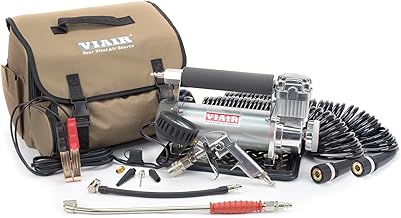 |
VIAIR 450P-RV Automatic Portable Air Compressor Kit - 150 PSI for RV, Truck, Jeep and SUV Tires - RV Accessories with 1.80 CFM, Silver |
$346.79 | (1,948) | View on Amazon |
| #2 | 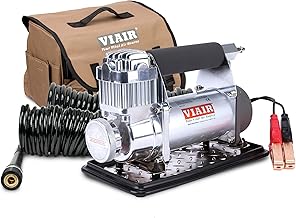 |
VIAIR 400P RV 12-Volt(12v) Automatic Portable Compressor Kit, RV Tire Inflator/Pump, For Class C Motorhomes, 150 PSI 40047 |
$322.76 | (2,463) | View on Amazon |
| #3 |  |
VIAIR 300P - 30033 Tire Inflator Portable Offroad Air Compressor for Truck & SUV, 12V On/Off Road Tire Pump Air Compressor Portable Heavy Duty 150 PSI |
$158.06 | (2,495) | View on Amazon |
| #4 |  |
ALL-TOP Air Compressor Kit, Dual Cylinder 12V Portable Inflator 12.35 ft³/Min, Offroad Air Compressor Pump for Truck Tires, Heavy Duty Max 150 PSI for 4x4 Vehicle & RV |
$189.99 | (558) | View on Amazon |
| #5 |  |
ALL-TOP Air Compressor Kit, 12V Portable Inflator 7.06CFM, Offroad Air Compressor for Truck ,Air Pump for Car Heavy Duty, Max 150PSI for SUV 4x4 Vehicle RV Tire |
$159.99 | (1,433) | View on Amazon |