
Best Portable Solar Chargers for RVs

Jake has spent 8 years full-timing in a Class A motorhome and has personally tested hundreds of RV products across North America. He is the lead gear reviewer at Shop RV Gear, covering solar setups, backup safety syst…
Why trust us
Every product featured on Shop RV Gear is researched by RV owners with real on-road experience. Our lead reviewer Jake Morris has full-timed for 8 years and personally tested gear across 40+ states. We earn a small commission on qualifying purchases — this never influences our picks.
How We Evaluated
We researched and tested the top options, comparing them across key factors including performance, value, ease of use, and reliability. Our recommendations are based on hands-on evaluation and real-world usage data.
⚡ Quick Picks
- #1 Renogy 200W Portable Solar Panel, 25% High Efficiency Solar Panel Kit with 20A Charger Controller for 12V Battery Power Station, N-Type Foldable Solar Panels w/Tempered Glass for RV, Camping Off-Grid $322.99 View on Amazon →
- #2 DOKIO 200W Portable Foldable Solar Panel Kit (20x27in, 9.7lb), with Separate Controller and Dual USB, Monocrystalline Charger for 12V Batteries & Power Stations, RV Camping Trailer Emergency Backup $123.28 View on Amazon →
- #3 200W Portable Solar Panel for Power Station, Foldable Solar Charger w/ 4 Kickstands, IP65 Waterproof Solar Panel Kit w/DC XT60 Anderson Aviation Output for Outdoor RV Camper Blackout $149.99 View on Amazon →
Best Portable Solar Chargers for RVs
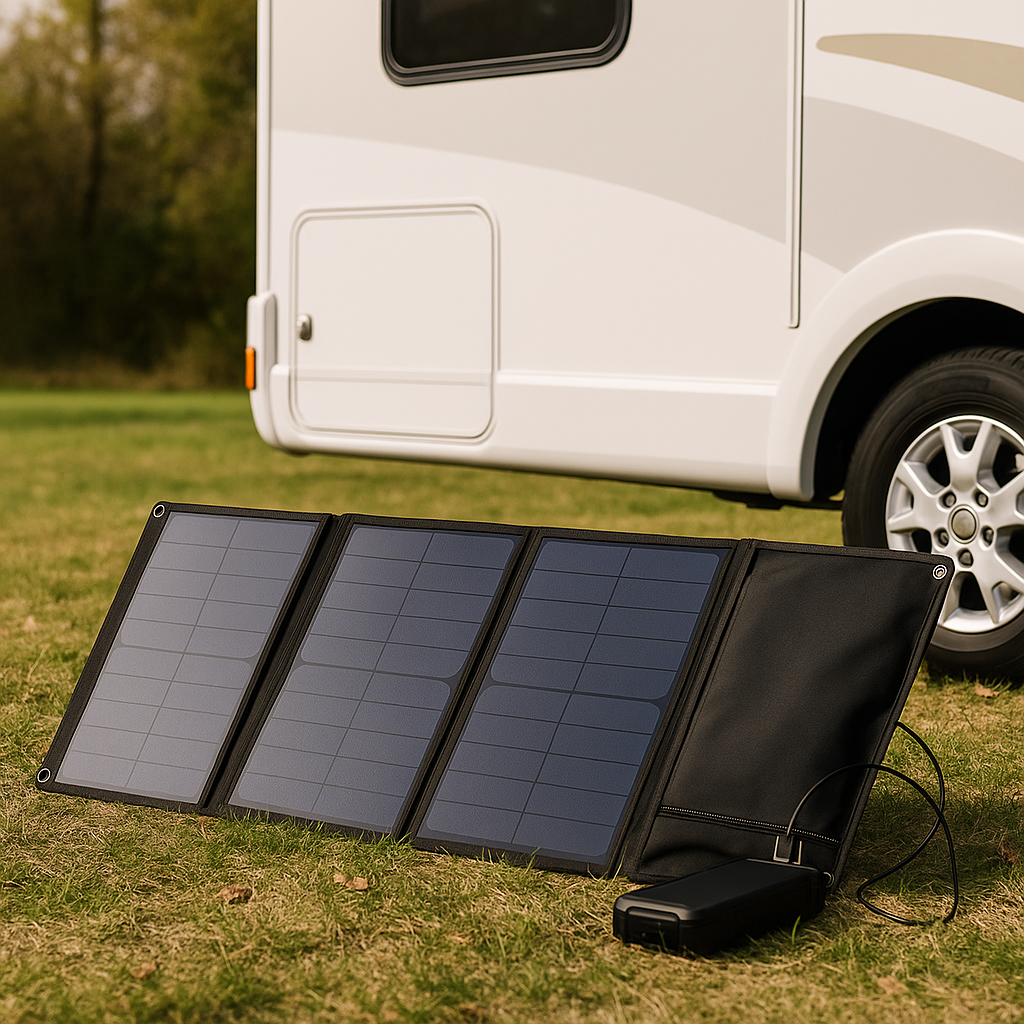
Finding the best portable solar charger for RV travel can make a huge difference in how comfortably you camp off-grid. A good portable solar setup helps keep your house batteries topped off, reduces generator run time, and gives you more flexibility whether you’re boondocking for a weekend or staying off-grid for longer stretches. In this Shop RV Gear buyer’s guide, we’ll compare the top portable solar chargers for RV owners, break down the key features to look for, and show you how to choose the right model for your battery bank and camping style.
Comparison Table: Best Portable Solar Chargers for RVs
| Product | Wattage | Panel Type | Charge Controller | Best For | Key Advantage |
|---|---|---|---|---|---|
| Renogy 200W 20A Rover Kit | 200W | Monocrystalline | MPPT included | Serious boondockers | Strong output and efficient charging |
| Zamp Solar Legacy 140W Portable Kit | 140W | Monocrystalline | PWM included | Premium plug-and-play use | RV-friendly build quality |
| Jackery SolarSaga 100W | 100W | Monocrystalline | No RV controller included | Portable power stations and light RV use | Lightweight and easy to carry |
| EcoFlow 220W Bifacial Portable Panel | 220W | Bifacial | No RV controller included | High-output flexible use | Excellent output in good conditions |
| Go Power! 130W Portable Solar Kit | 130W | Monocrystalline | PWM included | Easy setup for beginners | Simple all-in-one RV kit |
| Dokio 160W Foldable Kit | 160W | Monocrystalline | PWM included | Budget buyers | Low cost and compact storage |
Key Takeaways
- Portable solar chargers are ideal for RVers who want flexible off-grid charging without a permanent roof installation.
- The best choice depends on your battery type, daily power use, panel wattage needs, and whether a charge controller is included.
- For most RV owners, a 100W to 200W portable solar kit is the sweet spot for battery maintenance and light-to-moderate off-grid use.
- Higher-efficiency monocrystalline panels usually offer better performance in limited space and variable weather.
- A built-in or included MPPT charge controller is usually worth paying extra for better charging efficiency.
- Portable kits work best when paired with realistic energy expectations and proper battery monitoring.
Why RV Owners Choose Portable Solar Chargers
Portable solar chargers have become one of the most useful upgrades for modern RV camping. Unlike fixed rooftop panels, portable units can be moved into direct sunlight while your RV stays parked in the shade. That alone can improve charging performance in many campgrounds.

They’re also easier to install, easier to store, and often more affordable for RVers who don’t want to commit to a full roof-mounted system. If you rent RVs, own an older camper, or simply want a backup charging option, portable solar is a smart, low-hassle solution.
Portable Solar Is Best For:
- Weekend boondocking
- Battery maintenance during storage
- Supplemental charging for rooftop systems
- RV owners with limited roof space
- Campers who park in shade but can place panels in sun
Portable Solar Has Limits Too
Portable chargers are helpful, but they are not magic. A 100W or even 200W kit will not fully replace a generator or large inverter system if you run air conditioning, residential refrigerators, or heavy 120V appliances all day. They work best when matched to realistic energy usage and an appropriate battery bank.
Best Portable Solar Chargers for RVs: Top Picks
Below are our top picks for RV owners, with a focus on portability, charging performance, durability, and overall value.

Side-by-Side Verdict
If you want the best all-around option for most RV owners, the Renogy 200W 20A Rover Kit is our top recommendation. It balances output, portability, quality, and charging efficiency better than most competitors.
If you want a premium plug-and-play setup designed with RV use in mind, Zamp Solar Legacy 140W is an excellent pick, though it usually costs more.
If your main priority is affordability, Dokio 160W Foldable Kit offers solid entry-level value, but it is not as rugged or refined as higher-end options.
1. Renogy 200W 20A Rover Portable Solar Kit
The Renogy 200W kit is our pick for the best portable solar charger for RV owners overall. It offers a strong balance of power, portability, and charging efficiency, making it a great fit for campers who spend real time off-grid.
Why We Like It
This kit includes two 100W monocrystalline panels in a suitcase-style design, plus a 20A Rover MPPT charge controller. That MPPT controller is a major advantage over many basic kits because it can improve charging efficiency, especially during changing light conditions.
Best For
- RVers with lead-acid or lithium battery banks
- Moderate off-grid camping
- Users who want better efficiency than basic PWM kits
Pros
- 200W output suits many RV battery setups
- MPPT controller included
- Good brand reputation and parts support
- Foldable suitcase design with kickstands
- Better long-term value than many entry-level kits
Cons
- Heavier than 100W kits
- More expensive than budget options
- Bulkier to store in smaller campers
2. Zamp Solar Legacy 140W Portable Kit
Zamp Solar has long been popular with RV owners, especially those who want a premium, RV-focused solution. The Legacy 140W portable kit is well built, straightforward to use, and designed for practical field use.
Why We Like It
Zamp’s build quality stands out. The frame, carry handle, weather-resistant construction, and RV-ready design make it attractive for owners who prioritize reliability and convenience over maximum wattage.
Best For
- RVers who want premium construction
- Plug-and-play users
- Campers with prewired Zamp-compatible ports
Pros
- Durable, RV-oriented design
- Easy setup and transport
- Good reputation for support and quality control
- Works well for battery maintenance and moderate charging
Cons
- Expensive for its wattage
- PWM controller is less efficient than MPPT
- Lower output than some similarly priced competitors
3. Jackery SolarSaga 100W
The Jackery SolarSaga 100W is one of the most recognizable portable solar panels on the market. While it is often paired with portable power stations rather than traditional RV battery banks, it can still make sense for some RV owners with the right adapter and charging setup.
Why We Like It
It’s lightweight, compact, and easy to deploy. If you want something portable enough to use at the RV, at home, or on day trips, this panel offers a lot of flexibility.
Best For
- Light charging needs
- Portable power station users
- RVers who value low weight and easy handling
Pros
- Lightweight and easy to carry
- Fast setup and fold-flat storage
- Good brand ecosystem for portable power
- Useful beyond RV camping
Cons
- Not a complete RV charging kit by itself
- Usually requires additional components for direct battery charging
- 100W output is modest for larger RV setups
4. EcoFlow 220W Bifacial Portable Solar Panel
The EcoFlow 220W bifacial panel is a strong option for RVers who want high-output portable charging and already understand how to integrate portable solar into a broader power system.
Why We Like It
Its bifacial design can capture additional reflected light from the rear side, potentially boosting output in the right conditions. It also folds into a relatively compact package for its size.
Best For
- Experienced solar users
- High-output portable charging
- Pairing with power stations or custom setups
Pros
- High rated output
- Bifacial design can improve performance
- Premium materials and portability
- Good option for flexible multi-use power setups
Cons
- Expensive
- Not a complete RV battery charging kit on its own
- Real-world bifacial gains vary by surface and conditions
5. Go Power! 130W Portable Solar Kit
Go Power! is a familiar name in the RV world, and its 130W portable kit is designed specifically for RV battery charging. It’s a practical option for beginners who want a simple, all-in-one kit.
Why We Like It
This kit is easy to understand and easy to use. It comes with a built-in charge controller and a straightforward suitcase design that works well for casual off-grid camping.
Best For
- First-time solar buyers
- Smaller RV battery banks
- Easy weekend boondocking setups
Pros
- Beginner-friendly design
- RV-specific charging kit
- Portable and simple to set up
- Good brand familiarity in the RV market
Cons
- Lower wattage than top picks
- PWM controller limits efficiency
- Not ideal for larger daily power demands
6. Dokio 160W Foldable Solar Kit
The Dokio 160W foldable kit is one of the more budget-friendly ways to get into portable RV solar. It is lightweight and compact, but it also feels less rugged than framed suitcase-style kits.
Why We Like It
For occasional use or backup charging, it can be a cost-effective choice. It stores easily and offers decent rated wattage for the price.
Best For
- Budget-conscious RVers
- Occasional battery topping-off
- Compact storage needs
Pros
- Affordable entry point
- Lightweight and easy to pack
- Decent wattage for the price
- Good for backup or emergency use
Cons
- Less durable than premium kits
- Controller quality may be basic
- Performance consistency can vary more than top brands
How to Choose the Best Portable Solar Charger for Your RV
Not every RV owner needs the biggest panel. The right portable solar charger depends on how you camp, what you power, and what kind of battery bank you have.
1. Match Panel Wattage to Your Daily Power Use
As a rough guide:
- 50W to 100W: Battery maintenance, very light loads, emergency backup
- 100W to 200W: Most common range for weekend RV use and light boondocking
- 200W+: Better for longer off-grid stays, larger battery banks, and higher daily use
If you regularly use lights, fans, water pump, phone charging, and maybe some TV time, a 100W to 200W setup is usually a practical starting point.
2. Check Battery Compatibility
Make sure the charger and controller support your battery chemistry:
- Flooded lead-acid
- AGM
- Gel
- Lithium (LiFePO4)
Lithium batteries often benefit from controllers with customizable charging profiles.
3. Prefer Monocrystalline Panels
Monocrystalline panels are typically the best choice for RV use because they offer better efficiency and solid real-world performance in a compact footprint.
4. Choose MPPT Over PWM When Possible
A PWM controller is cheaper and common in entry-level kits. An MPPT controller is more efficient and usually performs better in colder weather, variable sunlight, and higher-voltage panel configurations.
5. Consider Weight and Storage
A 200W suitcase kit can be effective, but it may also be bulky. Make sure you have room in your RV basement, pass-through, or storage compartment.
6. Look at Cable Length
Longer cables let you place the panel farther from the RV, which is especially helpful when your campsite has partial shade.
Portable Solar Charger vs Rooftop RV Solar
Portable Solar Advantages
- Park RV in shade while placing panels in sun
- No roof drilling or permanent installation
- Easier to upgrade or replace
- Useful for backup charging and storage maintenance
Rooftop Solar Advantages
- Always deployed and ready
- No daily setup required
- Better for frequent off-grid travelers
- Harder to steal or misplace
Our Practical Take
For many RV owners, portable solar works best as either:
- A first step into RV solar, or
- A supplement to a rooftop system
If you boondock often and want maximum convenience, rooftop solar may eventually make more sense. But for flexibility and lower commitment, portable kits are hard to beat.
How to Set Up a Portable Solar Charger for Your RV
Setting up a portable solar charger is usually simple, but doing it correctly helps protect your batteries and improve performance.
Materials You’ll Need
- Portable solar panel kit
- Charge controller if not built in
- Battery connection cables or alligator clips
- RV battery bank
- Optional extension cable
- Battery monitor or multimeter
Step-by-Step Setup
- Park safely and stabilize the RV. Make sure your RV is secure before unloading gear.
- Place the solar panel in direct sunlight. Avoid tree cover, shadows from the RV, and obstructions.
- Angle the panel toward the sun. Use the built-in kickstands and adjust for the strongest exposure.
- Connect the charge controller first if required. Follow the manufacturer’s wiring order exactly.
- Attach the controller to the battery bank. Observe correct polarity: positive to positive, negative to negative.
- Connect the solar panel to the controller. Once connected, verify that charging has started.
- Check charging status. Use the controller display or a battery monitor to confirm voltage and charging current.
- Reposition through the day if needed. Portable panels work best when occasionally adjusted to follow the sun.
Safety Tips
- Always follow the panel and controller manufacturer instructions.
- Double-check polarity before making connections.
- Keep connectors dry and off wet ground when possible.
- Do not place panels where people can trip over cables.
- Secure panels in windy conditions to prevent damage.
- Avoid overpromising what a small panel can do for a large battery bank.
Real-World Buying Advice for RV Owners
The biggest mistake RV shoppers make is buying based only on wattage. A 200W panel from a poor-quality brand may underperform a well-built 140W or 160W kit in real use. Build quality, controller quality, cable design, and durability matter.
Another common mistake is ignoring battery size and usage habits. If your battery bank is small and you only camp off-grid occasionally, a modest portable kit may be perfect. If you run an inverter heavily and expect home-like power use, portable solar alone may not be enough.
Best Choice by RV User Type
Best Overall
Renogy 200W 20A Rover Portable Solar Kit
Best Premium Pick
Zamp Solar Legacy 140W Portable Kit
Best Budget Pick
Dokio 160W Foldable Solar Kit
Best for Beginners
Go Power! 130W Portable Solar Kit
Best for Power Station Users
Jackery SolarSaga 100W
Final Verdict
If you’re shopping for the best portable solar charger for RV use, the Renogy 200W 20A Rover Portable Solar Kit is the strongest all-around choice for most RV owners. It delivers useful charging capacity, includes an efficient MPPT controller, and offers the kind of flexibility that makes portable solar worthwhile.
For RVers who value premium construction and easy plug-and-play use, Zamp remains a strong contender. For budget shoppers, Dokio can be a practical starting point. And if your setup revolves around a portable power station rather than a traditional RV battery bank, Jackery and EcoFlow deserve a close look.
The right pick comes down to your battery type, storage space, budget, and how often you camp off-grid. Buy for your real power needs—not just the biggest number on the box—and you’ll get far better results at the campsite.
Frequently Asked Questions
1. What size portable solar charger do I need for my RV?
For many RV owners, 100W to 200W is a good starting range. A 100W kit works for battery maintenance and light use, while 200W is better for moderate off-grid camping and larger battery banks.
2. Can a portable solar charger run my RV air conditioner?
No, not by itself in most cases. Portable solar chargers are mainly used to recharge your RV batteries. Running an air conditioner requires a very large battery bank, a powerful inverter, and much more solar capacity than most portable kits provide.
3. Is portable solar better than rooftop solar for RVs?
It depends on how you camp. Portable solar is better for flexibility and shaded campsites, while rooftop solar is better for convenience and frequent off-grid travel. Many RVers benefit from using both.
All Picks & Comparison
| # | Product | Price | Rating | ||
|---|---|---|---|---|---|
| #1 |  |
Renogy 200W Portable Solar Panel, 25% High Efficiency Solar Panel Kit with 20A Charger Controller for 12V Battery Power Station, N-Type Foldable Solar Panels w/Tempered Glass for RV, Camping Off-Grid |
$322.99 | (1,374) | View on Amazon |
| #2 |  |
DOKIO 200W Portable Foldable Solar Panel Kit (20x27in, 9.7lb), with Separate Controller and Dual USB, Monocrystalline Charger for 12V Batteries & Power Stations, RV Camping Trailer Emergency Backup |
$123.28 | (3,924) | View on Amazon |
| #3 |  |
200W Portable Solar Panel for Power Station, Foldable Solar Charger w/ 4 Kickstands, IP65 Waterproof Solar Panel Kit w/DC XT60 Anderson Aviation Output for Outdoor RV Camper Blackout |
$149.99 | (1,025) | View on Amazon |
| #4 |  |
EBL 200W Portable Solar Panel for Power Station, Foldable Solar Charger w/ 4 Kickstands, IP65 Waterproof Solar Panel Kit w/DC XT60 Anderson Aviation Output for Outdoor RV Camper Blackout |
$149.99 | (113) | View on Amazon |
| #5 |  |
ECO-WORTHY 200 Watts 12 Volt/24 Volt Solar Panel Kit with High Efficiency Monocrystalline Solar Panel and 30A PWM Charge Controller for RV, Camper, Vehicle, Caravan and Other Off Grid Applications |
$179.99 | (1,090) | View on Amazon |