5th Wheel vs. Travel Trailer: Which Tow-Behind Is Right for You?

Salem Hassan founded Travelcamp RV and brings 30+ years of hands-on RV, marine, and powersports retail experience to every review.
✎ Reviewed by Salem Hassan — Founder, Travelcamp RV · 30+ years in RV, marine, and powersports retail
Why trust us
ShopRVGear articles are researched by the Searchshop Editorial team using manufacturer specs, RV trade sources, and owner feedback. We match every recommendation to your RV class — Class A, B, C, fifth-wheel, or travel trailer — because gear that works in a 40-ft motorhome often does not fit a Class B van. We may earn a commission on qualifying purchases; it does not change what we recommend.
5th Wheel vs. Travel Trailer: Which Tow-Behind Is Right for You?
If you are starting a fifth wheel vs travel trailer comparison, the best choice usually comes down to four things: your truck or SUV, where you camp, how much living space you want, and how comfortable you are with towing and setup. We researched the most important ownership factors so you can make a practical decision based on safety, budget, and real-world usability rather than just floorplans.
Both RV types can be excellent for road trips, seasonal stays, and long-distance travel. The right one depends less on which is “better” and more on which fits your tow vehicle and camping habits.
Understanding the Basic Difference

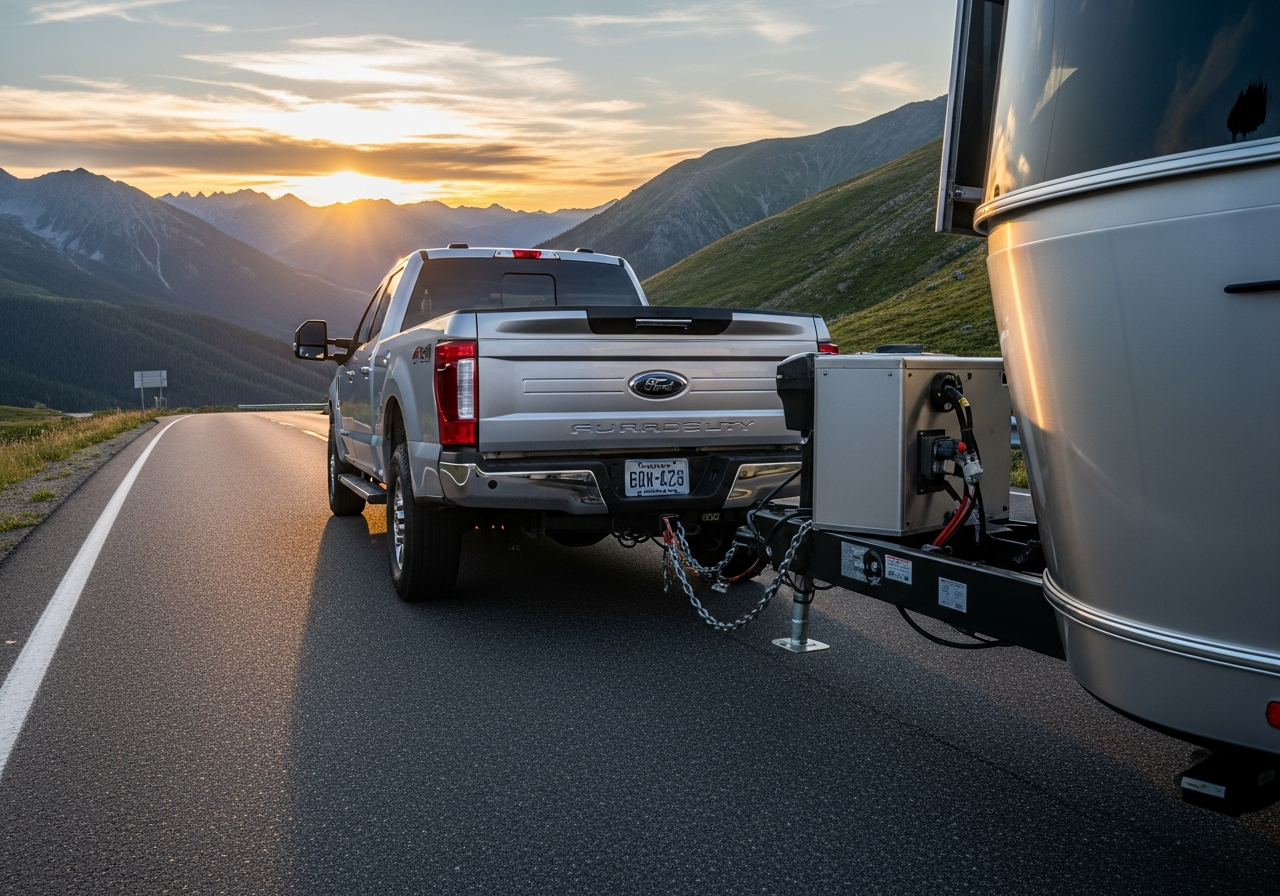
A travel trailer connects to a standard rear hitch at the back of the tow vehicle. A fifth wheel connects to a special hitch mounted in the bed of a pickup truck, usually over or slightly ahead of the rear axle.
That hitch location changes a lot:
- Travel trailers are more widely compatible with tow vehicles and come in a broader range of sizes.
- Fifth wheels often tow more smoothly and offer more interior height and split-level living space.
Fifth Wheel vs. Travel Trailer at a Glance
Tow Vehicle Requirements
A travel trailer can often be towed by an SUV, half-ton truck, or larger pickup, depending on trailer weight and payload requirements. A fifth wheel requires a pickup truck with a bed-mounted hitch, and many larger models need a heavy-duty truck.
Towing Feel
Because a fifth wheel hitch sits over the truck axle, it usually provides better stability and less sway than a bumper-pull trailer. Travel trailers can tow very well too, but they are generally more sensitive to loading, crosswinds, and hitch setup.
Interior Layout
Fifth wheels often feel roomier because of higher ceilings, slide-outs, and raised front sections that create separate bedroom or lounge areas. Travel trailers can still offer excellent layouts, but they typically use space more efficiently in a single-level design.
Cost of Ownership
Travel trailers usually cost less to buy and may require less expensive tow vehicles. Fifth wheels often cost more overall because the truck, hitch, and maintenance needs can be greater.
Pros and Cons of a Fifth Wheel

Advantages of a Fifth Wheel
- Better towing stability for many drivers
- More residential-feeling interiors
- Greater storage capacity in many models
- Easier backing response for some experienced owners
- Often better suited for extended stays or full-time RV use
Drawbacks of a Fifth Wheel
- Requires a pickup truck
- Uses truck bed space needed for cargo
- Higher purchase and setup costs in many cases
- Taller overall height, which requires more clearance awareness
- Can be excessive for short weekend trips if you prefer simplicity
Pros and Cons of a Travel Trailer
Advantages of a Travel Trailer
- Wider range of sizes and prices
- More tow vehicle flexibility
- Lower entry cost for many buyers
- Easier to store in some driveways or storage lots
- Truck bed or rear cargo area remains more usable if not towing with a pickup bed hitch
Drawbacks of a Travel Trailer
- More prone to sway if improperly loaded or mismatched to the tow vehicle
- Hitch setup can be more sensitive to tongue weight and balance
- Some layouts feel less spacious than similarly sized fifth wheels
- Longer rear overhang can affect maneuvering in tight areas
How to Choose the Right Tow-Behind
Use this step-by-step process before you shop.
1. Verify Your Tow Vehicle Ratings
Check your owner’s manual and door-jamb sticker for:
- Tow rating
- Payload capacity
- Gross Combined Weight Rating (GCWR)
- Rear axle rating
- Hitch rating
Safety tip: Never shop by dry weight alone. Loaded camping weight matters more, especially once you add water, propane, batteries, food, and gear.
2. Match the Trailer Type to Your Vehicle
If you do not own a pickup truck, that may narrow the field quickly. Most fifth wheels require a truck, while many travel trailers can work with SUVs or lighter-duty pickups if the numbers support it.
3. Think About Your Camping Style
Ask yourself:
- Do we camp mostly on weekends or for months at a time?
- Do we move often or stay parked for long stretches?
- Do we want more living room and storage, or easier towing logistics?
- Will we visit older campgrounds with tighter sites?
We recommend fifth wheels for travelers who prioritize interior comfort and longer stays. We recommend travel trailers for buyers who want flexibility, lower costs, and broader vehicle compatibility.
4. Consider Total Ownership Cost
Budget for more than the trailer itself:
- Hitch equipment
- Brake controller
- Extended mirrors if needed
- Tire replacement
- Insurance
- Storage fees
- Fuel use
- Routine maintenance
5. Evaluate Setup and Driving Confidence
Some buyers prefer the stable feel of a fifth wheel on highways. Others prefer a smaller travel trailer because it is easier to manage overall. Be honest about experience level, route types, and how often you expect to tow.
Safety tip: If you are new to towing, practice in an empty parking lot before your first trip, including braking, backing, and turning clearance.
Towing and Setup Basics
How to Hitch a Travel Trailer Safely
- Park on level ground and chock the trailer wheels.
- Raise or lower the coupler to match hitch ball height.
- Back the tow vehicle into alignment slowly.
- Lower the coupler onto the hitch ball and lock the latch.
- Attach safety chains in a crossed pattern.
- Connect the breakaway cable.
- Plug in the trailer wiring harness.
- If equipped, tension the weight-distribution hitch correctly.
- Raise stabilizers and tongue jack fully.
- Test lights and trailer brakes before departure.
Safety tip: Recheck hitch components after the first few miles of travel.
How to Hitch a Fifth Wheel Safely
- Inspect the hitch jaws and king pin for damage or debris.
- Chock the trailer wheels and ensure the trailer is at proper hitch height.
- Open the hitch jaws if required by your hitch design.
- Back the truck slowly until the king pin engages the hitch.
- Confirm the hitch jaws are fully closed and locked.
- Perform a visual inspection from both sides.
- Connect the breakaway cable and electrical cord.
- Raise landing gear fully.
- Conduct a pull test at low speed with trailer brakes engaged.
- Check lights, brake response, and clearance before leaving.
Safety tip: A failed hitch connection can cause severe damage. Always do a visual confirmation and pull test.
Common Problems and Troubleshooting
1. Trailer Sway While Driving
Diagnostic steps:
- Check trailer loading and cargo balance.
- Measure tongue weight or pin weight relative to trailer weight.
- Inspect tire pressure on both tow vehicle and trailer.
- Verify hitch setup and weight-distribution adjustment.
- Review whether the tow vehicle is undersized for the load.
Solutions:
- Redistribute cargo to improve balance.
- Increase tongue weight if it is too light on a travel trailer.
- Correct tire pressures to manufacturer specs.
- Adjust or service sway-control and weight-distribution components.
- Slow down in crosswinds and avoid sudden steering inputs.
2. Uneven Trailer Braking
Diagnostic steps:
- Test brake controller settings.
- Inspect trailer wiring plug for corrosion or looseness.
- Check brake adjustment and wear at each wheel.
- Confirm battery and breakaway system condition.
Solutions:
- Recalibrate the brake controller.
- Clean or repair electrical connections.
- Adjust or replace worn brake components.
- Service the breakaway battery if weak or dead.
3. Difficult Backing or Poor Turning Response
Diagnostic steps:
- Confirm mirrors are adjusted correctly.
- Check tire condition and pressure.
- Evaluate whether the site approach angle is too tight.
- Review hitch position and trailer tracking behavior.
Solutions:
- Use a spotter with clear hand signals.
- Make smaller steering corrections.
- Pull forward and reset rather than forcing the angle.
- Practice in open spaces before backing into crowded campsites.
4. Excessive Bouncing or Chucking
Diagnostic steps:
- Check suspension components and tire pressures.
- Inspect hitch setup and bed-rail clearance on fifth wheels.
- Review cargo placement.
- Drive over similar roads at reduced speed to isolate conditions.
Solutions:
- Correct pressures and replace worn suspension parts.
- Re-level the trailer if nose-high or nose-low.
- Move heavy cargo to improve balance.
- Reduce speed on rough roads.
Maintenance Guide for Both RV Types
Routine maintenance protects safety, handling, and resale value. While fifth wheels and travel trailers have different hitch systems, much of the care schedule overlaps.
Pre-Trip Maintenance Checklist
- Inspect tires for cracking, tread wear, and proper inflation.
- Torque lug nuts to specification.
- Test running lights, brake lights, and turn signals.
- Inspect roof seals, window seals, and exterior seams.
- Check battery charge and cable condition.
- Verify propane system operation and look for leaks.
- Test trailer brakes and breakaway switch.
- Confirm hitch hardware is secure and properly lubricated where required.
- Secure interior cargo and latch cabinets.
- Check fresh water, gray tank, and black tank status before departure.
Seasonal Maintenance Checklist
Spring Opening
- Inspect for winter moisture intrusion.
- Sanitize the fresh water system.
- Check awning fabric and hardware.
- Inspect tires for flat spotting or age damage.
- Test appliances, AC, furnace, and water heater.
- Reseal roof and body seams where needed.
Summer Mid-Season Check
- Reinspect tire wear and pressure frequently.
- Clean and inspect brake and suspension components.
- Wash the roof and sidewalls to spot sealant issues early.
- Check slide seals and lubricate approved moving parts.
Fall Winterization
- Drain fresh water lines and tanks.
- Bypass and drain the water heater.
- Add RV antifreeze as required for your plumbing layout.
- Remove food and moisture-sensitive items.
- Charge or maintain batteries properly.
- Cover or store according to climate and manufacturer guidance.
Safety tip: Never use automotive antifreeze in RV plumbing systems.
Hitch Maintenance by Trailer Type
Travel Trailer Hitch Care
- Inspect the coupler for wear or deformation.
- Grease the hitch ball if your setup requires it.
- Check chain attachment points.
- Inspect weight-distribution bars and brackets.
- Replace worn pins, clips, or damaged electrical connectors.
Fifth Wheel Hitch Care
- Inspect king pin and pin box bolts.
- Lubricate hitch plate or use the manufacturer-approved lube method.
- Check jaw operation and locking mechanism.
- Inspect bed mounting hardware for torque and corrosion.
- Verify adequate trailer-to-truck clearance during turns.
Which One Is Better for Different Buyers?
A Fifth Wheel May Be Better If You:
- Already own a capable pickup truck
- Want more interior comfort for longer trips
- Prioritize towing stability
- Need larger storage compartments
- Expect to spend extended time at campgrounds or RV parks
A Travel Trailer May Be Better If You:
- Want lower upfront cost
- Need more tow vehicle flexibility
- Prefer a simpler setup
- Camp on shorter trips or move frequently
- Need a wider selection of compact or lightweight models
Final Thoughts
In a practical fifth wheel vs travel trailer comparison, neither option wins for everyone. Fifth wheels usually shine in stability, interior volume, and long-stay comfort. Travel trailers usually win on affordability, flexibility, and accessibility for more tow vehicles.
We recommend starting with your vehicle ratings and realistic camping habits before falling in love with a floorplan. If the numbers, safety margins, and usage style all line up, the right choice becomes much clearer.
Key Takeaways
- A fifth wheel requires a pickup truck and usually offers better towing stability and more spacious interiors.
- A travel trailer is generally more affordable and compatible with a wider range of tow vehicles.
- The safest choice depends on tow rating, payload, hitch setup, and loaded trailer weight.
- Fifth wheels often suit longer stays and bigger living spaces.
- Travel trailers often suit budget-conscious buyers, lighter tow vehicles, and shorter trips.
- Proper hitching, loading, tire care, and brake checks matter just as much as trailer type.
- Seasonal maintenance helps prevent costly problems and improves towing safety.