
Manual vs Automatic RV Leveling Systems: Which Is Better?

Jake has spent 8 years full-timing in a Class A motorhome and has personally tested hundreds of RV products across North America. He is the lead gear reviewer at Shop RV Gear, covering solar setups, backup safety syst…
Why trust us
Every product featured on Shop RV Gear is researched by RV owners with real on-road experience. Our lead reviewer Jake Morris has full-timed for 8 years and personally tested gear across 40+ states. We earn a small commission on qualifying purchases — this never influences our picks.
How We Evaluated
We researched and tested the top options, comparing them across key factors including performance, value, ease of use, and reliability. Our recommendations are based on hands-on evaluation and real-world usage data.
Short answer: automatic wins for convenience, manual wins for simplicity
If you camp often and want the fastest, least fussy setup, automatic RV leveling is usually the better choice. If you want the lowest upfront cost and a system you can understand and troubleshoot without much drama, manual RV leveling still makes a lot of sense.[1][2][4]
That said, the best system is the one that matches your rig and your camping style. Automatic systems save time and reduce guesswork, but they add cost and complexity. Manual systems are cheaper and often more repair-friendly, but they demand more attention every time you set up camp.[1][2][7]

Side-by-side comparison
| Factor | Manual leveling | Automatic leveling |
|---|---|---|
| Upfront cost | Lower | Higher |
| Setup speed | Slower | Faster |
| Ease of use | More involved | Very easy |
| Maintenance | Simpler | More complex |
| Repairability | Often easier | Often harder |
| Best for | Budget buyers, occasional campers | Frequent travelers, larger rigs |
| Risk of user error | Higher | Lower |
| Physical effort | Higher | Lower |
Best pick: automatic RV leveling for most buyers
For most RV owners, automatic leveling is the better overall buy because it speeds up setup, makes leveling more consistent, and reduces the chance of a sloppy setup on tired hands after a long drive.[1][3][4]
Why it wins
- Faster campsite setup and teardown.[1][3]
- Less bending, cranking, and trial-and-error.[1][2]
- More consistent leveling on uneven sites.[4][7]
- Better fit for frequent travelers and larger rigs.[1][4]
Pros
- Quick setup.
- Easy to use.
- Consistent results.
- Less physical effort.[1][3][4]
Cons
- Higher cost upfront.[2][6][9]
- More parts that can fail.[1][7]
- Can require electrical or hydraulic troubleshooting.[3][1]
What manual RV leveling really means
Manual leveling usually means you’re using a combination of jacks, blocks, tongue jacks, bubble levels, and your own judgment to get the RV level.[1][2][4] In practice, that means more hands-on work at every stop and more opportunities to get it just a little off if you rush.
Pros
- Lower price than automatic systems.[2][6][9]
- Simpler design, which often means easier maintenance.[1][7]
- Fewer electronics to deal with.[1][7]
- Works well for lighter-duty or occasional campers.[2][6]
Cons
- Takes more time and effort.[1][2]
- Requires more attention and experience.[1][4]
- Easier to make setup mistakes when you’re tired or on uneven ground.[1][2]
- Can be annoying for frequent stop-and-go travel.[2][7]
What automatic RV leveling really means
Automatic systems use powered jacks or hydraulic mechanisms to level the RV with less manual input from you.[1][3][4] On many rigs, you park, hit a button, and the system handles most of the work.[3][4]

Pros
- One-button convenience.[3][4]
- Great for frequent moves and larger RVs.[1][4]
- Reduces physical strain.[1][3]
- Helps shorten the setup process.[3][4]
Cons
- More expensive to buy and install.[2][6][9]
- More mechanical complexity.[1][7]
- May need hydraulic or electrical maintenance.[3][1]
- Not every owner actually needs that level of convenience.[2][7]
What to skip, and why
Skip automatic leveling if:
- You camp only a few weekends a year and want to keep costs down.[2][6][7]
- Your rig is small and easy to level manually.[2][4]
- You prefer simple gear with fewer failure points.[1][7]
Skip manual leveling if:
- You move campsites often and hate setup chores.[1][3]
- You own a larger trailer or motorhome where convenience matters more.[1][4]
- You want a more repeatable process with less guesswork.[3][4]
Real-world buying advice by RV type
Travel trailers
Manual leveling can be perfectly fine if you camp occasionally and don’t mind using blocks and a tongue jack.[2][6] Automatic leveling becomes more attractive as trailers get larger and heavier, especially if you move often.[1][4]
Fifth wheels
Automatic leveling is often worth serious consideration because fifth-wheel owners tend to value fast setup and easier repeatability.[1][4] If budget is tight, manual can still work, but setup is less convenient.[2][7]
Motorhomes
Automatic leveling usually makes the most sense on motorhomes because the convenience payoff is big and the systems are commonly integrated into the coach.[3][4] Manual systems are possible, but they rarely feel as polished in daily use.[1][3]
The hidden factor most buyers miss: campsite reality
Level campsites are not guaranteed, and uneven terrain is exactly where automatic systems start to feel worth the money.[1][3] On flatter, more forgiving sites, manual leveling may be all you need.[2][4]
That is the real decision: How often do you want to solve the same setup problem by hand? If the answer is “all the time,” automatic is probably worth it.[1][3][4]
Maintenance and reliability: what actually matters
Both systems need regular inspection and basic care. Lippert recommends checking for dirt, debris, rust, secure electrical connections, intact hydraulic lines, and proper control-panel calibration, and it also notes that hydraulic systems should have fluid levels checked and seals inspected for leaks.[1] Camping World likewise emphasizes checking hydraulic fluid levels and inspecting leveling legs as part of routine maintenance.[3]
For manual systems, the upside is simplicity: fewer powered components usually means fewer failure points and less to service.[1][7] For automatic systems, the upside is convenience, but you must stay on top of maintenance because complexity always raises the odds that something eventually needs attention.[1][3][7]
Best choice by buyer type
- Choose automatic if you camp frequently, value fast setup, or have a larger rig.[1][3][4]
- Choose manual if you want the cheapest practical system and don’t mind doing the work yourself.[2][6][9]
- Choose automatic if physical effort is a concern or you want the least stressful setup routine.[1][3]
- Choose manual if you like simple gear and want to keep repair risk as low as possible.[1][7]
Frequently Asked Questions
Is automatic RV leveling worth the money?
Yes, if you camp often or want faster setup with less effort. The convenience and consistency are the main payoffs, while the tradeoff is higher cost and more system complexity.[1][3][4][6]
Are manual RV leveling systems more reliable?
They are usually simpler, which can make them easier to maintain and troubleshoot. But “more reliable” depends on the specific hardware and how well it is maintained; automatic systems can also be dependable when cared for properly.[1][3][7]
Which leveling system is best for a beginner?
Automatic leveling is usually easier for beginners because it removes a lot of guesswork. Manual systems are still workable, but they take more practice to get right every time.[1][2][4]
Do automatic leveling systems still need wheel chocks?
Yes. Lippert specifically notes that wheel chocks should be used to keep the RV from rolling during the leveling process.[1]
Can automatic leveling systems replace good campsite judgment?
No. Even automatic systems work best when the site is reasonably stable and you inspect the ground first for rocks, debris, soft soil, or other problems.[1]
Final verdict
If you want the most practical, user-friendly answer, automatic RV leveling is better for most buyers because it saves time and reduces hassle.[1][3][4] If you care more about price, simplicity, and fewer components to maintain, manual leveling is still a smart, workable choice.[2][6][7]
For ShopRVGear readers, the no-nonsense recommendation is simple: buy automatic if you camp enough to appreciate it; buy manual if you want to spend less and don’t mind doing the work yourself.[1][2][4]
Top Picks & Comparison
| # | Product | Price | Rating | ||
|---|---|---|---|---|---|
| #1 |  |
Lippert Ground Control TT 5-Point Automatic RV Travel Trailer Leveling System with Touchpad Controller, 10,000-lb. GVWR - 672136 |
$3,384.19 | (37) | View on Amazon |
| #2 | 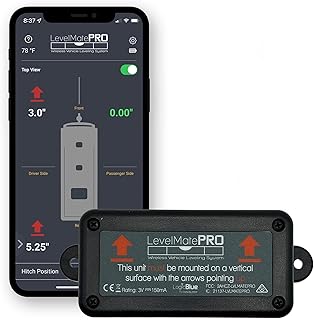 |
LogicBlue Technology LevelMatePRO Wireless RV Leveling System, Bluetooth Leveler for Campers, Must-Have Accessory for Travel Trailers, Effortless Setup for Phones with App |
$99.98 | (6,565) | View on Amazon |
| #3 |  |
Beech Lane Wireless RV Leveling System, Made in the USA, User-Friendly Phone App With Real-Time Precise Leveling Measurements, Advanced Wireless Camper Leveler, Included AA Batteries, Patented |
$99.99 | (1,790) | View on Amazon |
| #4 |  |
Camco FasTen RV Leveling Blocks - Features Interlocking Design for Customizable Height - Carrying Handle Twists to Secure Blocks for RV Storage - 8.5” x 8.5” x 1”, Yellow, 10-Pack (21022) |
$56.41 | (5,092) | View on Amazon |
| #5 |  |
RVMATE Camper Levelers 8-Piece Kit RV Leveling Blocks Camper Wheel Chocks Including Two Curved Levelers, Two Chocks, and Two Rubber Grip Mats in Storage Carrying Bag |
$29.99 | (1,000) | View on Amazon |