
Hardwired vs Portable RV Surge Protectors: Which Is Better?

Jake has spent 8 years full-timing in a Class A motorhome and has personally tested hundreds of RV products across North America. He is the lead gear reviewer at Shop RV Gear, covering solar setups, backup safety syst…
Why trust us
Every product featured on Shop RV Gear is researched by RV owners with real on-road experience. Our lead reviewer Jake Morris has full-timed for 8 years and personally tested gear across 40+ states. We earn a small commission on qualifying purchases — this never influences our picks.
How We Evaluated
We researched and tested the top options, comparing them across key factors including performance, value, ease of use, and reliability. Our recommendations are based on hands-on evaluation and real-world usage data.
Short answer
If you want the easiest, most flexible option, portable RV surge protectors are usually the better buy for most RVers because they plug in, move between rigs, and are simple to replace. If you want a cleaner, always-on setup and don’t mind paying a little more for installation, hardwired RV surge protectors are the better choice for full-timers or anyone who wants permanent protection with less day-to-day handling.[1][3][4]
Best pick first: what most RVers should buy
For most travel trailer, fifth-wheel, and motorhome owners, the best all-around choice is a portable 30-amp or 50-amp surge protector with EMS protection from a reputable RV electronics brand.[1][3][4]

Why? Because it gives you the most flexibility with the least commitment. You can use it on future rigs, swap it out quickly if it fails, and visually inspect campground power before you connect your coach.[1][3][4]
If you live in your RV full-time, have a single rig you plan to keep for years, or simply want the protector mounted out of the way, a hardwired unit makes more sense.[1][3][4]
Hardwired vs portable RV surge protectors: the real difference
A portable surge protector sits between the pedestal and your RV shore cord. A hardwired surge protector is installed permanently inside the RV’s electrical system, usually near the power entry point.[1][3][4]

The protection goal is the same: guard against low voltage, open ground, reverse polarity, and other bad power conditions commonly found at campgrounds.[1][3][4]
Which is better for you?
Choose portable if you:
- Want a plug-and-play setup
- Move between different rigs
- Rent, upgrade often, or may sell your RV soon
- Prefer easy replacement without opening panels
- Like checking the pedestal display before plugging in[1][3][4]
Choose hardwired if you:
- Want protection that is always installed
- Don’t want a device hanging from the pedestal
- Full-time or stay in one RV long term
- Prefer a cleaner setup with less handling at each stop
- Are comfortable with installation or paying for it[1][3][4]
Pros and cons
Portable RV surge protectors
Pros
- Easy to use and move between rigs[1][3][4]
- No permanent installation required[1][3][4]
- Can be replaced quickly if it fails[1][3][4]
- Lets you inspect campground power before connecting[1][3][4]
Cons
- Can be stolen if left unattended at the pedestal[1][3][4]
- Adds one more item to carry and store[1][3][4]
- More exposed to weather, dirt, and abuse at the hookup point[1][3][4]
Hardwired RV surge protectors
Pros
- Always installed and ready to protect[1][3][4]
- Cleaner campsite setup with nothing hanging outside[1][3][4]
- Less likely to walk off at the campground[1][3][4]
- Better fit for long-term ownership[1][3][4]
Cons
- Requires installation[1][3][4]
- Harder to move to a new RV[1][3][4]
- Usually less convenient to replace on the road[1][3][4]
- May cost more overall once installation is included[1][3][4]
What to skip and why
Skip any surge protector that only claims “surge protection” without clearly listing EMS-style electrical protection features such as low-voltage shutoff, open-neutral/open-ground detection, and reverse-polarity protection.[1][3][4]
Also skip ultra-cheap no-name units with vague specs and no clear support. With RV power, the cost of a bad unit can be far higher than the money you saved.[1][3][4]
Real-world buying advice
If you are shopping today, look for these practical features:
- Correct amperage: 30-amp or 50-amp to match your RV
- Built-in error code display or diagnostic lights
- Weather-resistant enclosure for portable models
- Locking or theft-deterrent features for pedestal use
- Solid warranty and accessible customer support[1][3][4]
Popular product families in the RV market include Progressive Industries and Southwire Surge Guard, both of which are commonly discussed by RV owners looking for portable and hardwired options.[1][3][4]
How to choose by camping style
- Weekend campers: Portable is usually the simplest choice.
- Full-timers: Hardwired is often worth it for convenience.
- Frequent travelers with one rig: Hardwired if you want set-and-forget, portable if you want the easiest replacement path.
- People who swap rigs: Portable wins, no contest.[1][3][4]
FAQs
Is a hardwired RV surge protector safer than a portable one?
Not inherently. Both can provide strong protection if they are quality EMS-style units with the right electrical safeguards. The main difference is installation and convenience, not the basic protection goal.[1][3][4]
Can I use a portable surge protector on a 30-amp or 50-amp RV?
Yes, as long as you buy the correct amperage model for your RV’s shore power connection.[1][3][4]
Are RV surge protectors worth it?
Yes. Campground power problems are common enough that many RV owners consider surge protection an essential part of protecting appliances and electronics.[1][3][4]
Which brand is most trusted?
The RV market most often points shoppers toward Progressive Industries and Southwire Surge Guard for both portable and hardwired options, though the best choice still depends on your rig and camping style.[1][3][4]
Final buying call
If you want the most practical answer, buy portable unless you have a strong reason to install hardwired. Portable is the better default for flexibility and resale value; hardwired is the better long-term convenience play for owners who stay in one RV and want a permanent setup.[1][3][4]
Top Picks & Comparison
| # | Product | Price | Rating | ||
|---|---|---|---|---|---|
| #1 |  |
Power Watchdog Smart RV Portable Surge Protector 30 Amp - Patented Bluetooth Connectivity - Monitor Voltage/Amperage/Wattage - Replaceable Module - IP65 Water-Resistant |
$309.99 | (2,777) | View on Amazon |
| #2 |  |
Progressive Industries EMS-HW50C Heavy Duty RV Surge Protector, Black, 50 Amp |
$192.35 | (544) | View on Amazon |
| #3 |  |
Progressive Industries SSP-30XL Portable RV Smart Surge Protector, Black, 30 Amp |
$51.55 | (5,683) | View on Amazon |
| #4 | 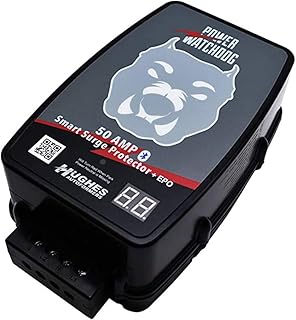 |
Power Watchdog PWD50EPOH 50 Amp Smart RV Hardwired Surge Protector - Emergency Power Off (EPO) – Bluetooth Monitoring - Replaceable Surge Module - LED Diagnostics - Durable for RV Campsite Use |
$266.70 | (2,667) | View on Amazon |
| #5 |  |
Progressive Industries EMS-PT30X Portable RV Surge Protector 30 Amp |
$109.00 | — | View on Amazon |