
Best RV Backup Cameras for Safe Parking

Jake has spent 8 years full-timing in a Class A motorhome and has personally tested hundreds of RV products across North America. He is the lead gear reviewer at Shop RV Gear, covering solar setups, backup safety syst…
Why trust us
Every product featured on Shop RV Gear is researched by RV owners with real on-road experience. Our lead reviewer Jake Morris has full-timed for 8 years and personally tested gear across 40+ states. We earn a small commission on qualifying purchases — this never influences our picks.
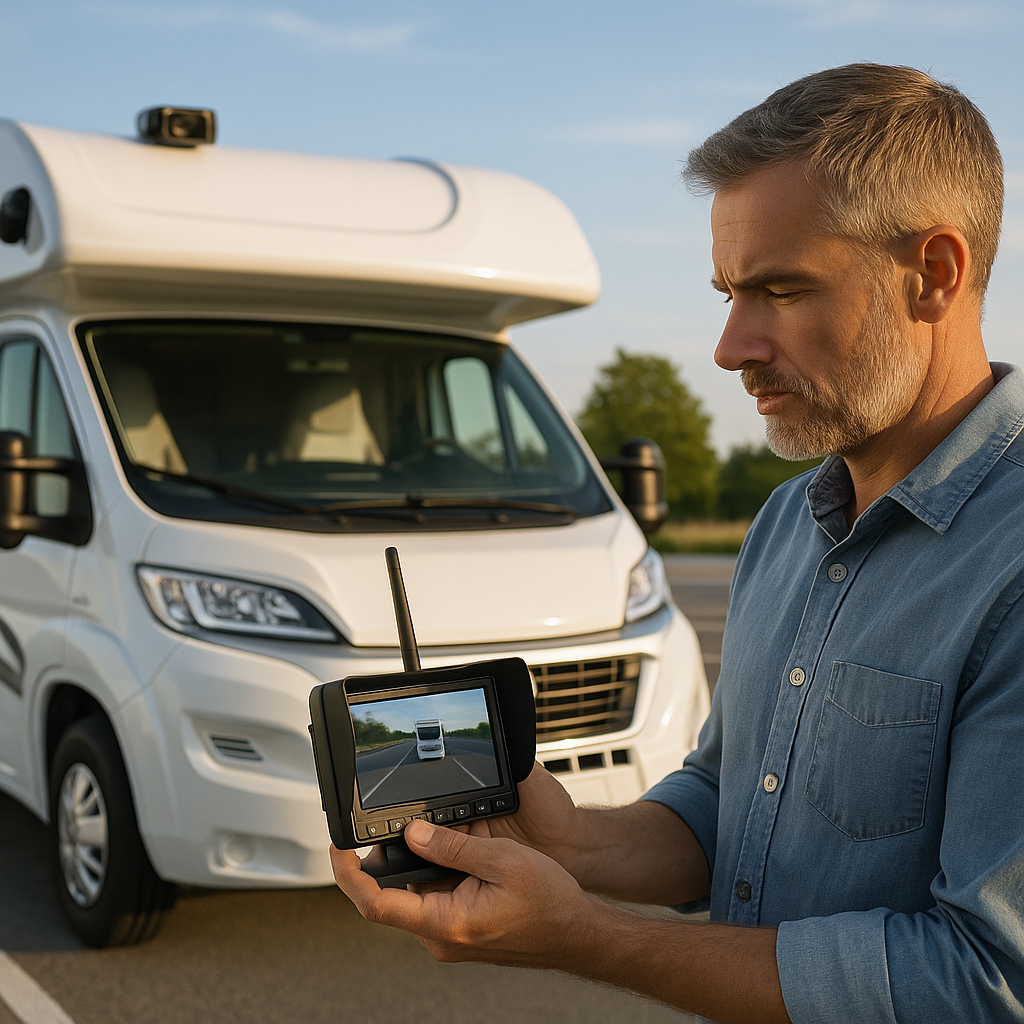
How We Evaluated
We researched and tested the top options, comparing them across key factors including performance, value, ease of use, and reliability. Our recommendations are based on hands-on evaluation and real-world usage data.
Short Answer
The best RV backup cameras for safe parking are the systems that combine a stable signal, wide viewing angle, strong low-light performance, and a screen large enough to use comfortably from the driver’s seat. For many RV owners, Furrion Vision S is the easiest factory-friendly wireless option, Haloview systems are strong picks for longer trailers that need a more robust signal, and Voyager remains a trusted premium choice for RVs that prioritize durability and image quality. If you want the most dependable connection overall, a wired system is still the gold standard, especially for full-timers and large Class A motorhomes.
The right choice depends on your RV type, whether it’s pre-wired for a camera, how often you tow, and whether you need one rear camera or a multi-camera system for side views and hitching.

Quick Comparison Table
| Camera System | Type | Best For | Main Strength | Main Tradeoff |
|---|---|---|---|---|
 Furrion Vision S Furrion Vision S |
Wireless | Pre-wired RVs | Easy factory-friendly install | Often pricier |
| Haloview | Wireless | Long trailers | Stronger wireless performance | Product selection can be confusing |
| Voyager | Wired/Wireless | Premium buyers | Durability and reputation | Higher cost |
| RVS Systems | Wired | Large motorhomes | Most reliable connection | Harder install |
| AMTIFO | Wireless | Budget-midrange shoppers | Good value potential | Less ideal for demanding long-range use |
| LeeKooLuu | Wireless | Entry-level buyers | Lower cost | More basic performance |
Why an RV Backup Camera Matters
Parking a motorhome, fifth wheel, or travel trailer is fundamentally different from backing up a passenger vehicle. RVs have longer blind spots, wider turning arcs, and more opportunity for damage to campsites, posts, hookups, and nearby vehicles.
A good RV backup camera helps with:
- Safer parking in campgrounds with tight roads and uneven sites
- Better rear visibility while reversing into campsites or storage spaces
- Improved lane-change awareness when used as an observation camera
- Easier hitching and unhooking for towable RVs
- Reduced dependence on a spotter in simple backing situations
It does not replace mirrors or a spotter in difficult maneuvers, but it adds a major safety advantage.

What to Look for in the Best RV Backup Cameras for Safe Parking
Before comparing models, it helps to know which features matter most in real RV use.
Signal reliability
For wireless RV camera systems, signal stability is critical. Longer trailers and motorhomes put more distance between the rear camera and the dashboard monitor, which can cause lag or dropouts in weaker systems. Some premium wireless systems use stronger antennas or signal repeaters to improve performance.
Wired vs. wireless installation
Wireless cameras are easier to install and are popular with travel trailers, fifth wheels, and motorhomes that want less labor.
Wired cameras take more effort to install but usually deliver the most consistent image with the least interference.
Screen size and visibility
A monitor that is too small can make reversing harder, not easier. Many RV owners prefer a 5-inch to 7-inch display, especially for larger rigs.
Low-light and night vision performance
Many parking situations happen early in the morning, late in the evening, or under poor campground lighting. Infrared night vision or strong low-light sensors make a meaningful difference.
Viewing angle
A wider field of view lets you see more of what is behind the RV, but extremely wide angles can distort distance. A balanced wide-angle lens is usually best for parking.
Weather resistance and durability
An RV camera is exposed to rain, road spray, sun, vibration, and temperature swings. Build quality matters, especially for full-time RVers.
Audio capability
Some systems include microphone support, which can help when a spotter is behind the rig giving verbal guidance.
Multi-camera expandability
If you want side marker cameras, front cameras, or an interior cargo/horse trailer camera, choose a system that supports additional channels.
Best RV Backup Cameras Compared
Below are some of the most commonly recommended RV backup camera systems for safe parking and everyday towing use.
1. Furrion Vision S Wireless RV Backup Camera System
Furrion Vision S is one of the best-known RV camera systems because many trailers come prepped for it from the factory. If your RV has a Furrion bracket and wiring already in place, this is often the most straightforward upgrade.
Best for
- RVs pre-wired for Furrion Vision S
- Owners who want relatively easy wireless installation
- Travel trailers and fifth wheels needing a mainstream, proven option
Notable features
- Wireless rear camera system
- Available with 4.3-inch, 5-inch, or 7-inch monitors
- Supports multiple cameras on some kits
- Infrared night vision
- Built-in microphone in many configurations
- Marker-light-compatible side camera options
Pros
- Very easy choice for many factory-prepped RVs
- Strong brand recognition in the RV market
- Multiple monitor sizes available
- Expandable into a multi-camera setup
- Good convenience for parking and rear observation
Cons
- Typically more expensive than basic budget wireless systems
- Wireless performance can vary depending on RV length and interference
- Best value often depends on whether your RV is already prepped for it
Bottom line
If your trailer or motorhome is already set up for Furrion compatibility, Vision S is one of the safest and simplest picks for improved parking confidence.
2. Haloview Wireless RV Backup Camera Systems
Haloview has built a strong reputation among RV owners looking for feature-rich wireless systems, especially for longer towables where signal strength matters more.
Best for
- Longer travel trailers and fifth wheels
- RVers wanting a stronger wireless signal than entry-level systems
- Buyers interested in multi-camera flexibility
Notable features
- Wireless digital transmission
- Available in multiple monitor sizes and kit configurations
- Often supports up to 4 cameras
- Wide-angle views and night vision
- Some systems include antennas or repeater-friendly designs
Pros
- Often praised for strong wireless range on longer rigs
- Good option for multi-camera coverage
- Broad product lineup for different RV sizes and budgets
- Useful for parking, monitoring, and lane-awareness setups
Cons
- Product line can be confusing if you are new to RV camera systems
- Installation is still more involved than “plug and play” for some rigs
- Performance varies by exact kit and RV layout
Bottom line
Haloview is a compelling choice if you want wireless convenience but need more confidence on a longer trailer where basic systems may struggle.
3. Voyager RV Camera Systems
Voyager is a long-established name in observation and backup camera technology, and its systems are often chosen by RVers who prioritize durability and premium performance over the lowest price.
Best for
- Full-time RVers
- Large Class A and Class C motorhomes
- Buyers who want a more premium, heavy-duty setup
Notable features
- Wireless and wired options depending on model line
- Rugged hardware designed for vehicle use
- Good display clarity on many systems
- Support for multiple cameras in some setups
- Strong reputation in commercial and RV applications
Pros
- Trusted brand with longstanding RV and vehicle use
- Good durability for frequent travel
- Strong option for larger rigs
- Often better suited to demanding use than bargain systems
Cons
- Premium pricing compared with many consumer-focused brands
- Some setups are better installed by experienced DIYers or professionals
- Fewer “entry-level” appeal points for casual buyers
Bottom line
Voyager is a strong premium pick if reliability and long-term use matter more than getting the cheapest possible camera.
4. RVS Systems Wired Backup Camera Systems
RVS Systems is frequently considered by RV owners who want the strongest possible connection and are willing to do a more involved installation. For large motorhomes or frequent backing in tricky conditions, wired can still be the benchmark.
Best for
- Large Class A motorhomes
- Full-timers who want maximum connection reliability
- RVers comfortable with more involved installation
Notable features
- Wired camera and monitor systems
- Commonly offered in 7-inch monitor configurations
- Heavy-duty camera housings on many kits
- Multi-camera options available
- Stable image without wireless interference concerns
Pros
- Highly dependable signal quality
- Excellent for larger rigs where wireless can be inconsistent
- Well suited for regular use and demanding parking situations
- Good choice when image stability matters most
Cons
- Installation is more labor-intensive
- Routing cable through an RV can be time-consuming
- Less convenient for buyers looking for a quick upgrade
Bottom line
If you care most about connection stability and use your RV frequently, a wired RVS-style setup is hard to beat.
5. AMTIFO Wireless Backup Camera Systems for RVs
AMTIFO is often considered by shoppers who want a practical camera system without jumping straight to premium pricing. Depending on the exact kit, these systems can work well for smaller RVs and moderate-use travel trailers.
Best for
- Budget-conscious buyers
- Smaller travel trailers and campers
- RVers who want a basic wireless setup for parking help
Notable features
- Wireless camera kits in several configurations
- Dash-mounted monitor options
- Night vision and wide viewing angles in many models
- Often marketed for RVs, trucks, and trailers
Pros
- More accessible price positioning than some premium RV brands
- Good fit for lighter-duty or occasional-use needs
- Often easier to install than wired systems
- Solid starting point for first-time camera buyers
Cons
- Not always the best match for the longest trailers or most demanding conditions
- Quality and included features vary by model
- Buyers need to verify screen size, compatibility, and range carefully
Bottom line
AMTIFO can make sense if you want an affordable RV backup camera for safer parking and your rig does not demand the strongest long-range wireless performance.
6. LeeKooLuu Wireless RV Backup Camera Systems
LeeKooLuu is another brand often found in the budget-friendly segment. It is most appealing for shoppers who want a lower-cost way to add rear visibility to a camper or trailer.
Best for
- Entry-level buyers
- Occasional RV users
- Smaller campers and shorter trailers
Notable features
- Wireless camera kits
- Compact monitor options
- Night vision on many models
- Frequently sold in universal vehicle configurations
Pros
- Budget-friendly entry point
- Easy to find online in multiple kit styles
- Reasonable option for lighter-duty use
- Can be enough for simple parking assistance needs
Cons
- Long-range signal performance may not match premium RV-specific systems
- Overall hardware refinement may be more basic
- Model-to-model consistency matters a lot
Bottom line
LeeKooLuu is worth considering if price is the biggest factor, but buyers with larger RVs or frequent travel may want to step up to a more robust system.
Which RV Backup Camera Is Best for Your RV Type?
Best for travel trailers
For many travel trailers, Furrion Vision S is the natural first choice if the trailer is pre-wired for it. If you have a longer trailer and want better wireless confidence, Haloview is often a smarter comparison point.
Best for fifth wheels
Fifth wheels can challenge weaker wireless systems because of their size and layout. Haloview and premium Voyager options are often better suited than bargain universal kits.
Best for Class A motorhomes
Large Class A motorhomes benefit most from either a premium wireless platform or a fully wired system such as those offered by RVS Systems. If signal stability is your top concern, wired usually wins.
Best for Class C motorhomes
Class C owners often have more flexibility. A quality wireless system can work very well, but frequent travelers may still appreciate the reliability of a more premium platform like Voyager.
Best for pop-up campers and small campers
Smaller towables can often use more affordable systems successfully because the transmission distance is shorter. That makes options like AMTIFO or LeeKooLuu more practical than they might be on a large fifth wheel.
Wireless vs. Wired RV Backup Cameras
Choose wireless if:
- You want easier installation
- Your RV is camera-prepped
- You have a shorter trailer or moderate signal distance
- You want to avoid routing long video cables
Choose wired if:
- You want the most stable connection possible
- You have a large Class A or a very long RV
- You use your camera system constantly
- You do not mind a more involved install
For safe parking alone, both can work well. For long-term, heavy-use reliability, wired still has an edge.
How We’d Pick the Best RV Backup Cameras for Safe Parking
When comparing RV backup cameras, these are the practical factors that matter most:
- Real-world RV compatibility rather than generic car-only marketing
- Reliable rear image while reversing, not just when parked
- Screen size and readability from the driver seat
- Night visibility in campgrounds and storage lots
- Expandability for side and hitch cameras
- Installation complexity for DIY RV owners
- Durability under road vibration and weather exposure
The best camera is not always the one with the most features. It is the one that works consistently on your specific rig.
Installation Tips for Better Backup Camera Performance
Even a strong camera system performs better with proper setup.
Mount the camera at the correct height
Too high, and it may be harder to judge near-ground obstacles. Too low, and the camera can get dirty faster and miss the broader rear view.
Test the monitor position before final mounting
The screen should be visible without forcing you to look far away from the road or mirrors.
Keep power connections secure
Many wireless camera complaints come down to weak or inconsistent power supply rather than the camera itself.
Update or add a repeater if needed
If your chosen wireless system supports repeaters or enhanced antennas, these can make a major difference on longer trailers.
Clean the lens regularly
Road grime, rain spots, and dust quickly reduce image quality.
Common Mistakes to Avoid When Buying an RV Backup Camera
- Choosing a camera based on price alone for a very long trailer
- Buying a universal car camera without confirming RV range needs
- Picking too small a monitor for a large motorhome
- Assuming “wireless” always means flawless signal
- Ignoring whether your RV is already pre-wired for a specific brand
- Forgetting to check support for extra cameras if you may want side views later
Our Overall Recommendations
If you want a quick summary:
- Best for pre-wired RVs: Furrion Vision S
- Best wireless choice for longer trailers: Haloview
- Best premium option: Voyager
- Best wired choice for maximum reliability: RVS Systems
- Best budget-friendly option for smaller rigs: AMTIFO
- Best entry-level option: LeeKooLuu
For most RVers focused on safe parking, the smartest buy is the one that matches the size of the rig and the installation style you are willing to handle.
Frequently Asked Questions
Are RV backup cameras worth it for safe parking?
Yes. RV backup cameras are one of the most useful safety upgrades for parking, backing into campsites, and watching blind areas behind large rigs. They do not replace mirrors or a spotter in difficult situations, but they make reversing safer and easier.
What is better for an RV: wired or wireless backup cameras?
Wired backup cameras are generally more reliable because they are not affected by wireless interference or long transmission distances. Wireless cameras are easier to install and often work very well, especially on shorter RVs or pre-wired trailers.
Do backup cameras work on travel trailers and fifth wheels?
Yes. Many backup camera systems are designed specifically for travel trailers and fifth wheels. Wireless systems are especially popular on towables, but longer fifth wheels may benefit from stronger signal systems or a repeater.
Can I use an RV backup camera while driving?
Some RV camera systems function as observation cameras, meaning they can display a live rear view while driving, not just when reversing. This can be useful for monitoring traffic behind the RV, but you should always confirm the specific product’s capabilities and local laws.
Which RV backup camera is easiest to install?
For many owners, the easiest installation is a wireless system matched to a pre-wired RV, especially a Furrion-compatible setup. The hardest installations are usually fully wired multi-camera systems.
How many cameras does an RV really need?
For basic safe parking, one rear camera may be enough. If you have a large motorhome or tow in tight areas often, side cameras can add valuable visibility during lane changes and maneuvering.
Final Take
The best RV backup cameras for safe parking are not one-size-fits-all. Furrion Vision S is a practical favorite for factory-prepped RVs, Haloview is a strong wireless contender for longer trailers, Voyager appeals to buyers who want premium hardware, and RVS Systems is the top direction if connection reliability matters most.
Start with your RV’s size, whether it is pre-wired, and whether you want a simple rear camera or a more complete visibility system. From there, choosing the right backup camera becomes much easier—and so does backing into your next campsite.
Top Picks & Comparison
| # | Product | Price | Rating | ||
|---|---|---|---|---|---|
| #1 | |
Furrion Vision S 4.3" Wireless RV Backup Camera System with Wide Angle Night Vision |
$199.99 | — | View on Amazon |
| #2 |  |
Garmin BC 50 Night Vision Wireless Backup Camera with License Plate Mount |
$149.99 | — | View on Amazon |
| #3 |  |
RV Tire Pressure Monitoring System — TST 507 Cap Sensor TPMS with 6 Sensors |
$189.95 | — | View on Amazon |
| #4 |  |
Progressive Industries EMS-PT30X Portable RV Surge Protector 30 Amp |
$109.00 | — | View on Amazon |