Best RV Accessories for Boondocking: Essential Gear for Off-Grid Camping

Jake has spent 8 years full-timing in a Class A motorhome and has personally tested hundreds of RV products across North America. He is the lead gear reviewer at Shop RV Gear, covering solar setups, backup safety syst…
Why trust us
Every product featured on Shop RV Gear is researched by RV owners with real on-road experience. Our lead reviewer Jake Morris has full-timed for 8 years and personally tested gear across 40+ states. We earn a small commission on qualifying purchases — this never influences our picks.
Short Answer
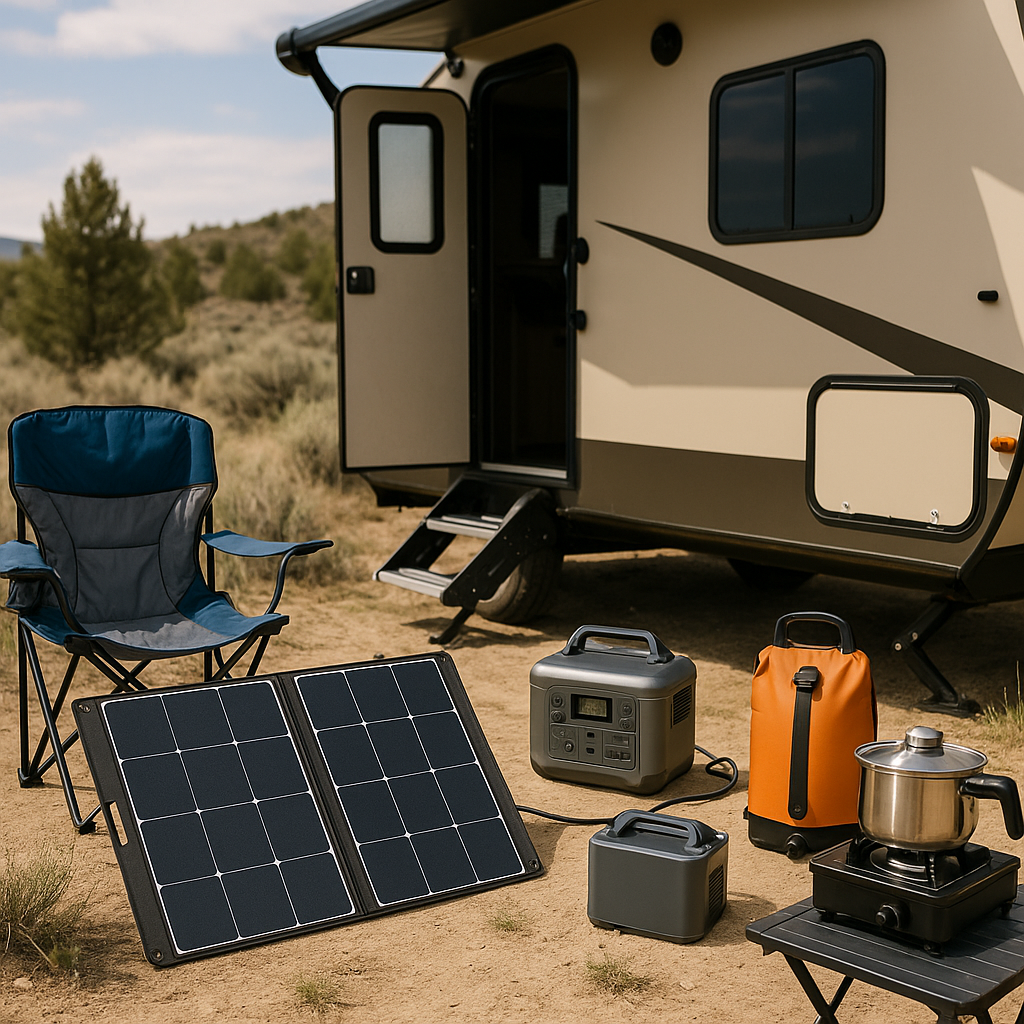
The best RV accessories for boondocking are the ones that solve the core off-grid problems first: power, water, waste management, leveling, weather protection, and basic repairs. For most RVers, the smartest priorities are a portable solar panel or rooftop solar setup, a lithium battery upgrade or battery monitor, a quality water hose and filtration system, extra fresh-water storage, a portable waste tote or composting solution, leveling blocks, tire pressure monitoring, and a dependable surge protector or EMS. After that, comfort and convenience upgrades like cell boosters, portable power stations, outdoor lighting, and collapsible storage gear become worth adding.
If you want the best value, buy accessories in this order: power system essentials, water and sewer gear, campsite setup tools, safety equipment, then comfort extras. That approach gives you the biggest real-world benefit for boondocking without overspending on gadgets you may not need.
Why Boondocking Requires Different RV Gear
Boondocking is very different from staying at a full-hookup campground. You are usually camping without shore power, city water, or sewer connections, which means your RV has to function as a self-contained system.
That changes what counts as a "must-have" accessory. Instead of focusing on campground convenience, boondocking gear needs to help you:
- Generate and store electricity
- Stretch fresh water supplies
- Handle gray and black tank capacity
- Stay level on uneven ground
- Protect your rig from weather and road conditions
- Improve self-sufficiency if something goes wrong
The best RV accessories for boondocking are not always the flashiest. They are usually the products that increase your time off-grid, reduce stress, and prevent small problems from ending a trip early.

How to Choose the Best RV Accessories for Boondocking
Before buying gear, think about your actual camping style.
Consider Your Rig Type
A small travel trailer, truck camper, Class B van, and large fifth wheel all have different needs.
For example:
- Truck campers and vans often benefit most from compact, multi-use gear.
- Travel trailers usually need better leveling, tongue jack support, and battery upgrades.
- Large fifth wheels and Class A motorhomes may need more robust solar, larger inverters, and better tank management tools.
Think About Your Typical Stay Length
If you boondock for one or two nights at a time, you may only need a few essentials. If you regularly stay off-grid for a week or longer, higher-capacity gear becomes much more important.
A weekend boondocker can often get by with:
- Portable solar panel
- Battery monitor
- Fresh water hose and filter
- Leveling blocks
- Portable generator backup
A long-stay boondocker may want:
- Larger solar array
- Lithium batteries
- Inverter upgrade
- Water transfer pump or bladder tank
- Portable waste tote
- Connectivity tools for remote work
Prioritize Function Over Novelty
A good buying rule is simple: if an accessory saves power, saves water, increases safety, or helps you stay off-grid longer, it is usually worth considering before comfort-only products.
Best RV Accessories for Boondocking by Category
Power Essentials
Power is the first limiting factor for many boondockers. If your battery system is weak, everything else becomes harder.
Solar Panels
Solar is one of the most useful boondocking upgrades because it replaces at least part of the energy you use each day.
You will typically choose between:
- Portable solar panels: easy to deploy, good for shaded campsites where the RV sits in shade but the panel can be moved into sun
- Rooftop solar panels: always available, more convenient, better for frequent off-grid travel
Pros
- Reduces generator runtime
- Helps maintain battery charge daily
- Quiet and low-maintenance
- Especially valuable for longer stays
Cons
- Performance depends on weather and season
- Portable panels require setup and storage
- Rooftop systems cost more and require installation planning
Best for: RVers who boondock regularly and want less dependence on a generator.
Lithium Batteries
Lithium batteries are a major upgrade over many stock lead-acid setups because they provide more usable capacity, charge faster, and generally weigh less.
Pros
- More usable energy than lead-acid batteries
- Faster charging from solar or generator
- Longer cycle life
- Lower weight for the same practical capacity
Cons
- Higher upfront cost
- Some RV charging systems may need updates for compatibility
- Cold-weather charging limitations on some batteries
Best for: Frequent boondockers, high power users, and RVers planning longer off-grid stays.
Battery Monitor
A battery monitor is one of the most underrated boondocking accessories. Voltage alone is often not enough to understand battery state of charge, especially under load.
Pros
- Helps prevent over-discharging batteries
- Makes power use easier to manage
- Useful for both lead-acid and lithium setups
Cons
- Requires installation in many cases
- Less exciting than bigger upgrades, but more useful than it sounds
Best for: Any RVer who wants accurate battery data.
Inverter or Portable Power Station
An inverter lets you run household AC devices from your battery bank. A portable power station can also be useful for small electronics, CPAP machines, laptops, cameras, and backup charging.
Pros
- Expands what you can power off-grid
- Useful for remote work and charging electronics
- Portable units can be used outside the RV too
Cons
- Higher loads can drain batteries quickly
- Not every RV needs a large inverter
- Portable power stations are convenient but not always the most cost-effective long-term solution
Best for: RVers with laptop, medical device, camera, or work-related power needs.
Generator Backup
Even a solid solar setup does not eliminate every need for a generator. Cloudy weather, tree cover, and heavy loads can make backup charging important.
Pros
- Reliable backup during poor solar conditions
- Helps run heavier loads when permitted
- Useful during shoulder-season travel
Cons
- Noise and fuel storage requirements
- Some public lands restrict generator use or limit acceptable hours
- Maintenance required
Best for: RVers who want a backup plan when solar is not enough.
Water Management Accessories
Water is usually the second-biggest boondocking constraint after power.
Drinking Water Hose and Pressure-Safe Fill Setup
A dedicated drinking-water-safe hose is a basic essential. Many boondockers also carry a short hose, hose elbows, shutoff valves, and a simple fill adapter kit to make awkward water fills easier.
Pros
- Safer for potable water use
- Helps at dump stations and public fill spigots
- Fewer leaks and easier tank fills
Cons
- Requires storage space
- Cheap hoses are prone to kinks and cracks
Best for: Every boondocker.
Water Filter
A quality RV water filter helps improve taste and reduce sediment when you refill from unfamiliar sources.
Pros
- Better water quality from uncertain sources
- Helps reduce sediment entering the RV plumbing system
- Useful at campgrounds and boondocking fills alike
Cons
- Filters need replacement
- Not every filter is designed for every contaminant type
Best for: RVers filling from varied sources.
Portable Water Containers or Water Bladder
Extra water storage can significantly extend boondocking stays. Portable jugs, collapsible water containers, or towable/portable water bladders help refill the fresh tank without moving the RV.
Pros
- Extends time off-grid
- Avoids breaking camp to refill fresh water
- Helpful for larger rigs with harder-to-move setups
Cons
- Can be heavy when full
- Requires careful handling to avoid contamination
- Large bladders need storage when empty
Best for: Longer stays and dry campers in remote areas.
Water Transfer Pump
A transfer pump makes it easier to move water from a container or bladder into the RV fresh tank.
Pros
- Much easier than gravity filling from heavy containers
- Saves time and physical effort
- Useful for larger fresh water replenishment setups
Cons
- Another device to store and maintain
- Some setups require extra hoses and fittings
Best for: Extended boondocking or larger water resupply setups.
Waste and Tank Management Gear
Managing holding tanks efficiently is essential if you want to stay off-grid longer.
Portable Waste Tote
A portable waste tote lets you move gray or black water to a dump station without moving the RV.
Pros
- Extends campsite stays
- Especially helpful for longer boondocking trips
- Prevents breaking camp just to dump tanks
Cons
- Bulky to store
- Needs careful sanitation and cleaning
- Can be awkward on rough terrain
Best for: RVers staying more than a few days in one spot.
Tank Treatment
A good tank treatment can help with odor control and sensor cleanliness, especially in hot weather.
Pros
- Helps reduce odors
- May improve tank sensor performance over time
- Easy addition to routine tank care
Cons
- Effectiveness varies by product and usage habits
- Not a substitute for proper flushing and tank maintenance
Best for: Any RV with holding tanks.
Composting Toilet or Portable Toilet
For some boondockers, especially vanlifers or small-rig travelers, changing the toilet setup can dramatically improve off-grid flexibility.
Pros
- Can reduce black tank dependence
- Useful for long stays without dump access
- Portable units offer flexibility in compact rigs
Cons
- Higher learning curve
- Upfront cost can be significant
- Not every RV layout suits a composting conversion
Best for: Frequent off-grid campers trying to maximize independence.
Campsite Setup Accessories
A good boondocking site is not always level, smooth, or easy to access.
Leveling Blocks and Wheel Chocks
Uneven terrain is common off-grid. Strong leveling blocks and chocks are simple gear, but they make a major difference in safety and comfort.
Pros
- Helps protect appliances that need a level setup
- Improves sleeping and shower comfort
- Increases stability and safety during parking
Cons
- Takes up storage space
- Some lightweight blocks are less durable on rough terrain
Best for: Every RV setup.
Jack Pads or Stabilizer Pads
Soft ground can cause sinking or instability. Jack pads help spread the load and protect your setup.
Pros
- Better stability on dirt, sand, or soft ground
- Helps protect pads and jacks from mud and sinking
- Useful in varied terrain conditions
Cons
- Extra pieces to carry and place
- Not always necessary for quick overnight stops
Best for: Heavier rigs and soft-ground campsites.
Portable Air Compressor
Tire pressure matters more than many RVers realize, especially on dirt roads, washboard routes, and long highway drives to remote camping areas.
Pros
- Lets you maintain tire pressure on the road
- Helpful after temperature swings or rough access roads
- Useful for bikes and inflatables too
Cons
- Better units can be bulky
- Cheap compressors may be slow or underpowered for larger RV tires
Best for: RVers traveling remote roads or towing long distances.
Safety and Reliability Accessories
When you are far from services, small failures become bigger problems.
Tire Pressure Monitoring System (TPMS)
A TPMS can alert you to pressure or temperature problems before they become a serious tire failure.
Pros
- Early warning for tire problems
- Useful for motorhomes, trailers, and tow vehicles
- Adds peace of mind on remote routes
Cons
- Sensor batteries need maintenance or replacement
- Initial setup takes a little time
Best for: Any RVer who regularly drives to remote campsites.
Surge Protector or Electrical Management System (EMS)
Even boondockers still plug in sometimes, whether at home, storage, or occasional campgrounds. Power quality protection still matters.
Pros
- Helps protect RV electronics from bad shore power
- EMS units can detect wiring faults and other issues
- Useful beyond boondocking trips
Cons
- Not used every day while fully off-grid
- Quality units cost more than basic surge protectors
Best for: Every RV owner who ever plugs into external power.
Basic Tool Kit and Repair Supplies
A practical boondocking kit should include at minimum:
- Screwdrivers and pliers
- Adjustable wrench and socket set
- Electrical tape and spare fuses
- Sealant compatible with your RV roof and exterior surfaces
- Zip ties and gloves
- Flashlight or headlamp
- Spare hose washers and fittings
Pros
- Helps solve common problems in the field
- Prevents minor issues from ending a trip
- Useful on every RV outing
Cons
- Easy to underpack or forget key items
- Specialized repairs may still require professional help
Best for: Everyone.
Comfort and Convenience Accessories Worth Adding
Once the essentials are covered, these accessories can make off-grid camping easier and more enjoyable.
Cell Signal Booster or Mobile Internet Gear
If you work remotely, stream lightly, or just want emergency contact options, connectivity gear can be worth it.
Pros
- Better odds of usable data in weak-signal areas
- Helpful for navigation, weather, and remote work
- Can improve trip flexibility
Cons
- Cannot create signal where none exists
- Can be expensive depending on setup
Best for: Working travelers and remote campers who need communication access.
Portable Outdoor Lighting
Rechargeable lanterns, LED string lights, and motion-sensor lights can improve campsite usability without putting too much drain on the RV battery system.
Pros
- Improves visibility and safety at night
- Low power draw with LED options
- Useful both inside and outside the RV
Cons
- Some decorative lighting is more clutter than benefit
- Rechargeable units still need a charging routine
Best for: RVers who spend evenings outside.
Collapsible Storage Gear
Collapsible bins, dish tubs, drying racks, and utility containers help manage limited RV space.
Pros
- Saves storage space
- Useful for washing, hauling, and organizing
- Great for smaller RVs and vans
Cons
- Quality varies widely
- Too many organizers can become their own clutter problem
Best for: Small-space campers and extended travelers.
Portable Shade or Ground Mat
A ground mat helps keep dirt outside, while a portable shade shelter can make hot, sunny sites much more comfortable.
Pros
- Improves campsite comfort significantly
- Helps keep dust and debris out of the RV
- Good for longer stays
Cons
- Extra setup time
- Wind can be a problem for some shade setups
- Bulky compared with more essential gear
Best for: Desert camping and sunny open campsites.
The Best RV Accessories for Boondocking: What to Buy First
If you are building a boondocking setup from scratch, buy in this order.
1. Battery Visibility and Basic Power Support
Start with:
- Battery monitor
- Portable solar panel or upgraded charging solution
- Generator backup if your travel style requires it
This gives you immediate control over your most important off-grid limitation.
2. Water Fill and Filtration Gear
Add:
- Drinking water hose
- Inline or canister water filter
- Fill adapters and shutoff valve
These are relatively affordable and useful on every trip.
3. Leveling and Tire Safety Tools
Next buy:
- Leveling blocks
- Wheel chocks
- TPMS
- Portable air compressor
These improve safety, campsite setup, and trip reliability.
4. Extended-Stay Upgrades
Then consider:
- Portable water containers n- Water transfer pump
- Portable waste tote
- Lithium battery upgrade
These make the biggest difference for longer boondocking stays.
5. Comfort and Connectivity
Finally add:
- Cell booster or internet gear
- Outdoor lighting
- Ground mat
- Storage organizers
These are nice quality-of-life improvements once the core systems are covered.
Common Boondocking Buying Mistakes to Avoid
Buying Too Many Low-Cost Gadgets Instead of Upgrading Core Systems
A pile of inexpensive accessories will not help much if your battery bank is undersized or your water setup is inefficient.
Ignoring Weight and Storage
Every accessory adds bulk. This matters even more in smaller trailers, camper vans, and truck campers.
Overbuilding for Rare Use
If you only boondock a few weekends a year, you may not need a large lithium and inverter system right away.
Underestimating Water Needs
Many new boondockers focus on power first and forget how quickly fresh water and gray tank capacity become the actual trip limit.
Assuming Solar Alone Solves Everything
Solar is excellent, but battery capacity, weather, appliance load, and your daily habits matter just as much.
FAQ
What are the most essential RV accessories for boondocking?
The most essential accessories are usually a battery monitor, solar charging solution, safe drinking water hose, water filter, leveling blocks, wheel chocks, and basic repair supplies. For longer stays, extra water storage, a waste tote, and a TPMS become especially valuable.
Is solar necessary for boondocking in an RV?
Solar is not strictly necessary, but it is one of the most useful upgrades for regular boondocking. If you camp off-grid often, solar helps reduce generator use and keeps batteries charged more consistently. Occasional boondockers can still manage with conservation, battery charging from driving, or generator backup.
What size battery setup is best for boondocking?
The best battery setup depends on your energy use. Light users running lights, fans, phone charging, and a water pump need much less capacity than RVers using laptops, inverters, CPAP machines, or extended furnace runtime. A battery monitor is often the best first step because it helps you size upgrades based on real usage rather than guesswork.
Do I need a generator if I have solar?
Not always. Many RVers boondock successfully with solar and adequate battery capacity alone, especially in sunny climates. But a generator can still be useful as backup during cloudy weather, winter camping, shaded campsites, or unusually heavy energy use.
How do I make my water last longer while boondocking?
Use low-flow habits, take shorter showers, wash dishes in basins, fix leaks quickly, and carry extra water containers if your RV has limited fresh capacity. A practical water refill setup with a hose, filter, and transfer method can extend stays significantly.
Final Thoughts
The best RV accessories for boondocking are the products that make your RV more self-sufficient, not just more complicated. If you focus first on power, water, leveling, tire safety, and basic repairs, you will build a setup that actually improves off-grid camping.
For most RVers, the smartest upgrades are not random gadgets. They are a reliable way to recharge batteries, a practical water system, better tank management, and a few tools that help prevent common problems. Start there, buy based on how you really camp, and your boondocking setup will be more useful, more efficient, and much less expensive in the long run.